Blog

  • Amici Italiani: 39 Years of Preserving Folk Dance Traditions

    Amici Italiani: 39 Years of Preserving Folk Dance Traditions

    Dance and folk music are the heart and soul of Sicilian tradition, connecting people and introducing others to the region’s rich heritage.


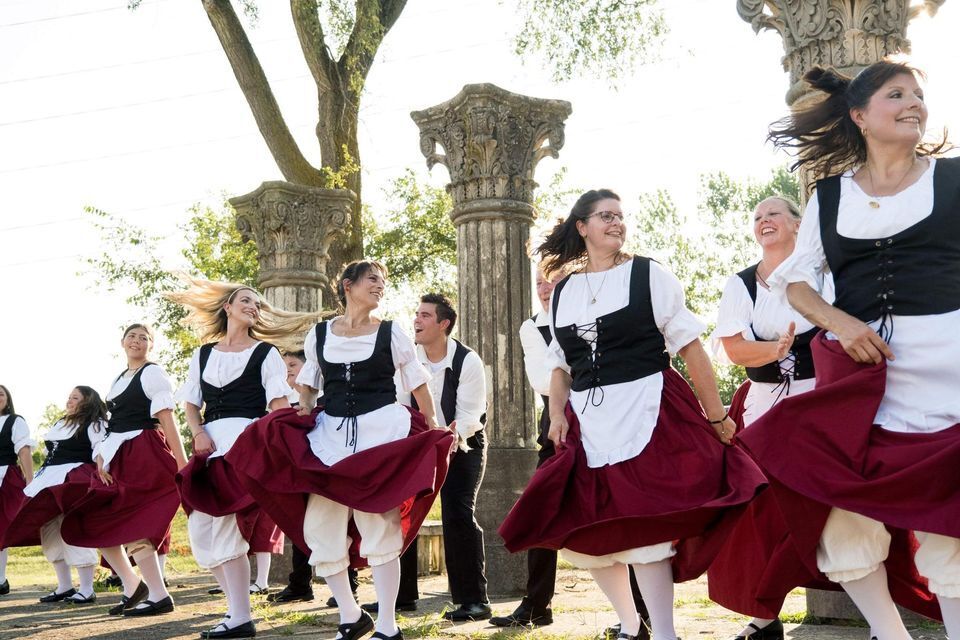
    For 39 years, Amici Italiani (Italian Friends) of Rockford, Illinois, has shared and preserved culture through folk dance. With both adult and youth troupes, the group performs traditional Quadriglias, Saltarellos, Mazurcas, Tarantellas, and Codigliones, all carefully researched as members of the Italian Folk Art Federation of America.


    I recently chatted with Amici Italiani Director Bea Giammarese Ricotta, whose family came from the Sicilian towns of Aragona and Bagheria. We discussed her start as a founding member, the memories she associates with Italian folk music and dance, her favorite dances, Amici Italiani’s traditional costumes, and her most rewarding performance.


    How did you get started with Amici Italiani?

    I was one of the founding members. We had a wonderful person named Shirley Martignoni Fedeli, who, with her husband, Gene, decided to start the Italian dance troupe.


    The newspaper printed a small article that said, “If you’re Italian and you want to dance the Italian folk dances, call Shirley.”

    So, my mom saw it, and I might’ve just graduated from college. And she said, “You like to dance. Why don’t you call?”


    I did, and Shirley sounded really nice, so I went. That was pretty much it.


    I have to laugh because I was such an idiot back then. On the first day of dance practice, I showed up in a legit dance skirt and tights while everybody else wore sweatpants and shorts.


    We were the founding members, and we brought in a dance instructor from Milwaukee’s dance troupe, Mario DeSantis, who has since passed.


    He taught us a couple of dances a year, and then we went from there.


    I was a dancer for a million years, and then I became the instructor, and I did that for a number of years. I loved that. Then I got pretty old. When you can’t do a hop, that’s pretty bad. Your knees don’t like you anymore. When our director retired, I became the director.


    My two daughters are in the troupe. One of my daughters is one of the dance instructors. We have two: a male and a female dance instructor.


    So, it’s a family thing. They grew up in the troupe. And I’m going to tell you a secret: Every time I hear this beautiful Italian folk music, I’m telling you the people I lost in my life who came from Italy and are no longer here; in those few minutes that the song is playing, they’re back, and it means so much. I’ll never get tired of any of that music because they’re alive all over again and all the good memories and all the love is still there.


    What memories do you associate with that music and dancing?

    We had relatives who emigrated here in the early seventies, so they came later than my mom. They were all grown. Most of them had kids already. And in the summer, they would have these little get-togethers in their backyards and they had a trellis with the grapes growing over. And they hardly had any lawn in the backyard because they planted tomato plants, rows and rows of these plants.


    I remember seeing the moon, and there were lights that they had strung above the trellis. And whenever somebody went in the house, they brought out other platters of food.


    When I was young, we would have wonderful family gatherings. My zio, my cousins Carl, Iggy, Frank and Mr. Spoto, a close friend from down the street, played instruments. They would bring out their instruments after we’d eaten and visited, and they would sing.


    Sometimes, the ladies would dance together. Those evenings were magical. I mean, my dad passed away when I was very young, so it was not easy. But because of all this wonderful stuff, I really feel like my childhood was enchanted.


    Of course, at weddings, they would always play the music. And as a kid, that was amazing. You’d get out there and dance. You didn’t know what you were doing, but nobody cared.


    Tarantella dances are popular at weddings. Which is your favorite?

    They’re all from the southern region and Sicily. But each one has a different flavor to it. And people really loved to watch them.


    We always call the Neapolitan the main Tarantella here. You could do it with as many or as few people as you want. We dance this as a call dance so you can follow along.


    We have Cantania’s, which I love. Catania’s Tarantella is totally different.


    Some are just crowd-pleasers, and I don’t know why. Some use tambourines, some don’t. There’s a Tarantella that only uses five people, and the movements are very together.


    I tell the troupe that we’re not Rockettes. This is a chance to show your personality. But there are some dances where you have to be more rigid regarding doing the same thing. So those are amazing for us. 


    How do you get the audience to participate?

    We’ve been hired to dance at weddings just to do what we call the main Tarantella, the Neapolitan one. But we get the bride and groom in there. We get Uncle Toto. We don’t know who we’re dancing with.


    The difference between that and all the others is that it’s a call dance. So, we have one person who calls the dance, and if he makes a mistake or does something we haven’t practiced, you just do what he says—just follow.


    That makes it really fun. And he says he calls it Italian, so it’s really beautiful to hear those words.


    How do your troupes ensure the traditions remain?

    We are really committed to the authenticity of these dances. If we change something, it would be that we can’t quite make a transition with a dance step, so we add a hop or something like that. But it does not change the integrity of the dance, which is so important to me.


    Even the costuming has a lot of tradition. We don’t use nylon fabrics; we use cotton and cotton blends, which are authentic to what they used to wear. They might get a little more “wrinkly”, and need to ironed more often. But it’s important.


    I saw a dance troupe with young ladies in fishnet stockings. I thought, “Oh my God, no Italian father would’ve let their daughter leave the house like that.”


    I don’t know what they were thinking. We try to be as authentic as possible. 


    Tell us more about your costumes.

    A woman from Pittsburgh put together a book of Italian clothing. We would pick our costumes from the book and recreate everything.  


    We would take that and find a seamstress out here who could design and sew it. Now, we have a couple of dancers who can sew, which has been very helpful. 


    We purchase what we can. We found some companies online that like to recreate historic items. I know they’re recreating things for Comic-Con or whatever. I don’t know why they’re making these costumes, but we can pull a shirt here or a skirt there, and it is what we want. We will hem it, and it just makes it a lot easier for our seamstresses.


    How has the local community in Rockford responded?

    They love them. I love being out somewhere where they’re clapping with the music. And when we have a chance to dance with the groups and the audience, I love seeing them get up there.


    We will do the Tarantella with them. We’ll also do the Scopa (broom) dance. Everybody gets a partner except one person. It’s typically one of our guys, and he has to dance with the broom. And at some point, while he is dancing, he’ll yell, “Scopa!” and he’ll throw it, and everyone has to switch partners.


    We’ve done that with crowds, and they do a great job. When locals see us in costumes, they stop us and ask if we can pose with them.


    What do you hope audiences take away?

    When I introduce a dance, I will tell a little bit about it and the area where it originated. So, we’re trying to teach them about Italy and the dances. We want to entertain them and disseminate some of our history.


    The story of the Tarantella involves a tarantula. I used to bring a tarantula to performances so that the audience could see it. And I’m telling you, any child in that audience could probably still tell you about the Tarantella because they remember the tarantula. The adults remember, too.


    I share the history of the dances and tell them where they come from. We have two dances from Sicily that the Moors brought over, and I love to tell people about them. The dances and music are different, but now they’re Sicilian dances and songs.


    What has been your most rewarding experience with Amici Italiani?

    There have been a few, but a real favorite of mine was in 1994 when we were invited to dance at the opening ceremony of the World Cup in Chicago to represent Italy.


    We’re out there, and there are cameras all over. We’re dancing. It was so exciting and wonderful.


    It was at Soldier Field. We ended the performance on the 50-yard line.


    I was on such a high, and then I heard that my then-husband and his relatives in Italy were watching because everybody loves soccer in Italy. And somebody said, “That’s Joe’s wife.” Crazy. Just crazy.


    Dancing connects us so much. Granted, they remembered me there, but it was the dancing that connected everybody.


    My kids have been dancers since they were bambini. They did the youth troupe, and now they’re in the adult troupe. They’re not the only ones who have stayed in it so long. It keeps us all connected.


    If you enjoyed this article, consider subscribing to my newsletter for more content and updates!
  • Baking with Olive Oil: Discover the Moisture and Flavor

    Baking with Olive Oil: Discover the Moisture and Flavor

    Olive oil may be a staple in Italian cooking, but baking with olive oil has become popular in recent years. 


    Sicilian grandmothers are likely shaking their heads. After all, Mediterranean people have long used olive oil as a fat for sweet and savory recipes. It’s been used to prepare food since at least the 4th century B.C.


    Baking with olive oil adds moisture and can heighten the flavor of baked goods. It’s also better for your heart, says the American Heart Association, which recommends choosing healthier fats like olive oil over saturated fats like butter to lower your cardiovascular risk.   


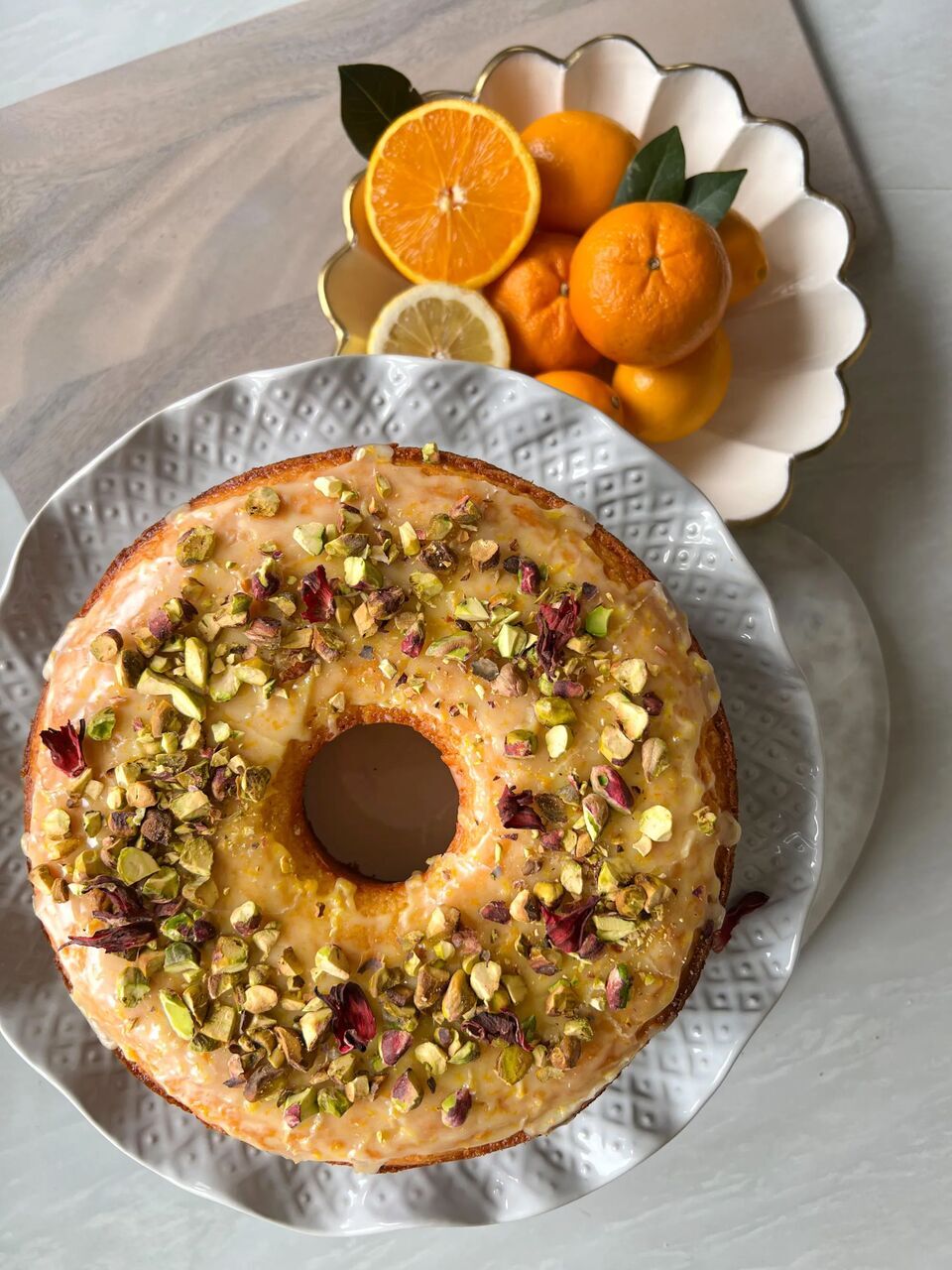
    Blogger Stephanie Mormina is a baking-with-olive-oil believer. I recently stumbled on her lovely Sicilian citrus olive oil cake recipe, and I just had to learn more. 


    Stephanie’s father hails from the town of Cattolica Eraclea in the Province of Agrigento. Being half Sicilian has influenced her love for citrus fruits, which she says pair nicely with olive oil when baking. 


    We chatted about her lovely cake recipe, its inspiration, and how baking with olive oil affects texture and taste.


    What inspired your Sicilian citrus olive oil cake?

    It’s actually a combination of different recipes I found online. I was attracted to it because you can add whatever citrus you want. I like to add a combination of orange and lemon. And then, in my zest, I’ll sometimes put in a little bit of lime because lime has a different flavor. It takes you in a different direction. And it looks pretty in the glaze when you have a little fleck of green along with the orange and the yellow. The great thing about any olive oil cake is that not only does olive oil go extremely well with citrus, but it’s also a cake that remains moist for a very long time. 


    Why is olive oil used in some Sicilian baking?

    They had many olive groves there and just used what they had. They weren’t using much animal fat, at least in my dad’s family, because they ate vegetables most of the time. They were eating more peasant food. So it was lots of vegetables, olive oil, whatever was available.  


    How does olive oil affect texture and moisture?

    It is a little more dense, but in a pleasant way. It is more moist and less crumbly than a butter cake or a cake. And it holds the moisture for days. It’ll be fresh for much longer than a traditional cake.


    How does olive oil affect the taste compared to vegetable or canola oil?

    Canola keeps things neutral. But in a cake with citrus, you don’t mind a little bit of flavor, but you still need to be careful what olive oil you choose. 


    I like to choose one with a milder flavor. I don’t choose the ones that are very full-bodied, thick, and peppery. I stay away from those, even for texture, because if your olive oil is too thick and heavy, it will bring down the cake. Olive oil cakes are already a little flatter, in my experience. 


    I use Tunisian olive oil. It’s not Italian olive oil, but it is the best because it has the olive oil flavor without being overpowering or too heavy. 


    What do you hope at-home bakers will take away from your recipe?

    I want them to appreciate the flavor of the olive oil in conjunction with the other ingredients, especially citrus. I have to say that the flavor combination is just perfect. Again, one of the benefits of having that moisture is that it has a prolonged shelf life. 


    I know that it’s not really used in traditional baking. It’s more of a European thing, and I hope people start using it more in baking.


    If you enjoyed this article, consider subscribing to my newsletter for more content and updates!
  • Sicilian Figs: Ancient Roots, Modern Appeal

    Sicilian Figs: Ancient Roots, Modern Appeal

    Cultivated since ancient times and even believed to be the forbidden fruit of the Garden of Eden, the fig occupies a special place in Mediterranean history and tradition. 


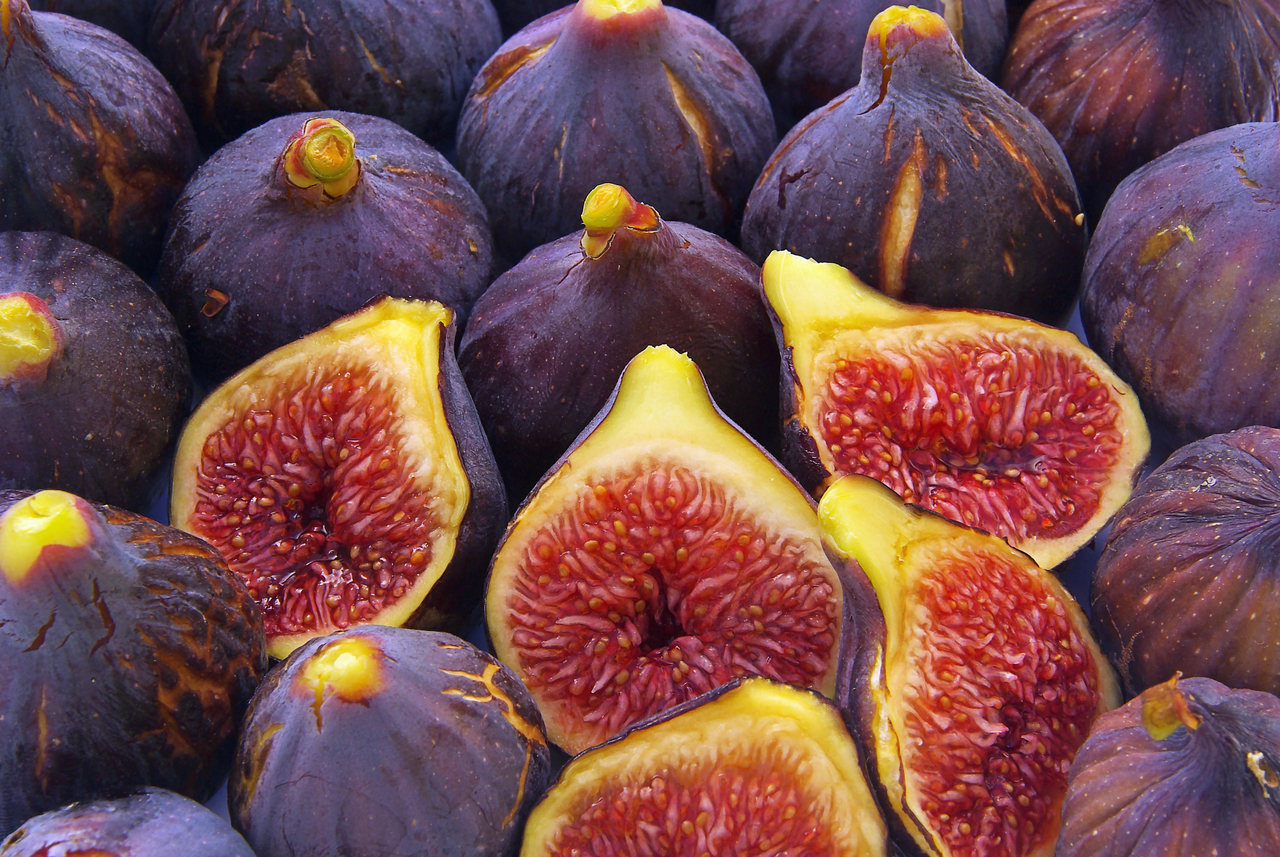
    Recognized for its bulbous shape with a small opening, the ostiole, at its base, the common fig is the edible fruit of the ficus carica—a flowering plant species in the mulberry family. 
     

    While figs hold a special place on Sicilian dessert tables, they’re rich in potassium and calcium, which benefit bone health. The fruit even provides significant amounts of iron, potassium, and magnesium.


    What’s not to love? It’s no wonder many gardeners choose to grow fig trees. 


    “It’s a plant we’ve been connected with for a really long time, which is why people become so fascinated by it,” says One Green World Nursery Manager Sam Huber. “We share a deep, rich history with it, and it’s such a unique plant that comes in many forms. It’s exciting to find one that thrives in your area. And it’s fairly easy to grow, too.”  


    Oregon-based One Green World sells a variety of so-called Mount Etna Sicilian figs, including the Sangue Dolce and the Natalina. They also sell a fig called the Chicago Hardy, which is originally from Sicily but easily takes root in colder areas in the northern U.S.


    Sam and I recently had a chance to chat about all things Sicilian fig-related. 


    Tell us about One Green World.

    The nursery was built on extensive plant exploration and searching the world. With the advent of the internet and the availability of so much information, more varieties and cultivars are available than ever before. We’ve been continuing in that tradition, looking for new things both here and abroad.


    You grow Sicilian figs. Can you share more about your offerings?

    The lines of where things developed and whatnot are a little bit blurry, but there’s a loose grouping of a certain type of fig, a smaller purple fig with a red interior that just gets called the Mount Etna figs. It’s very similar to the ones people have been growing for a long time in Sicily. There, they’re grown at 1,000-2,000-foot elevation—so high in elevation that those varieties do well for more northern growers. It’s been super cool to see how they thrive in Sicily, of course, but also here.
     

    They’re just really wonderful. Everybody likes different things. I really like the dark, jammy figs with the red interior. Sicily also grows a white one that’s more of a honey fig. And, of course, there are just wild ones growing everywhere. The fig has just naturalized around much of the Mediterranean and California.


    Figs have two crops: the breba crop, which ripens on previous years’ wood, and the main crop, which is on new growth. Etna figs have been such a winner for folks in more northern climates because they may have a touch more cold hardiness. 


    In Oregon, we don’t typically get cold enough to have killing frost that would kill off wood on our fig trees. Because they ripen the main crop really early, it’s on the new growth. But there’s a fig called Chicago Hardy, which is just another Mount Etna type that was found in Chicago and hardy enough to withstand some winters there. 


    What’s unique about them is you can have them get frosted back really hard, or people will do extreme things to overwinter them on places like the East Coast, like cut them back really hard. Some people will even tip them over and bury them, and then the trees still shoot out new growth and produce figs that year. Because the main crop grows all on the new growth, all you need is something that’s sending off new growth because they ripen so early and don’t need as much heat coming from a higher elevation place. It makes it a good, reliable one for folks who are more on the fringe of where figs would otherwise grow. 

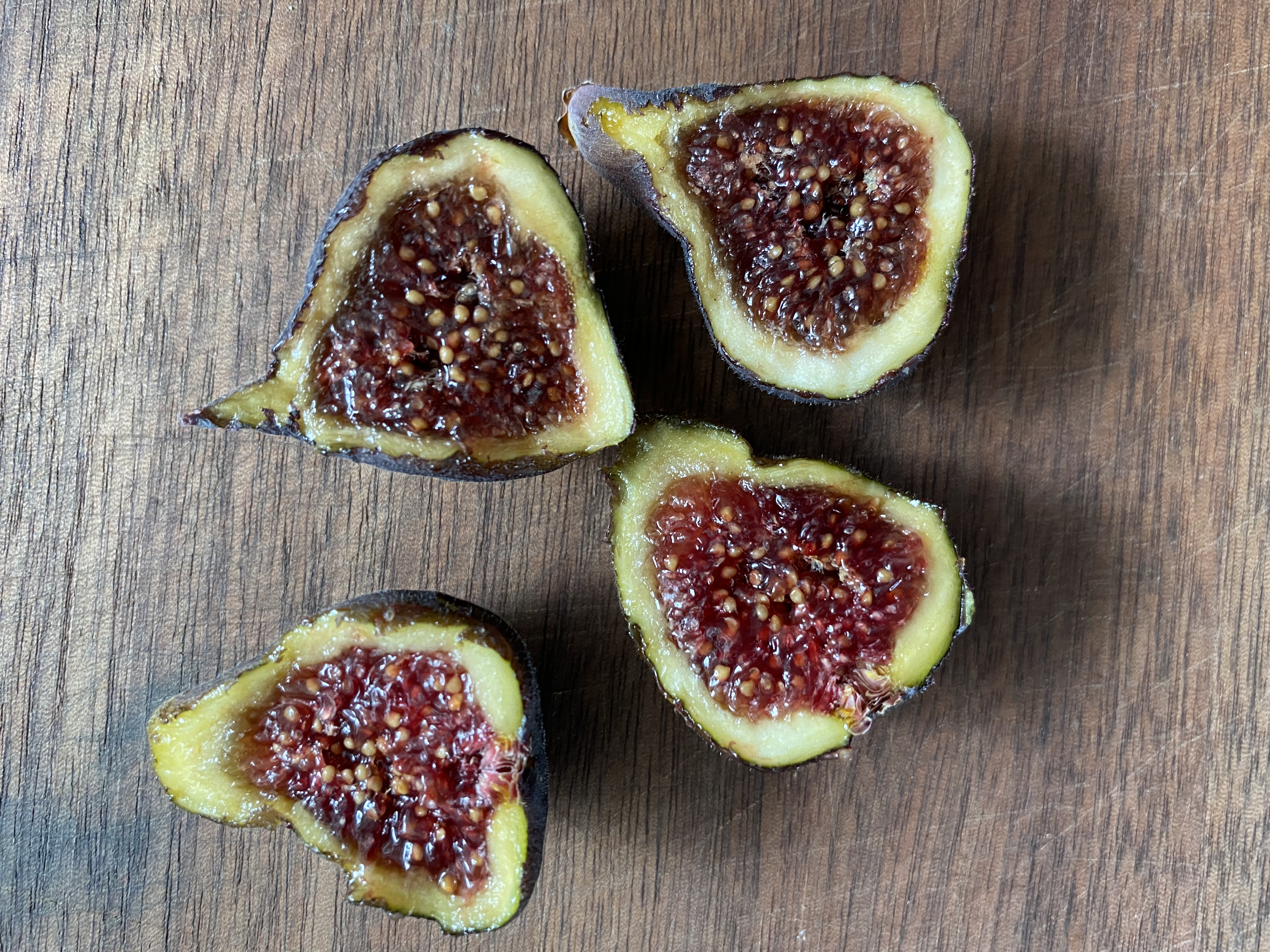
    Mount-Etna-figs.jpg


    What are the ideal conditions for growing Sicilian fig varieties?

    The Mount Etna ones, in particular, are adaptable. But if it gets wet in the fall, the fig will just split. Generally, it’s a dry summer climate that helps all figs thrive.


    It’s similar to where we grow grapes in the world. The Mediterranean climate of wet, mild winters and then pretty warm, dry summers concentrates the flavor and prevents the fig from splitting. 


    The fig isn’t actually a fruit; it’s this weird inside-out flower. So it’s very different when it’s ripening. It’s very easy for it to split if there’s too much water or after it’s been dry. When you get a big heavy rainfall, you’ll sometimes see that little eye of the fig, the ostiole, split open. 


    So fig trees generally need a dry climate with enough heat units; you need a good bit of warmth to ripen most varieties. We’ve been searching for ones that do well in cooler climates, but typically, if you’re in California, they can ripen way more than we do in Oregon. It needs a dry summer and a mild winter—not so cold that it kills off the tree. Because below zero, they get pretty damaged.


    Which regions are best for growing Sicilian figs?

    Oregon’s Willamette Valley will probably be one of the best spots outside of California, which is just the ideal fig-growing region in the country. 


    Most parts of the continent don’t have the dry summer that we do. But people grow them on the East Coast; there are many old fig trees on the East Coast because people brought them when they were emigrating. That’s encouraged growers there to continue finding hardy varieties.


    It’s a classic story: People who sneaked a fig tree in with them. And so that’s why you have all these various trees of unknown origin that were planted by immigrants way back in the day and are still surviving. Then, people go and clone those that proved themselves in harsher climates.  


    What are some ways to enjoy figs?

    Certainly, fresh eating is one of the best ways because it’s one of the more fragile perishable fruits when they’re perfectly ripe. But once your tree’s really cranking, there are more figs than you can just eat fresh. 


    Aside from fresh eating, people make jams with them and make dried figs. Drying figs is one the best ways to preserve them so that you have those carbohydrates and sugars for wintertime.


    People get creative, doing just all sorts of weird things. There is a brewery in Texas called Jester King, where they could not get enough figs. They used them to make fermented beers with all these different fruits thrown in.


    The possibilities are somewhat endless. People make concentrates and different syrups from them, but I feel like jams and dehydration for dried figs are probably the most common.


    What do you want people to take away when they buy a One Green World fig tree?

    Above all, we just want people to be successful in their gardening. Planting a tree is a pretty big commitment. They’re not super cheap, and you have to dedicate water and energy to keeping them alive. 


    During the COVID pandemic, when all these people started getting into gardening, people would come to us having never grown any trees before. And they’d always want to grow peaches, nectarines, and apricots, some of the most delicious, tasty fruits you can grow. But those, in particular, do poorly here. And so we would always say, “Why don’t you try growing a fig, a persimmon, a grape, or something that’s just a little easier and better adapted for our part of the world?” I feel like we’re often telling folks just to learn to love the things that really want to grow well here.


    Aside from just really wanting people to succeed with their gardens and grow something that they’re going to find success with and be really happy with in terms of it being reliable, easy, and delicious, there are so many stories attached to all these things, as there have always been with plants. It’s just a cool way to preserve stories, whether they are more recent or older ones. And for us, too, it’s like a botanical journal. When we’re on these trips and collecting things or doing road trips around California, they really encapsulate a time period for us.  


    Fig trees have deep origin stories; maybe that was the tree from the Garden of Eden. We’ve been intertwined with this plant for a really long time. 


    If you enjoyed this article, consider subscribing to my newsletter for more content and updates!
  • SF Festa della Madonna del Lume Queen Carries on Family Legacy

    SF Festa della Madonna del Lume Queen Carries on Family Legacy

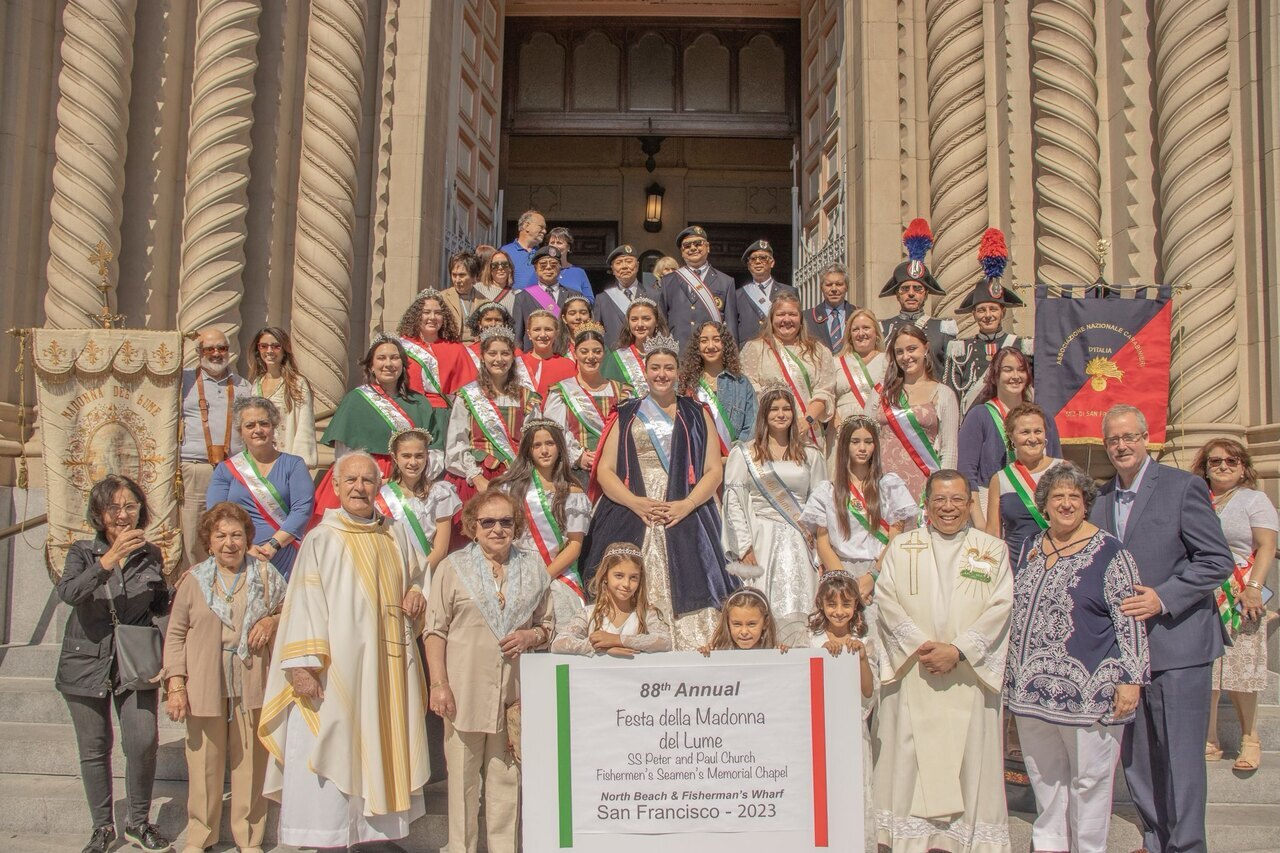
    For 89 years, San Francisco’s La Società di Maria Santissima del Lume has organized Festa delle Madonna del Lume, a grand celebration/memoriam patterned after the original held in Porticello, Sicily.


    In addition to serving as a Sicilian-American festival dedicated to Porticello’s patroness, the event honors fishermen who were lost or perished at sea. 


    Sicilian-American Brianna Dorio Wraa’s grandfather was one of those lost. His daughter, Brianna’s mother, was just 11 years old when his fishing boat was caught in a swell, and he disappeared off the coast of one of the Farallon Islands. A few years later, the then-teenager found comfort and fellowship within La Società di Maria Santissima del Lume and began attending the group’s annual Festa. It’s become a family affair. 


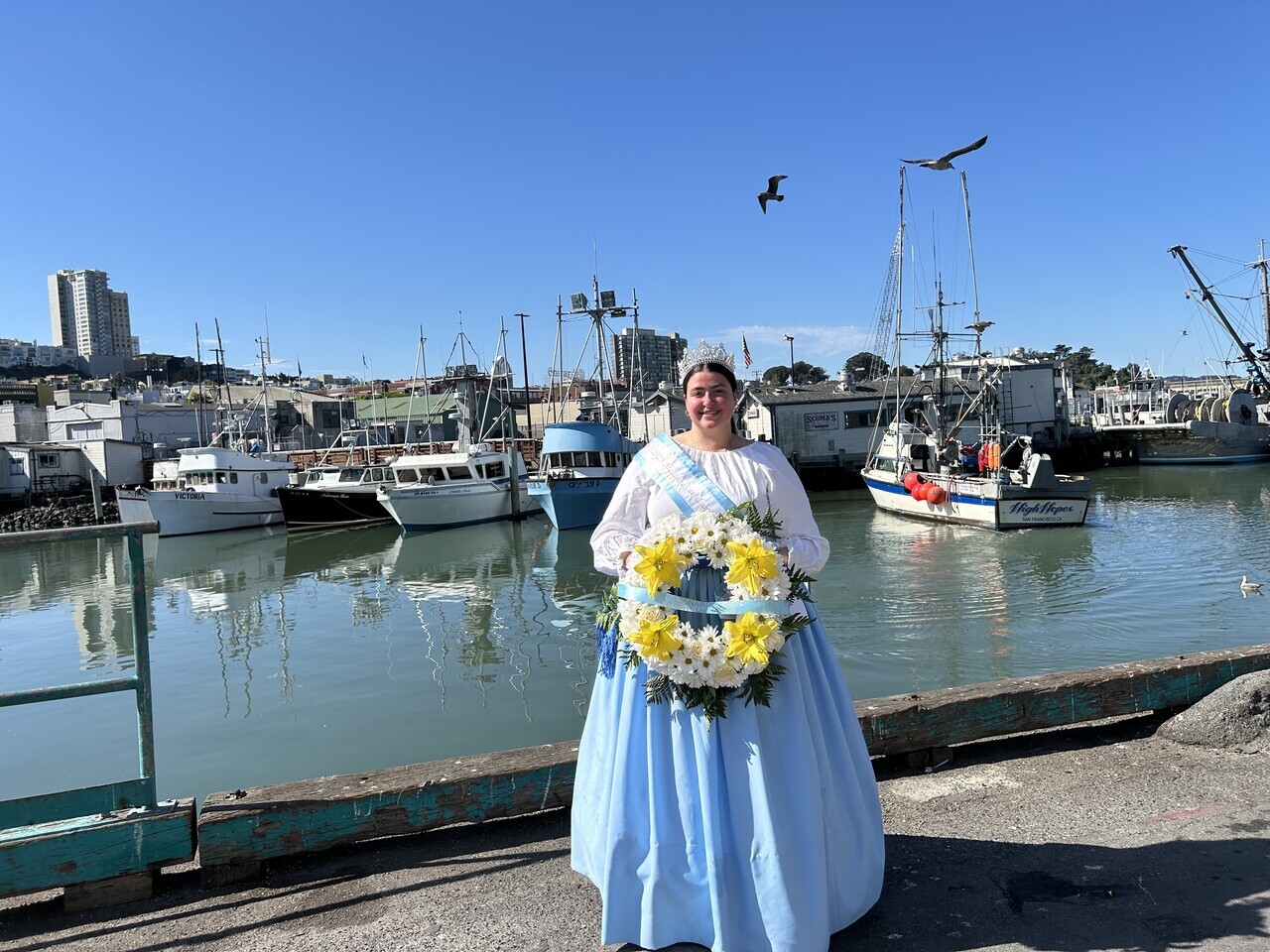
    Last weekend, Brianna proudly stood before her community for the second year in a row, wearing the crown of Festa della Madonna del Lume Queen. For her, it was an honor and a way to pay tribute to her grandfather’s memory. Next month, it will be 50 years since his disappearance. 


    Following the festivities, I caught up with Brianna, who is pursuing a degree in communications studies with a minor in human resources management at the University of Nevada-Reno, to chat about the significance of the event, how she became Queen, and her fondest Festa memory.  


    How did you become Festa Queen?

    For me, it was a little different than normal. My family has always gone to the Festa della Madonna del Lume, and we always saw the queen and the princesses, and everyone wanted to be that. 


    Knowing that it was coming up on 50 years with my grandfather’s passing, I wanted to do something to honor his memory more than just going to the event. So, I reached out to Rose Cannizzaro, one of our co-presidents.


    She said this was great because many people in my generation aren’t really focused on preserving the tradition. They usually have younger queens—middle school to high school-aged range—which is great, but when they’re finished, they still have a bunch of school left. There’s only so much you can do when you’re a kid. 


    But as an adult, I knew that I wanted to preserve this. I want to make sure that tradition continues for as long as possible. I know it means so much to my family. There are so many people for whom it means so much.


    When I joined the committee last year, I immediately started running. A couple of months after I joined the committee, they were having a fundraiser. We got raffle baskets, and we got the centerpieces done. And they were impressed that I was able to get so much done in such little time. Rose and Antonia San Filippo-Ferretti are not only co-presidents of the organization, but Antonia was also the queen and maiden director.


    Both called me on a three-way call, and they said, “We would be honored if you were our queen.” It was definitely a surprise. I said, “Oh my gosh, I’d love to; I’d be honored.”


    This organization is special for two reasons. One reason is to honor the Madonna and the very religious aspect. The other side is to honor the fishermen like my grandfather, who were lost at sea. It just meant a lot to be Queen. 


    I was able to find girls to be maidens for the court. I’ve expanded the court, so now we have six maidens. (Last year, we had three maidens.) And we already have girls talking about joining next year. It’s nice to see that progression.


    I think the committee was just so impressed that I was able to do so much being so young and being so dedicated already that they were like, “This girl is the perfect example of what it means to be dedicated, to honor our organization, and to portray our organization in a great way.”


    What are your responsibilities as Queen?

    I actually changed the way that Queen is thought of. In the past, it was really just for the events and to have a young representation there. So, there weren’t really any roles associated with it before I came in. And I set things in stone for the future in a way because, besides being Queen, I am still on the committee and go to the monthly meetings we have. I also am one of the fundraising chairs. So, I work with Antonia to find sponsors for our events.


    I try to get the word out. I am the person who runs our social media, our Facebook and Instagram. I am also a co-director of the court. I am super involved, and I will stay involved. And especially with next year being the 90th year, it’s really a huge year for us. 


    What does Madonna del Lume mean to you personally?

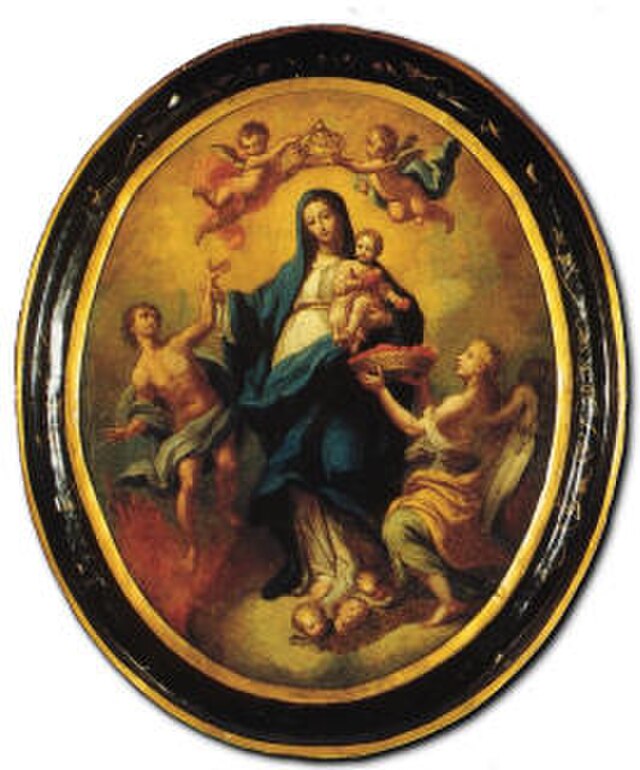
    People always talk about how Madonna de Luma shone the light down on the fishermen to help bring them back home. The Madonna can mean so many different things, but for those from fishing families, that’s the most heartfelt part. Part of the reason some people come is because of the fishermen who never made it back. I grew up hearing my mom’s stories. She was 11, so you know what’s happening at that age, but you don’t at the same time. I remember her talking about how, in the case of my grandfather, he was just going to show his friend and his friend’s son how to do his line of work on a new boat. He was a drag fisherman. 


    A swell just came, and it was too big for the boat they had. The Coast Guard searched 24/7 for two weeks, and then, after those two weeks, they called it off.


    It was hard. My grandmother was a stay-at-home mom, and she was a widow at 32. She had to not only take care of her children but also compose herself in a way after losing the love of her life.  


    Our organization is super-small compared to Porticello’s. The entire procession is huge and so focused on the Madonna. I think our organization finds a way to do both.


    There are many ways to pray to the Madonna because she is the Mother of Light. It’s not just about fishermen returning to shore. It’s also about when there’s so much darkness in your world, and you need a beacon of light or that light at the end of the tunnel mindset. She is that.


    A woman from one of the families associated with our organization went through several miscarriages, and a family member prayed to the Madonna. After they started praying to the Madonna, she got pregnant and was able to conceive and carry to full-term a child. 


    I know it means so many different things for so many different families. That’s something that’s great about the organization: It could mean so many different things, but we all find our way back to the light at the end of the tunnel, in a way.


    Can you share a special memory from a past Festa?

    Next month is going to be 50 years since my grandfather was lost at sea. I actually had a wreath made in honor of him and surprised my mom with that. And she absolutely had no clue. 


    For the past month, we have been running around doing a bunch of different things to get ready for this Festa. She kept saying this year, “I need to get a wreath made. I need to get flowers. I need to do this. I need to do that. I need to do all these things.”


    Because I’m in Reno, I flew on Thursday night and had Thursday and Friday, and then the Festa was on Saturday and Sunday. So there wasn’t really a lot of time to get flowers or make a wreath. I remembered someone I know, a beginner florist, and I asked her. She had never done a wreath before, and she was like, “I can try, but I’ve only done bouquets.” And I was like, “Anything is better than nothing at this point.”


    So we worked together, and it turned out amazing. My friend Gracie came in on Saturday to spend the day with us, and I was like, “Hey, on your way to my house, can you pick up this wreath I had made from my mom? It’s a surprise.”


    I knew my mom was so stressed and worked up. On Friday night, she said, “I never got flowers. I never got a wreath made.” And she was really upset about it. 


    Then my mom walked into the living room Saturday morning, right before we were about to leave, and she saw the wreath and said, “Wait.”


    She turned to my friend and said, “Did you make this?” 


    Gracie said, “No, Brianna had it made. I just picked it up.” My mom started bawling. 


    Obviously, you don’t want to make your mom cry, but in a way, I think the rush of emotions just hit her. 


    There were also a lot of overflowing emotions just because this is something I’ve always wanted. Being Queen of this organization, representing this organization, and representing my family have always been very important to me. 


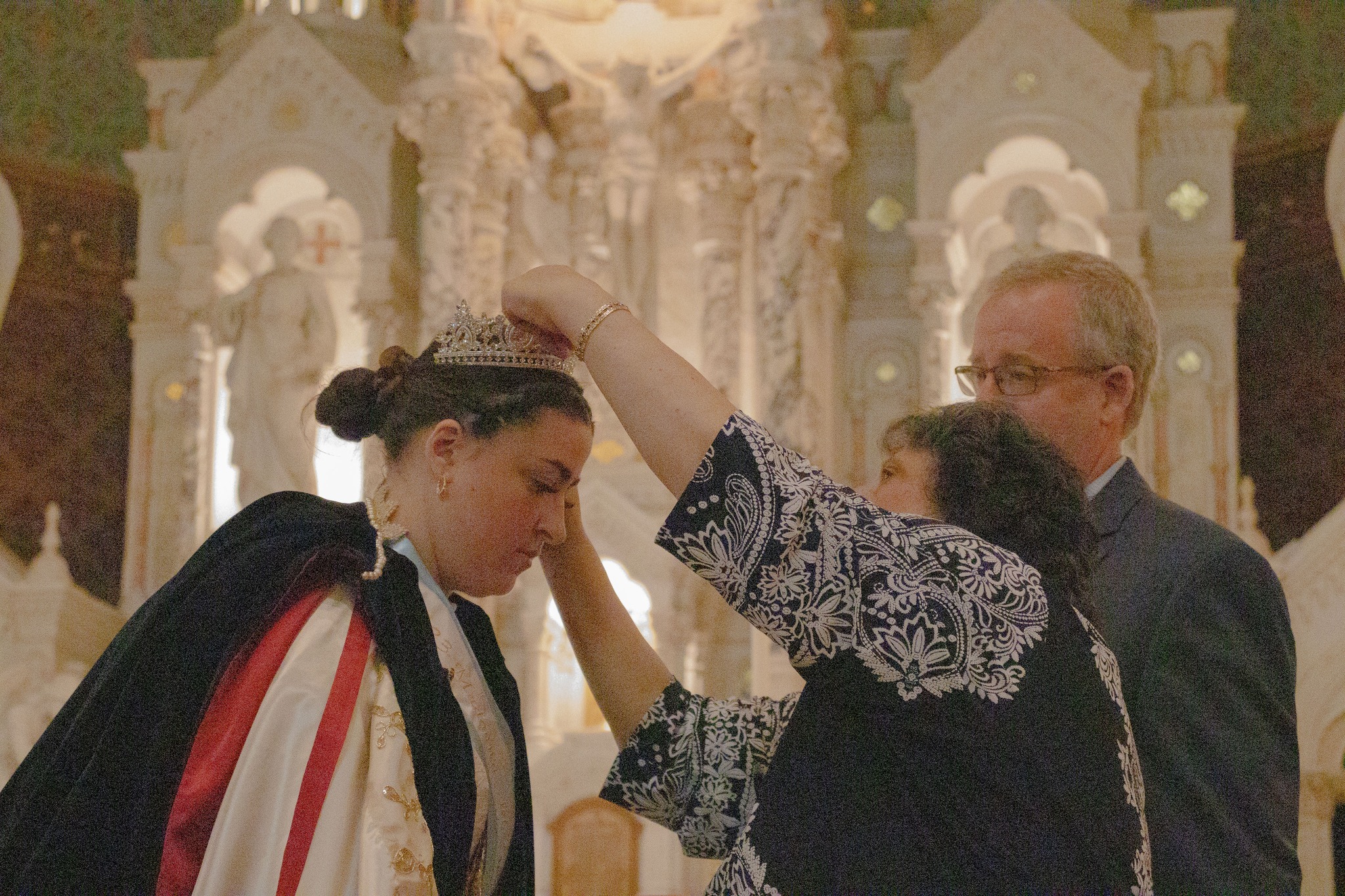
    Usually, they have the outgoing queen crown the incoming queen. But last year, because they found out my family’s history and that my mom had recently just finished radiation for breast cancer and had missed the year prior, they asked my mom, “Do you want to crown Brianna?”


    There’s a picture of her crowning me in Saints Peter and Paul’s Church. Those are two memories that I’ll definitely always have.

    Mom-crowning-Brianna-.jpg


    What do you hope to share with the broader community?

    Even though everything is about being Sicilian and Italian, we are inclusive of everything else. I will also say that even though we love our traditions and keep to them as much as possible, it’s so great to see us expanding. And I know that next year, being the 90th year, it’s going to be our biggest year yet.


    We’ve already talked to different organizations about creating an entire gallery for next year. It is going to be really exciting to share all the past photos and commemorate the fact that this has been happening for 90 years. We’ve always been a smaller organization, and it comes together. We love our traditions, but we also love creating new traditions.


    If you enjoyed this article, consider subscribing to my newsletter for more content and updates!
  • Memoirist Suzanne Lo Coco Shares Secret Dough

    Memoirist Suzanne Lo Coco Shares Secret Dough

    Restauranteur’s daughter and former restaurant owner Suzanne Lo Coco doesn’t recommend people get into the restaurant business.


    “You need a lot of raw talent, and you need to be willing to put in all that time and hard work and long hours and miss weddings and parties and everything else and have your hands burned several times over and still work through a shift,” she says. 


    She’s done all that and then some, having run the popular La Fornaretta in Pasadena, California, for nearly ten years before new landlords purchased her lease in order to repurpose the building. She also watched her father’s challenging rise from immigrant to successful owner of Lo Coco restaurants


    Still, despite their mother’s misgivings, Suzanne’s sons, Gian Luca and Gilberto Di Lorenzo, have carried on the tradition at La Fornaretta in Newcastle, California. And Gian Luca has invited Suzanne to join him in a new pasta-making venture he’s started with her brother Frank.  


    “I feel very complimented that they asked me to do that,” Suzanne says. 


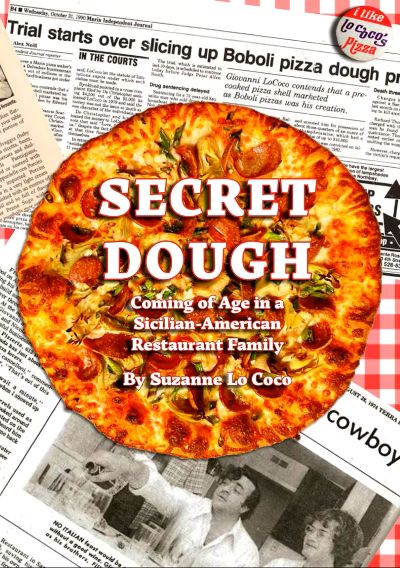
    There will undoubtedly be more stories to tell for this Washington resident, who recently published the deliciously entertaining memoir Secret Dough. Drawing from the wit and wisdom of her late father, Giovanni Lo Coco, Suzanne shares her journey to self-discovery flavored with Sicilian traditions, relationship drama, and humorous stories. She’s even thrown in a handful of recipes to savor between page turns. 


    Suzanne is what we call a paesana. Giovanni came to the U.S. from Porticello, Sicily, the same village as my grandparents, and Suzanne has returned often.


    We sat down for an entertaining chat about Porticello, the book’s namesake dough, her writing inspiration, balancing personal and professional life, her favorite Giovanni aphorisms, and what she hopes readers will take away.   


    What are your memories of Porticello?

    The first time I went there, I was a baby. My parents drove across the United States and took the Michelangelo ship to Napoli and then to Sicily. They were there for two months, and I have absolutely no recollection of this trip whatsoever.


    When I was 10, I returned with my dad for two weeks. When we got on the plane and took Alitalia from San Francisco to Rome and then Rome Palermo, he ordered me my own bottle of Asti spumante as soon as the plane lifted off the ground.


    And he says, “This is an Italian plane, and now you are in Italy. The air… It’s not America anymore. The air doesn’t belong to anybody. Now we are on an Italian plane, so we are in Italy. You can drink with your papà.”


    The flight attendant didn’t even bat an eye. He brought me my flute and bottle, and I drank that whole thing. Then, I crashed for several hours.
     

    Every day when we were in Sicily, we’d drive from Palermo to Porticello and hang out. And everything is kind of mind-blowing to an 11-year-old who has only ever been in America, and all of a sudden, you’re in Sicily.


    I remember that at that time, there were a lot fewer cars and less traffic. And there were still women laying out those giant pieces of plywood propped up on sawhorses used to make tomato paste.


    I remember swimming in the sea with my dad every day and him diving for ricci, sea urchins. I couldn’t believe how long he could stay underwater! His cousins made pasta con ricci with his catch.


    I remember going to the open fish markets—those giant swordfish on display made such an impression on me. Every town had its own frutta e verdura guy and fresh fish stand. And then, just randomly, there’s this popup with a very round man under the tent tossing fresh octopus into these giant vats of boiling water with lemon halves bobbing around on the top. There are no women, just men at the counter that is set up with beautifully painted ceramic plates, lemon wedges and salt shakers. They are all spouting off in Sicilian, yelling and talking all at the same time while eating their octopus.


    My dad stuffed things in my mouth throughout that whole trip. He stuffed a piece of octopus in my mouth, and I was horrified. They cut into the brains and that brown mushy stuff… Oh my God! I just remember swallowing it whole.


    I remember the first time I had pane e panelle, and then I had to have it every day. I just loved the arancini and eating ice cream every day.
     

    So, for me, when the plane lands in Rome… Sure, you’re in Italy, and you’re excited. But when the plane flies into Palermo, I feel like I’m at home. It really does pull on your heartstrings to go there, to be there—the sights, the smells.


    After my dad retired, he spent half the year in Sicily. He happened to be there when he passed away, so we buried him there. Now, when I go to Sicily, I feel like I am visiting him. I’m so happy that he introduced us to this magical island and that it is part of our lives.


    Tell us about your family. When and why did they leave Porticello for California?

    My grandfather Gaetano Lo Coco was a professor of philosophy, but he was also, I guess, very instrumental in local politics and trying to advocate for the fishermen. His father was a fisherman. 

     
    My grandfather used to own the land where Solunto is. It was full of olive and citrus orchards, climbing up the mountain behind Porticello. He was not a businessman or materialistic in any way—he was a true philosopher. 


    Before selling the land, my dad’s dream was to build a pizzeria and nightclub at the top of the mountain. My grandfather did not support this idea, which was very upsetting to him. For this reason, he decided to leave for America to pursue his dream of owning his own business. Funny—eventually, someone opened a pizzeria atop that mountain and became very successful!


    When my father left, he ended up living with cousins for a couple of months in San Francisco’s North Beach, where he had to teach himself English. He worked three jobs, seven days a week, both lunch and dinner shifts at various Fisherman’s Wharf restaurants.


    He met my mother about a year after he came to the States. They ended up getting married very quickly and starting a family. Shortly after they married, his cousin Domenic, whom he had lived with, recommended, “Giovanni, if you could come up with a really great pizza recipe, you will be very successful.” 


    Domenic planted the seed in his head: “I need to come up with a pizza recipe.”


    After a visit to Jackson, California my dad fell in love with the town, as it reminded him of scenes from old Western movies he had grown up with. So they moved there and opened their first pizzeria. That’s where his secret dough recipe was born.


    Let’s talk about the significance of that dough; it’s what you named your memoir.

    So, there is a whole chapter on that in the book.


    My parents divorced in 1977, maybe ’78. Afterward, a gentleman named Eugene deChristopher came into the restaurant. He had been eating Lo Coco’s Pizza in Marin County. He actually first approached my uncles, and they sent him over to my dad. So, he came into the restaurant in Pleasant Hill.


    So Eugene comes to the restaurant and tells my dad, “This is a great product, and I think we can do something with it. Have you ever thought about marketing it like this or that?”


    Initially, my dad thought, “Well, maybe we should open up franchises.”


    At the time, you had places like Pizza Hut and Shakey’s and this and that. But still, if you go in and order a pizza, it’s going to take some time. You can’t get a pizza at the same time as a hamburger, right?


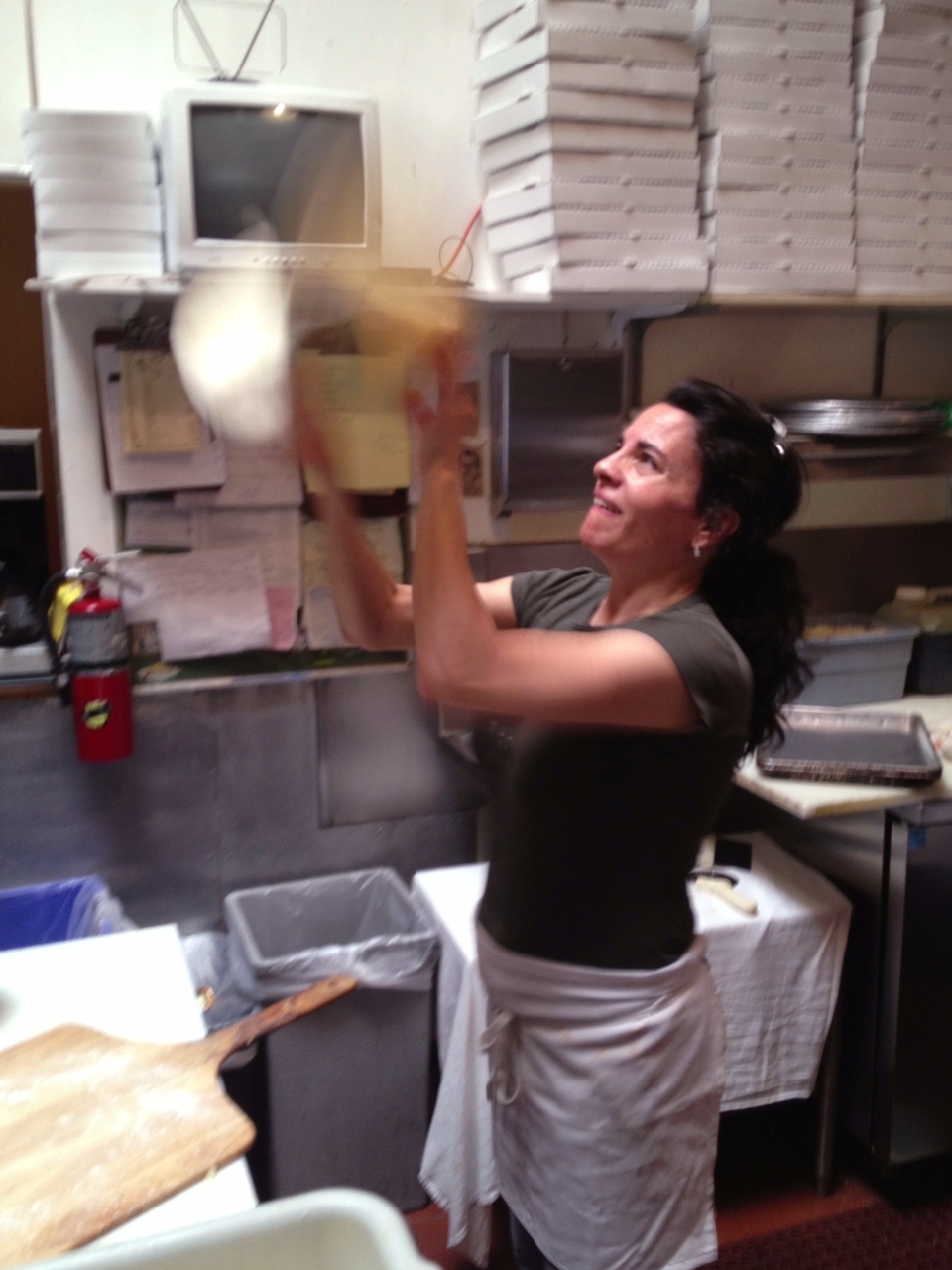
    But my dad thought we could cut some of this production time in half by having a crust that’s already half-baked and ready to be topped. He came up with this idea to speed up the pizza process.


    He originally thought, “We’ll start with universities and make all these really small, self-serve pizzerias.”


    The idea evolved from there.


    Then Eugene said, “Well, we could package it. And then what about selling it in grocery stores?”


    They created a company that was originally called PizzAmore.


    Meanwhile, they are still in the developing phase, coming up with packaging ideas and reaching out to different companies for meetings. Eugene is sending in his son all the time, who hangs out at the pizza counter and watches night after night. One night, he was watching my dad make pizza and asked, “I don’t understand, Giovanni; how do you get those bubbles on the crust?”


    My dad, with his thick accent, responded, “That’s the boboli—the cheese—it melts on the crust and makes the boboli.”


    The Boboli chapter of my book illustrates the “origins” of the pizza shell and the partnership between my father and Eugene. The company has since sold many times, and we wish them well.


    What inspired you to write your memoir?

    I was in my first marriage, and we were going through a very rocky time. Someone gave me Ruth Reichl’s book Comfort Me with Apples, and it really inspired me.


    I thought, “I have stories like this!”


    So, I started writing, having been inspired by her books and also just as an outlet. And I always enjoyed writing.


    I always enjoyed creative writing classes and writing term papers in school. I enjoyed the whole process of crafting a good story. Growing up in the restaurant business, one is naturally groomed to become a storyteller.


    I interviewed my dad a lot when I started that process over twenty years ago. But this book is not that book. I did finish that. Many years later, I went back to school, and with all the required writing and reading, I sharpened my skills.


    A couple of instructors had pulled me aside and said, “Do you do a lot of writing? I have to tell you, it’s really a pleasure reading your papers.”


    I went back to school at 42 years old. I had an AA degree, but it still took me four years to get my BA.

     
    I was raising kids and working, so I couldn’t take a full load. I’d take three or four classes at a time.


    Two years into school, I divorced but continued working at the restaurant until I got my degree. A few months before graduation, I met and started dating Stuart, who I eventually married. After we married, we moved to Tahoe and bought these two little houses. We lived in one of them, and I rented the other on Airbnb. Early on, one of my first guests was Cheryl Angelina Koehler, from the Bay Area, who was the publisher, editor, and designer for Edible East Bay Magazine.


    Having had many false starts on writing a book, now that I had the time, I once again started dabbling in writing. I held so many stories in my head. I said, “I really want to do this.”


    So when Cheryl checked in, my mind went immediately to” I’ve got to meet this lady!”


    But something about having her land on my doorstep ignited this hope and excitement within me.


    I thought, “Somehow, this lady is going to help me in this process, to get this going, and to get this moving in the right direction.”


    I was dying to say something to her, but I didn’t know how to approach the subject of my writing. Finally, just as they were checking out, she asked, “Can we meet your dogs?”


    We got into this conversation, and I asked Cheryl, “You’re from the East Bay. Well, do you go to Lo Coco’s?”


    We got into this discussion about Lo Coco’s and then into a discussion about my dad. When I get into Giovanni Lo Coco’s stories, I become very animated. I mean, there are so many good stories. He really was such a unique character.


    She says, “That is pretty incredible. You should really write down some of these stories. Just start writing. I would love to help you. You can send me what you have, and I’ll read it over.”

     
    I couldn’t believe my good fortune. Of all the places in Tahoe she could have rented, this was the one. It was a sign! I needed to finally write and try to publish my memoir.

     
    It took me months. I wrote about four chapters and then sat on them for months. I didn’t have the nerve to send them to her, and I didn’t think they’d be good enough.


    Finally, my husband was like, “You’ve got to send this to her. Just send them. What do you have to lose?”


    I sent her what I had, and she encouraged me to keep going. I continued sending bits and pieces and then decided to hold off until I finished the book. 


    After three years, I forwarded her the final chapters, and she said, “Oh my God, you finished!”


    That really excited her, and she went through it. Then suddenly, our process and our relationship shifted, and it really turned into a writer-editor relationship.


    Tell us about your book’s cover.

    Well, as you can see on the cover of the book I sent Cheryl, I wanted to incorporate a lot of these articles. It was her brilliant idea to plaster them all over the book in a collage-type way. That basically makes up the cover. And then I wanted to include an “I like Lo Coco’s Pizza” pin on there.

    Whenever my father’s restaurant was written up, they always wanted a photograph of our Lo Coco’s special, which was pepperoni, artichoke heart, green onion, and anchovy, because it was such a pretty pizza—just aesthetically, it’s just the colors.

    So, I said it has to be the Lo Coco special on the front. So, last spring, I went into my boys’ restaurant and made a pizza. My husband, who is actually a professional photographer, took the picture of the pizza.

    There are many old family photos peppered throughout the book. They help tell the story.


    You sprinkled pearls of wisdom from your father throughout the book. Can you share a couple?

    Each chapter starts with something that my father used to tell me, using sayings or dictums instead of telling you straight what you need to do, like “You always leave the taste of honey in the mouth,” meaning don’t burn bridges.


    Or “Be stupid inside and smart outside.” My dad was of the philosophy that the world was out to get you, so you need to stick together.


    How do you balance life’s personal and professional aspects in your storytelling?

    When I knew this book was complete and we were going to launch, I was overcome with a panic I did not expect to have when I started this process. It had been a pipe dream for so long, and now it was really happening. I was second-guessing myself. Maybe it’s not good enough; maybe people will hate it; maybe my family will be upset.


    This book is so different from my first few attempts. I was sort of all over the place—mingling dad stories with my own stories. After reviewing some of my work, my sister commented, “I don’t hear your voice.” She asked, “Is this about Dad, or is this about you?”


    I didn’t have much confidence in telling my story. I never even thought about that. But then I thought, well, actually, there is a lot to say and a lot to tell.


    I didn’t write the book to bash anybody, and I don’t bash anyone. But sometimes, people, including myself, are not shown in a good light because if you’re writing a memoir, you can’t just talk about the good things; that’s not realistic. Life is messy.


    What do you hope that people take away from reading your book?

    Well, I hope it humors and entertains people, and I hope it’s relatable. I hope it reminds people to treat themselves with more kindness and forgiveness. We all have dark periods in our lives; we make mistakes. I strived to be very authentic and offer readers an intimate glimpse into the life of a Sicilian-American restaurant family. I introduced intriguing, fun characters, like my immigrant dad and my ex-husband.


    There are so many misunderstandings about Sicily and Sicilians, and I hope this book helps Americans gain more appreciation for this place and its people whom I love so dearly. Finally, I hope that Secret Dough inspires people. As illustrated in the book, one can walk through a lot of crap and still come out smelling like a rose.


    I hope it makes people laugh and feel many emotions. It’s just a good, fun read.  


    >>Get Secret Dough here!<<


    If you enjoyed this article, consider subscribing to my newsletter for more content and updates!
  • Alileo Wines: Bringing Sicilian Tradition to Sustainable Boxed Wine

    Alileo Wines: Bringing Sicilian Tradition to Sustainable Boxed Wine

    Antonio Bertone arrives at our interview wearing a sweatshirt that reads, “Boxed Wine Is Not a Crime.” He hopes this slogan will stick and help people choose more sustainable boxed beverages like his Alileo Wines


    Cofounded by Antonio and his wife, Alexandra Drane, the Boston-based boxed natural wine company produces award-winning West Coast Sicilian varietals in partnership with Bertone’s family in Sicily and imports them to the United States, where they are distributed in Massachusetts, New York, Vermont, New Hampshire, and Texas. 


    Antonio shared what inspired Alileo’s creation, what makes his wines unique, and why boxed wine.


    What is your background?

    My father emigrated from Molise, and my mom emigrated from Partanna, Sicily. When I was in the second grade, my parents decided to move us back. My sister and I were born here in the United States. 


    My mom was very homesick. She was the only one from her family that left and came to America. My dad’s entire family ultimately ended up in the States. 


    So, we moved back, and I did my second to fourth grades of elementary school in Sicily and all my summers. Then, after my dad passed, my mom kind of moved back for half the year, so she would do June to December in Sicily and then December to June back in the U.S. That went on for 30 years until she passed. 


    What inspired Alileo’s creation?

    We were in COVID lockdown, and my mom was battling cancer. I think she felt this fear or sadness that once she passed, the connection to Sicily would start to degrade or disappear because I’m the last one left in America, representing the Sicilian side. 


    So, my wife and I started talking about starting a wine company with our cousin Rosario, a winemaker in Sicily. 


    Over the years, we have always joked about it at the dinner table and about how nice it would be. We all enjoyed those conversations in the kitchen. My kids got into it; they were like, “That could be so cool.”


    We came up with the name and the product’s USP. We started it, kicked into making-things mode, and worked with some designer friends in London to design the packaging. We started getting ready for the first shipment, and then my mom passed. The first shipment, our first 40-foot container, actually arrived on her birthday the following year. So it was pretty magical that the wine has this eternal connection to her. 


    What’s been your goal with Alileo Wines?

    For our wine, we wanted to make a low-intervention, natural wine. We wanted to make something that didn’t have junk in it and sugar and all the crap that gives you headaches. And we wanted to bring a younger audience into wine.


    Wine is as old as time. The simpler the wine-making, the better, in my opinion.  


    Your wine is low-sulfite. Why is that important?

    You’re dealing with a low-intervention wine, which has a greatly reduced amount of sulfites in the wine. The grapes themselves produce a certain amount of sulfites, and for you to get some sort of shelf life, you have to work with some form of SO2. So we keep ours at the bare minimum, which is around 55 parts per million. The standard natural wine is 150 parts per million. Commercial wines are in the four hundreds and five hundreds, which sometimes causes people headaches and some of the negative side effects of wine. 


    Why did you choose to box your wines?

    I come from a consumer products background. As a marketeer, I’m better against the grain than I am with the grain. Sustainability is a key discussion to get a younger audience interested. 


    Sicily’s on fire right now; it’s still 40 degrees Celsius daily. So it’s important to put your money where your mouth is and act in a more sustainable or responsible manner. 


    In my previous careers, I always drove toward a more sustainable point of view. In our product creation, our ambition is to be a B Corp, and the box in and of itself is way more functional. Once you open a box, the wine’s still good for 30 to 45 days. Transport costs are a fraction. Think about the overall energy it takes to make a glass bottle rather than just a cardboard box and a bladder. 


    People are like, “Boxed wine?” The rest of the world is fine with the format. It’s just in America and weird days at college, slamming Franzia that has forever created this stigma. So we’re here to change it.


    How does your wine compare to other Sicilian wines?

    I think my cousin has a special gift. When you hear about natural wines, people start to think funky and weird. And no knock to the really experimental winemakers, but we’re making a commercial product. We’re using grapes that are synonymous with our side of the island. 


    Our most popular wine is zibibbo macerato, a skin-contact wine made out of a grape that’s usually used to make dessert wine. Our zibibbo is very dry tasting and drinks super lovely, all because of Rosario and his skills. 


    I come from farmers. My mom’s side of the family were all grape and olive farmers. My dad was a farmer before he came to America. He had livestock. He had sheep, horses, and cows. So we ate incredibly well. Even though we had no money, we never knew that we didn’t have any money. Because we basically produced all the things that we consumed. So to make something that’s as simple but delicious and has its own profile and point of view, I think suits us. 


    What are your future plans?

    We launched boxed water as well. We were doing a lot of popups, and it was interesting to find the format. Single-use plastic, under a certain measurement, is being banned in a lot of communities around the oceans.


    Right now, we’re in five states. Funny enough, we don’t sell in Italy. Next year, we will start selling in six European countries. 


    We’re trying to grow and occupy a place in the wine retail channel that serves good food. We really want to have a good connection to good cuisine.  


    What experience do you hope people have with your wines?

    I hope they’re enjoying themselves, eating something nice, and having a nice conversation. That’s the overall goal: bringing people together. 


    If you enjoyed this article, consider subscribing to my newsletter for more content and updates!
  • Montclair State’s Sicily Study Abroad: A Journey Through History and Culture

    Montclair State’s Sicily Study Abroad: A Journey Through History and Culture

    There are many Italian study-abroad programs. These programs, primarily set on the mainland, offer students an opportunity to immerse themselves in the nation’s rich culture. 


    A few institutions, including New Jersey’s Montclair State University, offer a study-abroad program in Sicily. Montclair’s program has introduced both high school and college students to a place uniquely shaped by numerous rulers and wayfarers who left their mark on its food, customs, and architecture.


    I recently met with Montclair Department of History Professor Dawn Marie Hayes to discuss Study Abroad in Sicily, Italy.


    Dr. Hayes, whose family is from Palermo, also leads The Norman Sicily Project, which uses print, photographic, web, and geolocation technologies to document Sicily’s cultural heritage during the 11th and 12th centuries, a time of enormous transformation for the island. 


    We discussed her interest in Sicily, how Montclair’s Sicily study-abroad program got started, the impact of The Norman Sicily Project, and what she hopes people will take away from her work. 


    Tell us about your interest in Sicily. 

    I’m Sicilian American. I’m actually a dual U.S. Italian citizen. I was raised in a Sicilian-American house but wasn’t always interested in my Sicilian roots. And it took me quite some time to get around to actually being interested in them. I always joke that my high school offered three languages, and I took French and Spanish. I was not going to take Italian, which I didn’t want. But back in 2004, I received an NEH award, and I was studying at the University of Cambridge that summer. My husband, a software engineer, worked with a colleague, and we became very friendly with his family. They had just bought property in Sicily in a small town called Campofelice di Roccella. He said, before you go home back to the States, come to Sicily; we’d love to show you around.


    So we went, and my heart’s been there ever since. I get tears in my eyes just thinking about it. It’s an extraordinary place. 


    Where did the idea for the Study Abroad in Sicily program originate?

    I got my Ph.D. in ’98 and was a specialist in English and French, especially French history. When I went to Sicily, I was fascinated to see these medieval monuments, and after 12 years of college, I learned nothing about them. So, as a scholar, I started to become very interested in learning more about Sicily’s medieval past.


    At that time, compared to Sicily and Southern Italy, a zillion people were working on medieval England and medieval France. And so I decided to change my field of research very slowly, which meant learning Italian, especially the ability to read it, starting to make contacts, and getting a sense of the period’s historiography. And that took some time, especially since I was teaching full-time by that point. So, I wasn’t just a student anymore.


    As I was doing that, I also started to think about the vast number of Italian-Americans in this country. I was exploring where U.S. colleges and universities had a presence in Italy. And, of course, there are a zillion schools that have campuses in Rome, or they have programs in Florence or Venice, but as you go south of Rome, they become fewer and fewer. And in Sicily, there were just about none.


    So I went to Montclair’s administration – I guess it was in the fall of 2004 when I came back – and I pitched this idea: “We’ll be distinctive, having one of the few American programs in Southern Italy.”


    We had just received a significant amount of money at the university from an Italian-American gentleman, Joseph Coccia, who has funded an institute at Montclair.


    Another Italian-American family, the Calis, has been incredibly supportive of MSU for many years. In fact, we now have a music school named after John Cali, one of the university’s benefactors. 


    John’s brother, Angelo, was very proud to be Sicilian. And when he heard through the grapevine that I was starting this program, he wanted to come to campus and offer financial support. How often do you find a benefactor wanting to come to you? He did. And I was so grateful for that.


    Angelo gave the program $15,000 that year. He advised that the first 15 kids to sign up each receive a thousand dollars to offset their program costs. And that’s what we did. 


    In 2006, the program’s first year, I took 15 students, and it was fabulous. All sorts of things happened. They fell in love with the place. I fell in love with watching them fall in love. We were there for about three to four weeks and they really enjoyed it. 


    We went on a couple of field trips. We went to Agrigento and Piazza Armerina because I wanted them to see the Greek and Roman remains in Sicily. We went to Palermo, and I think we went to Monreale as well, but our base was always Taormina. I’ve been working with the same language school, Babilonia, in Taormina for 20 years now.


    I ran the program for a couple more years and then took some years off. But I recently started it up again, and we ran it last year, and we ran it this year. It’s been a joy. 


    You also ran a high school program. Tell us about that experience.

    This summer’s program was fantastic. I developed it last academic year and ran it this past summer with Dominique Houze, our Senior Director for Strategy and Program Development (Summer and Winter) in Academic Affairs. Many of the students actually had tears in their eyes the night before they left. They didn’t want to leave. It was nine days. They took one course and got three college credits for a course on Italian history, language, and culture.


    Before they began the program, I assigned them a book to read: Sicily: A Short History, from the Greeks to Cosa Nostra. So they came to Sicily with some background. They did some cooking. They did some Italian language learning, too. 


    They landed in Palermo on a Saturday, and we stayed overnight. Then, we did a walking tour of the Centro Storico before going to Monreale. By Sunday afternoon, we got back in our van and went to Taormina. 


    The night we were in Palermo, we went to a local restaurant, which was wonderful. They did karaoke. They had the traditional Sicilian samplers, and those who wanted to sing could sing.


    The next morning, we went to some of the UNESCO heritage sites in Palermo, Monreale, and Taormina. And so the round-trip airfare, the hotel in Palermo, the guided tours in Palermo, the trip to Taormina, and then the hotels in Taormina, all food, a boat excursion off Taormina’s coast, and then the field trips to Piazza Armerina, Agrigento, Syracuse, and Mount Etna, which was very active this summer, and three college credits—all of that we did for $5,650. In some schools, you would pay $5,650 just for three college credits. So I was really proud of that, and it was a success.


    Will we be doing it in 2025? No. The university wants to review a few administrative matters first. Unique programs like this require lots of planning and fine-tuning. So, we are on an administrative pause for summer 2025. But I am hopeful that as of summer 2026, the high school program will begin to run regularly. I will, though, be offering the college program in 2025.


    How is the college program different?

    The college program is run a bit differently (two courses instead of one). But one of the courses, HIST 299, “History Study Abroad,” is similar to the high school program. One significant difference between them, however, is that this is team-taught, and my colleague, Professor Esperanza Brizuela-Garcia, spends some time on the current migration crisis in the Mediterranean, looking at the testimonies of migrants who have arrived on Sicily’s shores. For this, they write essays as well as do some data visualization based on the information in the migrant histories they are assigned.


    They also do some travel journaling for me about how Sicilians have preserved and asserted their cultural identity historically, as well as about a particular experience they’ve had personally that they believe captures/reflects Sicily’s history and/or culture. Beyond this, they also spend some time in the classroom learning Italian and, in a typical Sicilian restaurant, learning how to make traditional foods.

    Why did you choose Sicily for these trips?

    There’s still not a great presence in Sicily of American colleges and universities, though this has begun to change over the past two decades. Yet, at the same time, the influence of Italian-American culture has been so profound in this country. For example, you could argue that The Godfather is, if not the most famous movie produced in the past 50 years, certainly one of the most famous. This movie has been followed by numerous other TV programs and films focusing on Italian-Americans and their culture.


    So, very often, Americans think they understand Southern Italian, including Sicilian culture, well despite what many of them have seen in the media as inaccurate and distorted representations. I want to challenge the perceptions promoted in various media—especially in TV and film. Are there problems in this region? Yes. Is there organized crime? Absolutely, yes. But that’s not all that Sicily is—not by far.


    Also, being in the Mediterranean lets them relax a little bit in a way that I think they’re able to absorb more because it is a slower society than if you are getting on and off subways in northern Europe, for example. I think the environment lends itself to connecting to the culture in profound ways. 


    The last thing I’ll say is that, compared to many other places in Europe, there hasn’t been much work done on Sicily (though this, too, has begun to change over the past two decades). So, even as a scholar, it’s important to me because it needs attention. It absolutely needs attention, and it needs English language scholars speaking with the natives there, which hasn’t happened often.


    You also run the Norman Sicily Project. Tell us about that.

    Back in 2019, I got a $50,000 NEH grant to map Sicily’s medieval monuments. What had happened, in a nutshell, is that as I was going to see friends in Sicily and leading these programs, I would stay on. I was able to visit these medieval monuments that most people never get to see because you have to find the person with the key, show up on the right day, etc. For years, I have been accumulating these images. I started to say to my husband, who is a software engineer, “We really need to make these available to the public. I feel guilty sitting on them.”


    In 2015, we started a project called The Norman Sicily Project. I got 50 grand, and we did a prototype. This particular NEH competition is very competitive; they have an 18% funding rate, and of that 18%, most of the projects are American-focused, which makes sense. But we did a good job with that money – credit goes to the fantastic team I worked with from 2019-2021 – and this April, I was able to win a Level II award of $350,000 to take the prototype to full implementation. 


    So, I have been traveling around forgotten parts of Sicily for many years, and my cousins in Palermo always say, I know Sicily better than they do because I go to these places where there’s no one but where there are these abandoned monuments. But that’s what I do. And so I’ll be doing that with a scholar and two graduate students from the University of the West Indies at Cave Hill in Barbados for the next three summers, too. 


    The project is an attempt to document medieval Sicily by geolocating its buildings and creating a genealogy of its people, having those two databases speak to each other. Because of the massive work by one scholar in the thirties, we were able to create the monastic database fairly easily. That was the focus of the prototype. Since then, I’ve begun to develop a database for the fortifications. Now, we are in the process of surfacing the churches, which is a massive task.


    I work with my husband, Joseph Hayes, on this. He’s the chief technical architect. But then I also have two Sicilians working on the project. One in a technological capacity, another programmer, Salvatore Buffa, who has his degree from the University of Palermo, and Alessandra Faranda, also an alumna of the University of Palermo and now a graduate student at Bocconi University, who does a lot of the translations and some of the outreach work. We also have Pratt Institute working with us, which has done some of the work on the project for free in the past through their UX/UI design program for their master’s students. They’ve given us a lot of really good feedback over the past couple of years, and now we have money to pay for people to actually implement that. So Pratt is on the grant as well.


    Pratt’s Dr. Craig MacDonald will be helping us identify grad students for the next three years. We also have Dr. Casey Allen from the University of the West Indies at Cave Hill, Barbados, who is a cultural stone specialist. And he and his students will be reading the stones of subsets of the buildings. 


    We’ve divided Sicily into thirds: the Val Demone, the Val di Noto, and the Val di Mazara. For the next three years, we’ll focus on a subset of buildings in each of these regions, with each summer dedicated to one region. We will study the remains with LiDAR technology and make reports available to the Soprintendenze in case they want to act on them. 


    We also have a mathematician on the grant, a colleague at Montclair, Dr. Deepak Bal. He is applying network analysis and different analytics using graphs to try to discern patterns between different places and people and places the human mind would not automatically pick up on. So, he’ll be applying them to see if there are relationships that have escaped us. 


    The project is pretty ambitious. As we go into the field, very often, we’ll start up conversations with locals, and they have a wealth of knowledge. One of the other things we’re doing with this project is capturing that local memory. When it comes up in the database, I’m indicating what’s been shared and whether it’s corroborated by a published source. Scholars could look at this and say, “Oh, look. Someone from the area has suggested that there are medieval remains—human or otherwise—buried in this location even though this information isn’t in the written record.” And they could look into it further. So it’s there, and it allows Sicilians to contribute to and participate in the reconstruction of their own history. 


    Down the line, we’re hoping to employ machine learning, maybe scanning the charters and attaching them to the people in places. The people graph right now is a bunch of spaghetti and meatballs. It’s very hard to read. This is one of the things that we’re working on with Pratt. 


    As of now, I’ve created records for about 1,350 people who lived in this Norman Society. This 150-year period was arguably Sicily at its finest hour. It was ruled by people who were ruling Sicily for Sicily’s own sake, and that gives me a special feeling for the Normans. They built up this kingdom, which was just extraordinary, and so we’re trying to reconstruct that special moment in this island’s fascinating and very long history through interdisciplinarity supported by the best tools technology offers at this time. 


    It’s an interesting project because it is so interdisciplinary. For example, the Italian government does very good work with seismic data, which we’ve been recording, too, as we attempt to signal the threats to conserving—and preserving—this built culture.


    With Dr. Casey Allen, we will also examine, based on our observations, whether wildfires are threatening what remains. Is it animals? Is it human beings? Is it Mount Etna? These are the kinds of things that we are doing. So, it’s a marriage of the humanities and the sciences. 


    Do you integrate certain components of the project into the study abroad program?

    Yes, I do try to integrate these. Ultimately, what would be really wonderful is to have Sicilian students work on this as well and teach them. One of the really cool things that Dr. Allen has done is help develop an assessment tool, the Cultural Stone Stability Index, that can be used pretty easily. You don’t need a Ph.D. in earth science to evaluate monuments or sections of monuments. This opens itself up to what my science colleagues call “citizen science.” And Casey Allen has been part of a team that has done this remarkably well in Jordan. 


    What’s important about this approach is that you can very easily go into economically underprivileged places like Jordan or even Sicily. You don’t need a gazillion dollars, and you don’t need PhDs to be around all the time, which gets costly, but you can train locals to do this stuff.


    Sicily has a wealth of locals who just really have an attachment to the place they live. I think it’s one of the most endearing things about that society. They love their towns, and so this is something that we can teach them as well. 


    What do you hope people will take away from your work?

    There are all sorts of challenges in higher ed right now. In a world where, for various reasons, we can struggle to reach our students, I find that this is a way I can have a significant impact on their young lives, and it reinforces in me those feelings that I have had since the time I decided to get a Ph.D. and become a professor. 


    I really leave there with satisfaction because my hope for my students is that they come to appreciate the South, realize that there’s incredible beauty there, and that they also leave with an understanding that the world is a big place and that I want them to travel again. I want them to leave with a sense of wonder and an interest in learning about other places, maybe more deeply about Sicily and Southern Italy, but also about other places, too. Ultimately, I want them to go on to share this experience and these desires with their own families as they move forward with their lives.


    An interesting aside. I had an MSU student couple who got married as a result of this program. They met in Sicily, fell in love, and got married a few years later. These are the kinds of life-changing experiences that I want my students to leave Sicily with.


    >>Learn more about Dr. Hayes’s and her work here.<<


    If you enjoyed this article, consider subscribing to my newsletter for more content and updates!
  • How Tomatoes Became the Heart of Italian Cuisine

    How Tomatoes Became the Heart of Italian Cuisine

    Tomatoes have become almost synonymous with Italy, but they had a long, incredible journey before they reached European plates. 


    It’s a topic that fascinated writer Clarissa Hyman, whose book Tomatoes: A Global History charts the origins of this vibrant and juicy fruit while covering topics such as tomato varieties, breeding and genetics, nutrition, and tomatoes in art. It also includes tomato recipes.


    Clarissa, who previously published Cucina Siciliana, a “cook’s tour” of Italy’s largest island, got her start as a TV producer, working on factual programs, documentaries, educational programs, and adult education. 


    She isn’t Sicilian (or Italian, for that matter), but she’s earned a reputation and awards for her skills in marrying food writing with lessons in history. At the heart of all of her works is a sense of curiosity and wonder: Just how did these foods make their way to global cuisine?


    I recently had the chance to chat with Clarissa about tomatoes. We discussed the tomato’s origins, the ways it spread, how the perception of the tomato has changed, and the fruit’s influence on food and culture. 


    Tell us how the tomato found its way to Europe.

    I became fascinated by the Columbus Exchange, of which tomatoes were a part. I was also fascinated by what happened even earlier: how tomato seeds traveled from mostly Peru and the northern part of South America up towards Mexico. How did they get there? 


    Once they got to Mexico, they found a home, a climate that really encouraged their growth and proliferation. Clearly, the Aztecs didn’t seem concerned about whether or not they were going to be poisonous or inedible in some way, and they took to them very readily.


    Franciscan Friar Bernardino de Sahagún wrote in a journal about all the different tomatoes he came across in Mexico. He went with the conquistadors as a missionary and wrote about hundreds of different sorts of tomatoes in different colors, sizes, shapes, and attributes. 


    When I read what he wrote, I thought, “This is so sophisticated, this understanding of the tomato’s potential and how diverse and varied it could be.”


    This is not something we think about in terms of the 16th century. We’re very arrogant in our day and age about how advanced we are. But in fact, there’s very little that’s not been done before. So that very much engaged me. 


    How the tomato actually got to Europe, to Spain, again, is another story in itself. How did the sailors and the ships actually transport these tomatoes? I mean, they were out to sea for such a long time, and tomatoes weren’t going to last. So, did they dry them? Did they preserve them? Did they just take the seeds? 


    I suppose anything that came from the Americas to Spain and Portugal was going to be precious in some way. It was going to be valuable; even if they didn’t know just what that value was, you couldn’t just throw it overboard. 


    History is never simple. It never works on one track, or often, tracks run in parallel. 


    Some explorers gave the royal families of Spain just about everything that they found. It was part of their job to bring everything over. Some people in the aristocracy were very interested in botanical things, cultivation, and horticulture, and they had beautiful gardens and skillful gardeners who were ready to experiment with plant things and see what happened. 


    Once tomatoes started to grow, there were others who wouldn’t eat them or weren’t interested. But there were also some very poor people who were grateful to eat anything, even if it was going to be a little bit dodgy. They were prepared to give it a go if it was cheap and easy and grew well.


    So, there were different roots for tomatoes becoming increasingly available in the marketplace in Spain. That’s where it all started in terms of European consumption of tomatoes.


    One of the main drivers of tomatoes being incorporated into European gastronomy and culinary culture was the monasteries and the friars and the priests, who had an amazing culinary dimension to their lives. A number of priests and monks wrote cookery books or recorded what they did in the kitchens of the monasteries. Because a lot of monks traveled around visiting different outposts of their particular order, they took this knowledge with them.


    One of the main ways that tomatoes started to spread around the Mediterranean basin was through trade, but there were certainly other roots in religion. The Jewish communities took this vegetable knowledge with them, even when other people were still reluctant. 


    Tell us about that reluctance.

    It was very pervasive and lasted a long time. A lot of people thought, “Well, we know it’s part of the nightshade family, so maybe it could be poisonous.”


    Early tomatoes were probably rather acidic and didn’t really have the sweetness that was bred into them eventually. So they didn’t like it. People didn’t know what to do with it. I think a fear of poisoning really prevented its rapid adoption.


    But bit by bit, people became a bit more adventurous. It’s so interesting how gardeners have been able to improve plants and turn them into something a bit more palatable, as well as cross-breed and encourage certain characteristics. 


    There are always a few brave souls somewhere who are going to try something new and radical and say, “Hey, look, I’m still standing. I ate a tomato.”


    How did tomatoes return to the Americas?

    The technological advance of canning again gave a huge impetus to how tomatoes could then spread back to the Americas in the form of tin tomatoes. And it was, again, the whole story of Italian tomatoes and Italian-American communities, which is a big story on its own because the canning came from a time when a lot of Italians emigrated to America at the end of the 19th century. There were a lot of Italian producers and merchants in Italy who saw that they could supply the Italian immigrants, particularly on the East Coast, with some of the foods that they remembered from their homelands, and tomatoes came full circle.


    However, there was also another route for tomatoes to become so popular in North America: people planted tomatoes or took tomato plants from Central America and Mexico up to California and Louisiana, often through the missions in California or through the French influence in Louisiana.


    Tomatoes were found to flourish in those more northern regions. And so that was another route, helped by the development of the railways, which could transport fresh tomatoes.


    How have tomatoes influenced global cuisine?

    You certainly can’t think of pasta without tomato sauce or a pizza without tomato sauce in some way. 


    The influence of tomatoes on global cuisine is incalculable. Where would we be without tomatoes? I can’t think of a cuisine or a culture that doesn’t use tomatoes in some important way now, which is extraordinary when you think the world ate perfectly well before the Columbus Exchange took place. And certainly in Europe, North America, and Asia, I mean, there was a very good diet. There’s a very good culinary culture in virtually every country in the world without a tomato. So it’s really quite extraordinary, the power that the tomato has had to transform virtually all our lives. And I think it’s because it’s something that can be consumed in so many different forms, and it’s worked its way into lots of different aspects of our life for good or bad. 


    You can think of some hideous tomato things: tomato-flavored crisps and even tomato ice cream. But overall, tomatoes have been a force for good when it comes to the food on our plates.


    I don’t mean to say every dish we eat has a tomato in it or is tomato-connected. Of course not. But it’s such an integral part of our lives now. It’s very hard to imagine it not being there. Certainly, when it comes to Italian food, it’s a marriage that has lasted for a very long time in terms of pasta and pizza.


    What are some varieties unique to Sicily?

    There is a variety called Siccagno that grows in western Sicily that isn’t watered. Any moisture comes from rain. They are the most amazing-tasting tomatoes. Then, there is a place in eastern Sicily where a very tiny tomato called Pachino is grown virtually on the beach in very sandy soil. They say they get their flavor from the sea, somehow from the aromas of the saltwater. The winds and the waves somehow infuse these tomatoes, and they’re brilliant.


    The Sicilians really appreciate different varieties and sizes and understand their uses. Some tomatoes are just for use in a sugo, and some tomatoes can be eaten in a salad with a little bit of oil.

     pachino-tomatoes-photo-by-Salmassara.jpg
    Pachino tomatoes photo by Salmassara

    You’ve mentioned that one shouldn’t refrigerate tomatoes.

    I met an Italian tomato grower, and he said to me, “You English are terrible. I really can’t believe it. You murder your tomatoes.”


    I said, “What do you mean by murder? How do you murder a tomato?”


    He said, “You always put them in the fridge. That’s the worst thing you can do with a tomato.”


    He said the cold destroys all the flavor and aroma. He said he’d never forget going to an English home. He went into the kitchen, opened the refrigerator door, and saw half a tomato wrapped in cling film. And he said his heart nearly stopped. 


    He said that in Italy, you buy a tomato and eat it. You don’t leave it in the fridge for a week until you’re ready to eat the rest of it.


    So I tell everyone that if they’ve got tomatoes in the fridge, take them out.  


    What do you hope people take away from your research?

    It’s such a fascinating story and one that is so largely unknown. It’s actually a little miracle, a little red round miracle, and we should respect it a lot more than we do. 


    >>Get Tomatoes: A Global History here!<<


    If you enjoyed this article, consider subscribing to my newsletter for more content and updates!
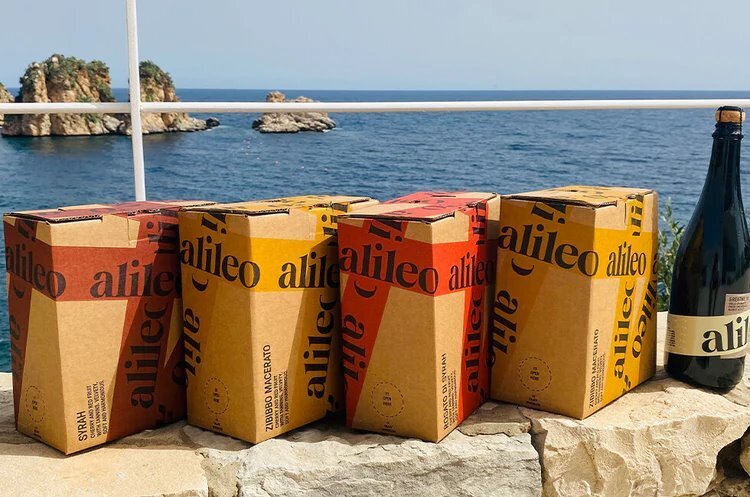
  • Madonna del Lume Connects Sicily and San Francisco Across Generations

    Madonna del Lume Connects Sicily and San Francisco Across Generations

    The biggest event of the year in Porticello, Sicily, revolves around the legend of the Madonna del Lume, patroness of the seaside village and protector of the sea. Since the 18th century, the whole town has gathered for a traditional celebration, which includes a procession of a revered painting of Mary from Chiesa Di Maria Santissima Del Lume through the town before it is loaded onto a fishing boat and paraded on the sea with hundreds of other fishing boats to its sacred shrine. It’s the main event of Festa della Madonna del Lume, which begins the week before the first Sunday in October and features fireworks, food, and festivities. 


    The festival serves as a backdrop to scenes in my debut novel, The Last Letter from Sicily (Storm Publishing, 2025), which was inspired by my grandparents’ story. My Nonna grew up in Porticello, where she met my Nonno, who was baptised at Chiesa Di Maria Santissima Del Lume and lived in the neighboring town of Santa Flavia. They later married at the Madonna’s church, so the building, the parish, and the patroness serve an important role in my ancestral story. It has remained dear to many other families, whose Porticello ancestors made the United States their home. Large contingents landed in California.


    For 89 years, San Francisco has held its own two-day Festa della Madonna del Lume, an event started by immigrant women from Porticello, Sicily.

      
    Saturday, October 5, includes a Mass at the Fishermen’s and Seamen’s Memorial Chapel, followed by a memorial flower ceremony at the sea to honor those lost or perished at sea. Sunday, October 6, includes Mass at Saint Peter and Paul Church, a procession from North Beach to Fisherman’s Wharf, a ritual blessing of the fishing fleet, and other festivities.


    Organized by La Società di Maria Santissima del Lume, founded by immigrant Sicilian women in 1935, the Festa is a time for families and friends to come together in memorial, prayer, thanks, and celebration.


    I recently caught up with Christina Balistreri, a member of the Society’s celebration committee. She and fellow committee members spend countless hours all year planning and preparing for the big event, which takes place the first weekend in October of each year. We chatted about the origins of San Francisco’s Madonna del Lume Society and the differences and similarities between Porticello’s Festa and San Francisco’s. She also shared her hopes for attendees.


    Tell us about your connection to Sicily.

    My great-grandparents came to San Francisco from Sicily around 1890. My great-grandmother was an Alitio from Porticello, and my great-grandfather was a Balistreri from Sant’Elia, just down the road from Porticello. Both families carried the traditional profession of pescatore (fishermen) to America, where many settled in San Francisco’s Wharf, known then as “Meiggs Wharf,” to become fishermen. This profession was passed down through many generations of the Sicilian families that came to San Francisco. During this time, many Sicilian fishing families were concentrated in this area.


    My nonno (grandfather) was a fisherman here for 59 years. His boat was parked in front of Scomas, and as a child, I would regularly go with my father as he worked on it. I have many great memories of playing on the piers and jumping on and off the different Monterey boats. Sadly, my great-grandfather Salvatore Balistreri lost his life here on the San Francisco Bay while fishing.


    Fishing is all our family has ever known. The Sicilian community was a tight-knit community where everyone was famiglia. It is funny because we still connect with each other at many of our events and figure out how we are related. Most of us are convinced we are related in some way or another. 


    My great-grandmother and her sisters were very involved in the Madonna del Lume Society, helping keep the tradition alive and preserving the ancient tradition that the Sicilian community brought when many emigrated here in the late 1800s and early 1900s. The tradition and participation in the Madonna Del Lume have also been passed down for many generations for many of the current committee members. Many of the current celebration committee members come from very instrumental families in the Sicilian community at the Wharf, and some are even direct descendants of the original members listed on the bylaws from 1938. 

    How did San Francisco’s Madonna del Lume Society start?

    It was officially on the books in 1938, but the celebration started in 1935. When they got the organization together, they established the nonprofit religious organization and registered it with the city of San Francisco. The original members were women from Porticello who came here.


    The instrumental women who established the organization here in San Francisco were Carmela Cresci, Anna Auteri, Margherita Carini, Rosalia Alioto, Teresa Mercurto, Antonia Papia, Maria Crivello, and Paola Sanfilippo. Many of the women’s husbands and family members were fishermen here in the Wharf, all from the little town of Porticello. 


    Today, some of the influential families invested in preserving this tradition include Alioto, Asciutto, Baccari, Balistreri, Battaglia, Cannizzaro, Castagnola, Corona, Cresci, Crivello, D’ Amato, Dorio-Wraa, Lavin, Lo Coco, Raineri, Sanfilippo, and Tarantino.


    This organization is more than just a religious organization; it has a powerful social and cultural aspect that embodies the well-being of all of its members and the Sicilian Community as a whole. 


    The first bylaw in the founding documents states, “To promote and encourage a spirit of religion, sociability, and friendship among its members; to celebrate once a year a special feast in honor of the Madonna Del Lume; to gather together for that purpose; to manage and conduct entertainments, picnics, and social gatherings of its members; and to advance their mental, moral, and religious welfare.” 


    When the Sicilians arrived in San Francisco, there was a lot of strife in Fisherman’s Wharf. Many did not speak English, which was hard. It was a really hard life for them to make the voyage from the other side of the world and make a new life here while trying their best to hold on to their culture and traditions. I think the Madonna Del Lume was really instrumental in keeping tradition going, encouraging positivity and a sense of community and belonging. 

    San Francisco’s Festa della Madonna del Lume is patterned after Porticello’s. Tell us about that.

    In 1777, fishermen were lost at sea, and they prayed to the Madonna, who shone a light down where they needed it to guide them back safely to the shore. So that’s kind of part of it. The other piece is the painting. When the fishermen returned, the Madonna painting was found stuck in their fishing nets. There’s another legend about a Jesuit priest, Father Giovanni Antonio Genovesi. The Madonna guided him to paint it as she wanted it. 


    We have a symbolic relic that we call the “Vara.” This relic represents the sacred painting of the Madonna and holds a lot of significance. It is carried on the shoulders of the carriers while music is played with drums. The Vara is processed around Porticello, and everyone tries to touch it and prays to the Madonna. It is a very emotional event where people cry out to the Madonna. The chant is “Viva, Madonna Del Lume, Viva!” It is then placed on a fishing boat, which travels to the Madonna Del Lume altar 15 minutes by boat up the coast. The shrine is beautifully situated on the top of Capo Zafferano, overlooking the Tyrrhenian Sea.


    In Porticello, the celebration lasts for nearly two weeks. There are daily activities, and the celebration ends with an impressive fireworks display at the port of Santa Nicolicchia. Throughout the year, the local fishermen return from fishing and make generous donations to ensure a grand celebration every October. It’s for the Madonna so that she may continue to guide and protect them. So, by the time the year passes, they will have the money to put into this big celebration. It is really big, and the whole town attends and participates.

    Our committee members have talked about going on a voyage to Sicily together. But it would be hard for us all to go to the celebration in Porticello because we need to plan and attend our celebration here. 


    Describe San Francisco’s two-day event.

    Saturday, we have a mass at the Fishermen’s and Seamen’s Memorial Chapel on Fisherman’s Wharf. It’s a newer chapel built in 1981. All religions are welcome. On the walls are gold plaques bearing the names of the men and women who have dedicated their lives to the sea and the Wharf. You can also find the names of the founders of the Madonna Del Lume. It is a true gem hidden in plain sight.  


    We go there, have Mass, pray, and then go on a ferry boat, the Red and White Fleet. We walk over to the Red and White as a group and embark on our journey, where we honor the lives lost at sea. 


    Sadly, only a few active Sicilian fishing boats (mostly Monterey Boats) are left on the Wharf. The remaining ” Montereys ” fleet comes and follows us, which is really fun. The San Francisco Fireboat joins us, too. We go under the Golden Gate Bridge and stop just on the other side. The priest leads us in prayer, and we have a moment of silence while the names of all those who lost their lives at sea are read out loud. We then say, “Viva, Madonna Del Lume, Viva!” and throw wreaths and loose flowers, usually a lot of carnations, into the water while the fireboat sprays water up into the sky as a horn is sounded. This is a very emotional moment for many members and the attendees. 

    We take a nice long ride back on the Bay to the docks, passing Angel Island and Alcatraz. It is a time for memory and reflection as we pass through the waters where many of our ancestors spent many years. After we return to shore, the day is over, and we go home and rest for the next day. Many committee members have lunch on the Wharf with family and friends at local eateries, and some head to Saints Peter and Paul Church to prepare for the second day of the celebration.  


    On Sunday, members, family, and friends meet at Saints Peter and Paul Church in North Beach for Sunday mass. We have a coronation ceremony in which a queen is crowned for the upcoming year. The existing queen passes off the crown, and then the queen, her court, and the family march around the church led by the Carabinieri (The local Italian police squad). We have a chapter here in San Francisco. My dad’s cousin is one; they all dress in official uniforms, including hats and flags. They’ve got their flags and lead the Vara that carries the painting around the church.


    When Mass is done, everyone exits the church, stands on the steps for a group photo, and heads down to the hall under the church for the spuntino. We have small bites to eat and prepare for the procession down to Fisherman’s Wharf. Once we are ready, we line up behind the float, usually parked in front of the church. We process the Vara and special flags along with a marching band. There is also a cable car on wheels for members and attendees who may have difficulty walking the whole way.


    We go all the way down to Fisherman’s Wharf, back at the pier, where the Fisherman and Seamen’s Chapel is located. The priest blesses the fishing boats remaining there. Members usually leave from there or take the cable car back up to North Beach.


    In the early evening, we come back together and have a big dinner at the Italian Athletic Club. We have raffle prizes and enjoy a meal together, a big part of Sicilian and Italian culture.  


    What do you eat?

    For the spuntino, we usually have a lot of cookies and cold cuts. So, many of our members will bake homemade recipe cookies and bring them, along with cold cuts and cheeses. They can also make little panini (sandwiches) and little salads. I’m going to make a tomato and onion salad this year and some biscotti or almond torrone, a classic Sicilian dessert. 


    So, for the big Sunday Family dinner, we’ll serve a fixed menu of either beef, salmon, or a veggie. Of course, there’s always pasta, antipasti, desserts, cookies, and spumoni ice cream. Food is one of the focal points of our culture, so attendees can be sure they will be nice and full once dinner is done. 


    I personally have a very strong feeling about keeping this special tradition going and as close to the original customs as possible. It’s hard because our Sicilian community is dwindling here in San Francisco. There are not as many Sicilian families as there once were. We welcome anyone from the Italian community, friends, and family who cherish our traditions and culture. Keeping in the realm of tradition and culture, we welcome anybody to be part of our Festa and enjoy our special tradition. Sharing our tradition, culture, and customs is important, and we are so happy to keep this part of our history alive and teach others about it.

    What do you hope people take away from participating in the Festa?

    The sense of community supporting each other and specifically carrying on the Sicilian traditions and culture, particularly the patron saint of the fishermen. For the Madonna, we carry it on and continue to pray to her for her guidance for the people still in the fishing industry, all the families involved over the years, and most importantly, for those who have lost their lives at sea. 

    We hope that people will come to be part of it year after year. We are determined to keep this tradition going and foster its growth. We invite everyone to come, enjoy, remember, and celebrate with us. This unique and rich experience and tradition are very special to us, and we want to share them with everyone. “Viva, Madonna Del Lume, Viva!” 


    More Information


    If you enjoyed this article, consider subscribing to my newsletter for more content and updates!
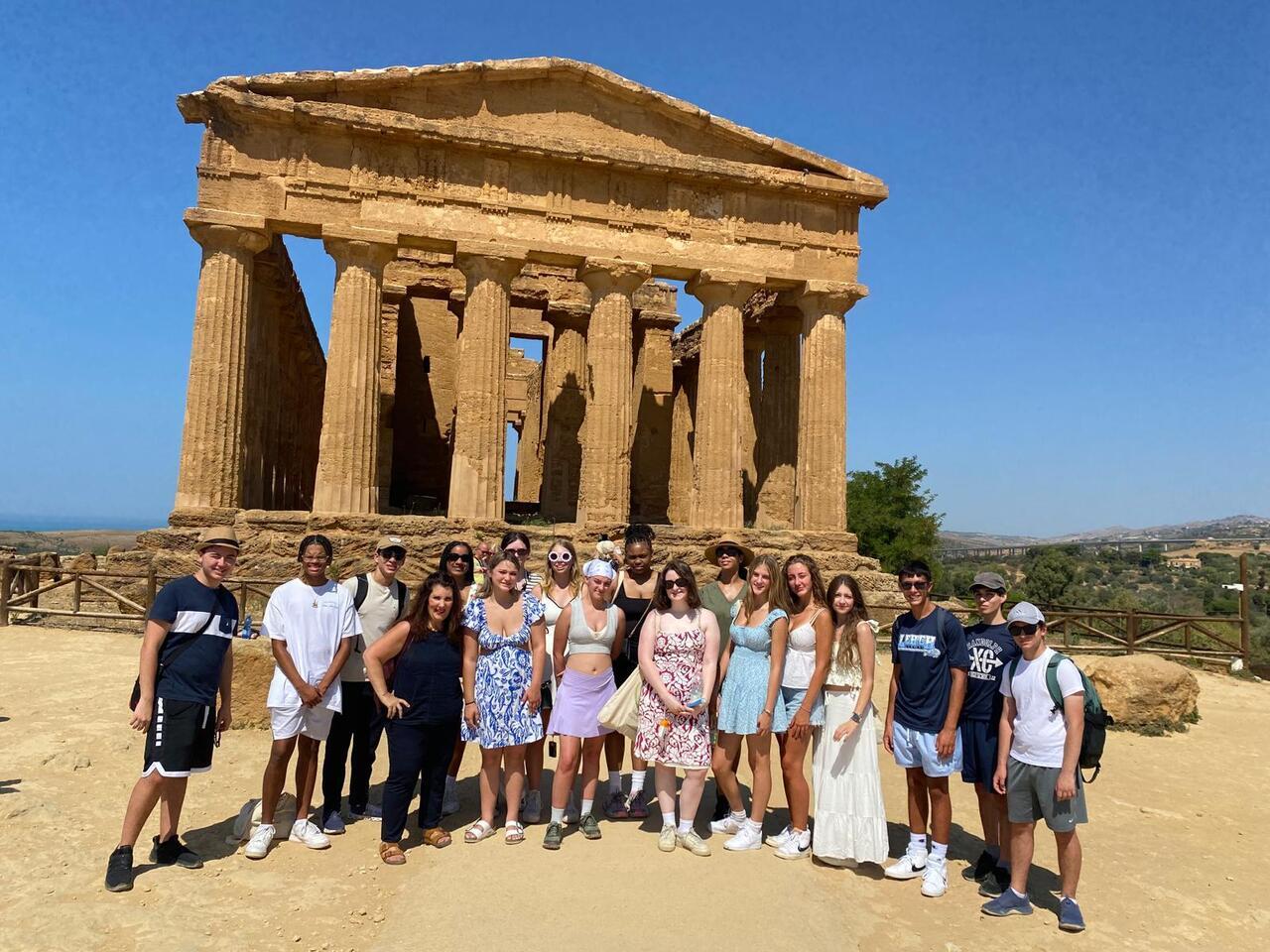
  • Discovering the Sweet Legacy of Sicily’s Blood Oranges

    Discovering the Sweet Legacy of Sicily’s Blood Oranges

    On our last trip to Sicily, my cousin handed us some oranges to take with us on our bus ride from Porticello to Catania. It wasn’t until later, when we peeled them, that we discovered these weren’t our typical, orange-fleshed oranges. In fact, they were Taroccos, blood oranges with ruby red flesh hidden beneath an orange-colored peel and a taste reminiscent of raspberries.


    One of three popular arance rosse, the Sicilian-grown Tarocco is actually Italy’s most popular table orange. Sweet, seedless, and easy to peel, it also has the highest vitamin C content of the world’s oranges.


    Citrus fruits, including bitter oranges, were introduced to Sicily as part of the Muslim conquest in the 9th century. However, sweet oranges did not arrive until the late 15th or 16th century when Italian and Portuguese merchants brought their trees into the region.


    Starting in the 18th century, Sicily became known for its blood oranges, which also include the Moro and the Sanguinello.


    The vibrant flesh color of these oranges comes from the presence of anthocyanins, pigments found in flowers but less commonly in citrus fruits. It’s activated when the fruit is exposed to low temperatures during the night and early morning, and the often tougher skin can take on a darker hue than that of more common oranges. 


    Sicily’s blood oranges are protected under PGI (Protected Geographical Indication) certification and grow in the provinces of Syracuse, Catania, and Enna. 


    Tenuta Serravalle, a company based in Mineo, just over 30 miles southwest of Catania, is a leader among the specialized growers of PGI blood oranges.


    The Grimaldi family has run the farm since the 19th century. Today, it’s managed by descendant Gerado Diana, who holds a degree in dairy science from Texas A&M University. A proponent of sustainable agriculture in Sicily and active in several industry groups, Gerardo serves as president of the PGI Sicilian Blood Orange Consortium.


    Gerardo and I recently spoke about his farm, blood oranges, and orange-derived products.


    Tell me about the history of your farm and how it’s changed.

    They once cultivated rice on our land. This shows how the situation with climate change is very strong. The water was always less and less. Now, our core business is PGI blood oranges production and wheat. We produce wheat that is very resistant to drought and oats. But the main business is oranges and all the products we produce with the oranges, like honey made from the orange flower. My wife is a lawyer, but for the past five years, she’s provided hospitality to the people who come and visit the farm. 


    We are mainly trying to improve upon what our ancestors did. What is very interesting is how all the people and generations have spent their time here making improvements and developing different farming systems. You really understand what people mean when they say that the land is not yours but is of your son. 


    When so many people work so hard to leave you the soil, this makes you understand how you need to behave and respect nature, cultivation, and the effort that goes into agriculture.


    Tell me about your oranges.

    PGI blood oranges grow in a certain area, which is out of 34 small cities in three parts of the region of Sicily: Catania, Siracusa, and a small portion of Enna. We have very different temperature variations in these areas from day to night. So, in February, it can be 20 degrees during the day minus 2 degrees in the early morning. 


    These three varieties of blood oranges—Moro, Tarocco, and Sanguinello—become red to protect against the cold.


    Our oranges are PGI (Protected Geographical Indication), which is different from our neighbors because we follow some rules. We need to respect the soil; we need to respect the bees; we need to save water; we need to behave with the people who work with us. So, it’s a different way of cultivating. So this is why we always say that PGI products are more guaranteed for the consumer rather than other products.


    How have you adjusted your practices to deal with Sicily’s current drought?

    In the last two years, it has been a continuous pain because we didn’t have 40 millimeters of rain on the same day, which is needed for the irrigation of the plants. We have implemented new technology, so it’s all drip irrigation. We also have a machine that monitors the soil’s humidity level.


    Describe your agricultural practices.

    More than 600 families of bees help pollinate our oranges. Then, there is the drip irrigation. All the oranges picked for the market and for the table of the European family are picked by hand. Although we are in 2024, no machine works as well as the human hand.


    Where are your oranges distributed?

    We sell 50% of our PGI oranges in Italy and the rest throughout Europe. 


    How are your oranges used?

    I imagine we have 232 ways of using oranges because there are orange jams, ice creams, and granitas. Some whiskeys are made with oranges. Then there is the special recipe in Sicily, the salad with oranges and onions, which is very good. Some research shows that blood oranges are very good at fighting depression. 


    What is your favorite way to enjoy oranges?

    I’m very simple, so I like to peel my oranges in the morning when I’m on the farm, when it is cold, and when you can smell the smell of nature.


    Can you describe how you’ve diversified your product line with honeys and jams? 

    My wife [Mariarosa Magnano di San Lio] had the idea. I’m very grateful to her. 


    Bees are the best indicator of how you run a farm because if the farm is healthy, the bees are healthy. Honey is very important to us; it is basically a way for us to reach new markets. 

    My wife makes the jam we produce from our fruit without sugar; she adds honey, which is much healthier.


    We have sold our honey to people as far as the Philippines. It is really nice to think that the honey from a small town in Sicily goes so far. Lots of people call, and they say they immediately need the honey. They say, “I need it now.”


    This makes you feel that there are people who appreciate the quality and are also willing to wait one week for their product. We don’t use Amazon; our honey leaves the farm and directly reaches the house of the person or family that has bought it.


    You give tours. What can visitors expect to see?

    It’s an old house on top of a hill. To reach the house, you have more than one kilometer of dirt road, all surrounded by oranges, especially blood oranges. Then, there are some wheat and hay fields, and we have nine donkeys near the house. The oldest of them is more than 30 years old, and we keep them because they help clear brush so we can prevent fire and erosion of the soil. 


    It’s as if time has stopped for the house. Then you see the technology on the oranges, which I think is a good mixture of modern and old, between technology and tradition.


    What can people take away from their experience at your farm and with your products?

    We would like them to understand how important nature and farming are for the whole community. Hopefully, they will understand all the work that goes into growing fruit.


     If you enjoyed this article, consider subscribing to my newsletter for more content and updates!