Blog

  • Listen to Sicily’s Traditional Musical Instruments

    Listen to Sicily’s Traditional Musical Instruments

    Sicilian folk music, ranging from lullabies to harvest songs, has served as a cultural backbone for centuries. A fusion of Greek and Byzantine hymns, Arabic Maqam, and Spanish styles, the island’s unique sounds were recorded and cataloged by American musicologist Alan Lomax as part of his Italian Treasury: Sicily.


    Lomax recorded the voices of peasants, shepherds, salt and sulfur miners, cart drivers, and fishermen and uncovered music related to festivals, dance, religion, and storytelling. In doing so, he also introduced the sounds of Sicily’s traditional musical instruments, many of which I highlight along with video performances below.


    Ciaramedda

    Native to rural Sicily and Calabria, particularly in the province of Messina in Sicily, the ciaramedda or ciaramèddha consists of a goatskin bag, a blowpipe that inflates the bag, two chanters (the part of the bagpipe used to create the melody) that are typically made of fruit wood or heather wood, and two or three drones, which provide the harmony.


    Friscaletto

    Once commonly played by shepherds, the fiscaletto or friscalettu is similar in appearance to the recorder that most American schoolchildren are taught to play. But instead of plastic, it’s typically made of cane, featuring a hollow cylinder with seven holes in the front and two holes in the rear.


    Marranzano

    Colloquially referred to as the “jaw harp,” a name that originates from jeu-trompe, the French word for trumpet, the marranzano or marranzanu is similar to instruments found throughout Asia. Italy’s first marranzani can be traced to the 16th century, and there’s evidence of its use in Sicily and Sardinia in the 18th century. Giuseppe Pitrè‘s Canti popolari Siciliani (Sicilian Folk Songs) was published in 1870. Since then, this circular metal instrument has become a part of Sicilian folk tradition.


    Tamborello

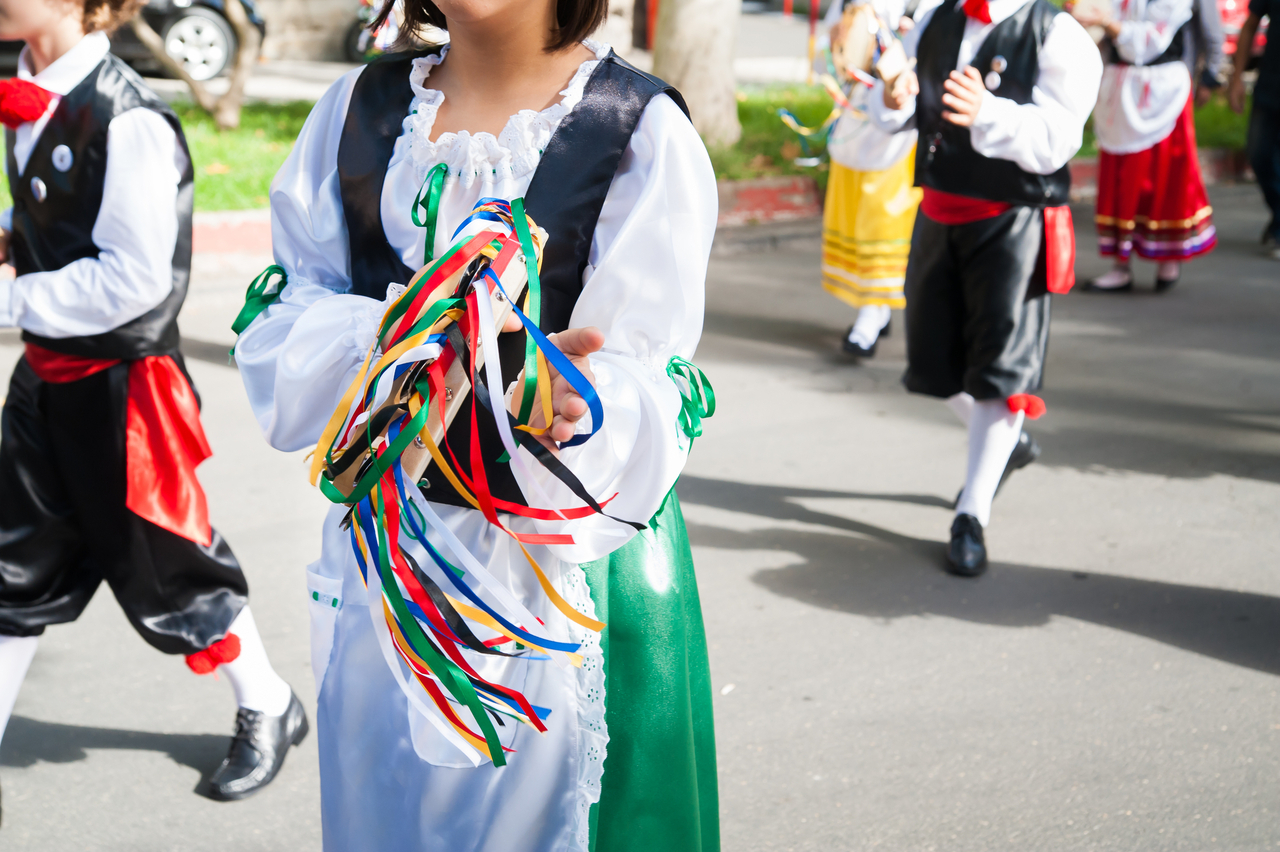
    Whether it originated in western Africa, the Middle East, Greece, or India, most scholars believe that the tambourine was one of the first instruments created by humans. It dates as far back as 1700 BC, roughly within the New Stone Age or Neolithic Period. Called the tamborello in Italy, this percussion instrument was traditionally made of stretched skin over a wooden frame. In Sicily, it’s typically played during tarantella dances.


    Organetto

    A diatonic-button accordion (not to be confused with the piano accordion), the organetto is played throughout Italy, particularly along with the saltarello dance.


    Putipù

    The putipù or cupa cupa is a friction drum composed of three key parts: a bamboo reed, a drum membrane, and a cylindrical sound box. The sound is made by rubbing a wet hand on the reed, which vibrates the membrane. Drum tones vary based on the size of the sound box and the thickness of the membrane.


    If you enjoyed this article, consider subscribing to my newsletter for more content and updates!

  • Rediscovering the Art of Sicilian Semolina Bread

    Rediscovering the Art of Sicilian Semolina Bread

    Sundays of my youth were spent with my Sicilian grandparents. We’d gather in the kitchen to enjoy Nonna’s afternoon supper. And at the center of the table, we could always look forward to her fresh-baked bread. Typical of Sicily, this bread was made with semolina, coarsely ground durum flour. She’d roll her loaves in sesame seeds, which added depth to the already nutty flavor. 


    As a bread-baker myself, I have attempted to recreate Nonna’s recipe, but apparently, I hadn’t found the right recipe. My bread was too flat. 


    That was before I stumbled on a semolina bread recipe on Marcellina in Cucina. This pane Siciliano was gorgeous, golden, and looked just like Nonna’s. I just had to reach out to blogger Marcella Cantatore to learn more. 


    Tell us about your background.

    I’m the owner of Marcellina in Cucina and the second child of Italian immigrants Anna and Enzo. My mother, Anna, was from Reggio Calabria, Calabria, and my dad was from Piacenza, Emilia Romagna. I grew up in a traditional Italian immigrant family. We grew a lot of our food and cooked everything from scratch. I learned to cook by just watching my mother and father in the kitchen. There were no recipes, but I wanted to record our family recipes and those of others, so I started my blog.


    How often do you travel to Italy, and have you been to Sicily?

    I have traveled to Italy three times, and I plan another trip in the next year or two. I’ve been to Sicily, but not extensively. It’s a beautiful place, and I will spend more time there next time.


    What is your connection to this recipe?

    This recipe is a traditional Sicilian bread but also very similar to the bread in my mother’s hometown, Reggio Calabria. Reggio Calabria has many similarities to Sicily due to its proximity. At home, I wanted to recreate the bread I ate there, so I searched for recipes and tested them until I adapted this bread from Carol Field’s book The Italian Baker.


    Why semolina and why sesame seeds?

    This is a traditional Sicilian bread that you’ll find in all Sicilian bakeries and many southern Italian bakeries. Semolina is hardier and resistant to spoilage, so it was the flour used for bread for the common people who were poor and couldn’t afford bread made with soft white flour. Semolina flour lends a beautiful yellow color and delicious flavor to the bread. Sesame seeds are much loved in Sicily and add extra flavor to bread. Plus, I adore sesame seeds!


    Can you tell me about the shape of this bread and others?

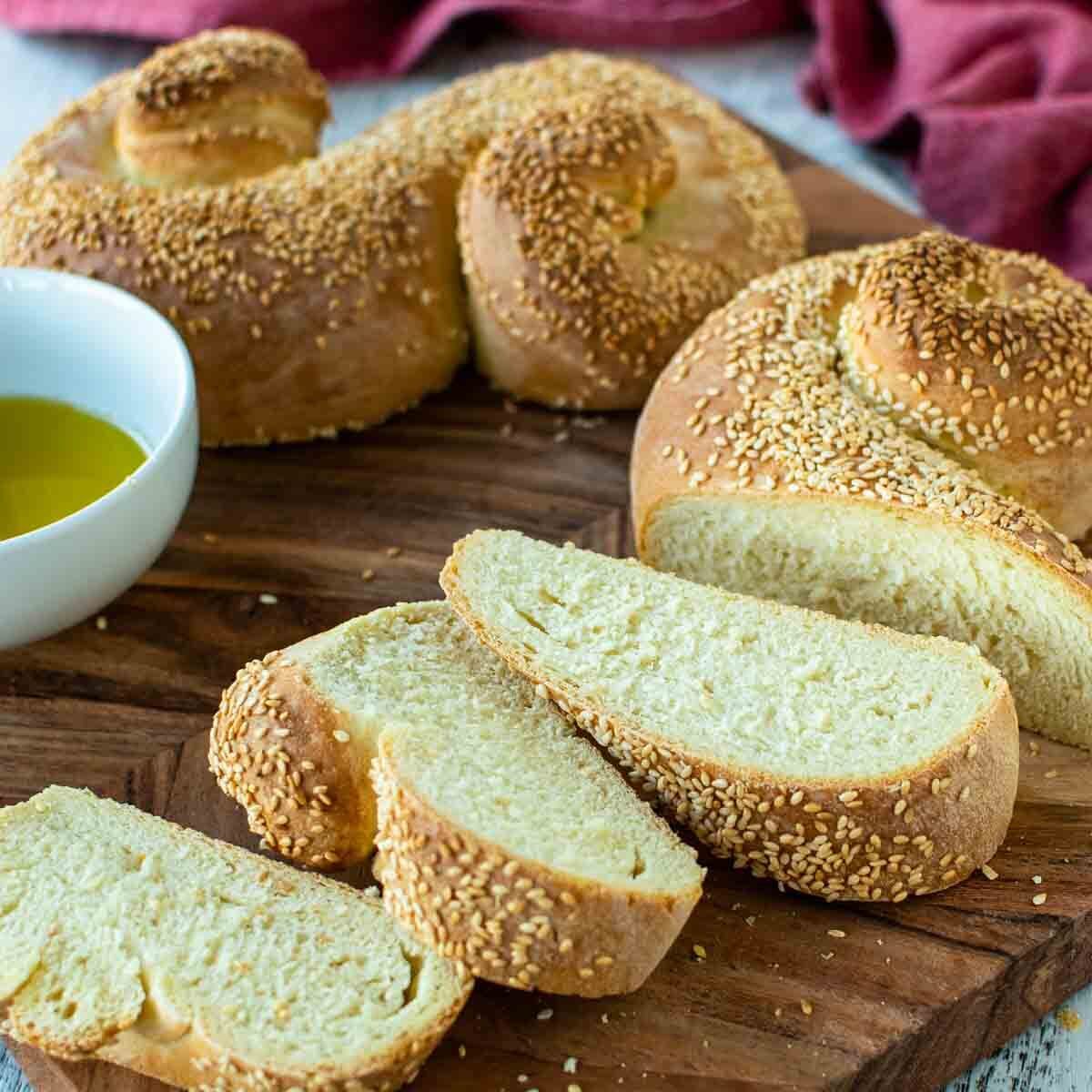
    The shape I have used in this recipe is called occhi, which means eyes and looks a little like eyeglasses. Another shape that you’ll find this bread in is mafalda, which is like a snake zig-zagged back and forth, with the remaining length of dough laid over the top of the zig-zag. Sometimes, the dough is just zig-zagged without the extra dough laid over the top. In this case, it’s known as scaletta or little ladder. 


    What is the connection to Santa Lucia?

    Santa Lucia is the patron saint of eyes. The swirled S shape, which is a little like eyeglasses, is a traditional bread shape made to commemorate Santa Lucia (Saint Lucy). However, this is not the bread eaten on the Feast of Santa Lucia in Italy; it’s a whole other story!


    When is this bread served, and what are some popular Sicilian recipe pairings?

    This bread can be served with any meal. Its flavor goes particularly well with cheese, sausage, and salami.


    Tell me what you hope readers will take away from this recipe.

    I hope readers learn a little about Italian and Sicilian culture and enjoy this deliciously different bread. 


    >>Get Marcella Cantatore’s pane Siciliana recipe here!<<


    If you enjoyed this article, consider subscribing to my newsletter for more content and updates!

  • Community Oven Offers Food and Fellowship

    Community Oven Offers Food and Fellowship

    Among the cornerstones of rural life in Sicily was the tradition of using and maintaining a public oven. It was a practice born from necessity. Because few rural people had their own ovens throughout Italy’s history, communities would rely on one that was communally shared. 


    Ancient Rome once hosted a vast network of at least 500 public ovens, which spread throughout Europe from the 14th to the 19th centuries. Citizens would bring dough to bake bread together in the community oven, which was a place where the rich and poor would bake side-by-side, stories would be swapped, and relationships would blossom.


    It lasted until after World War II when most people purchased their own ranges and baked in their own homes. Much was gained in convenience, but was something lost in shedding this ancient practice?


    Several people have asked that question, which has led to the creation of community ovens across the United States.


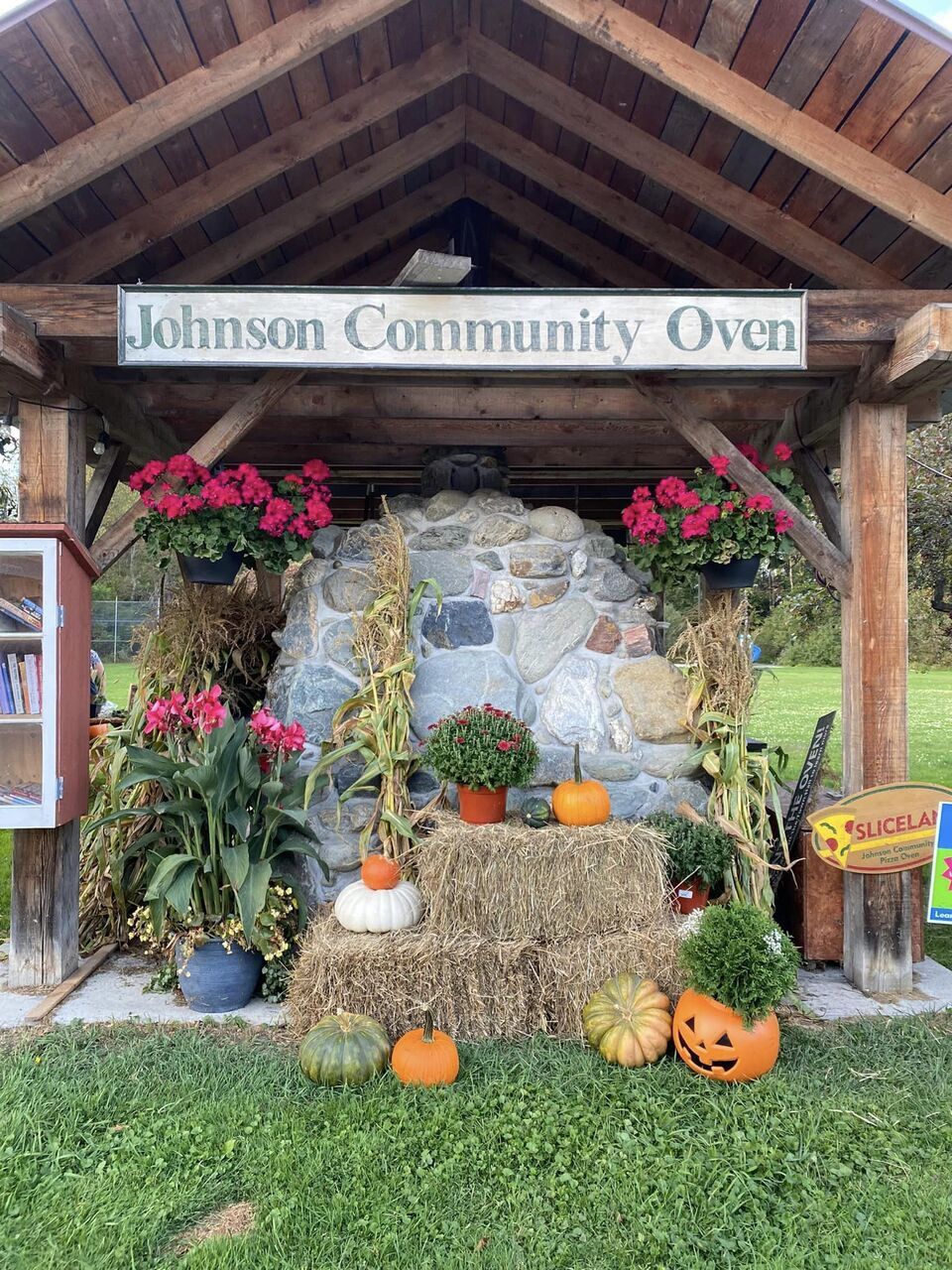
    Vermont art teacher and former librarian Jen Burton and her friend Mark Woodward, a former state legislator, founded the Johnson Community Oven in 2017.


    A family-friendly place where locals have gathered to communally dine on fresh-baked pizzas, the oven is primarily supported by donations and grants. Elmore Mountain Bread, Jasper Hill Farm, and Foote Brook Farm have all contributed food. And residents have donated building materials and wood. The oven has served as a glue, further connecting people in this town of just over 3,000 people.


    Jen and I recently sat down to chat about how she and Mark got started, what goes into running a community oven, how it’s used, and how the Johnson Community Oven ties to public oven tradition.


    What exactly is a community oven?

    I guess it doesn’t have to be the same thing everywhere, but in Johnson, it’s an oven that sits on town property and is available for anyone in the community to use. You need to sign up with the town, fill out a form, and say when you’ll use it. Hopefully, you will get a little bit of training from an oven volunteer. Often, people will reach out to someone on the oven committee, and committee members will run the oven for their event.


    There’s a community pizza night that happens for about eight weeks each summer. The oven committee, along with other volunteers, organizes and hosts it. The pizza is free—by donation—and the committee often gets grants and other donations to supplement the cost. 


    Tell us how you got started.

    My stepmom and her partner built an oven in their backyard, and they sometimes fire it up and invite people in the neighborhood to bring their own baked goods, like bread and other things, to bake. I knew about that, and then I heard a piece on Vermont Public Radio about an oven in Norwich, VT. It had been there for a long time, and somebody had just started using it to bake bread once a week. People would sign up for a loaf of bread.


    Mark and I both independently heard that story. He kept talking about how he wanted a bread oven in town, and I decided to take action.  

    I did the groundwork to get the approval from the town. I had to defend the idea at a select board meeting, where everybody grilled me with questions for an hour. A big question was where to put it; there was a lot of conversation about that.


    Once we had the approval, we hired a local mason to build it. People contributed stones and other items to be built into it, which added another aspect of community involvement. That was Mark’s idea and turned out to be pretty cool.

    Describe the oven and the space where it’s located.

    It’s a big stone wood-burning oven, probably about six feet across each side, and it sits in a 12 x 16 structure. It’s on a green in town next to an elementary school. In the summer, we have a Tuesday night live concert series there. So, the oven is kind of an extenuation of how we use that space in town.
     

    How many pizzas can you fit in there at a time?

    About three pizzas can be cooked at once. On a good night, they’ve made up to 90 pizzas for people in just a few hours, so they really crank out the pizzas. They do a great job.


    How else is the oven used?

    It’s been used for birthday parties, retirement parties, and a few fundraising events. The library has started to collaborate with the oven committee on pizza nights. They’ve been providing some activities and music.


    How has the use of the Johnson community oven changed?

    It was built in the fall of 2017. We didn’t use it much that winter, but we started to use it more the next summer. Initially, it was a free-for-all, with everybody bringing toppings and everybody making pizza, including kids. It was nice—messy but nice.


    Then COVID happened, so we couldn’t really do it that way anymore. The committee worked together to formulate a new plan in which just a few people made the pizzas, and nobody else was around. A pickup system was developed where we would tell people online what would be available that day, and they would come to pick them up.

    We started to give people whole pizzas in boxes, and they would pick them up and leave instead of hanging around the field. Once COVID started to abate, people started to come onto the field again and spend more time with their neighbors. We had more volunteers helping with the baking, but this core group of people was still doing all the work, like making and cooking the pizzas.


    Just this year, they started to open it up again and have more people come in, with more people bringing ingredients. And now it’s a bit back to being more of a community-involved event.


    I think people like it to be more participatory, and I think the people running it appreciate not having all the pressure on them. Also, there tend to be just one or two people who cook the whole time because that is more of a skill, but I think a wider range of people are coming in, bringing things in, and making the pizzas.


    You talked about pizza. What other dishes can be made in the oven?

    Richard Miscovich’s book From the Wood-Fired Oven is a really great resource. I took a class from him to learn more about using ovens, which was really helpful.


    I still love his onion recipe. He just put onions in a pot and put them in the oven; they’re one of the best things that comes out of the oven.


    But I’ve made bread, cookies, and garlic knots in that oven. The nice thing about the oven is that after the high temperatures of the pizza cooking, you can use the lower temperatures to do other things in it. So there’s a cycle to it where you can cook at the high heat with certain things and then cook other things at the lower heat. People don’t take advantage of it in that way as much as they could.


    How does this oven tie to public oven tradition?

    NPR’s Shankar Vedantam has talked about how food really brings people together, so a lot of the reasoning behind doing it was based on that. It just felt like there needed to be something to bring different factions of the town together.


    It’s something that has been a central component of a community for hundreds or maybe thousands of years. Some towns only had one oven, where people would come to cook, so everybody would see each other there and have to cooperate.


    So, part of the foundation for wanting to build it was to build something that would bring people together and make them work together toward a common goal.


    In Vermont, we have Town Meeting Day. It’s a cultural phenomenon. It’s one day when people come to vote on their town budgets. It’s an interesting thing that I don’t think many other states, if any, have.


    We have a potluck on Town Meeting Day. The oven is right next to the elementary school, where the town meeting is held. Over the past few years, people have made pizza for the potluck.


    How would you describe the experience?

    Overall, it’s been a positive experience for the town. I think a lot of people really do like it. It’s a very positive, family-friendly experience.


    If you enjoyed this article, consider subscribing to my newsletter for more content and updates!

  • How to Grow and Eat Cardoons

    How to Grow and Eat Cardoons

    A favorite among Sicilians but lesser known in the U.S., the artichoke’s celery-resembling cousin, the cardoon (also known as artichoke thistle), is typically harvested after the first frost. That’s when the otherwise bitter leafy green vegetable stalks are at their sweetest, says Westfield, Massachusetts, gardener Chrissy Saraceno.


    She and her husband, Greg Russian, tend to a half-acre garden and run the Galaxy Gardens YouTube channel to educate aspiring gardeners and homesteaders.


    Chrissy was inspired by her grandparents, who came to the U.S. from Melilli, Sicily, in the 1960s. Both had green thumbs and her grandmother gardens to this day. 


    Chrissy sees growing cardoons as a way to connect with her Sicilian roots, and she shared more about growing and cooking this unique, tasty vegetable with me.


    Tell us about Galaxy Gardens.

    Galaxy Gardens came up through the pandemic. Because I do a lot of gardening, my family kept asking me questions. Eventually, I was like, “You know what? I’m going to put it all in one spot for you, so if you have questions, I have some videos to refer you to so I don’t have to keep repeating myself.” 


    I really enjoy providing free education, so I’ve continued it. I’d really love to get into consulting in the future.


    Describe your garden.

    We’re on about half an acre. Our main raised garden bed area is about 20 feet by 40 feet large. We have 16 raised beds. They’re each six feet by three feet and about 11 inches deep. And then we have since foodscaped the rest of our property. So, right around our house, we have horseradishes, gooseberries, and valerian. We’ve added a couple more beds, and we’re about at capacity for our property right now. But it’s been really nice since we purchased a home to be able to actually foodscape our property. We have a small orchard in the back as well, and we have some chickens, too. It’s been a very involved project the last few years, but now we’re fully set up and really just have to worry about maintaining nutrient levels. 


    What is a cardoon?

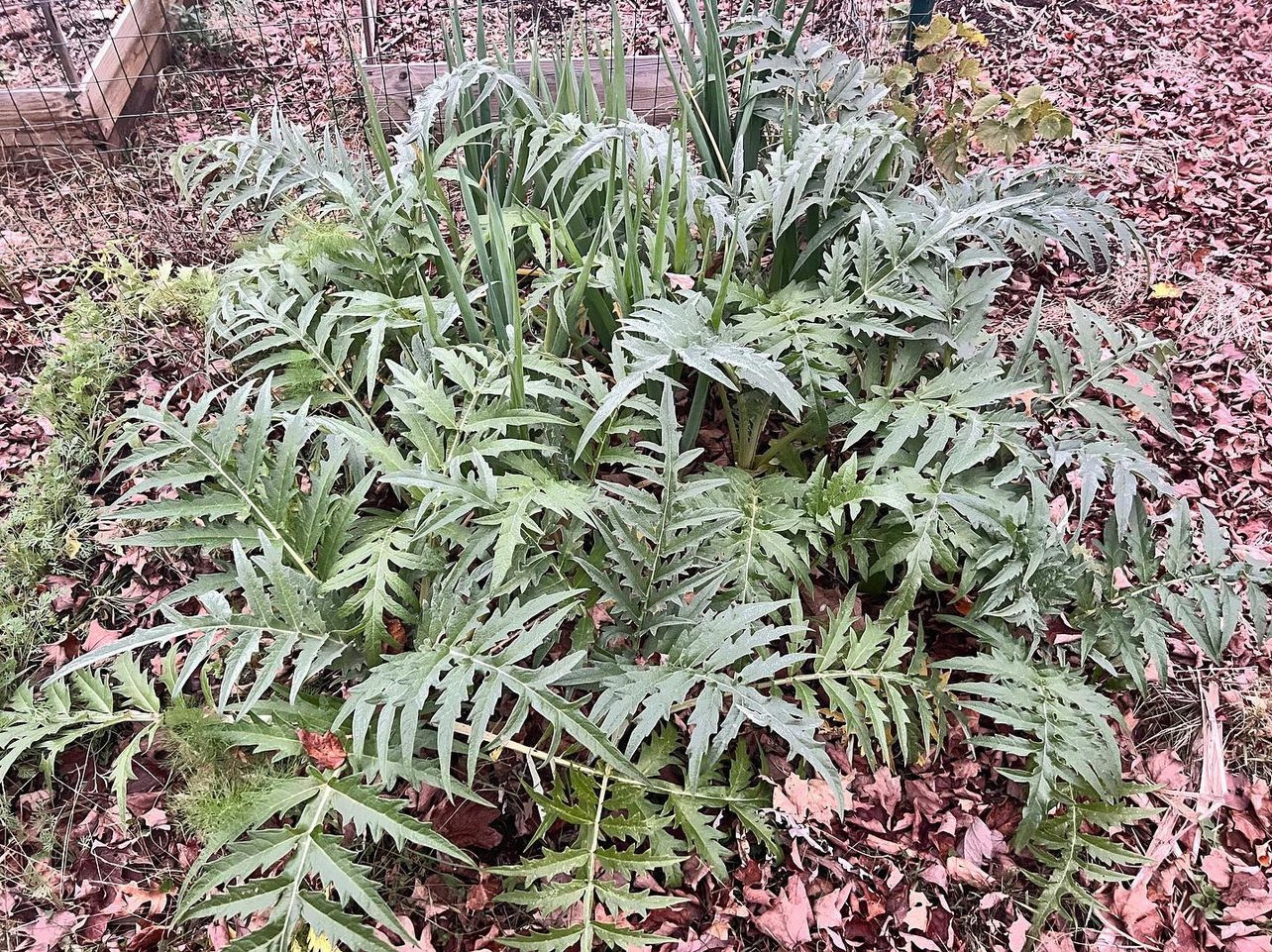
    A cardoon is in the artichoke family. However, it grows in stalks rather than producing the flower head that you harvest with artichokes. It loves nitrogen; it’s a very slow grower. It tends to stay very small until about August or so, and then it’ll go through a big growth spurt. So you’ll get three- or four-foot tall plants that just keep going until it gets too cold out. And if you wait for the first frost to come and harvest, they tend to be a bit sweeter and slightly less bitter than if you harvest it when it’s still warm. 


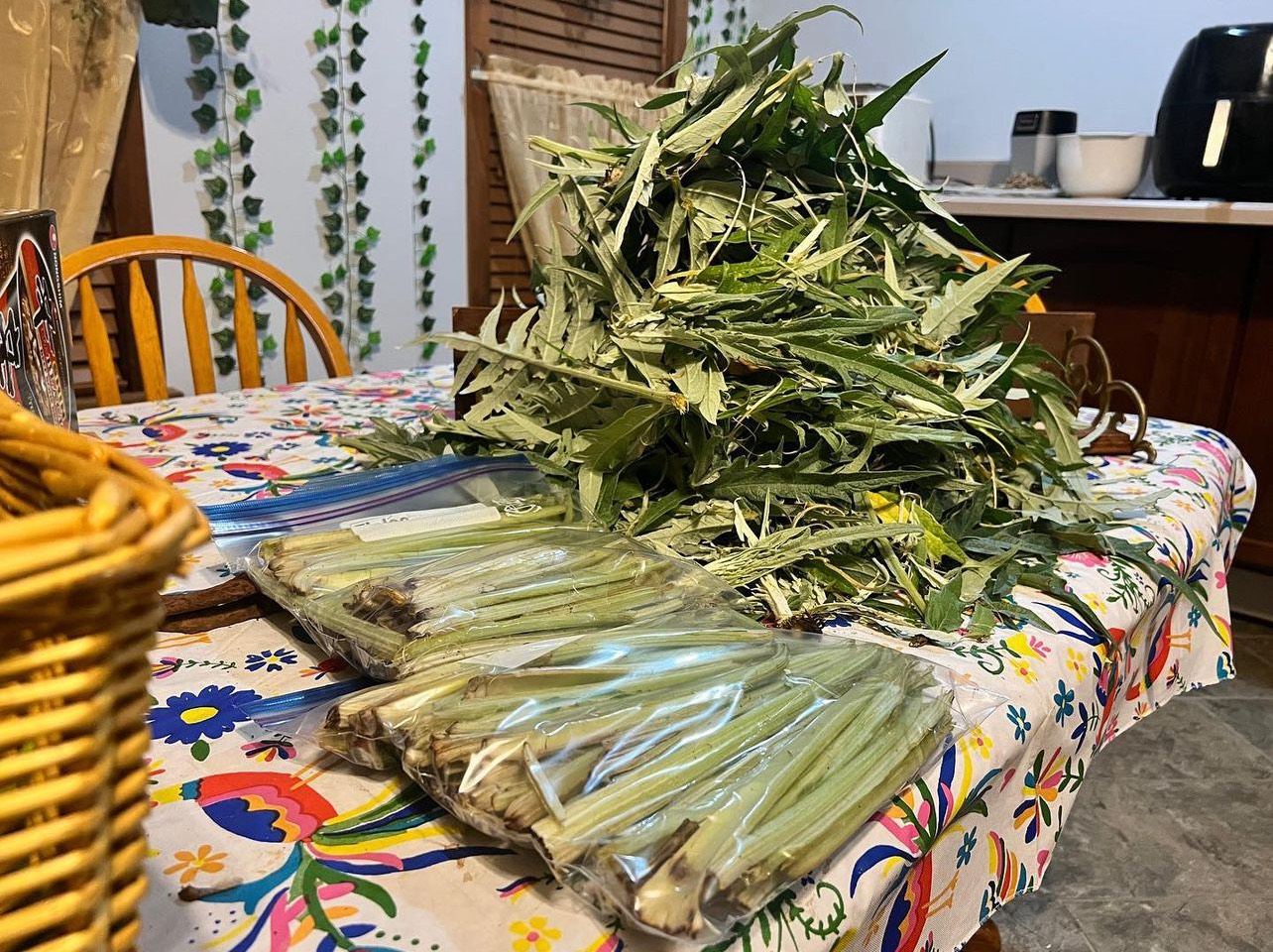
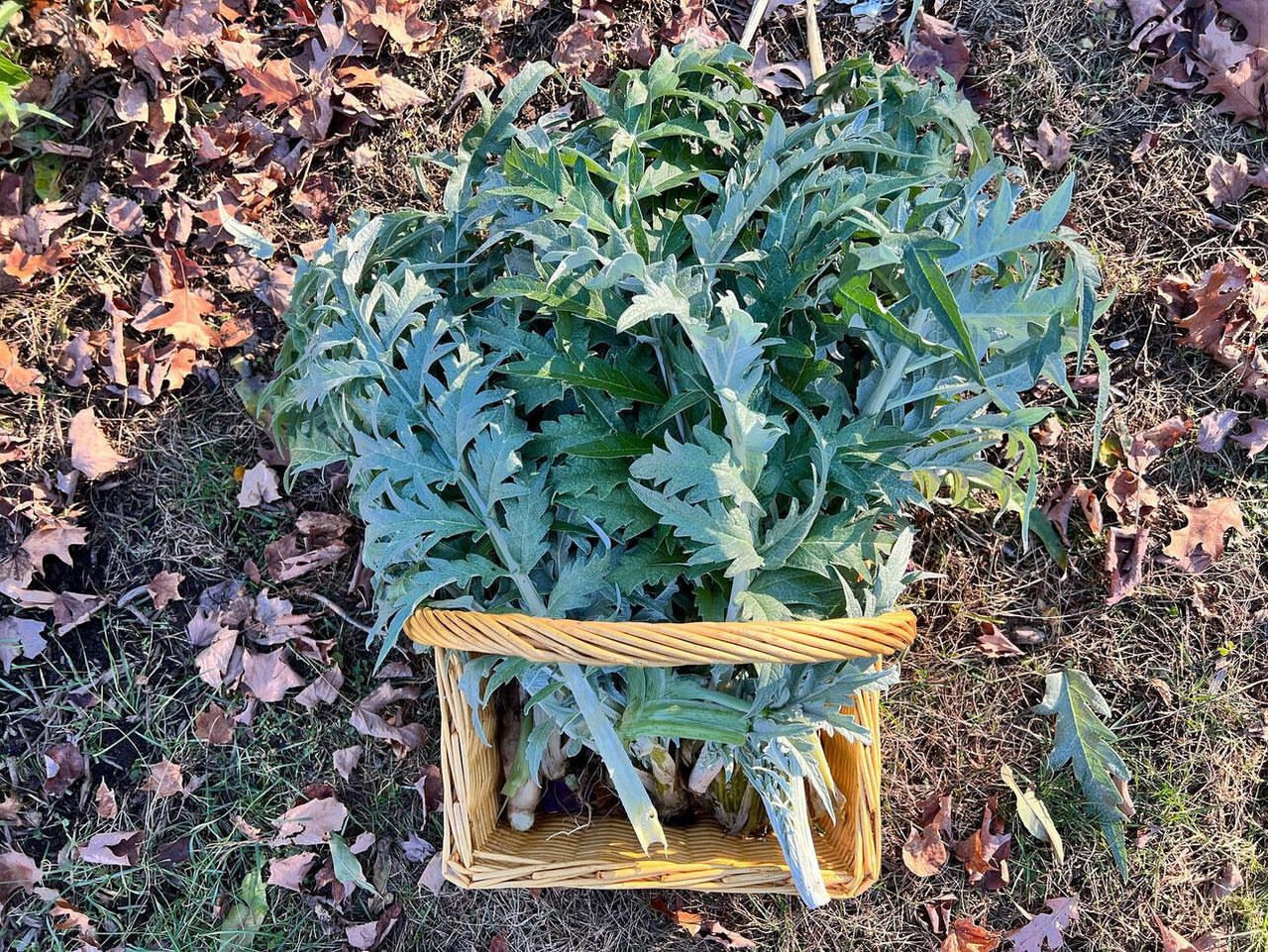
    full-size-cardoons-in-garden.jpeg

    Full-size cardoons. Photo by Galaxy Gardens


    How did you start growing cardoons?

    I really wanted to push our gardening zone limits on our property, which is in a Zone 6B area. Obviously, we get snow here in Massachusetts, but different parts of the property tend to stay warmer than others. 


    Over the years, my goal has been to experiment with all these different types of foods and just see what grows best here. I originally wanted to grow artichokes, but artichokes just don’t last. Sometimes, we get early falls and a cold snap in September, and cardoons are a little hardier.


    Why do you like growing them?

    Honestly, the easiest, lowest-risk, and highest-reward thing you can grow is garlic. And second to that, now that I’ve grown it for several seasons, are cardoons. 


    If you try lettuce, you can look at it the wrong way when it’s a seedling, and it will wilt on you. Cardoons are hardier. They’re more forgiving. You just set them and forget them.


    They are great if you just want something that’s passively growing on the side, and you don’t need to give it too much attention until it gets around harvest season. And it’s a beautiful landscaping plant. My brother and his wife have it right on the corner of their house. It’s this huge, sprawling bunch right now.


    You can use the plant not only for landscaping purposes but also so that at the end of the year when you’re going to be taking out or cutting down your landscaping plants anyway, you have food for your table.


    How do you grow and harvest this vegetable?

    You can start them inside in April, move them outside, and they’ll grow all summer. I harvest them around October or November, and they do okay, even on frosty mornings. 


    You harvest it like you do celery, where you can cut them at the bottom.


    We grow the spineless variety. When you harvest it and clean it up, it’s very stringy. So it’s kind of like stringing beans: You just need to pull the one big string off of it. 


    The spineless variety is more tender. After you clean up all the leaves, you just need to prepare it to eat, and you don’t have to worry about any really tough textures on it. 


    cardoons-harvesting.jpeg

    Preparing cardoons post-harvest. Photo by Galaxy Gardens


    What part do you eat?

    The main stalk. When you finish processing, it looks like celery. It will grow in bunches, and as you separate the stalks from each other, you just go to the point where it’s still thick and malleable, and you can remove the leaves. It has a fuzzy coating, but you can peel that off very easily. So then you’ll end up with a four-foot plant with about a foot to a foot and a half stalk in the entire bunch. We grew about 12 plants last year. After processing, we ended up with two gallons of stalks to use. 


    Can cardoons be eaten raw?

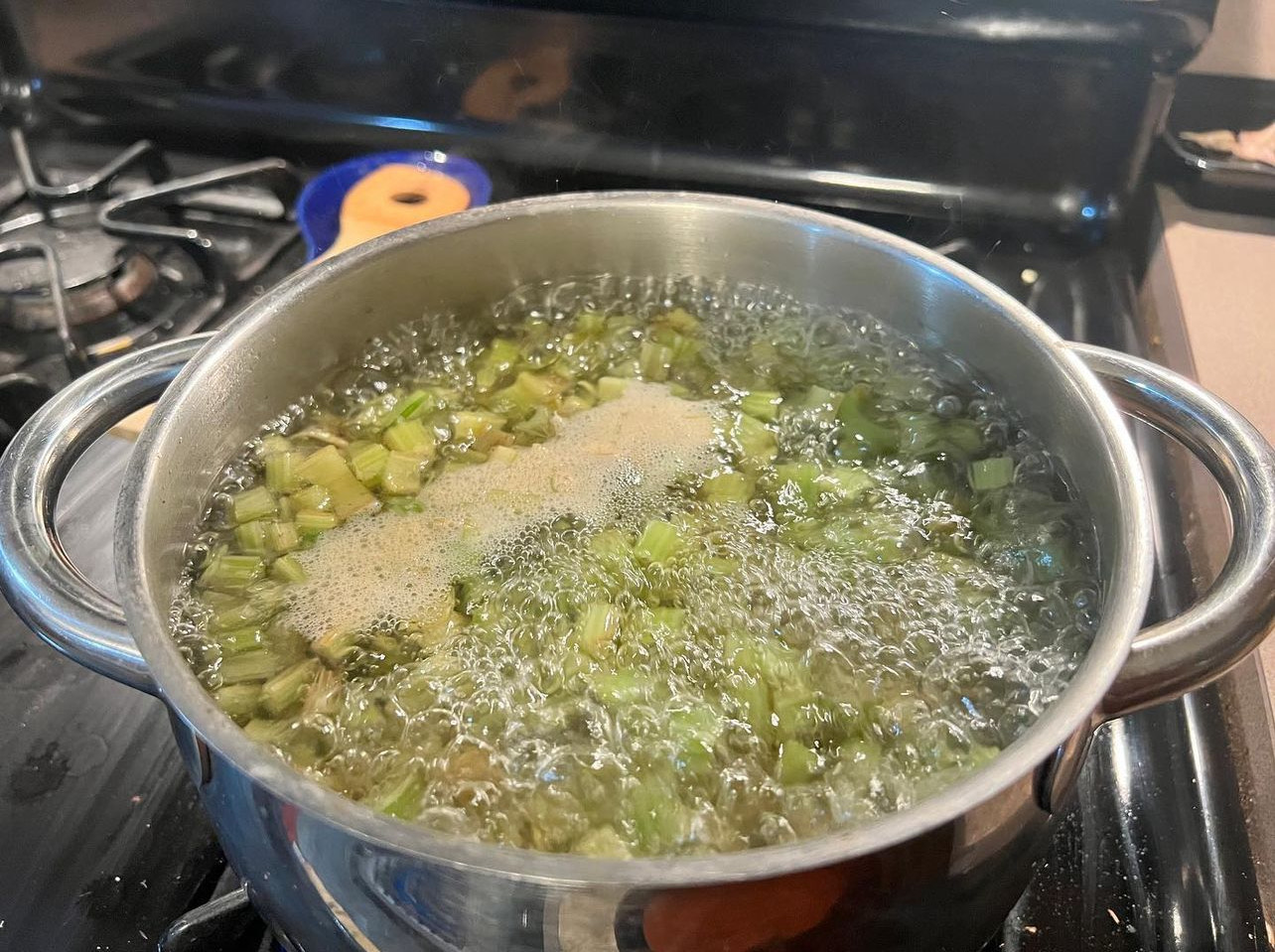
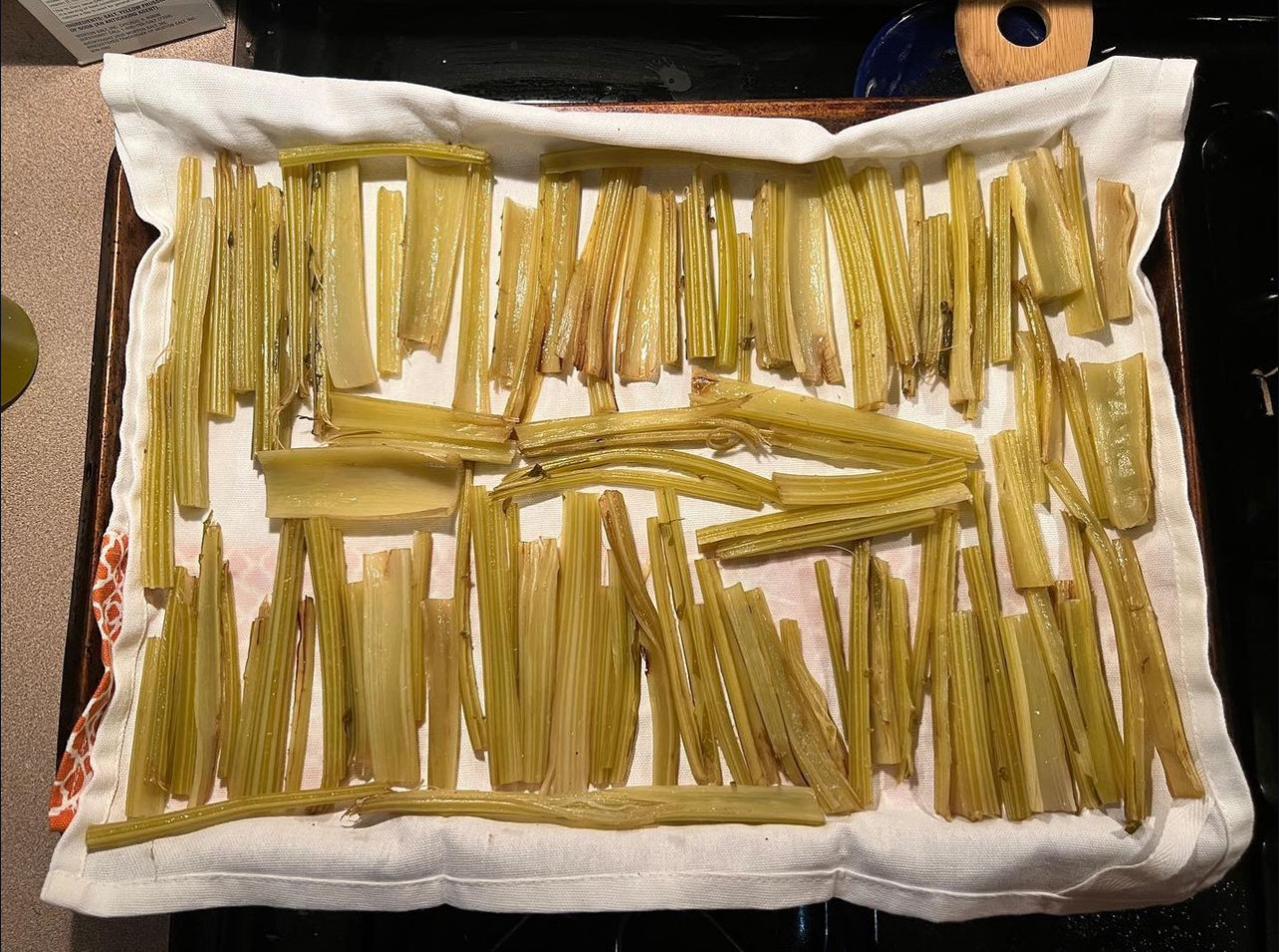
    I wouldn’t recommend it! To be safe, once you have them harvested and processed, you would just boil them for about 15 to 20 minutes with some lemon juice and salt added to the water. And then, of course, blanch them and add some ice water to stop the cooking process. You can use them from there.


    boiling-cardoons.jpeg

    Boiling cardoons. Photo by Galaxy Gardens


    What do they taste like?

    The stalks taste like the most tender artichoke you’ve had. It’s just a different texture that you’re dealing with. They’re sweet and almost a little bit nutty. Pine nuts would go very well with them. 


    When you cook cardoons, they really maintain that sweet flavor. It really comes through in anything that you make with them.


    blanched-cardoons.jpeg

    Blanched cardoons. Photo by Galaxy Gardens


    What are your favorite ways to prepare them?

    I actually have some left over from last year. I was hoping to make a leek-style soup with them, but my go-to is just to batter them. You could bake or fry them and make a nice dip to go with them. It’s a really good appetizer. 


    What advice do you have for someone new to growing cardoons?

    Start them inside. It depends on where you live. I have tried directly sowing them, and they actually like more water than you might expect. Cardoons do best in very fluffy and moist soil. By the time they come up, we have chipmunks and squirrels stealing them. So we start them inside. They’re very easy. You can directly sow them in a cup, and they sprout within a day or so. We use LED lights that keep things pretty warm. They’ll sprout in a couple of days and usually get between six and eight inches tall. But the plants themselves, once they get between two and four leaves, tend to stay there for even a month or two when you start them inside. By the time they’re ready to go outside, they’re pretty easy to transplant. You don’t have to worry about breaking the roots. They’re pretty hardy. 


    Once you transplant them, you can see where the stalks are already starting to come out. Just stick them so they are standing straight up in the ground and make sure they’re well watered. They may wilt slightly in the sun if you are too fast with transitioning them outside. But once they’re transplanted, they take a week or so to get established, and they’ll grow a little bit more over the next month. They pretty much stay there until about August or September. Then, they decide to take off and continue with most of their growth. 


    What do you hope people take away from your gardening videos?

    Gardening is a lot of work, but it’s only as difficult as you make it for yourself. I think a lot of people lack the confidence to experiment with what they’re growing. I hope they can see that we are just two regular people. There’s nothing too special about the process that we’re doing. They can try that at home.


    If you enjoyed this article, consider subscribing to my newsletter for more content and updates!

  • Cooking Kohlrabi: A Humble Vegetable Rich in Tradition

    Cooking Kohlrabi: A Humble Vegetable Rich in Tradition


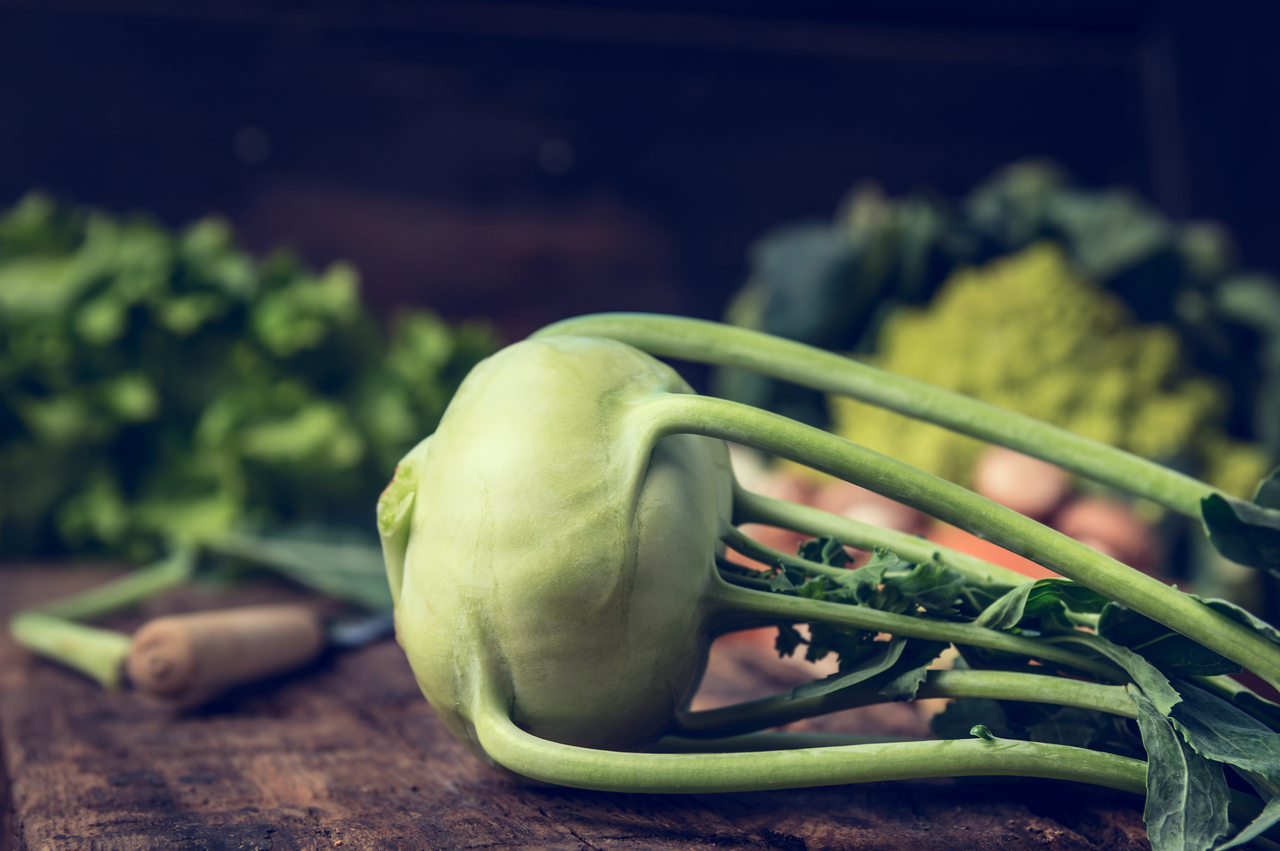
    Bulbous and green with antennae-like leaves, the kohlrabi almost resembles a cartoon alien rather than the brassica vegetable that it is. Also called German turnip or turnip cabbage, this cultivar of wild cabbage is not typically found in supermarkets. Instead, it shows up at specialty grocers or farmers markets. 


    Kohlrabi, which ranges in color from pale green to purple, can be eaten raw or cooked, from its broad leaves to its hearty stems and bulbs. My Sicilian grandmother used the whole vegetable in soups and stews; she ate it frequently in Sicily.


    Kohlrabi has been eaten in Italy since at least 1554, when Siena-born botanist Pietro Adrea Mattioli wrote that the vegetable had “come lately into Italy.” Not long after, kohlrabi spread to North Europe and was being grown in England, Germany, Austria, Italy, Spain, Tripoli, and parts of the eastern Mediterranean.


    I recently stumbled on a blog post by Marisa Raniolo Wilkins of All Things Sicilian and More about the ways kohlrabi is eaten in Sicily. 


    I reached out to Marisa, who is based in Australia, to learn more about her background and experience with this vegetable. She shared her reflections on kohlrabi’s significance in Sicilian cuisine and her favorite kohlrabi recipes. 


    Where is your family from in Sicily, and how did you end up in Australia?

    My Sicilian background is a blend of two Sicilian regions—Catania and Ragusa—and enriched my very different life in Trieste. My mother was born in Catania but moved to Trieste when she was just five years old. When she was fourteen, life for my mother changed when my grandfather died, prompting part of her family to return to Sicily, primarily to Augusta, while she chose to stay with her eldest brother and his wife in Trieste. One other brother also remained in Trieste.


    My father met my mother while stationed in Trieste during World War II. They traveled briefly to Sicily, where they married in Catania before returning to Trieste. Although the war had ended, Trieste remained in political and military turmoil through what was, for all intents and purposes, a civil war. And during her pregnancy, my mother felt unsafe. So, in the last weeks of her pregnancy, my parents caught a train to Sicily, and I was born in my paternal grandparents’ home in Ragusa. A few weeks later, they caught the train home to Trieste, where I grew up, and remained until we came to Australia.


    Our family was deeply connected to our Sicilian roots, spending summers in Sicily and welcoming relatives who visited us in Trieste. My maternal grandmother would stay with us for a month, filling our home with the scents and flavors of her Catanese cooking, especially seafood. My mother’s family has always been tied to the sea, whether in Catania, Trieste, or Augusta, and much of my culinary knowledge about fish comes from her family. My fondness for eating fish partly contributed to my book Sicilian Seafood Cooking (now out of print).


    When I was eight, we sailed to Australia, driven by my father’s spirit of exploration. We went directly to Adelaide, which was chosen as a city reminiscent of Trieste’s size rather than a larger city like Sydney or Melbourne. Despite our new life, we continued to make regular trips back to Italy, both to Trieste and Sicily, further deepening my appreciation of my heritage. As an adult, I made regular trips to Italy and explored many other regions—and other countries.


    I feel fortunate to have been exposed to regional Italian and Sicilian cuisines with all their variations. Traveling to different countries and living in Australia have exposed me to the wealth of multicultural cuisines that are evident in this country. My knowledge, experiences, and opportunities to make connections between cuisines have enriched my understanding and appreciation of Sicilian cooking and its flavors. Sicilian cuisine remains unique due to its historical influences, ingredients, and methods of cooking. 


    What inspired you to write about kohlrabi’s role in Sicilian cuisine?

    My inspiration to write about kohlrabi and its role in Sicilian cuisine stems from the memorable family tradition of cooking this vegetable in Ragusa, my father’s hometown. 


    The significance of kohlrabi in his family went beyond cooking this vegetable. Kohlrabi was a centerpiece of family feasts that brought everyone together, including the buying of the vegetables, the preparation, and the sharing of the cooked meal with the family. 


    Regarding the purchasing of the vegetable, my father’s two sisters (my two aunts) and one cousin who lived on different floors of the same building purchased their vegetables and fruit from a trusted local traveling ortalano (seller of fruit vegetables), who came around every morning—excluding Sunday—with his van. Each time I visited my Sicilian aunts in Ragusa, I had this unique experience where the squawk of the ortolano was heard from the street below their apartments, announcing his arrival. When it was in season, the leafy bunches of kohlrabi were such prized produce.


    Out would come their purses and their baskets tied to the end of a rope, and they’d go to their balconies where they questioned the ortolano in detail about the quality of his produce. If satisfied, they lowered their baskets, which he filled. They hauled them back up, examined the contents, and only then, if convinced, lowered their basket once again with the money tucked inside it. Then, the aunties would make special requests for the next day, entreating him to visit them first so that they had the best produce. Sometimes, they traveled down to the van in their slippers and dressing gowns.


    Then, there was the preparation of the kohlrabi. I have particularly fond memories of one of the Ragusa aunts, a remarkable cook who implemented the cooking and eating of this special dish. She is a champion pasta maker and ensured there was fresh pasta for family gatherings. The kohlrabi dish always featured a distinctive pasta known as causunnedda, the regional Sicilian name for this short pasta shape. The atmosphere of these family gatherings was gratifying. There was laughter, stories, fondness for the family, and the pleasures associated with sharing the meal and eating something delicious.


    Kohlrabi are called cavoli in Sicily; in Italian, it is known as cavolo rapa. Cavolo is the generic term for some of the brassicas; for example, cavolo verza is a cabbage, cavolo nero is Tuscan cabbage, cavolo rosso is red cabbage, and in Italian, cavoli are cauliflowers. (Just to confuse things even further, Sicilians call cauliflowers broccoli.)

     
    In the Ragusa family, they referred to the whole dish as causunnedda. I am assuming this was the abbreviation of causunnedda chi cavoli (Sicilian), causunnedda with kohlrabi.


    How can one forget and not celebrate these memories?


    The Ragusani are known for their straightforward, flavorful dishes, which focus on local produce, rich meats—especially pork—and seasonal vegetables. This emphasis on simplicity has profoundly shaped my understanding of cooking, showing me that the best meals often come from the freshest ingredients and heartfelt traditions.


    Spending time with my father’s family, particularly with this aunt, has further deepened my passion for Sicilian cooking. She has been a treasure trove of knowledge, eager to share recipes and techniques, knowing how much I cherished my heritage. Through her stories and guidance, I’ve come to appreciate the intricate web of flavors, customs, and memories that define Sicilian cuisine—making kohlrabi not just a vegetable but a symbol of family connection and culinary history.


    How significant is kohlrabi in Sicilian cuisine compared to other vegetables?

    Kohlrabi’s significance in Sicilian cuisine may be modest compared to more popular common vegetables like tomatoes, peppers, eggplants, or green leafy vegetables (this includes wild greens). 


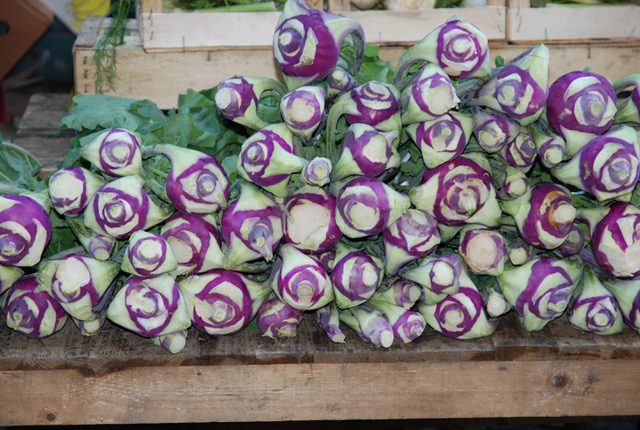
    What is unique in the cooking of this vegetable is the emphasis placed on the kohlrabi leaves, often considered more valuable than the bulb itself. They are sold in bunches; the bulbs are smaller than I have found in Australia, and there are many leaves. There are purple-colored kohlrabi and light green. What I experienced in Ragusa were the light green ones, whereas in Syracuse, they were an attractive purple with some green. In Australia, at least in Melbourne, where I live, I have only seen green ones.
     

    kohlrabi-purple-pattern-0104.jpeg
    Purple kohlrabi. Photo by Marisa Raniolo Wilkins


    How does kohlrabi use vary regionally?

    While my mother’s side of the family excelled in their own culinary traditions, I didn’t encounter kohlrabi in her family. Instead, it was in Ragusa that I truly came to appreciate its significance.


    In Sicily, as in other parts of Italy, kohlrabi is often simply boiled, drained, and then presented as a cooked salad, dressed with a generous drizzle of extra virgin olive oil, a sprinkle of salt, and either lemon juice or vinegar. This method, while straightforward, showcases the humble quality of the ingredients.  


    In the fertile region of Acireale, just north of Catania and rich with the volcanic soil of Mount Etna, kohlrabi takes on a different role. Here, it’s not just a simple side dish but a flavorful dressing for pasta. The vegetables (bulb and leaves) are boiled and drained, and the cooking water is preserved to cook the pasta. The drained vegetables are sautéed in hot oil with garlic and chili that creates a vibrant dish that might also include a splash of tomato for added depth. I recently contacted my cousin in Augusta, just south of Catania, who said that she follows a similar method but enriches the depth of flavor with anchovies during the sautéing process, illustrating the creativity inherent in Sicilian cooking.


    What sets Ragusa apart is how the Ragusani relatives have a distinct way of cooking it. They use homemade causunnedda, but they also add fresh pork rind to the water while cooking the kohlrabi, infusing it with the rich flavor of the homemade broth. 


    The causunnedda is then cooked in this flavorful broth, which transforms it into something delicious, turning a humble vegetable into a celebration of local flavors and family heritage.


    In my mother’s family, broth is typically made with chicken, veal, or beef—never fresh pork. This stark contrast highlights how regional traditions shape our understanding of food. These traditional methods and unique techniques not only enrich the dish, but also weave a narrative of family, community and culture. 


    What is your favorite way to prepare and enjoy kohlrabi?

    My favorite way to prepare and enjoy kohlrabi is a blend of tradition and creativity inspired by both my Sicilian roots and modern culinary trends. Here in Australia, kohlrabi has sparse green leaves, which is a departure from the leafy bunches I remember from Sicily. When I do come across kohlrabi with its leafy greens intact, it becomes a richer experience.


    I treat the leaves much like I would cook cime di rapa or broccoli in a classic pasta dish with the greens and bulb sautéed with garlic and a little chili. Often, I have had to buy bunches of kale to increase the number of green leaves. Recently, my cousin in Augusta shared a brilliant tip of also adding anchovies while sautéing the vegetables. I do this often when I am preparing other vegetables, and it makes sense to do this with kohlrabi. I am looking forward to trying this.


    Of course, I’ve also embraced contemporary ways of preparing kohlrabi, especially with exposure to how it is prepared in other countries. I like it in crisp salads or rich soups, showcasing its versatility. But there’s something profoundly satisfying about returning to those old Sicilian traditions, reminding me of family meals where ingredients and preparation were cherished. Each preparation tells a story—of the past, family, and the flavors that unite us across time and distance.


    What do you hope readers will take away from your recipes?

    What I hope readers will take away from my recipes is a rich tapestry of connection, nostalgia, and inspiration. For those who have traveled to Sicily, I would like them to remember their culinary adventures and the vibrancy and beauty of Sicily.


    For readers unfamiliar with Sicilian cooking, I hope to introduce them to its unique flavors and traditions, exemplifying how it diverges from the more commonly known Italian cuisine and its regions.


    Many of my readers are second-generation Sicilian Americans who cherish the recipes and stories that connect them to their heritage. I hope my recipes spark memories of family gatherings, the aromas in their grandparents’ kitchens, and the warmth of shared meals. Sharing these recipes would be very rewarding if they not only valued those memories, cooked those recipes, and also passed on the traditions to the next generation.


    Cooking becomes more than just a task; it transforms into a celebration of culture and history. Therefore, most of all, I would like to inspire curiosity about Sicilian cuisine and to motivate them to explore its diverse ingredients and techniques. Cooking Sicilian recipes should increase understanding of the broader regional variations within the cuisine of Italy. 


    >>Get Marisa’s wet pasta dish with kohlrabi recipe here!<<


    If you enjoyed this article, consider subscribing to my newsletter for more content and updates!
  • New Study Links Mediterranean Diet to Lower Risk of Heart Failure in Women

    New Study Links Mediterranean Diet to Lower Risk of Heart Failure in Women

    Following a Mediterranean diet is associated with a lower risk of heart failure, particularly in women. So says a recent review published by a group of European scientists, including researchers at Sicily’s University of Palermo and Kore University of Enna


    The results suggest following such a diet could benefit women, who research shows tend to develop heart failure later in life than men. They are also more likely to experience heart failure with preserved ejection fraction (otherwise known as diastolic heart failure). 


    While women with heart failure tend to live longer than men, they experience lower quality of life during those extended years. Perhaps eating more fruits, vegetables, seeds, nuts, and vegetable oils (and fewer meat and dairy products) can help women reduce their risk and avoid unnecessary suffering. 


    For more information, I reached out to Saint Camillus International University of Health Sciences Associate Professor of Geriatrics and Internal Medicine Nicola Veronese


    In his previous role as Senior Researcher of Geriatrics and Internal Medicine at the University of Palermo, Dr. Veronese was part of the team that performed this latest systematic review and meta-analysis of the effect of the Mediterranean diet on the incidence of heart failure. He shared more about heart failure and which components of the diet contribute to its heart-healthy benefits. 


    Why did you and your colleagues embark on this review?

    Heart failure is among the most common causes of hospitalization, particularly, but not only in older people. We have in mind other cardiovascular diseases, but very little is known about heart failure, particularly in terms of prevention. So, we started with the idea that the Mediterranean diet has a protective effect on several medical conditions. But, the knowledge of its effect on heart failure was limited, so we decided to do this work.


    What is heart failure?

    Heart failure is a common condition where your heart has difficulties regulating normal blood pressure or blood for your system and organs. It is a common cause of hospitalization. There are better medications compared to some years ago, but they’re not able to solve the problem; they are only able to reduce the symptoms of heart failure.


    How does heart failure affect women and men differently?

    Our research tried to highlight this important topic because gender differences are highly supported in cardiovascular research. We don’t have any reason for these epidemiological findings. You are told about this without being able to find a precise mechanism. However, the research suggests that, for example, the Mediterranean diet’s effect was stronger in women than in men. This is probably due to hormonal changes or differences mediating the interaction between a Mediterranean diet and the risk of heart failure.


    Women may also adhere to the Mediterranean diet more than men because, in Europe, they cook more frequently than men, particularly in families. They’re probably better positioned to tailor foods to be more Mediterranean. 


    What components of the Mediterranean diet contribute to its heart-health benefits?

    First, olive oil is like gold in Italian kitchens. It has a lot of anti-inflammatory and antioxidant properties. Second is the fact that you limit practically all animal fats. Fish offers strong cardiovascular heart disease protection compared to meats like beef. Finally, the Mediterranean diet is a spiritual attitude to follow with your family. This is very important to decrease anxiety, depression, and your risk of heart failure or other cardiovascular diseases. 


    What were the limitations of your review?

    They are observational studies, so we did not put an intervention of, for example, one group with a randomized diet and the other with low fat. There is also somewhat of a selection bias. First, you are including people who are not adhering to your reality. Second, we observed that the Mediterranean diet sometimes was not reported. It is somewhat unrealistic to think that today, you’ll have practically the same diet in 10 years. Maybe today, you will eat animals, and in 10 years, you will become vegan. This is an important limitation, of course, but it is related to the fact that these are observational studies. 


    What do you hope people will take away from these findings?

    I hope they gain some knowledge about how important the Mediterranean diet is for this disease. Unfortunately, heart failure is less known compared to other cardiovascular diseases, metabolic disease, or diabetes. However, it is a very important condition. Knowing that the Mediterranean diet can decrease your risk of heart failure is important not only from an epidemiological point of view but also as an attempt to try at least to follow a Mediterranean diet. 


    If you enjoyed this article, consider subscribing to my newsletter for more content and updates!
  • Mangia, Bedda! How Nadia Fazio’s Minestrone Connects Generations Through Food and Memory

    Mangia, Bedda! How Nadia Fazio’s Minestrone Connects Generations Through Food and Memory

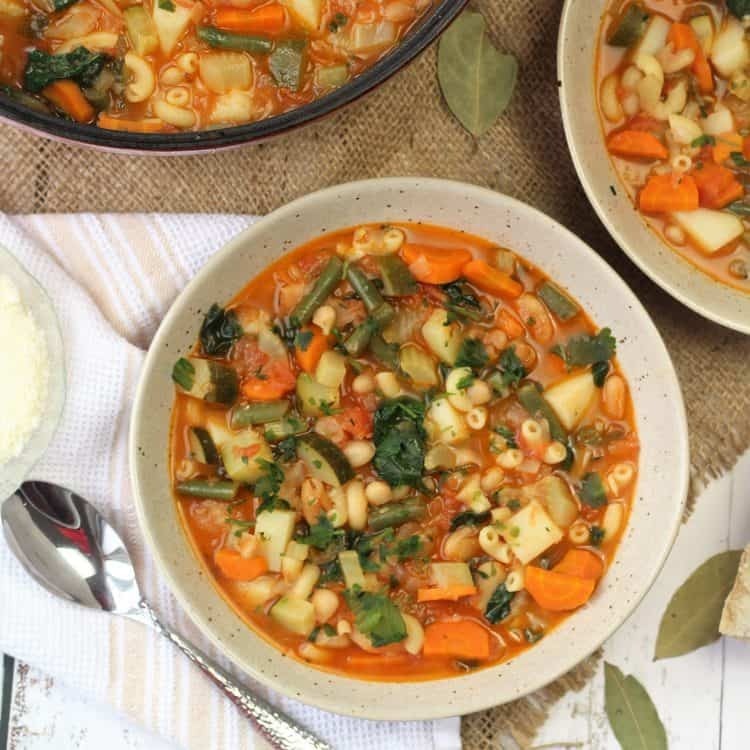
    A classic Italian soup, traditionally made from vegetable scraps and paired with beans and sometimes pasta, minestrone is the perfect first course for a Sicilian supper. There are a variety of ways to prepare this meal starter, but I was drawn to a recipe by Nadia Fazio of Mangia Bedda.


    Nadia’s blog reflects her quest to transcribe all of her mother’s classic recipes. It has an even deeper meaning for her now that their mother has passed. 


    I sat down with Nadia to discuss her Sicilian-Canadian upbringing, the origin of Mangia Bedda (and its name), the right way to make minestrone, and the art of shelling your own beans.  


    What’s your background?

    I’m Italian-Canadian. Both my parents, however, were born in Sicily. They are actually from the same little town in Sicily (Naso in the province of Messina). My father emigrated to Canada in 1954. My mom, after they got married, came here and joined in 1959.


    What was it like growing up Sicilian Canadian?

    My siblings and I grew up with all the typical Italian traditions that they brought over from Sicily. It’s interesting because it appears that when people came here from Sicily, it was sort of like time froze. They maintained the exact same traditions, with regard to food and family, that they practiced in Sicily. 


    I grew up with the typical Sicilian foods, all the traditional foods, all homemade from scratch, especially at this time of the year, all of the preserving, making the tomato sauce and all the different vegetables, the beans, and roasting the peppers and the eggplants and all of that.


    I grew up surrounded by that, and I think my memories of my childhood and my parents are all, for the most part, actually centered around food, and I didn’t appreciate it at the time. I really did not appreciate it.


    I remember being dragged to a local farmers market in Montreal, and I found it so drab. I mean, I was a kid. It was boring, and it’s one of my favorite places today.


    Another memory that stands out is going to a farm outside of the city to get fresh milk (probably unpasteurized at the time) so that my mom could come home and make ricotta with it.


    Tell us about your project, Mangia Bedda.

    I started this blog almost 10 years ago as a little part-time hobby. It slowly grew and evolved, and I realized that my mission was really to transcribe all of my mom’s recipes so that they wouldn’t be lost. Most importantly, I wanted to write them down and get the correct quantities of ingredients because whenever you speak to an Italian nonna about how much flour goes into a recipe, it’s as much as needed.


    I started going to my mom’s home to prepare one recipe at a time, watching her make it and stopping her at every step. “Wait, Mom, I’ve got to measure. I’ve got to weigh; I’ve got to write down how much it is.” So that’s what I did because I wanted to make sure that I had my favorite recipes. And that’s even more dear to me now. I’m so grateful that I had the opportunity to do that.


    I lost my mom a year ago, actually. So I am ever so grateful that I had that opportunity to do that because I have the recipes, not only for me, but I see how much they’re appreciated by the types of comments and feedback I get from my readers, who are so happy that I took the time to document them. They share these memories of growing up with these recipes and are so happy that there’s a place where they can get them.


    Where does the name of your blog come from?

    Bedda means my pretty one or beautiful one. And that’s of significance to me because when I was little, I only met my nonna twice in my lifetime. She lived in Sicily, but I remember I was two years old when I met her, and apparently, I didn’t want to eat. She always said those words to me, “Mangia, bedda,” to coax me to eat.  


    What does this minestrone remind you of?

    The first thing that comes to mind is memories of this time of year, specifically because this was when my mom made huge batches of minestrone, and she had all the vegetables from my dad’s garden. So, if I look at all the ingredients and the recipe, the celery came from the garden. The tomatoes came from the garden. The zucchini and the green beans came from the garden. Oh, and some of the greens, I put in fresh spinach that’s easily accessible, but you can use any greens in the garden.


    I remember my mom making huge batches. She would freeze it before adding pasta and put it into freezer bags. She had a freezer full; we used to have the deep-chest freezer that we had in the garage at the time. She would take out a bag at a time and cook it up for us.


    So, what exactly is minestrone?

    It’s an Italian vegetable and bean soup. The key component is that it’s vegetables and beans. The beans are always present. Usually, they’re Romano beans, but they could be white beans. It’s just a medley of vegetables cooked down with these beans. There’s a tomato base, and in my mom’s case, it was always fresh tomatoes from the garden.


    Usually, pasta is added to it as well. It’s usually a small shape, like a ditalini. It could be small shells or elbow macaroni. Another typical addition would be taking spaghetti and breaking it up into small pieces. We call this spaghetti “sminuzzati.” That was very, very common. In fact, sometimes, my mom might’ve even mixed pasta.  


    How do you flavor your minestrone?

    Most minestrone soups are made with plain water, which is the classic way. But you could use chicken stock or vegetable broth if you want.


    The herbs are also important—fresh basil, parsley, and thyme. You could add flavor with bay leaves. In just about any soup, I always add a couple of bay leaves.


    I also add Parmesan rind. I think that makes such a big difference. If you want to stick to using plain water and not some kind of broth, just throw in a Parmesan rind, and I think it’s fantastic. It gives a lot of flavor. And, of course, I always serve it with Parmesan cheese. Having minestrone or anything with pasta without cheese is hard for me.


    Another thing you could add just before serving is a nice drizzle of olive oil. Olive oil on top adds tons of flavor.


    What did your mother add that was unique to this recipe?

    In our house, it was always made with freshly picked vegetables from our garden because, as I said, my mom made large batches. At this time of year, my parents often headed out to local farms and picked their own vegetables to supplement what we had. We could get more tomatoes, more zucchini, and so on.


    I should add that the beans used were not dried beans that you just bought and soaked from the grocery store. They would always go out and get fresh beans. I actually did this recently. I went to a local farmers market and got a huge 20-pound bag of beans in their pods.


    There was a lot of time spent shelling these beans at this time of year. They were the beans that we shelled ourselves. She also froze bags full of these beans to make pasta fagioli as well during the winter months.


    What do you get out of that experience of shelling your own beans?

    Oh, it connects me to my mom. When I was a kid, I was always trying to find a way to get away from these tasks. And my mom didn’t force me. She let me go out and play and wouldn’t hold me to these tasks. But for the last few years, I made sure to head out with my mom every year to get those beans. So we spent time the last few years sitting here, actually in my backyard, bonding while we were shelling the beans and chitchatting and talking about family and so on. So it’s really special. I’m glad that I had the opportunity to do that. And now I do that with my husband and my daughter. It’s just continuing that tradition.


    What do you hope readers will take away from your recipe?

    What I hope readers will take away is a few things. I think, first of all, the importance of preparing a simple, healthy meal from scratch with fresh ingredients for themselves and their family. I want to show them that it’s really not that difficult to do so. Also, the importance of preserving family food traditions and passing them on to the next generation.

    >>Get Nadia Fazio’s minestrone recipe here.<<


    If you enjoyed this article, consider subscribing to my newsletter for more content and updates!
  • Making Sicilian-Style Bruschetta

    Making Sicilian-Style Bruschetta

    It was late afternoon when our bus rolled into Catania. After checking into our hotel, we wandered over to a cafe across the street, which proudly advertised “Sicilian Bruschetta.” 


    My Sicilian family never served bruschetta. Growing up in Wisconsin, it was just something I’d find at a hip trattoria. So I assumed this menu item was geared toward American tourists, who pronounce it “broo-shetta” instead of the Italian “broo-sketta.” 


    Still, I was intrigued. What made this bruschetta Sicilian?

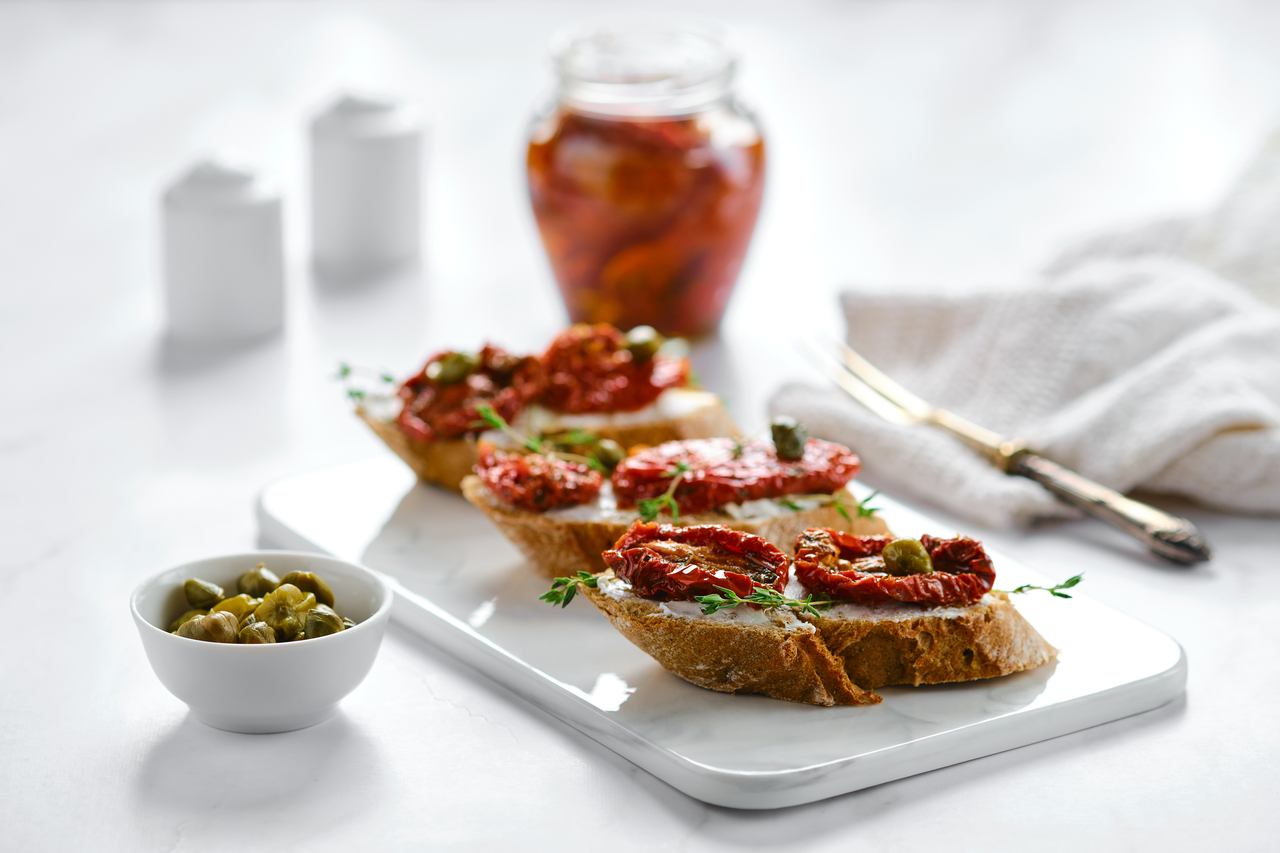
    We ordered a plate, and it was delightful: sweet Sicilian tomatoes, fresh basil, crunchy caper berries, roasted garlic, and just the right amount of olive oil and vinegar. It was a celebration of Sicilian culture on crunchy, toasted bread.


    But I wondered. Was bruschetta really Italian? Where did it come from?


    For one thing, it probably didn’t originate in Sicily. There are some who say that the Etruscans invented bruschettaAncient Romans. Either way, the appetizer has likely existed nearly as long as olive oil, according to the late James Beard Foundation Lifetime Achievement winner and Italian cooking writer Marcella Hazan, who wrote about bruschetta in The Classic Italian Cookbook. As for the name, she explained, “bruschetta comes from bruscare, which means ‘to roast over coals.’”


    I recently stumbled on a YouTube video of another Sicilian bruschetta recipe. Produced by Francesco Elia, aka Tortellino, this recipe starts with good-quality bread: a fresh-baked pane nero di Castelvetrano loaf made from tumminia durum, which, like bruschetta, has ties to Ancient Rome. According to Francesco, this was also the go-to bread during World War II when other flours were harder to come by. 


    Francesco mixes his toppings—tomato, basil, garlic, salt, and pepper—with extra virgin olive oil and vinegar. He lets the mixture sit and marinate for several minutes to let the flavors blend. During that time, he bakes the slices until the edges are golden but not too crispy. 


    I contacted Francesco, a Sicilian born in Catania who now lives in the United Kingdom, to chat about this popular antipasti offering, its preparation, how to keep bruschetta crispy, serving etiquette, and what makes a recipe Sicilian.


    What is Sicilian bruschetta?

    It can be as simple as olive oil, oregano, and pepper or as sophisticated as looking almost like a pizza. It doesn’t really matter. But the fundamental basis is the way you cook the bread. 


    As long as the olive oil is good, especially if it’s new, that is a form of bruschetta. You can have hot bread, bread under the grill, or sometimes even bread on the barbecue. You get a lovely charcoal and smoky flavor.


    People add oregano, for example, to give a little bit of a pizza flavor, along with garlic, tomatoes, and mozzarella. It’s a bit like a pizza to an extent.


    I also included some balsamic drizzle in my recipe, which is incredibly tasty. I did that because that’s what I was used to doing here in Sicily. So I’m calling it a Sicilian bruschetta because that’s how we used to eat in my house. It’s generally an appetizer as well. It’s a form of a starter. 


    You can dip it with olives and sun-dried tomatoes on the side. And that is more cultural nowadays, of course. But in the past, it was very much about survival because it was something you could do very easily, and you could get by just by eating bread, olive oil, and tomatoes.

    Is there a proper way to prepare the basil?

    I think basil is okay as long as you don’t cook it. Basil is an incredible herb. I always put it at the end of my dishes. If it’s a hot ragù, for example, you will see me adding the basil at the end because it releases lots of flavors. I do that with most of my herbs.


    It doesn’t matter if you crush it, chop it with a knife, or do it with your hands. People say that if you chop with a knife, it loses its properties. I think it’s rubbish. Personally, it’s so minimal. The whole thing doesn’t matter. The most important thing is to leave it to marinade because if you leave it for 20 minutes or 30 minutes to marinade with the olive oil, you will see that it will release its lovely flavors and taste incredible. That is an ingredient that is not in the original bruschetta. It is part of the evolution of bruschetta because basil obviously goes really well with most things, especially with tomatoes.


    How do you ensure that your bread will be crispy rather than soggy when adding the toppings?

    What I do is I put mine under the grill, and I do not put the mix until I’m ready to eat it. Generally, I tend to serve it hot. So if I am entertaining, for example, and I’ve got guests coming, I will do the bruschetta bread under the grill and then call everybody at the table. They sit at the table, and I’ll get it out of the oven, and it’s hot and crispy. Then, I’ll have the little pot of my marinade in the middle. Then people can help themselves and then eat it straight away. And because between putting it on the bread and eating, it’s pretty much a couple of minutes, it stays crispy. However, if you were to do it earlier and leave it on the bread, it would get soggy because the bread would absorb the olive oil. It will taste okay but not the same because you will lose the crunchiness. So, if you want to retain the crunchiness between spreading the marinade and eating it, just a few seconds.

    What is the traditional serving of bruschetta?

    There isn’t one really. I think in Sicily, you have the bread in the middle of the table, and you help yourselves. That is generally how food is consumed in Sicily. It’s more about the warmth and the family fun of fitting together rather than the etiquette of having to have it on a plate that becomes very un-Sicilian, so to say. I’m sure some people do that, but it’s not how people generally eat in a household; in a family, you put the food in the middle of the table, and people help themselves.


    What makes a recipe Sicilian?

    What makes it really Sicilian is ingenuity and making it do with what you have. Sicilians are very good at using their imagination to make anything they have in the fridge. That is why Sicilians have come up with so many different recipes: because their imagination is really great, and from very little, they can make something very, very big. And the best thing is that Sicilian food is the simplest food. And that’s why bruschetta is so great because it’s very, very simple. You will find that even the most acclaimed pasta dishes in Sicily have only a few ingredients but are incredibly delicious. The same applies to a lot of pasta, for example. There are only a few ingredients, maybe three, four, or five. 


    The reason is that the fewer ingredients you have, the more you can taste what the meal is about. And so if it’s about the mozzarella, then you can taste the mozzarella. If it’s about the tomato in a recipe, then you taste the tomato. 


    The true Italian and Sicilian dish is simple cuisine where you can eat something, identify what is in it, and appreciate a blend of flavors without something being overpowering. A lot of Sicilian food also has garlic, but I will only put one little clove because I don’t want it to be overpowering. 


    And that is where Sicilians are good at making something work from very, very little.


    Sicilian bruschetta recipe


    Preserving Sicily’s Bread-Making Tradition


    If you enjoyed this article, consider subscribing to my newsletter for more content and updates!
  • Victoria Granof Redefines La Dolce Vita with Sicily: My Sweet

    Victoria Granof Redefines La Dolce Vita with Sicily: My Sweet

    Director and food stylist Victoria Granof is well aware of America’s love affair with Italy. It’s something she shares, but one region of Italy particularly inspires her—and it’s not the one at the tip of your tongue.


    “I get so frustrated when people start talking about Tuscany,” she says. “I mean, Tuscany is really nice—really nice. But Sicily is more my style; it’s so different from any other part of Italy. People just think it’s mafia, mafia, mafia. And it’s so much more than that. I am on this mission to show people the Sicily that I love and that it’s fabulous and different from the rest of Italy.”


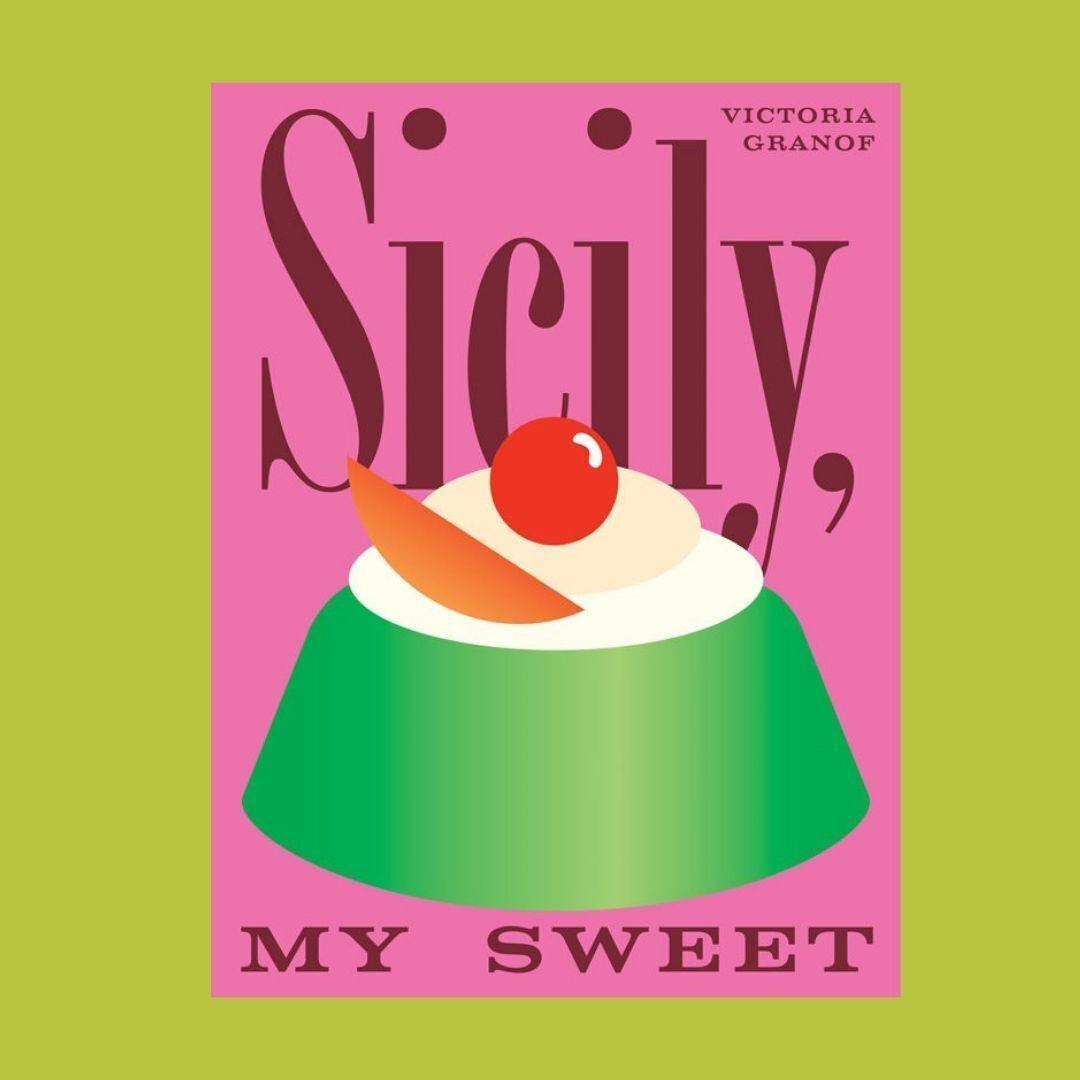
    One of Victoria’s obsessions is the aesthetic beauty of Sicily’s famous sweets, which inspired her latest project, Sicily, My Sweet: Love Notes to an Island, with Recipes for Cakes, Cookies, Puddings, and Preserves.


    Victoria and I recently sat down for a conversation where she shared her surprising Sicilian connection, her favorite recipes, what she learned working with photographer Irving Penn, the fascinating and sustainable way Sicilians make cannoli, and what she hopes book readers will take away. 


    Tell us about your background and connection to Sicily.

    My father’s side of the family is northern Italian, and on my mother’s side of the family were Sephardic Jews from Spain before the Spanish Inquisition.


    We always thought we originated in Spain and landed in Turkey for the last 400 years. But the language, dialect, and food that we took with us, as well as a lot of the traditions, were not Turkish. 


    When I went looking for my roots and to feel a connection, I went to Turkey, and it was like, “Oh, this is nice, but this is not home.”


    It wasn’t until I read an article about Maria Grammatico, who owns a pastry shop in Erice. She said she was getting older and was afraid that none of the younger generation wanted to keep the tradition of Sicilian pastry alive because it was just dying off. All they wanted to do was move to a big city or out of Sicily and do something else.


    I was really drawn to this because I was a pastry chef then, and I thought, okay, I’ll go, and she can teach me. So that’s what first brought me there, and I felt this really strong connection as soon as I went. 


    Fast-forward to maybe five years ago, when all my family did our DNA and found out that we’re Sicilian—57% Sicilian. Then I started really researching it. 


    Spain wasn’t Spain as we know it now at that time. It was the Spanish empire, which included a lot of South and Central America and from Naples down through Sicily. 


    That’s where we started from, who knows how long ago, but we were in the Sicily of Spain. And so there are still traces of the dialect in what we brought from 500 years ago, just like Sicilian Americans whose families came here a hundred years ago or 200 years ago with that same dialect, they will be speaking that same dialect for another 300 years. That’s what they brought with them, and that’s what gets passed down through the family. 


    Is there a recipe in this book that has special personal significance?

    I think everybody’s grandmother makes biscotti Regina, the cookies with the sesame seeds. I remember my grandmother had a cookie tin of those on top of her refrigerator. Honestly, now that I think about it, it was kind of rusty inside. Those cookies probably took years off our lives!


    When she died, I remember taking the cookies off the top of the refrigerator and thinking, “These are the last ones she’s ever going to make with her hands.”


    I had one in my freezer for the longest time. Then we had a power outage last summer, and everything had to go. I forgot that the cookie was in there, so it went with it. It’s very heartbreaking. 


    You were a pastry chef and now a food stylist. How did that influence this book?

    I had to go against all of my pastry-chef training, make it approachable and easy, and simplify it for home cooks. So, that part didn’t come into it other than I love making pastries. 


    The book’s aesthetics were really important. In the end, two publishers were interested in it. (There were others, but these were the two that I was considering.) I went with Hardie Grant Publishing because they were willing and eager to have me not only design the book but also guide its aesthetics. 


    I worked with a designer in Sydney, Australia, on the book design. When I saw her very first designs, I was like, “Oh my God. I love this so much.”


    Then they went through a couple of iterations, but just the colors! It was really important for me to have those colors in the book and on the book. It wasn’t those earth-tony Tuscan things, so people would really understand that Sicily is different from the rest of Italy, period, and why it’s so fabulously different. So the color had a lot to do with it—the graphics, the photographs, everything. 


    Describe those colors.

    I used pinks and greens and oranges and blues: the colors in the tile work and those on houses. There are pink houses in Sicily and raspberry-colored houses in the country. And I just love that color. So a lot of that; not millennial pink, but a lot of that kind of Sicilian country house/raspberry pink and the green of pistachios, I really leaned into that. And the orange of orange peel and yellow of lemons—just the colors in the ingredients, really. 


    You worked with the late Irving Penn. How did he influence you?

    I worked with him for 10 years. The funny thing was that I met the Vogue photo editor at a party, and it was a very short, cordial conversation. I handed him my card, and that was it. 


    Then, a few months later, he called me and said, “Mr. Penn is looking for a collaborator. And I remember meeting you at the party, and you were very reserved and quiet, and that’s what he likes. That’s the vibe he likes, so I think it would be a good match.”


    So, for 10 years, I had to keep my mouth shut and not chat. It was a little bit torturous from that point of view. But you know what? I learned the economy of everything. There was nothing extra in anything. None of his output, none of his persona, none of his words, none of his anything were extra. Everything was essential. So he never had superfluous anything anywhere around him. 


    I learned what is important in a picture and what is not necessary. I learned when to stop because several times, he would set up the shot, do a Polaroid, and take a picture. He would do a Polaroid first; if he liked it, he would take the picture, and then we would leave.


    We’d be done before lunch. And it was never like, “Alright, let’s do some variations,” or “Let’s do five more just in case,” or “Let’s see; do we think we have it?” No, after many years, he knew what it took to get a good picture and how to recognize it when he got it. And that was huge. 


    It’s a practice and a discipline. I’m so grateful for that because I’ve used it in all aspects of my life, including personal relationships. It’s really important to know when to stop.


    Which Sicilian desserts should everyone experience?:

    Well, anybody who hasn’t had a really good cannolo is… I mean, forget it!


    I learned the last time I was in Sicily that they use bamboo as cannoli-shaping tubes. It was kind of a revelation for me. If you’ve ever done that with the metal tubes and fried the shells, the first thing it does is sink to the bottom. And then the bottom of the shell gets a little bit darker, which nobody notices, really. And then you have to keep turning them around and everything. With the bamboo, it floats. So not only does it just float and turn around by itself, but it’s porous. So it cooks from the inside out and the outside in, and it allows air bubbles to come through and make the dough lighter. It’s really an amazing thing. They turn black, but they are used over and over, and it’s sustainable.


    I’m also really obsessed with St. Agatha’s breast cakes. I do them a couple of different ways, but the way I really love them is just with the pastry dough, the ricotta inside, and the icing on top. I love those symbolically—and just about anything with almonds and pistachios.


    Most of my recipes are traditional, but some of them I developed that are just in the spirit of Sicily using Sicilian ingredients. I have shortbread cookie recipes, and one has sun-dried tomatoes and anise seeds. It’s treating the tomatoes like dried fruit because that’s what they are. Then, the other one has dried figs and oil-cured olives in it. It’s really treating the olives and the tomatoes like the fruits they actually are. And it’s really, really good. You could just keep the rolls of the dough in your freezer and then slice and bake it as you need it.


    What do you hope readers take away?

    I want them to appreciate this on so many levels. I want them to open their eyes and minds and appreciate Sicily for the multicultural, fabulously weird, and delicious place that it is.


    In the book’s introduction, I really talk about how if you go to other parts of Italy, they look like postcards. Everybody brings the same pictures back from Rome. There I am, throwing the coin in the Trevi Fountain. There I am in front of the Coliseum. They’re all the same pictures. And the takeaway is the same. You can go to those places passively. You can just observe.


    But what I love to say about Sicily is if you are there, you’re in the game—not just enjoying it passively. You’re not just looking at it. You’re experiencing it. And some of it is funky, and there’s garbage on the side of the road. There’s some funky stuff there. But it’s worth it because being there is such a heightened sensory experience. 


    After so many centuries of being dominated and controlled by all kinds of different civilizations, people, empires, and all of that, it’s just turned into this really strong, strange, wonderfully mixed-up, and beautiful place. It’s not in spite of having that history; it’s because of the history that it’s so great.


    >>Get your copy of Sicily, My Sweet here!<<


    If you enjoyed this article, consider subscribing to my newsletter for more content and updates!
  • Victoria Granof Redefines La Dolce Vita with Sicily: My Sweet

    Director and food stylist Victoria Granof is well aware of America’s love affair with Italy. It’s something she shares, but one region of Italy particularly inspires her—and it’s not the one at the tip of your tongue.


    “I get so frustrated when people start talking about Tuscany,” she says. “I mean, Tuscany is really nice—really nice. But Sicily is more my style; it’s so different from any other part of Italy. People just think it’s mafia, mafia, mafia. And it’s so much more than that. I am on this mission to show people the Sicily that I love and that it’s fabulous and different from the rest of Italy.”

    One of Victoria’s obsessions is the aesthetic beauty of Sicily’s famous sweets, which inspired her latest project, Sicily, My Sweet: Love Notes to an Island, with Recipes for Cakes, Cookies, Puddings, and Preserves.


    Victoria and I recently sat down for a conversation where she shared her surprising Sicilian connection, her favorite recipes, what she learned working with photographer Irving Penn, the fascinating and sustainable way Sicilians make cannoli, and what she hopes book readers will take away. 


    Tell us about your background and connection to Sicily.

    My father’s side of the family is northern Italian, and on my mother’s side of the family were Sephardic Jews from Spain before the Spanish Inquisition.


    We always thought we originated in Spain and landed in Turkey for the last 400 years. But the language, dialect, and food that we took with us, as well as a lot of the traditions, were not Turkish. 


    When I went looking for my roots and to feel a connection, I went to Turkey, and it was like, “Oh, this is nice, but this is not home.”


    It wasn’t until I read an article about Maria Grammatico, who owns a pastry shop in Erice. She said she was getting older and was afraid that none of the younger generation wanted to keep the tradition of Sicilian pastry alive because it was just dying off. All they wanted to do was move to a big city or out of Sicily and do something else.


    I was really drawn to this because I was a pastry chef then, and I thought, okay, I’ll go, and she can teach me. So that’s what first brought me there, and I felt this really strong connection as soon as I went. 


    Fast-forward to maybe five years ago, when all my family did our DNA and found out that we’re Sicilian—57% Sicilian. Then I started really researching it. 


    Spain wasn’t Spain as we know it now at that time. It was the Spanish empire, which included a lot of South and Central America and from Naples down through Sicily. 


    That’s where we started from, who knows how long ago, but we were in the Sicily of Spain. And so there are still traces of the dialect in what we brought from 500 years ago, just like Sicilian Americans whose families came here a hundred years ago or 200 years ago with that same dialect, they will be speaking that same dialect for another 300 years. That’s what they brought with them, and that’s what gets passed down through the family. 


    Is there a recipe in this book that has special personal significance?

    I think everybody’s grandmother makes biscotti Regina, the cookies with the sesame seeds. I remember my grandmother had a cookie tin of those on top of her refrigerator. Honestly, now that I think about it, it was kind of rusty inside. Those cookies probably took years off our lives!


    When she died, I remember taking the cookies off the top of the refrigerator and thinking, “These are the last ones she’s ever going to make with her hands.”


    I had one in my freezer for the longest time. Then we had a power outage last summer, and everything had to go. I forgot that the cookie was in there, so it went with it. It’s very heartbreaking. 


    You were a pastry chef and now a food stylist. How did that influence this book?

    I had to go against all of my pastry-chef training, make it approachable and easy, and simplify it for home cooks. So, that part didn’t come into it other than I love making pastries. 


    The book’s aesthetics were really important. In the end, two publishers were interested in it. (There were others, but these were the two that I was considering.) I went with Hardie Grant Publishing because they were willing and eager to have me not only design the book but also guide its aesthetics. 


    I worked with a designer in Sydney, Australia, on the book design. When I saw her very first designs, I was like, “Oh my God. I love this so much.”


    Then they went through a couple of iterations, but just the colors! It was really important for me to have those colors in the book and on the book. It wasn’t those earth-tony Tuscan things, so people would really understand that Sicily is different from the rest of Italy, period, and why it’s so fabulously different. So the color had a lot to do with it—the graphics, the photographs, everything. 


    Describe those colors.

    I used pinks and greens and oranges and blues: the colors in the tile work and those on houses. There are pink houses in Sicily and raspberry-colored houses in the country. And I just love that color. So a lot of that; not millennial pink, but a lot of that kind of Sicilian country house/raspberry pink and the green of pistachios, I really leaned into that. And the orange of orange peel and yellow of lemons—just the colors in the ingredients, really. 


    You worked with the late Irving Penn. How did he influence you?

    I worked with him for 10 years. The funny thing was that I met the Vogue photo editor at a party, and it was a very short, cordial conversation. I handed him my card, and that was it. 


    Then, a few months later, he called me and said, “Mr. Penn is looking for a collaborator. And I remember meeting you at the party, and you were very reserved and quiet, and that’s what he likes. That’s the vibe he likes, so I think it would be a good match.”


    So, for 10 years, I had to keep my mouth shut and not chat. It was a little bit torturous from that point of view. But you know what? I learned the economy of everything. There was nothing extra in anything. None of his output, none of his persona, none of his words, none of his anything were extra. Everything was essential. So he never had superfluous anything anywhere around him. 


    I learned what is important in a picture and what is not necessary. I learned when to stop because several times, he would set up the shot, do a Polaroid, and take a picture. He would do a Polaroid first; if he liked it, he would take the picture, and then we would leave.


    We’d be done before lunch. And it was never like, “Alright, let’s do some variations,” or “Let’s do five more just in case,” or “Let’s see; do we think we have it?” No, after many years, he knew what it took to get a good picture and how to recognize it when he got it. And that was huge. 


    It’s a practice and a discipline. I’m so grateful for that because I’ve used it in all aspects of my life, including personal relationships. It’s really important to know when to stop.


    Which Sicilian desserts should everyone experience?:

    Well, anybody who hasn’t had a really good cannolo is… I mean, forget it!


    I learned the last time I was in Sicily that they use bamboo as cannoli-shaping tubes. It was kind of a revelation for me. If you’ve ever done that with the metal tubes and fried the shells, the first thing it does is sink to the bottom. And then the bottom of the shell gets a little bit darker, which nobody notices, really. And then you have to keep turning them around and everything. With the bamboo, it floats. So not only does it just float and turn around by itself, but it’s porous. So it cooks from the inside out and the outside in, and it allows air bubbles to come through and make the dough lighter. It’s really an amazing thing. They turn black, but they are used over and over, and it’s sustainable.


    I’m also really obsessed with St. Agatha’s breast cakes. I do them a couple of different ways, but the way I really love them is just with the pastry dough, the ricotta inside, and the icing on top. I love those symbolically—and just about anything with almonds and pistachios.


    Most of my recipes are traditional, but some of them I developed that are just in the spirit of Sicily using Sicilian ingredients. I have shortbread cookie recipes, and one has sun-dried tomatoes and anise seeds. It’s treating the tomatoes like dried fruit because that’s what they are. Then, the other one has dried figs and oil-cured olives in it. It’s really treating the olives and the tomatoes like the fruits they actually are. And it’s really, really good. You could just keep the rolls of the dough in your freezer and then slice and bake it as you need it.


    What do you hope readers take away?

    I want them to appreciate this on so many levels. I want them to open their eyes and minds and appreciate Sicily for the multicultural, fabulously weird, and delicious place that it is.


    In the book’s introduction, I really talk about how if you go to other parts of Italy, they look like postcards. Everybody brings the same pictures back from Rome. There I am, throwing the coin in the Trevi Fountain. There I am in front of the Coliseum. They’re all the same pictures. And the takeaway is the same. You can go to those places passively. You can just observe.


    But what I love to say about Sicily is if you are there, you’re in the game—not just enjoying it passively. You’re not just looking at it. You’re experiencing it. And some of it is funky, and there’s garbage on the side of the road. There’s some funky stuff there. But it’s worth it because being there is such a heightened sensory experience. 


    After so many centuries of being dominated and controlled by all kinds of different civilizations, people, empires, and all of that, it’s just turned into this really strong, strange, wonderfully mixed-up, and beautiful place. It’s not in spite of having that history; it’s because of the history that is so great.


    >>Get your copy of Sicily, My Sweet here!<<


    If you enjoyed this article, consider subscribing to my newsletter for more content and updates!