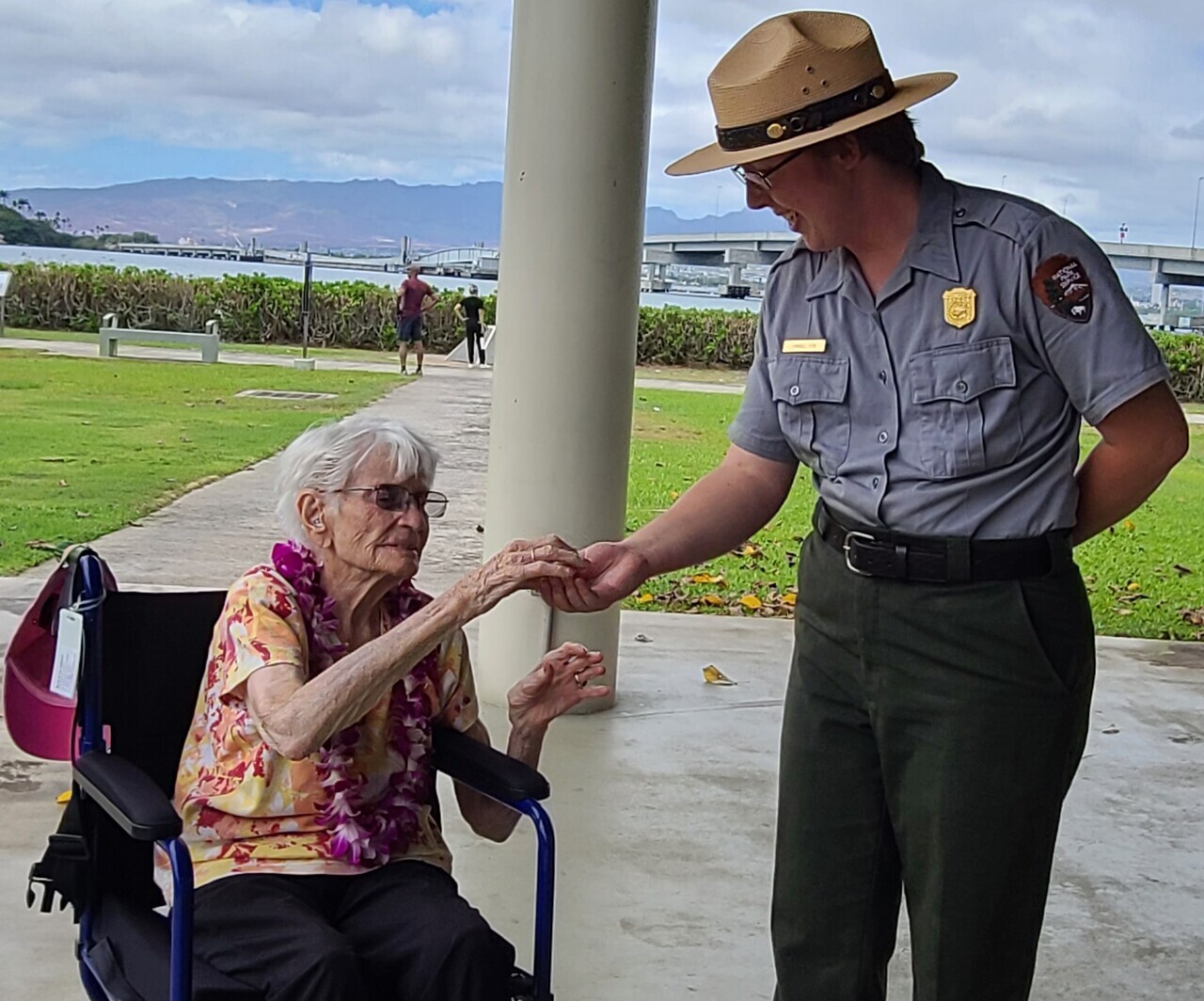
One hundred seven-year-old Alice Darrow remembers being shaken by the news of Japan’s attack on Pearl Harbor. Having worked the night shift at Peralta Hospital in Oakland, California, the nurse was physically rocked out of sleep by her frantic landlady, who shared the tragic news.
Alice had enlisted in the Navy just one month before the tragedy and the United States’ entry into World War II. In January, she received her orders for active duty at Mare Island Naval Hospital, a facility near Vallejo, California, bordered by the Napa River and San Pablo Bay.
Although she served stateside, Alice was on the medical frontlines of treating grave injuries suffered by men returning from the South Pacific. Her days were defined by a critical shortage of doctors and nurses, which required her to pitch in and take on a range of responsibilities, including assisting with anesthesia. Beneath it all lay an undercurrent of fear: the West Coast was a potential target, particularly its military bases. Alice often had to assist in major surgeries by the faint glow of a red flashlight during mandatory blackout drills.
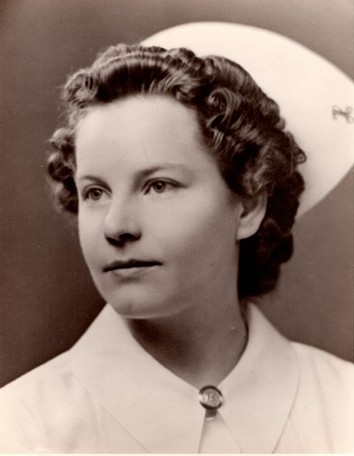
Then Alice Beck poses for her 1941 graduation photo.
“It was pretty horrible,” she recalls, even 83 years later. “There were ones who had amputations, some who were blinded from the blast.”
Among the many service members Alice treated during those critical early months, one in particular stands out. And his surgery and survival redefined both their lives.
Dean G. Darrow was 23 years old when he was blown overboard from his post on the USS West Virginia on December 7, 1941. Considered to be among the lucky ones who survived the Pearl Harbor tragedy, Dean was quickly patched up and resumed duty in the South Pacific. But he frequently felt faint and experienced a pounding heart, something his supervisor dismissed as “war nerves.” A few months later, following appendix surgery aboard a hospital ship, X-rays revealed the true culprit: a Japanese bullet lodged in his heart.
The Navy sent the sailor to Mare Island. There, he was evaluated by renowned Stanford University School of Medicine surgeon Emile Holman, MD, who explained that Dean might not survive long without open-heart surgery, then a rare, risky operation. During the week before his major procedure, Dean grew close to Alice, his special‑duty nurse, whom the staff called “Becky” for her maiden name Beck. He tried to maintain a good sense of humor, joking about how many days he had left to survive.
“When he was scheduled for surgery, he was pretty emotionally shaken up,” Alice remembers. “He took hold of my hand and said, ‘Ms. Becky? When I get well healed up from this, will you go on liberty with me?’ What could I do but say, ‘Well, of course, of course,’ because nobody really thought he’d ever make it through heart surgery, especially in those days.”
Alice didn’t want to crush the man’s spirits. Part of being a nurse was providing such psychological comforts, tending to her patients’ mental as well as physical ailments. Envisioning future off-time with his favorite nurse might provide him some joy in what could be his final moments.
Dean survived his surgery, and Alice recalls what he said to her when he awoke: “Now we’re going on liberty, aren’t we?”
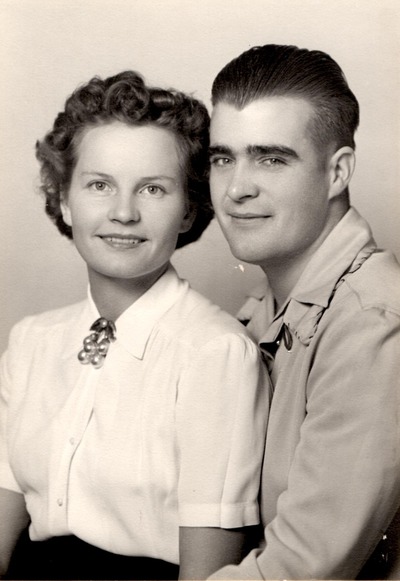
Alice and Dean Darrow in August 1942
Alice agreed to a date. They took a ferry to Vallejo and dined at a restaurant. Months later, on August 1, 1942, they married. The two raised four children together in Contra Costa County, California.
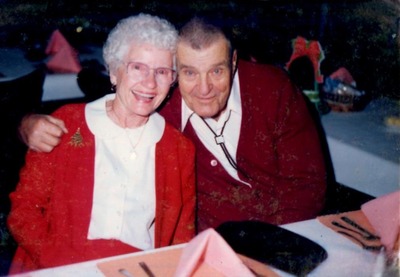
Just before what would have been their fiftieth anniversary, Dean died in 1991 of a heart attack, leaving a legacy of courage, resilience, and the bullet fragment he’d kept as a reminder all those years.
Alice and Dean shortly before his 1991 passing
For decades, Alice shared that “souvenir” in school presentations. Then, 30 years ago, the Pearl Harbor National Memorial reached out to Alice to see if she’d consider donating the bullet. She wasn’t ready; the bullet that might have killed him had come to symbolize an epic love story. So, it was hard to let it go.
But finally, last year, 84 years after Dean was shot, Alice decided it was time. In September 2025, she and her family embarked on a cruise to Hawaii, where she visited the Pearl Harbor National Memorial and presented the bullet.
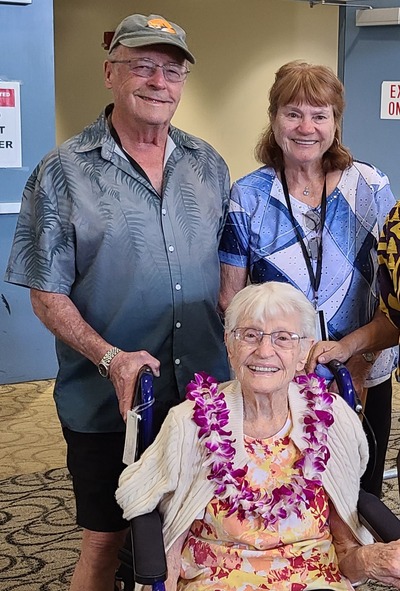
Alice leaves for Pearl Harbor with daughter Becky and son-in-law Ken.
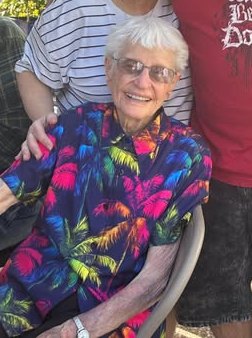
March is Women’s History Month, honoring heroes like Alice, whose stories reveal great achievements and infinite possibilities. It also happens to be the month of her birth. On March 15, more than 35 friends and family gathered at her home in Danville, California, to celebrate this icon’s 107th birthday.
Alice celebrates 107 years with friends and family.
When asked about her legacy and the lessons she’s learned over the past 107 years, Alice says her motto has been, “Never give up.”
“The best you can do is the best you can do at the time,” she explains. “When there was a shortage of doctors and nurses, everybody had to do what they could do, and it was surprising to see how everybody pitched in to help.”
This perseverance, along with a childhood diet rich with her mother’s garden-fresh vegetables, may have played a key role in her longevity.
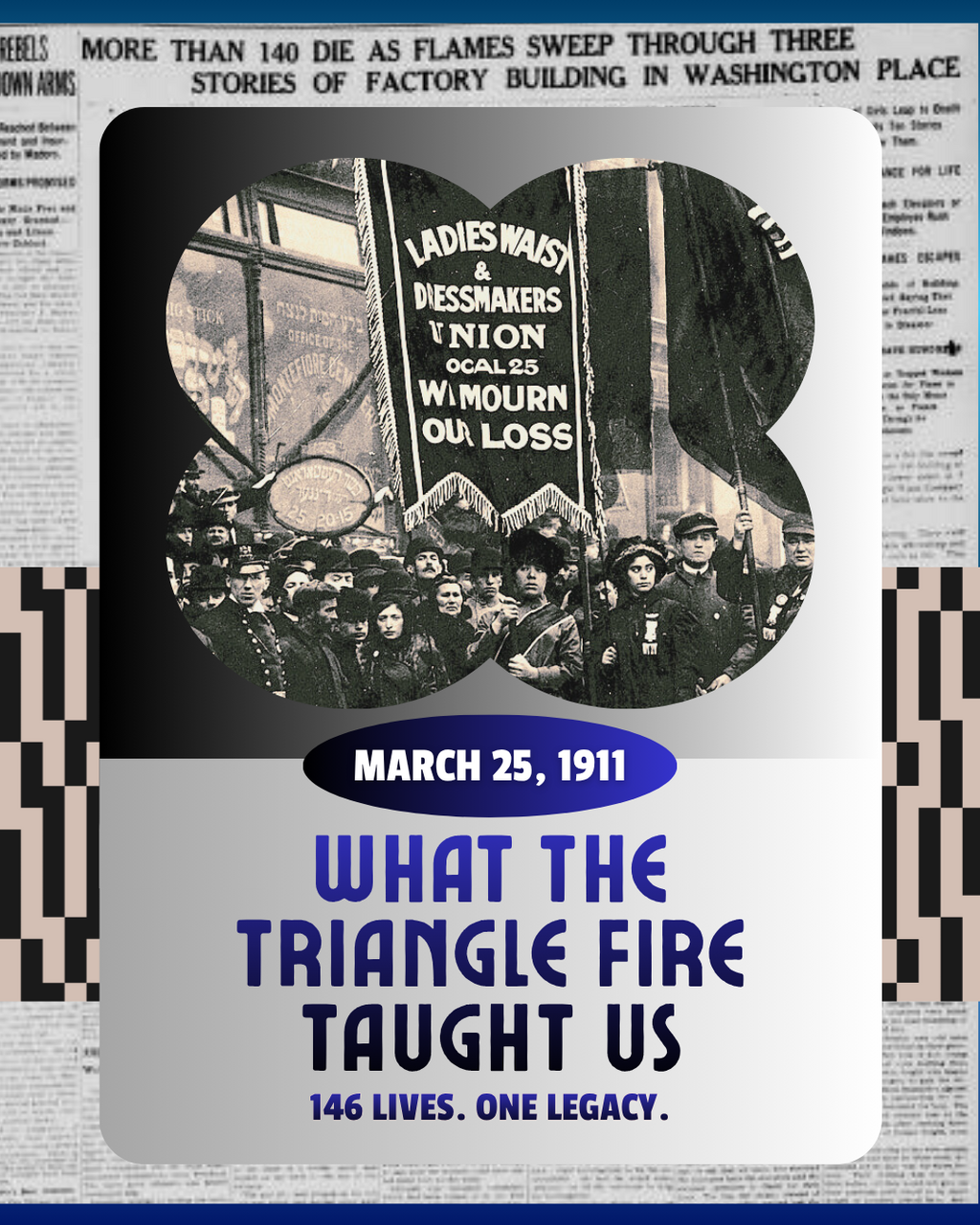
115 years ago today, the Triangle Shirtwaist Factory fire changed everything. In just 18 minutes, 146 workers (mostly Italian and Jewish immigrant women) lost their lives due to unsafe conditions and neglect.
After the fire started on the eighth floor of the Triangle Shirtwaist Factory in New York City’s Greenwich Village, the workers desperately ran for the stairwell, only to find the door locked. This practice was common among employers, who feared theft. Facing certain death, some employees jumped. Others remained trapped, dying from suffocation.
Owners Isaac Harris and Max Blanck, the so-called Shirtwaist Kings of New York, were indicted by a grand jury with manslaughter. But the prosecution was unsuccessful in its conviction. And while they paid victims’ families $75 per deceased person, they received an insurance payout of $60,000, $400 per death.
Enraged, New York’s immigrants took to the streets, demanding justice, dignity, and protection for workers. In response, states began passing reforms, fueling the rise of the International Ladies Garment Union.
For me, this history is personal. My Sicilian grandmother worked for years in a Milwaukee garment factory, protected by the very reforms born from this tragedy. Her workplace later shifted to parachute production during WWII, contributing to the war effort like so many women who kept the United States moving.
Today, we honor their memory and the legacy they left behind. We celebrate the labor advocates who continue to organize and push for the reforms still urgently needed. And we honor the workers upon whose backs this America runs. May they be afforded the safety and dignity they deserve.
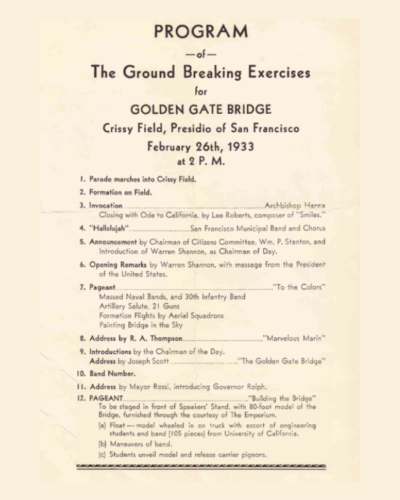
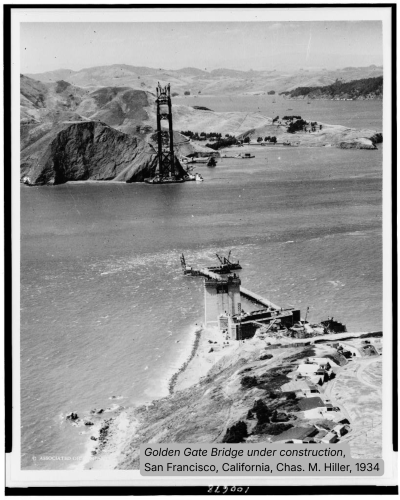
Ninety-three years ago today, at least 100,000 people gathered at Crissy Field for the official groundbreaking of San Francisco’s Golden Gate Bridge.
The celebration featured aerial shows, music, speeches, an 80-foot model of the bridge, and the release of 250 carrier pigeons to “carry the message of groundbreaking to every corner of California.”
Very few, if any, attendees are likely still alive to share their experiences of that historic event. Archival news stories and the original program remain, describing a projected “all-coast” highway system that would one day stretch from Alaska to South America. That ambitious goal has stalled for nearly a century, delayed by the complexity and cost of constructing 50- to 60-mile tunnels or bridge systems to pass obstacles such as the Bering Strait and the Darién Gap.
A printed program tells a story. Showing it through a lived perspective is the work of storytellers. When I discovered the original document, I wondered how Bay Area children like Annalisa and Mario Aiello of Beneath the Sicilian Stars might have experienced such a spectacle. I imagined that for young dreamers already burdened by the stigma of being seen as “other,” the promise of connection to far-flung places could symbolize both progress and escape.
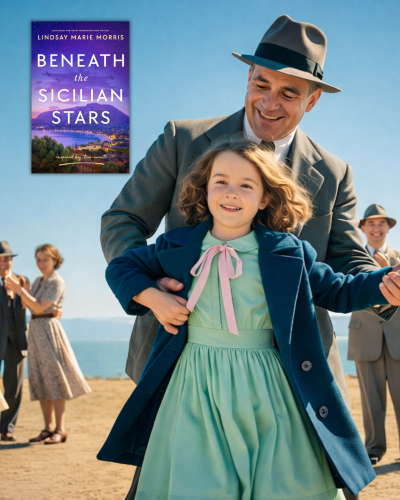
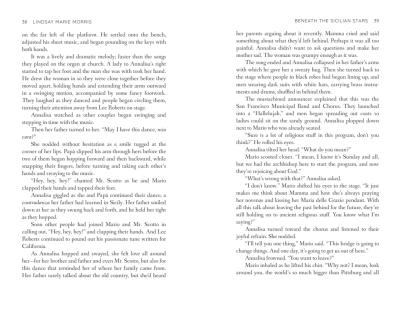
In Chapter 5 of Beneath the Sicilian Stars, I imagined a father bringing his children to that historic day.
The event became:
An Identity Shift: Public progress alongside private questions of belonging.
Cultural Fusion: Sicilian contradanza steps set to Lee Roberts’ “Ode to California.”
A Message of Hope: Carrier pigeons soaring skyward, foreshadowing upheaval yet to come.
I share this passage in my lecture, The Scaffolding Approach: Building Enduring Historical Narratives, to show how fiction becomes its own kind of bridge. It allows us not only to observe history, but to step inside it and see how individual perceptions shape its course.
Some bridges are made of steel. Others are made of memory, tradition, and hope. In the end, we choose which bridges to build and which paths to follow.
February 1942 marked a dark chapter in American history, perhaps the cruelest month on the home front during the World War II years. On February 19, President Franklin D. Roosevelt signed Executive Order 9066, ordering thousands of West Coast unnaturalized Italian and German immigrants to leave their homes, jobs, and communities, just two months after labeling them “enemy aliens.”
In California alone, more than 10,000 Italian immigrants were forced to evacuate designated protected zones such as coastal areas and regions near military bases, often with only days’ notice. Streets, neighborhoods, and entire towns were suddenly off-limits to these “potentially dangerous” people. In the Contra Costa County town of Pittsburg, where Beneath the Sicilian Stars begins, about 22 percent of the local population was uprooted because the town contained critical sites, including Camp Stoneman and the Columbia Steel Plant.
But the numbers and labels only tell part of the story. These evacuated individuals were longtime residents who had spent decades working to support their families, their communities, and the United States economy. Many had sons and grandchildren serving in the U.S. Armed Forces. After all, up to 1.5 million Italian Americans served during World War II. Some evacuated “enemy aliens,” like Rosina Criscuolo of Monterey, whose son and nephew were killed during the attack on Pearl Harbor, were Gold Star parents.
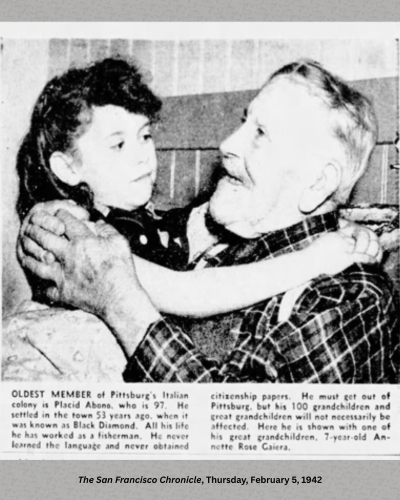
Most were senior citizens, according to a report in The Hartford Sentinel, with an average age of 70. Ninety-seven-year-old Pittsburg resident Placido Abono was among those ordered to evacuate, despite being bedridden. A resident of 53 years, he was reportedly removed on a stretcher.
When I shared this article during a presentation at the Pittsburg Historical Museum, at least two of Mr. Abono’s great-grandchildren were in the audience. It was a stark reminder that this is not abstract history. If you are Italian American, they could have been your grandparents or great-grandparents, too.
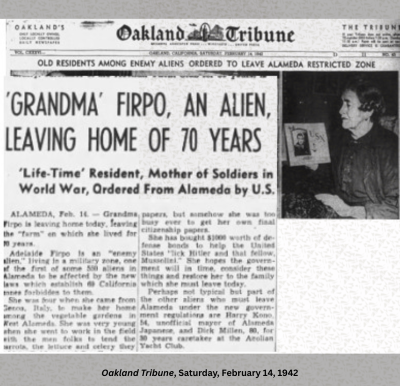
A few days after Mr. Abono was featured, the Oakland Tribune ran a front-page article on “Grandma Firpo,” an Alameda resident since 1872. Adelaide Firpo had two sons who served in the U.S. Army during World War I and a grandson stationed at Pearl Harbor on the day of Japan’s attack. In the featured image, she holds his portrait, not yet knowing whether he survived. Yet her hometown was suddenly off-limits to her, despite the fact that she had purchased $1,000 in defense bonds to “lick Hitler and that fellow Mussolini,” and had applied for U.S. citizenship just five months before receiving her evacuation order.
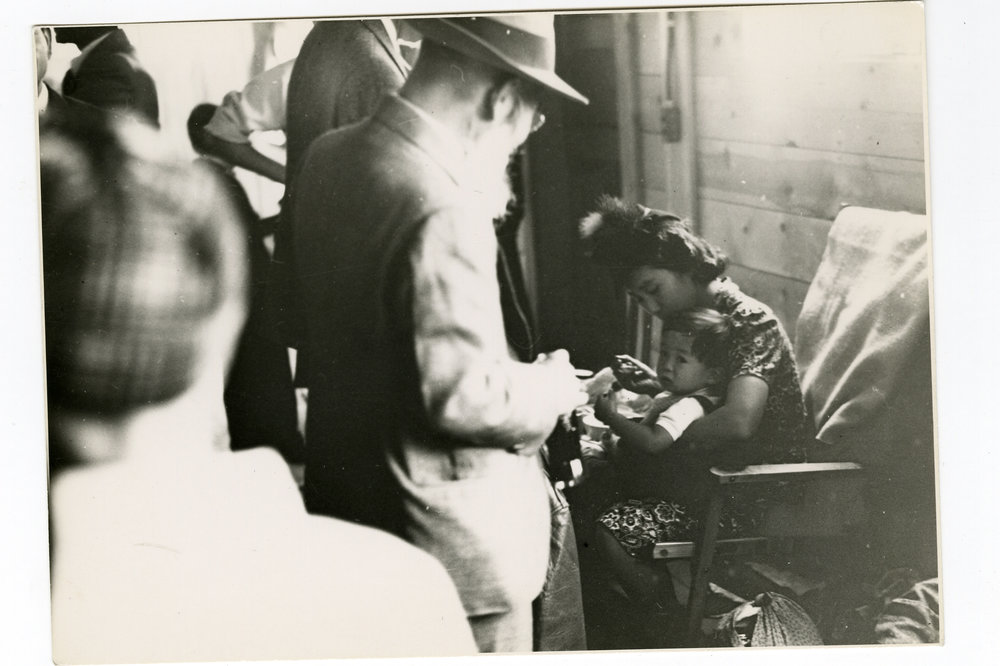
But, of course, West Coast Italian residents weren’t the only ones affected. The same period saw Japanese Americans across the Western United States—including babies, children, and American citizens—forcibly removed in far greater numbers and sent to War Relocation Camps.
I hope you’ll join me in sharing these forgotten stories and in pushing for greater awareness of how policy decisions uprooted generations, affecting not only those directly impacted but also their descendants who are still seeking answers, understanding, and ways to avoid history’s echoes.
Christina Olivolo Sauvageau wasn’t always so passionate about her Italian American identity. But that was decades before she discovered an important piece of Italian American history hidden in her hometown.
Pacifica, California’s Sharp Park is a favorite place for golfers, with its 18-hole historic seaside golf course, and for families, with its grills and picnic tables. San Francisco Archers hosts events at the park’s scenic public range, the oldest of its kind in the nation. But what interests and haunts Christina is what came before.
Not far from where today’s archers aim and flinch, visitors may stumble upon remnants of a small set of concrete stairs. But there’s no sign explaining why—yet.
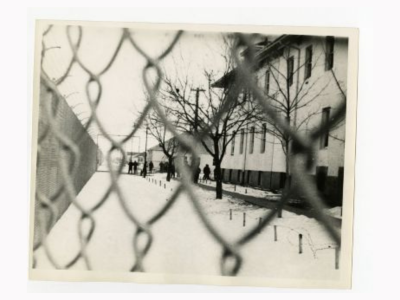
In the aftermath of Pearl Harbor, President Franklin D. Roosevelt issued a series of Presidential Proclamations and Executive Orders, targeting unnaturalized Japanese, Italian, and German residents, whom he branded as “enemy aliens” in early December 1941. Fishing bans, boat requisitions, home searches for “contraband,” such as cameras, radios, and flashlights, strict travel restrictions, and curfews soon followed. But to enforce these policies, the government hastily established detention centers across the country.
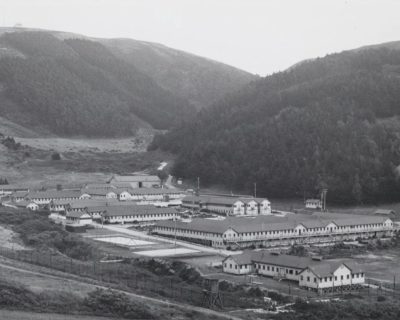
Bay Area violators and those arrested during FBI raids typically landed at an Immigration and Naturalization Service center on San Francisco’s Silver Avenue (now Cornerstone Evangelical Baptist Church). Detainees slept in a gymnasium in wall-to-wall bunk beds without much (if any) access to fresh air or natural light. Once Silver Avenue was at capacity, officials looked to Sharp Park Station, a former state relief camp (also known as Camp Sharp Park). They transferred 193 former Silver Avenue detainees to the new facility on its opening day, March 30, 1942.
The detention centers served as a starting point for many internees before they were placed within a network of internment camps stretched across the country. The stays of other Japanese, German, and Italian detainees ranged from days to months for more routine curfew, travel, or contraband violations.
Christina was amazed that she’d never heard about Sharp Park, which was in her proverbial backyard. Raised in a U.S. Army family, she was vaguely aware of her Southern Italian heritage. She ate spaghetti and honored traditions during the holidays with her paternal grandmother. But learning about this largely hidden local Italian American history inspired her to dig deeper.
She phoned DiStasi to inquire about Sharp Park, and after receiving some rough coordinates, she hopped in her car. About 20 minutes later, she arrived at a deserted spot surrounded by hills near the archery range.
“When I stood there and looked at those hills, I realized that I was looking at the same hills that those detainees looked at,” Christina shares. “I looked at the old electrical poles, now covered in moss, and I know they’re a few of the originals; they match up with photos of the camp I’d found. And I started to tear up. I felt the enormity and the injustice and the helplessness—everything the people must have felt standing there on that same land.”
Today, Christina serves as Historian of Italian Internment for Le Donne d’Italia, a Bay Area multigenerational Italian women’s group dedicated to promoting and preserving Italian culture. We spoke about Christina’s journey as a heritage-inspired historian and activist, surprising finds, and how uncovering and sharing suppressed historical truths can honor those who suffered while educating present generations to recognize patterns of injustice.
Photo credit: Bancroft Library, University of California, Berkeley
How did Sharp Park’s history inspire your advocacy work?
I had no idea that Italians were sent to internment camps, put in detention, and that we were even looked upon as suspicious. By the time I read Una Storia Segreta, everyone in my dad’s generation from my family was gone. So I couldn’t ask them about their experience. My grandfather had become a citizen, but I know it had to have affected them.
This was still during the pandemic. I was being careful—wearing a mask indoors—and I kept thinking, This story needs to be told. People need to know this happened right here in our own backyard. I thought about my organization, Le Donne d’Italia, and how important it would be for them to know.
I wondered if it would be possible to do something outdoors, where we wouldn’t have to wear masks. I thought about asking Larry DiStasi to give a presentation, but he was no longer able to travel. He suggested doing a Zoom presentation.
I hesitated. That wasn’t what I wanted. I wanted people to feel it. I believed they would feel it if they were standing on that land. So I thought, Someone has to tell this story. If no one else can, I’ll do it. That decision came around January 2022.
So, I started studying as if it were a master’s thesis. I didn’t want to get anything wrong—this history is complicated!
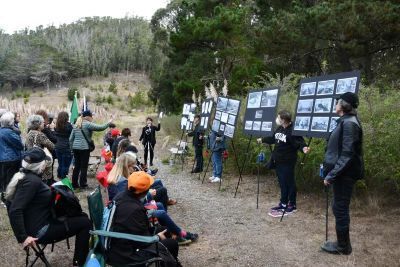
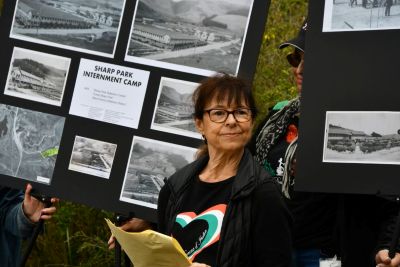
I decided September 2022 would be best for a presentation, when Pacifica’s weather is usually clearer. I created large foam-core boards with photos on easels. Every Le Donne d’Italia officer stood by a board to hold it steady in the wind. I borrowed a karaoke machine for sound and rigged a microphone to a camera tripod so I could keep my hands free.
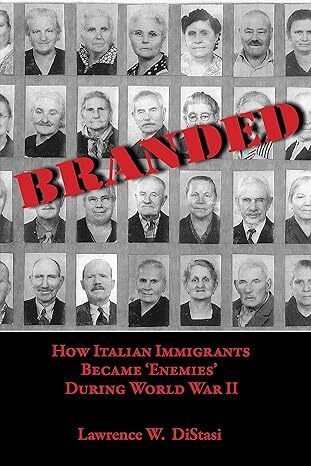
I also wanted a reenactment. I had the actual words of one Italian detainee, Marino Sichi, from Unknown Internment by Steven Fox, a professor at Humboldt State University.
Most of what we know about Camp Sharp Park comes from Marino Sichi. He was quite a character. I asked a very dramatic teacher from my kids’ high school to read the text as a reenactment, and he was wonderful. I also had someone play the role of Marino’s friend from San Francisco who visited him. They read a few lines describing what it felt like to see him behind the wire fence, wondering, Why am I here?
About 25 people attended—mostly Le Donne d’Italia members, plus some spouses and friends. Members of the Pacifica Historical Society came, too. An Italian American woman on the board, who grew up in Pacifica, shared that the FBI had raided her family’s artichoke farm. Their Italian neighbor was interned and held at Sharp Park, and they used to visit him.
A reporter also attended, and the event was covered in the Pacifica Tribune. It went very well.
Coincidentally, that same month, a San Francisco supervisor introduced a resolution calling for signage at Sharp Park to acknowledge its history after consultation with the Japanese American Community.
Two months later, the woman from the Pacifica Historical Society contacted me. A reporter from the Japanese American newspaper The Nichi Bei Times had asked her about the Japanese detention camp. She told him there were also Italians and Germans held there. He didn’t know that. She urged me to get involved.
Because the land is owned by the San Francisco Recreation and Parks Department, the project was open to the public, inviting volunteers to help research the signage. I joined the effort. Someone asked if I had names of Italians held there. I had a few from the Congressional Report [A Review of the Restrictions on Persons of Italian Ancestry During World War II].
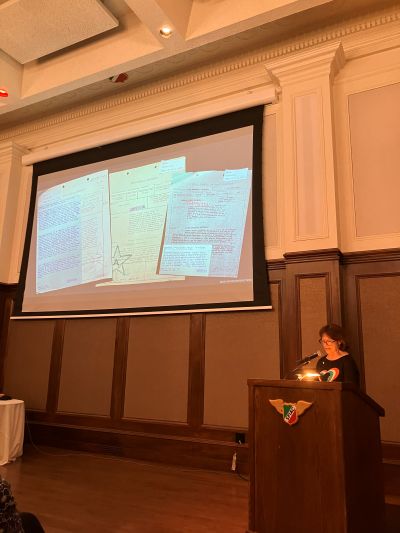
A genealogist on the committee suggested I visit the National Archives in San Bruno. I went, and there were five boxes—about 1,500 FBI records on Italians during WWII, mostly from California. They included investigations, arrest reports, and release documents.
I started skimming for “Sharp Park” but couldn’t find it. Most files didn’t list where people were detained—just “currently detained” or “en route to the U.S. Marshal.” Occasionally, buried deep in a paragraph, it would mention Sharp Park. It was like finding a needle in a haystack.
But as I started reading more closely, I was stunned. The reports were invasive and deeply personal. The FBI interviewed neighbors, coworkers, and even documented children’s schools and activities. Many people were arrested for minor curfew violations or paperwork issues, such as being more than 5 miles from home or temporarily staying with family without updating their certificate.
People’s lives were ruined over honest mistakes. I could only read a few files at a time before becoming overwhelmed. Once, I had to stop and put my head in my hands.
That’s how bad it was. Reading books gives you an understanding—but reading the actual FBI files is different. I felt like I knew these people. There were women detained, too. Their stories haunt me. That’s why I’m so passionate about telling this story now.
Can you share some more memorable stories?
A couple of stories come to mind. One involves a 42-year-old woman in Sacramento. The FBI and other authorities would randomly stake out neighborhoods, and one night they saw her entering her home at 8:30 p.m.—half an hour past the 8:00 p.m. curfew.
She had been at a neighbor’s house borrowing a bottle capper because she was bottling tomato juice. She had two young children at home. For that curfew violation, she was arrested, held in the Sacramento jail for three days, and then sent to Sharp Park. I don’t know how long she stayed there, but even at a minimum, that’s about a week total. Her children were left at home without their mother.
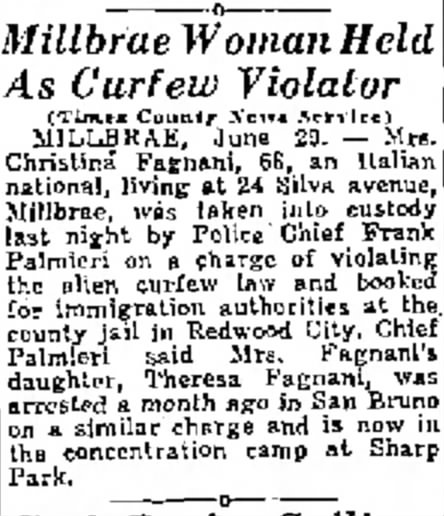
Another case was 30-year-old Theresa Fagnani of Millbrae, near San Francisco, who was also arrested for a curfew violation. Her arrest was reported in the newspaper, which must have been humiliating. She was held at Sharp Park for 11 weeks for a curfew violation.
Her mother was also picked up for a curfew violation a few weeks later. She was 66 years old, and Theresa was her only daughter. I’ve often wondered whether the mother may have done it intentionally so she could be with her daughter. It’s also possible their work required them to be out after 8:00 p.m.
When you share these stories, what do you hope listeners take away?
Compassion for others. It’s interesting because earlier this year, when we heard the news about people being rounded up by ICE and placed in detention camps, I started getting text messages from people who had attended my presentations, saying, “It’s just like what happened to the Italians.”
They felt compelled to share. That’s huge. They’re feeling it now because they know that it happened to Italians, too.
Christina presents to an audience at the SF Italian Athletic Club.
How can readers get involved?
There is still so much investigation to be done through the National Archives and even Newspapers.com. I’ve found names that never appeared in the Congressional report simply by searching newspapers from that time period. Arrests were often reported publicly.
From what I’ve uncovered so far, Italians—and Japanese, and likely Germans—were brought to Sharp Park from as far south as just north of Bakersfield and all the way up to the Oregon border. I even found the release document for one Italian American detainee who was brought from Hood River, Oregon, near Portland. When detainees were released, they were usually put on a Greyhound bus and sent back to where they’d been apprehended. His release form stated that he was put on a Greyhound bus at 1:00 p.m. and sent back to Hood River.
Through this work, I’ve also connected with families of Italians who were held at Sharp Park. I’m now in touch with Marino Sichi’s daughters, the family of Aristide Bertolini, who was also held there, and three others. It’s been a fascinating journey—truly fascinating.
If you enjoyed this article, consider subscribing to my newsletter for more content and updates!
Even 47 years after his death, jazz entertainer, songwriter, and Grammy Award winner Louis Prima remains a legend. Born in New Orleans to immigrants from Salaparuta, Sicily, and the island of Ustica (north of Palermo), he proudly embraced his Italian roots. Something remarkable in the 1940s, when Italian Americans faced hostility as Italy and the United States were at war, and 600,000 Italian immigrants were branded “enemy aliens.”
Against the odds, he transformed Italian folk melodies into unforgettable hits, composed jazz standards, brought a beloved Disney Jungle Book character to life, and inspired Americans of every background to swing, sing, and celebrate the joy of music.
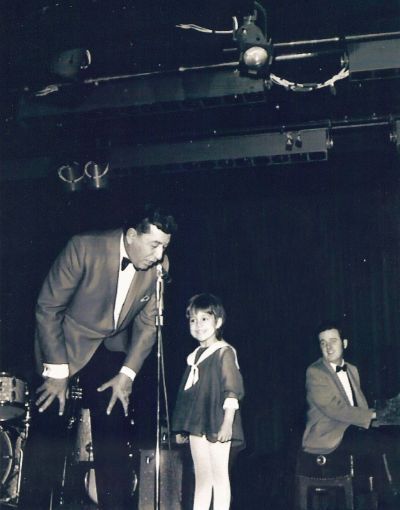
His youngest daughter, Lena Prima, remembers his later years, the times he brought her onstage with her mother, Gia Maione, and the quieter moments when they sat together in the living room. One memorable night, he sang “Pennies from Heaven” to accompany her treasured piggy bank that played the same tune.
“I really idolized my dad,” she says. “I thought he was just magical and amazing. And the band and the excitement of the show, and just going to different places… as a kid, it was exciting, glamorous, and cool. It was just a magical life.”
All of that changed in 1975, when Louis underwent surgery to remove a benign brain stem tumor. Afterward, he fell into a coma. Lena was 11 when it happened; her father remained in a vegetative state for three years before passing away on August 24, 1978.
“It was very traumatizing,” she reflects. “It made me feel like I dreamed that life that was so magical.”
Lena left home early to forge her own path as a rock singer, despite her mother’s objections. During that period, she balanced multiple day jobs, ultimately forming a band called Rough Angel and recording an album with Geoff Workman, producer for Queen, Journey, The Cars, and numerous other rock icons. But the music scene dramatically changed in the 1990s, and Lena shifted to the lounge circuit.
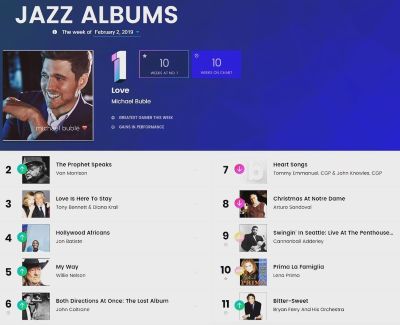
She performed as a vocalist with various bands, including Spiral Starecase (known for their 1969 single, “More Today Than Yesterday“). It was during a performance with that group that she made a career-changing decision: to put on a show in honor of her father. That tribute quickly took on a life of its own, leading to her move to New Orleans in 201, a 14-year residency at the world-famous Carousel Bar & Lounge at the Hotel Monteleone, and to her 2019 top-10 Billboard Jazz Album, Prima La Famiglia.
Lena carries not only her father’s legacy but also her own hard-earned artistic identity. During our conversation, she reflected on the places and people that shaped her, the grief that changed her, and the music that ultimately led her home.
YOU GREW UP BETWEEN LAS VEGAS AND NEW ORLEANS. HOW DID THAT EXPERIENCE SHAPE YOU?
I was born in Vegas, and my dad kept a place in Louisiana. I was in the fifth or sixth grade when we lived in New Orleans, and then eighth, ninth, and tenth grade across the lake in Covington on Highway 190. He had a golf course there and a home.
I started high school there at Covington High, and then after my dad passed away, we moved back to Vegas. I finished high school in Las Vegas and stayed living there off and on.
It was a great experience because it allowed me to just up and say goodbye to friends and school and start over somewhere else. It teaches you to have that kind of lifestyle, where you’re always excited to go places, meet people, and travel.
I like that I had that experience. It makes me not afraid to get up and go, and I have done that. Just selling everything and moving to New Orleans, and also seeing different places, different cities, different cultures, and different accents of people. I have been grateful for having that experience as a kid.
YOUR PARENTS WERE IN SHOW BUSINESS. HOW DID THEY SHARE THAT EXPERIENCE WITH YOU?
My dad always brought me on stage. My first singing experience, which has stayed with me, was at 5 years old at The Sands in Las Vegas. And I remember being embarrassed because it wasn’t Christmas, and the only song I knew was “Santa Claus is Coming to Town.” So I sang that, but I will never forget the spotlight in my eyes and the people all smiling at me. I remember what I was wearing, and then someone sent me photographs from that night many years later. And sure enough, I was wearing what I remembered wearing. So it’s amazing how that particular moment just went, “Bam!” for me.
YOU WERE VERY YOUNG WHEN YOUR FATHER DEVELOPED A BRAIN TUMOR. CAN YOU SHARE THAT EXPERIENCE?
It was scary, and I was confused. I hid around corners and under the stairs, so I could watch him when no one was around. My dad would cry a lot, and I didn’t know why he was so sad. I just didn’t really understand the whole thing; I just knew he was sick.
I remember the day he left, and I sat cross-legged by the window for hours. I just didn’t move after he left.
Then it was just very traumatic. He was in a coma, and he wouldn’t wake up, and I didn’t understand it, and I was afraid of it. And it was just sad.
The only thing I knew to do as a kid was pray, go to church, and light candles. Every night, I would do the rosary beads and just think, “God will make him well, and he’ll wake up and come back home.” I didn’t really understand all that.
When he passed, I felt like it was my fault that I didn’t say enough rosary beads or that I didn’t pray enough. Kids take that kind of stuff on. They think anything traumatic in the family is their fault. So I did feel that feeling like I should have done something more.
It was very traumatizing and just made me feel like I had dreamed that life.
HOW DID THAT CHANGE YOU?
I went through a period when I started working as a professional rock singer. My mom was not supportive; I had basically been forbidden from being a singer or in show business. So I kind of felt like I was doing something I wasn’t supposed to.
I didn’t want anyone to know my name, so I was in bands just as a side singer. I never really went out on my own using my name.
I kind of pushed the pain of everything that happened to the side.
I’ve worked really hard on myself with therapy and self-work. I just feel like this is a journey, and I try to be the best version of myself I can be and heal from everything.
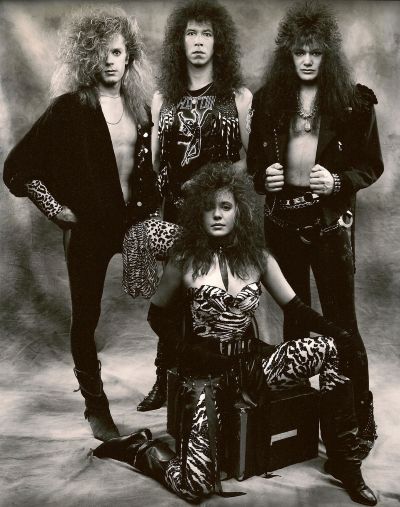
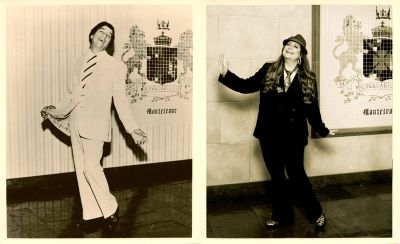
Lena Prima with her Rough Angel bandmates
TELL US MORE ABOUT YOUR ROCK MUSIC EXPERIENCE AND WHAT IT TAUGHT YOU.
It was a great experience, because when you’re working in rock clubs, you have to have a big, big personality and voice to get over the crowd and get everybody’s attention. Also, I trained really hard to develop that voice, which strengthened it a lot. And having to be prepared in any situation in the rock clubs really helped me be better on stage. That was a great lesson.
There was also the feeling of being part of a team, because in the bands I was in, we were all kind of a family. We wrote songs together, collaborated, created music, and rehearsed constantly.
There was a work ethic, especially in my original band. We rehearsed every single day, and we did an album project with Geoff Workman. It didn’t turn into anything because the band broke up, but it was a great experience working with a real platinum-album producer who had produced all my heroes: Journey, the Cars, Foreigner, and Queen.
I learned a lot about being in the studio, and I love to record because of that. I have had many great experiences that have carried me through. I like having a band that feels like a team and a family, where we’re all in it together, we’re up there to have fun, and we all enjoy each other and what music we’re making. People enjoy it when you’re enjoying it.
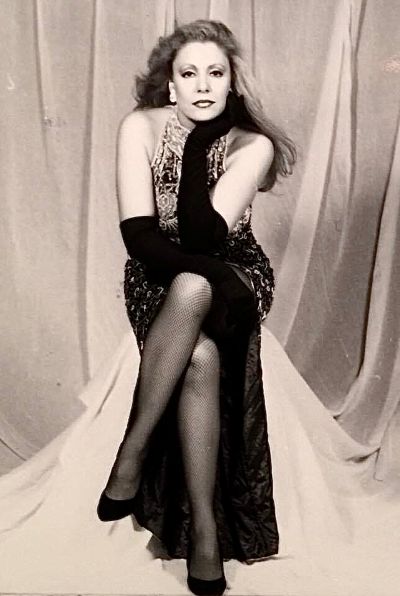
Lena Prima in 1991
WHAT DID YOU DO AFTER THE BAND BROKE UP?
I went from the rock bands to the lounge circuit, so there was no break. What was great about that was when I was playing rock, I had to work day jobs to make a living—no money in that. We would just split whatever we earned. At one point, I was working three jobs at one time and singing at night. It was a lot.
My good friend from high school was working in the lounges, and she said, “You should do it.” And I just didn’t want to; I thought, “Cover songs and Top 40? I’m not that person,” but she talked me into it because it was a way for me to make a living, singing, without having to work day jobs. And it was good money. I went right from rock to that, and I worked on it until 2000, when I put the tribute to my dad together.
Lena recreates an iconic photo of her father at Hotel Monteleone, where she’s performed a residency for 14 years.
TELL US ABOUT THAT TRIBUTE SHOW AND WHAT IT TAUGHT YOU.
I worked with an arranger and wrote the show with the songs, stories, and video. It was tough to get that going, but it was a great experience because I got to see who my dad was through the audience. They would line up to tell me stories about my dad, and grown men would cry, telling me what a wonderful man he was. I learned a lot about my dad and who he was, and it was great for me because the guy I thought he was as a kid was really that guy. So it was just a super joyful experience, and I also learned about the Sicilians in New Orleans and all the history and culture.
I was able to connect with those vibes, and I got more than I could ever have expected or thought. So I learned more about it and embraced it more as I went on that journey of doing a daughter’s loving tribute to her dad, doing the music and singing the songs, and then moving to New Orleans and actually experiencing how the musicians play here and how it’s different. And I kind of thought, “Oh my God, this is where that sound came from for my dad! This is where those rhythms came from, those horn players, and just the way that the music is here.”
It really pulled it all together for me.
HAS THERE BEEN A MOMENT OR EXPERIENCE THAT MADE YOU FEEL LIKE YOUR FATHER WAS RIGHT THERE WITH YOU?
When I made Prima La Famiglia with my good friend John Viola, I mentioned that I wanted to make a big-band album and feature all those Italian songs my dad had heard growing up, along with their stories. There was one particular song that made me feel really, really close to him, and it’s called “Pensate, Amore” on the album.
The reason that’s on there is that, as a small child, I had been watching The Man Called Flintstone. It was a Flintstones full-length feature in which the Flintstones and their friends are going to Europe. They went to Italy, and there was a scene where Fred’s in a tower singing to Wilma, and the singer was my dad.
I remember screaming, “Mommy, Daddy’s on The Flintstones!” And she wasn’t aware that he had done that.
WHAT WOULD YOU WANT YOUR DAD TO SEE IN HOW YOU’VE CARRIED HIS LEGACY FORWARD?
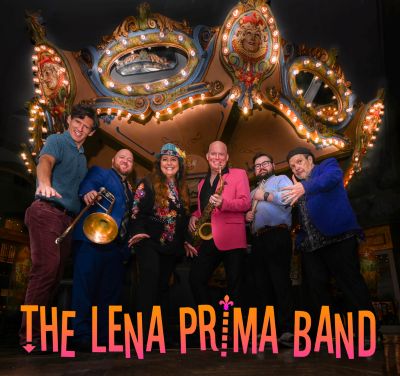
I feel like he would be really proud, honestly. I always hoped he would be, but I now feel really confident about it. He’d be proud of the band I put together and the way that I learned how to get out of myself when I’m on stage.
Over the years, I’d been in my head, trying to be perfect —trying to sing perfectly, say the perfect things, and make sure my show had the perfect songs in the perfect order—everything planned.
It’s become more, “Get out of your head! Just go with how you feel that people feel in the audience.”
That’s what he did. Of course, I want to be good and have excellent arrangements and excellent quality music. I’d learned that from my dad. But now I’m also trying to help people have a great time just like he did.
He’d be proud of that part. And when I sit out, and my band does the first set, I listen and think, “Oh, my dad would love that band.”
I think he’d be proud of what I’ve put together, my journey, and how far I’ve come to where I am now.
On December 7, 1941, 2,341 U.S. military personnel and 49 civilians were killed in the attack on Pearl Harbor. Of those lost, 1,177 sailors, officers, and Marines aboard the USS Arizona accounted for more than half of that day’s American military deaths.
Beneath the Sicilian Stars portrays an Italian American family profoundly shaped by these events: their son, Mario, served as a sailor aboard the Arizona. History shows that Mario’s experience was far from unique. Up to 1.5 million Italian Americans served in the U.S. military during World War II, many while their families at home faced suspicion, stigma, and displacement. U.S. Army statistics further underscore this reality, documenting more than 39,000 Italy-born soldiers in uniform, including 8,913 non-naturalized Italian Americans who served during the war.
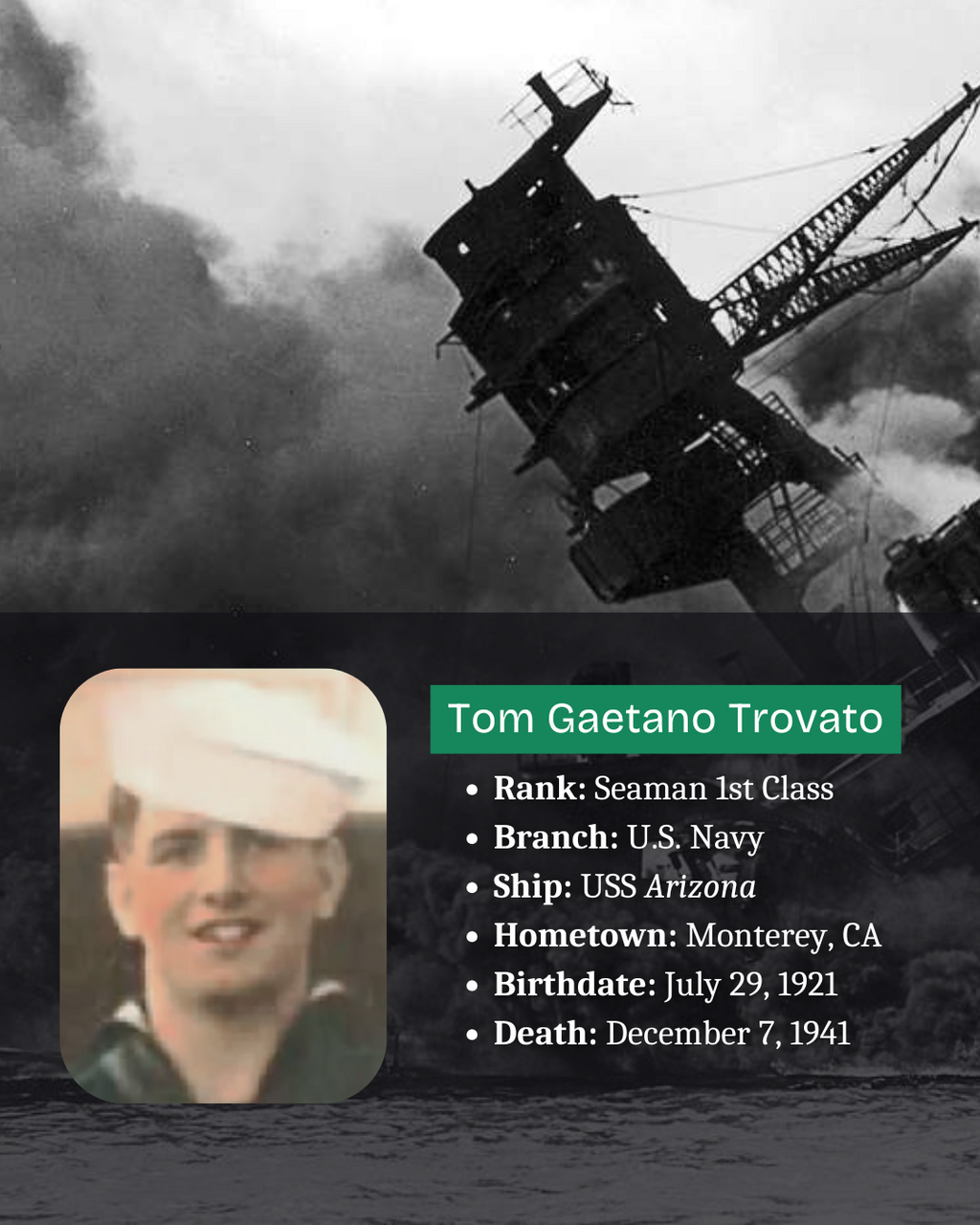
Among those lost aboard the USS Arizona was Seaman First Class Tom Trovato of Monterey, California. His story reflects the painful contradiction faced by many Italian American families during World War II: sons fighting and dying for the United States while parents at home were branded and uprooted as “enemy aliens.”
Rosina Criscuolo, Tom’s mother, was born in Campania, Italy, and arrived in the United States in 1920. She settled in Monterey with her husband, Jean Trovato, another Italian immigrant, and Tom was their firstborn of three sons and a daughter.
After Jean’s death, Rosina supported the family by working as a laundry worker at the Del Monte Hotel. Seeing the strain, Tom quit school in 1939 and enlisted in the Navy. He was serving aboard the Arizona on December 7, 1941. His first cousin, Yeoman Second Class Michael Criscuolo, and his childhood friend, Seaman First Class Jack Hazdovac, also died on the ship.
Rosina was not informed of Tom’s death until the week of February 6, 1942, after her younger son, Michael, had also joined the Navy. Less than two weeks later, she was among the 3,000 unnaturalized Monterey-based Italian Americans ordered to evacuate their homes due to their “enemy alien” status, joining 10,000 other Italian Americans in California, who had also received the notice.
Having lost a son and a nephew at Pearl Harbor, Rosina was forced to leave her job and relocate from her restricted coastal city to an apartment in Salinas with her 11-year-old daughter. Only after broadcaster Walter Winchell drew attention to her case was she permitted to return home.
Italian immigrants from Sicilian coastal villages, including Isola delle Femmine, Porticello, and Terrasini, were crucial to the thriving fishing industries along the East and West coasts of the United States. Yet as readers ofBeneath the Sicilian Starsknow, everything changed after Italy was designated an enemy nation.
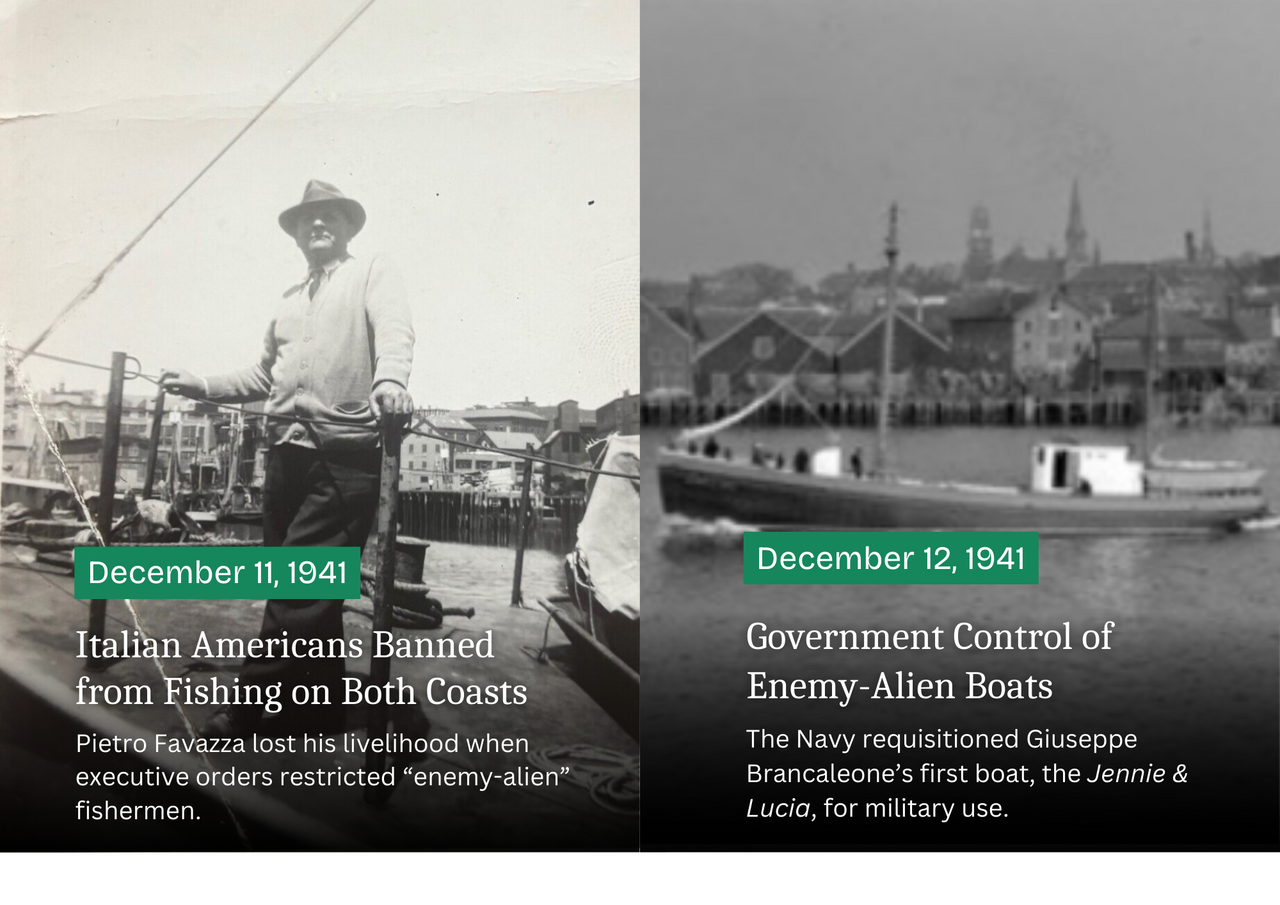
For fishermen, wartime restrictions were particularly crippling after President Franklin D. Roosevelt issued Executive Order 8970 on December 11. So-called enemy aliens were prohibited from entering wharves, piers, or even boarding fishing vessels themselves. The next day, the president issued Executive Order 8976, empowering the government to bypass standard maritime regulations during wartime, so agencies could swiftly requisition Italian-American boats in the name of national security. With a few strokes of a pen, fishermen on both coasts lost their livelihoods.
Once the government imposed enemy-alien curfews and travel restrictions, it was even more difficult for families to find alternative employment, exacerbating their financial hardships. Earlier this year, I spoke with author Maria “Mia” Millefoglie, whose Sicilian grandfathers, both fishermen, were branded as “enemy aliens” after restrictions were imposed in Gloucester, Massachusetts. She described the deeply personal impact on her family.
“It was really tough,” she said. “They had been barely surviving on fishermen’s salaries, and now couldn’t send money over to Sicily… exploring just how they survived made me realize their resilience.”
After the tragedy of Pearl Harbor, President Franklin D. Roosevelt issued a series of life-changing directives, even before Italy was at war with the United States.
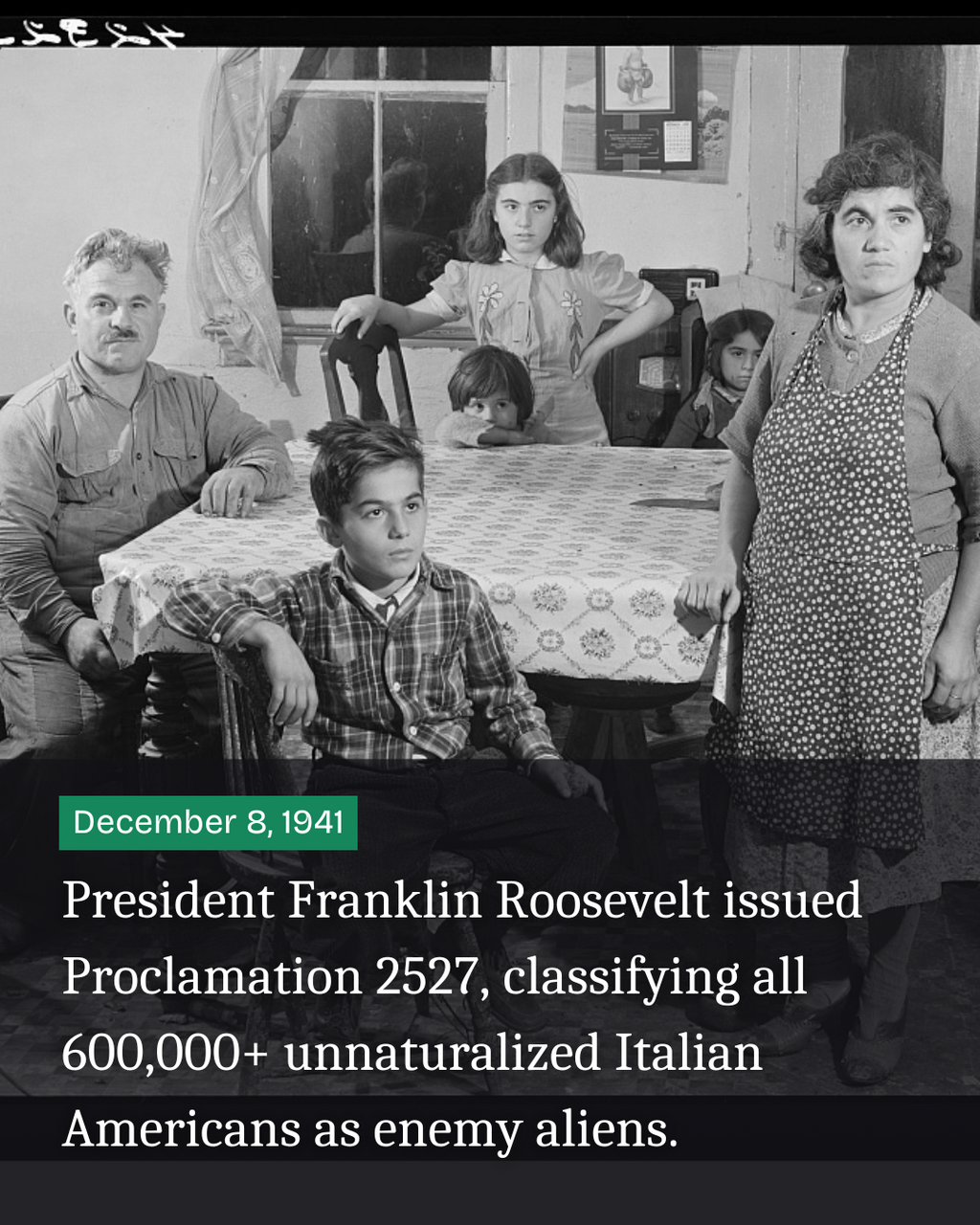
On December 8, 1941, the day after Pearl Harbor, he issued Proclamation 2527, classifying 600,000+ Italian immigrants as “enemy aliens.” Three days later, Italian American fishermen were barred from the Defensive Sea Areas off the coasts of the continental U.S., including Maine, New Hampshire, Massachusetts, and California. With a few pen strokes, livelihoods were lost, and families faced an uncertain future of hardships. Then, just after Christmas, enemy aliens in California, Oregon, Idaho, Washington, Montana, Utah, and Nevada were subject to home searches and ordered to surrender all radios, cameras, firearms, and even flashlights.
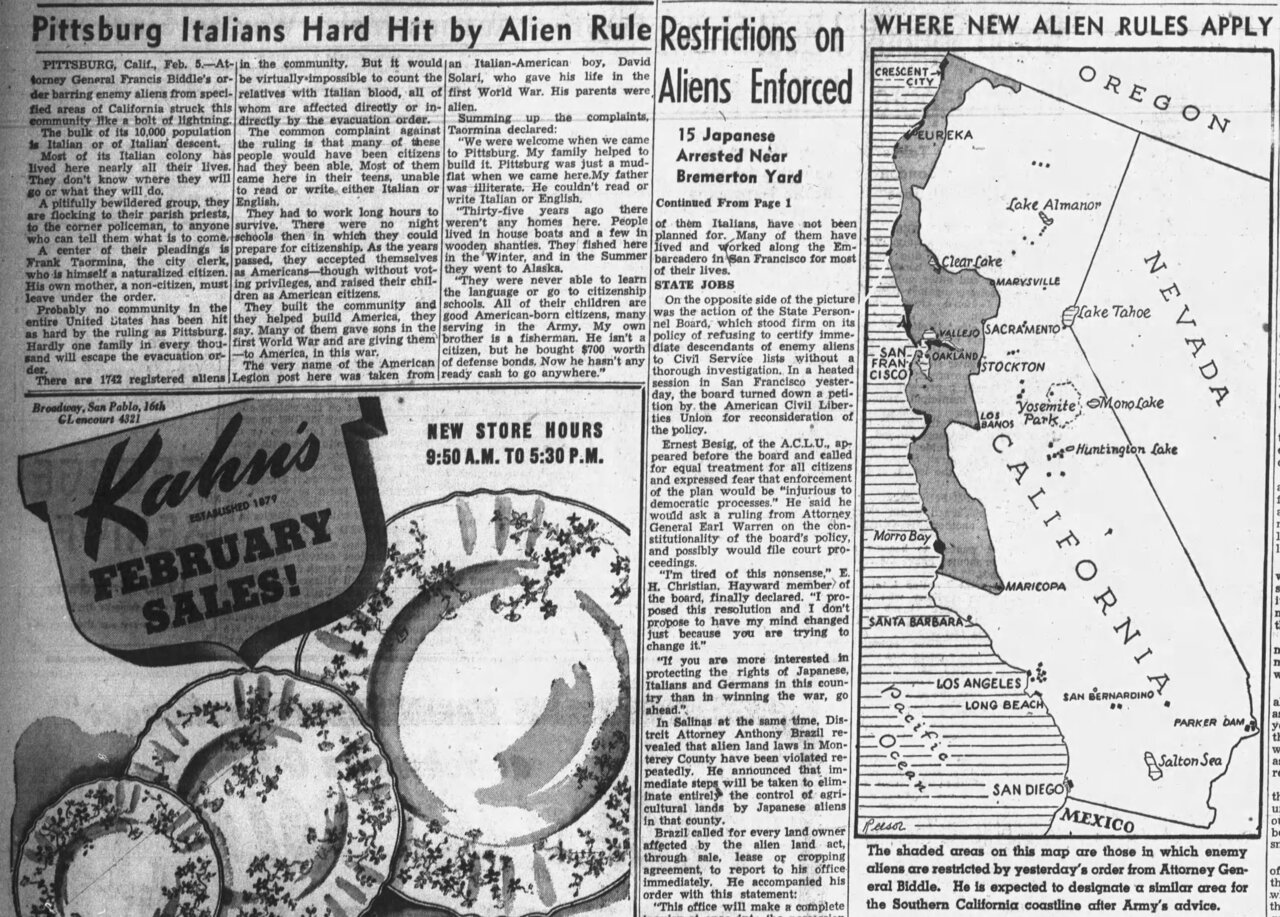
But it didn’t end there. February 1942 proved to be another pressure cooker, particularly on the West Coast after Roosevelt issued Executive Order 9066. Families whose homes were located in designated protected zones, such as coasts or areas near military bases, were forced to evacuate within days. San Francisco Italian Americans within 14 blocks of Fisherman’s Wharf were required to leave their homes and businesses behind. In some cases, entire cities were declared off-limits. More than 1,600 Italian American residents of Pittsburg, California, in Contra Costa County were required to move, uprooting about 22% of the town’s population. More than 10,000 Italian Americans were affected across California.
Oakland Tribune, Thursday, February 5, 1942
Evacuated or not, West Coast families were placed under curfew and faced travel restrictions, confining them within a five-mile radius of their homes. Violators were punished and arrested. A 30-year-old Bay Area woman was held for 11 weeks in detention at Sharp Park Detention Station for a curfew violation; a month later, her mother was arrested for the same crime.
This chapter of American history is rarely taught, yet it transformed entire communities.
As I uncovered these stories, I felt an urgency to share them. That journey led me to write my second novel, Beneath the Sicilian Stars. The novel follows a fictional Sicilian American family through the patriarch’s internment and their forced relocation, shedding light on overlooked events and inviting deeper questions about patriotism, identity, and the echoes of history.
I invite you to read Beneath the Sicilian Stars, share it, and join this important conversation.
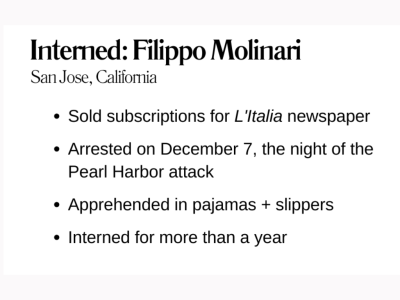
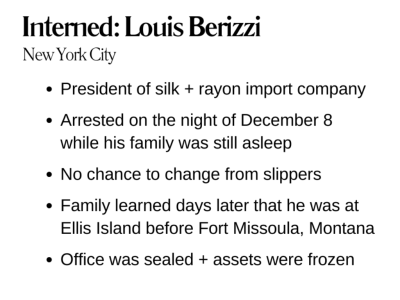
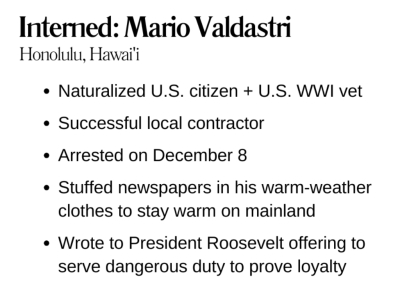
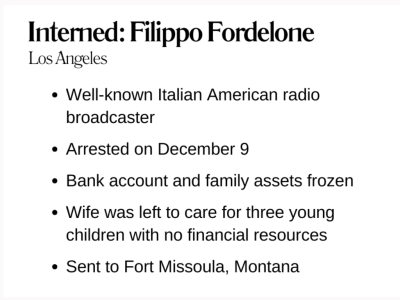
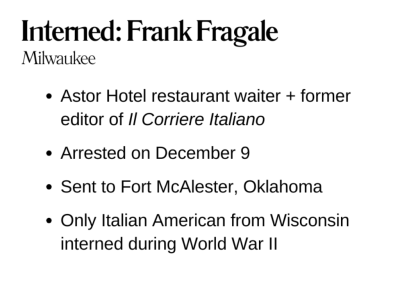
December 7 is a date that will live in infamy, not just because of the tragic attack on Pearl Harbor. That night, the FBI began arresting “potentially dangerous” Japanese, German, and Italian residents beforethe United States had even officially entered World War II.
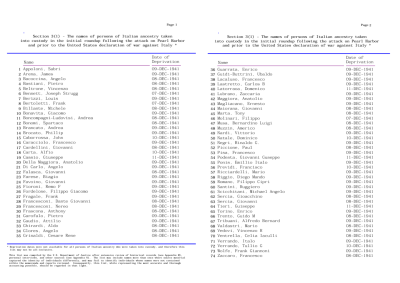
That week, before Mussolini’s December 11 war declaration, Italian Americans like Frank Fragale (Milwaukee), Mario Valdastri (Honolulu), Filippo Molinari (Los Angeles), Filippo Fordelone (San Jose, California), Louis Berizzi (New York City), and 69 other Italian-born residents were taken from their homes, some in pajamas, and sent to internment camps for months or years.
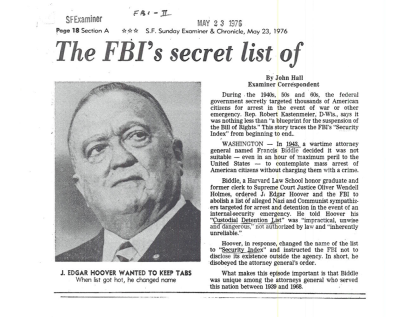
The FBI had, since 1939, been compiling lists of suspicious and allegedly subversive persons whom they decided required surveillance and (in the event of war) arrest for internment. Among the hundreds targeted and later interned were journalists (and even media salesmen), Italian Consulate employees, and veterans of the Great War (when Italy and America were allies).
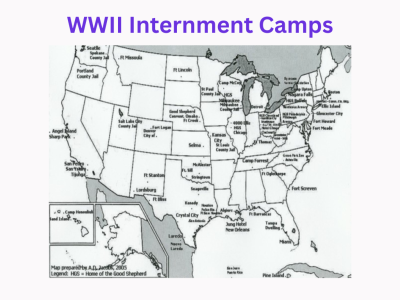
Internees were sent to camps across the nation, where hundreds spent years imprisoned. They were allowed to write to their families, but they were limited to two letters and/or four postcards per week on special forms that held no more than 24 lines, and every piece of mail was censored. Because most men were held far from home, families rarely had the chance to visit. When visits were permitted, they typically lasted about 30 minutes, and participants were allowed to speak only in English.
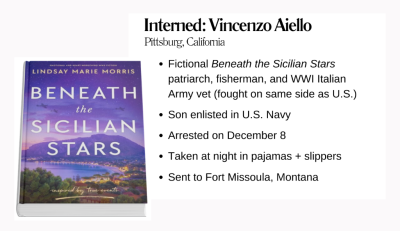
This largely overlooked history and the internees’ personal stories inspired the first chapter I wrote of Beneath the Sicilian Stars, in which a Sicilian American fisherman in Pittsburg, California, is dragged from his home in his slippers and pajamas and arrested for being “potentially dangerous,” despite his service on the same side as the U.S. during World War I and his son’s enlistment in the Navy.
It felt impossible when the Steven Spielberg movie came out in 2002, but history reminds us that some things are stranger than fiction. I wrote this novel to spotlight these injustices and help us recognize their echoes and dangers today.