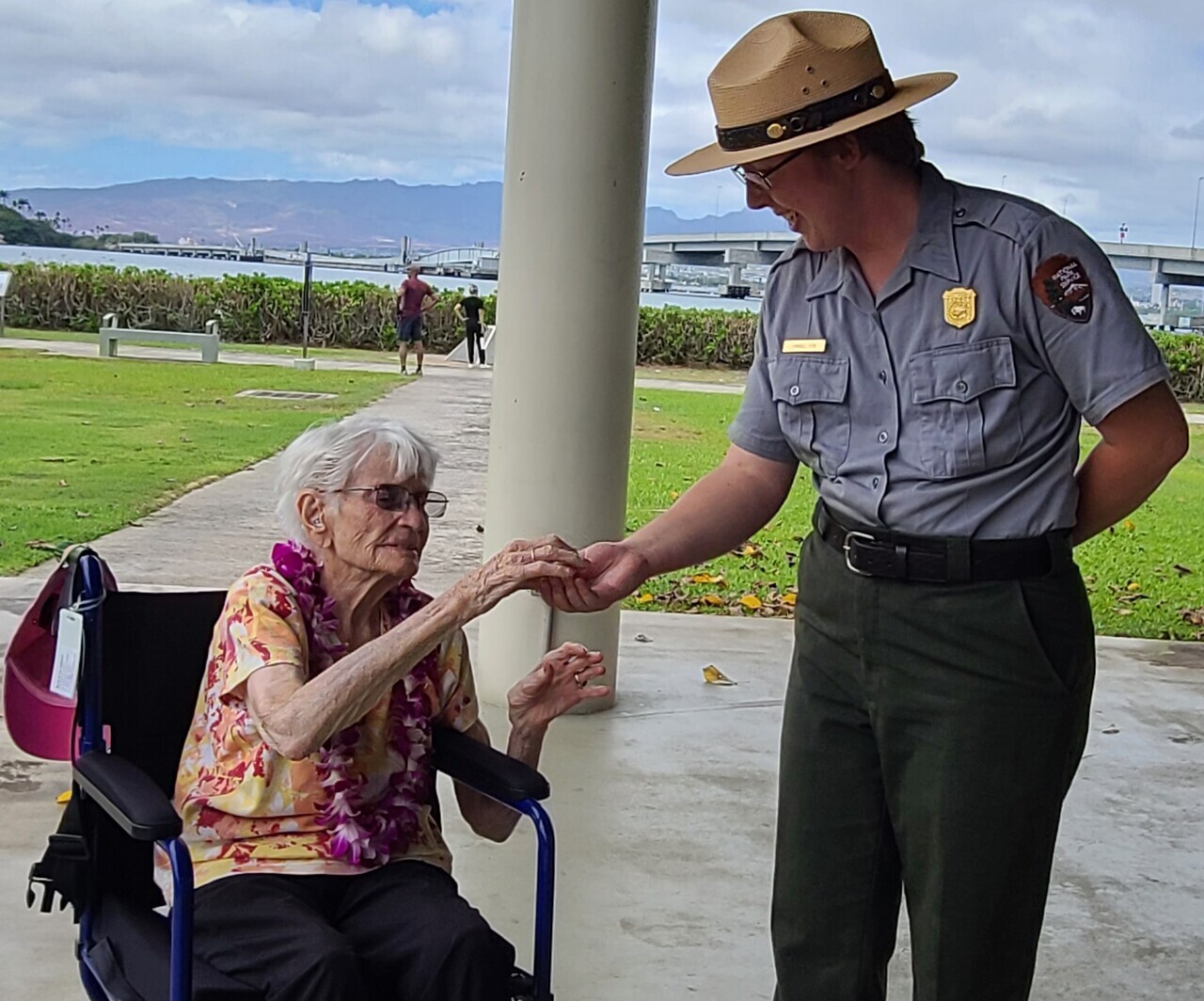
One hundred seven-year-old Alice Darrow remembers being shaken by the news of Japan’s attack on Pearl Harbor. Having worked the night shift at Peralta Hospital in Oakland, California, the nurse was physically rocked out of sleep by her frantic landlady, who shared the tragic news.
Alice had enlisted in the Navy just one month before the tragedy and the United States’ entry into World War II. In January, she received her orders for active duty at Mare Island Naval Hospital, a facility near Vallejo, California, bordered by the Napa River and San Pablo Bay.
Although she served stateside, Alice was on the medical frontlines of treating grave injuries suffered by men returning from the South Pacific. Her days were defined by a critical shortage of doctors and nurses, which required her to pitch in and take on a range of responsibilities, including assisting with anesthesia. Beneath it all lay an undercurrent of fear: the West Coast was a potential target, particularly its military bases. Alice often had to assist in major surgeries by the faint glow of a red flashlight during mandatory blackout drills.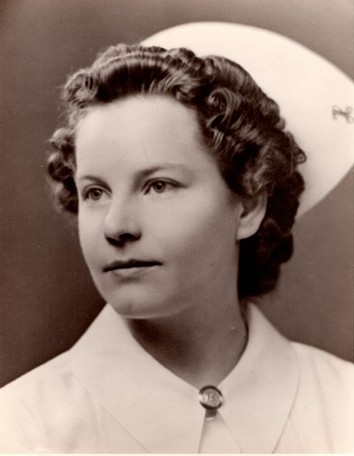
Then Alice Beck poses for her 1941 graduation photo.
“It was pretty horrible,” she recalls, even 83 years later. “There were ones who had amputations, some who were blinded from the blast.”
Among the many service members Alice treated during those critical early months, one in particular stands out. And his surgery and survival redefined both their lives.
Dean G. Darrow was 23 years old when he was blown overboard from his post on the USS West Virginia on December 7, 1941. Considered to be among the lucky ones who survived the Pearl Harbor tragedy, Dean was quickly patched up and resumed duty in the South Pacific. But he frequently felt faint and experienced a pounding heart, something his supervisor dismissed as “war nerves.” A few months later, following appendix surgery aboard a hospital ship, X-rays revealed the true culprit: a Japanese bullet lodged in his heart.
The Navy sent the sailor to Mare Island. There, he was evaluated by renowned Stanford University School of Medicine surgeon Emile Holman, MD, who explained that Dean might not survive long without open-heart surgery, then a rare, risky operation. During the week before his major procedure, Dean grew close to Alice, his special‑duty nurse, whom the staff called “Becky” for her maiden name Beck. He tried to maintain a good sense of humor, joking about how many days he had left to survive.
“When he was scheduled for surgery, he was pretty emotionally shaken up,” Alice remembers. “He took hold of my hand and said, ‘Ms. Becky? When I get well healed up from this, will you go on liberty with me?’ What could I do but say, ‘Well, of course, of course,’ because nobody really thought he’d ever make it through heart surgery, especially in those days.”
Alice didn’t want to crush the man’s spirits. Part of being a nurse was providing such psychological comforts, tending to her patients’ mental as well as physical ailments. Envisioning future off-time with his favorite nurse might provide him some joy in what could be his final moments.
Dean survived his surgery, and Alice recalls what he said to her when he awoke: “Now we’re going on liberty, aren’t we?”
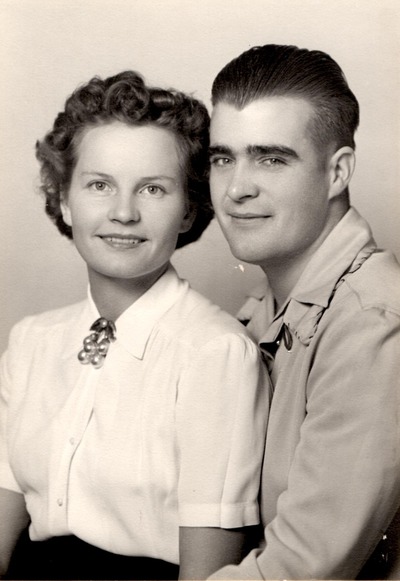
Alice and Dean Darrow in August 1942
Alice agreed to a date. They took a ferry to Vallejo and dined at a restaurant. Months later, on August 1, 1942, they married. The two raised four children together in Contra Costa County, California.
Just before what would have been their fiftieth anniversary, Dean died in 1991 of a heart attack, leaving a legacy of courage, resilience, and the bullet fragment he’d kept as a reminder all those years.
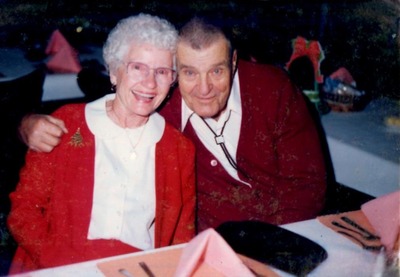
Alice and Dean shortly before his 1991 passing
For decades, Alice shared that “souvenir” in school presentations. Then, 30 years ago, the Pearl Harbor National Memorial reached out to Alice to see if she’d consider donating the bullet. She wasn’t ready; the bullet that might have killed him had come to symbolize an epic love story. So, it was hard to let it go.
But finally, last year, 84 years after Dean was shot, Alice decided it was time. In September 2025, she and her family embarked on a cruise to Hawaii, where she visited the Pearl Harbor National Memorial and presented the bullet.
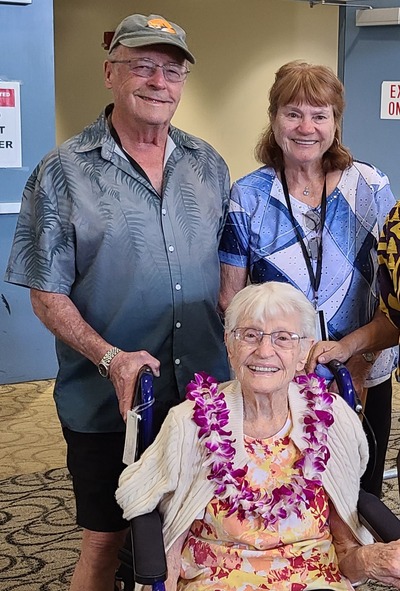
Alice leaves for Pearl Harbor with daughter Becky and son-in-law Ken.
March is Women’s History Month, honoring heroes like Alice, whose stories reveal great achievements and infinite possibilities. It also happens to be the month of her birth. On March 15, more than 35 friends and family gathered at her home in Danville, California, to celebrate this icon’s 107th birthday.
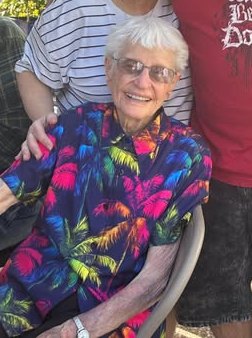
Alice celebrates 107 years with friends and family.
When asked about her legacy and the lessons she’s learned over the past 107 years, Alice says her motto has been, “Never give up.”
“The best you can do is the best you can do at the time,” she explains. “When there was a shortage of doctors and nurses, everybody had to do what they could do, and it was surprising to see how everybody pitched in to help.”
This perseverance, along with a childhood diet rich with her mother’s garden-fresh vegetables, may have played a key role in her longevity.