Blog

  • Maria Rapicavoli: Exploring Power and History Through Sicily-Inspired Art

    Maria Rapicavoli: Exploring Power and History Through Sicily-Inspired Art

    Maria Rapicavoli says she isn’t a journalist, but her works of art tell a story about global events tied to Sicily, encouraging viewers to form their own opinions. She’s covered issues ranging from the militarization of airspace and immigration to the mafia and the Second World War. Each piece offers arresting and interactive visuals to provoke thought and further conversation. 


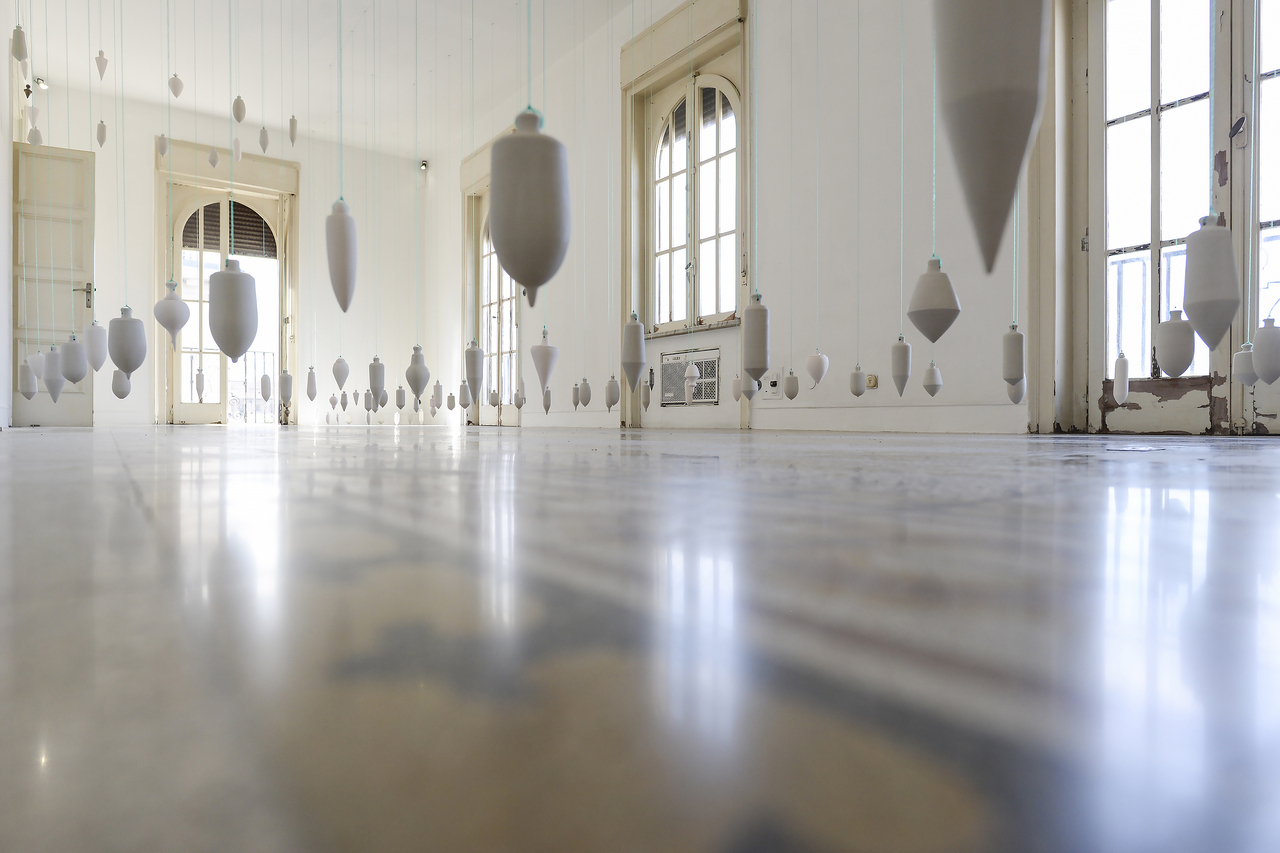
    One of Maria’s many evocative pieces stands out to me for its subject matter: Crooked Incline. For this piece, Maria created porcelain geometric shapes resembling bombs dropped by the Allies during World War II. The work serves as a haunting reminder of the damage wrought on Palermo, particularly by the Americans, who escalated bombing frequency and intensity in 1943. 


    Maria, who was born in a town on Mount Etna, has lived in New York for 13 years. She’s currently doing an artistic residency program in Palermo organized by Istituto Svizzero.


    I recently had the opportunity to chat with Maria, who shared her art inspiration and what went into the making of Crooked Incline


    What influence does your Sicilian heritage have on your art?

    I use Sicily as a starting point for all my projects. I’ve been doing a lot of projects related to structures of power, economic issues, and socio-political issues. I am constantly taking inspiration from Sicily. Starting from a personal and familiar point of view, I try to make works that have a wider perspective. 


    What inspired Crooked Incline?

    I was invited to have a show in an old Palazzo in Palermo as part of a project called Cassata Drone during Manifesta 12, an itinerant international art exhibition that in 2018 took place in Sicily. I’ve already done projects about how the sky is controlled and the militarization of the sky above Sicily—even above New York. I’ve always been interested in the common idea that the sky is open and accessible to everybody, but it’s not. There are borders similar to those that are geographical, but the difference is that the borders are often arbitrary in the sky. They’re just lines drawn, not based on geographical borders but on what is below the sky. 


    I was born in an area near military bases. Some of them are American bases and have existed since 1943 when the Allied forces arrived in Italy, first in Sicily. So, the militarized sky has always been part of my background. As a child, I remember hearing the roar of military planes, but I couldn’t see them because they were super fast. However, this doesn’t exist anymore because drones are very silent. 


    While doing this project in Palermo, I was supposed to remake a site-specific installation called A Cielo Aperto, an artwork related to drone corridors. The idea was to recreate the airspace above Sicily. 


    Because I usually spend one day or night in the place where I work on my installation, I asked the curator if I could sleep in the exhibition space. When I woke up in the morning, I realized something was wrong. I asked the owner of the building, and they told me that the palazzo was tilted because of a bomb that the Americans dropped in 1943 during an air raid. The building was damaged, but it wasn’t destroyed. 


    Based on that, I decided to change my project. Because my family has a background in construction, I was familiar with plumb lines, which were widely used to create perpendicular lines. 


    I decided to make visible this damage related to 1943. I recreated plumb lines, but I used porcelain instead of metal. I made a hundred plumb lines and installed them in the space. Of course, the plumb lines were falling straight, but because the room was tilted, there was a sense of disorientation, so I made the plumb lines a little bit bigger, and they looked a little bit more like missiles or bombs. They looked like they were ready to explode or were about to be dropped.


    Why did you use handmade white porcelain elements?

    So, porcelain is fragile, the opposite of metal and stainless steel. I was also playing with the contradiction that they would break and could not damage anything. They would be damaged if dropped, so it’s the opposite of real bombs or missiles. 


    I’ve been using porcelain a lot in my practice. I usually use white porcelain and don’t decorate it. I wanted to create this contrast because a bomb is usually never white.


    How do you incorporate historical narratives into your works?

    I research a lot, and then I get inspired by one element that strikes me as urgent. I work on that. And usually, it’s always about making visible something that otherwise is not really visible. 


    What is the impact of power structures on your work?

    It’s all based on a critique and then an analysis of the strongly connected structures. Economic, military, and political structures are all part of the same system. I like to talk about them because I like to talk about the daily consequences of these structures and what affects our lives.


    Tell us about your current project.

    I am working on a piece related to a criminal trial against the Sicilian Mafia, the Maxi Trial (Maxiprocesso), that took place almost 40 years ago in Italy. I have already documented all the folders of the Maxiprocesso. What I’m doing here now is to research the courthouse designed and built specifically to host the trial. I don’t know the outcome yet because I just started my research in Palermo as part of the residency Palermo Calling: Art & Science together with architect Fabrizio Furiassi, who is also researching the courthouse. 


    What do you hope viewers of your art take away?

    I don’t want to force anyone to share my view. Every time I make a work, I have an urge to bring up something that bothers me or is relevant to make visible. But that doesn’t mean that the viewers have the same approach as I do. 


    When I make a work, I like that the viewer will have their own interpretation and view. I would like them to have a broader view. For example, I made a video (The Other: A Familiar Story) about the story of a woman from my family who was a victim of domestic violence and was forced to move to the United States. This is a specific story that belongs to my family, but I tried to make it more universal and ensure that the viewer could appropriate it. It could be any woman anywhere in the world. And that’s the approach I have with every project I make.


    If you enjoyed this article, consider subscribing to my newsletter for more content and updates!
  • All About Cavatelli, Sicily’s Gnocchi

    All About Cavatelli, Sicily’s Gnocchi

    Wheat first arrived in Sicily around the 3rd millennium B.C. Due to its ideal cultivation conditions, the region became known as the Breadbasket of the Roman Empire.


    By 2021, the island had become Italy’s second-largest durum wheat-producing region, with 343,500 hectares under cultivation and a production of 931,800 tons.


    You may have seen durum on the back of a box of pasta. It’s frequently coarsely ground into semolina, a common ingredient in Sicilian bread and pasta. 


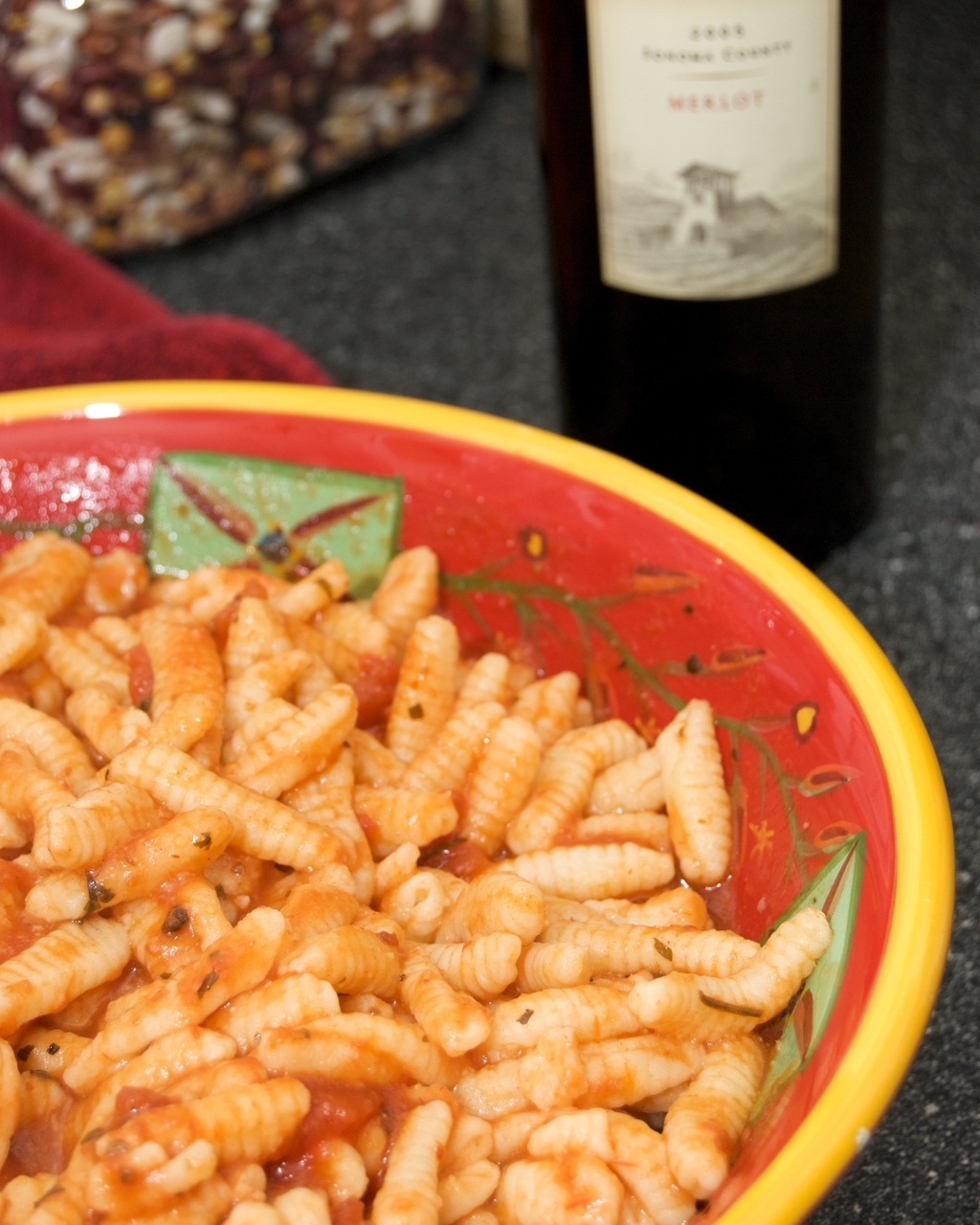
    One of the more popular semolina pastas is cavatelli, also known as cavateddi. This Sicilian version of gnocchi is served with plain red or meaty sauce. I recently caught up with private chef and cooking instructor Antonella La Macchia to learn more about this specialty and what differentiates her cavatelli recipe from typical gnocchi


    What is your background?

    I was born in Catania, Sicily, and live in Florence, Tuscany. I moved here 23 years ago because I married a Florentine, and I have been teaching cooking classes in Florence for more than 10 years now. 

    What is the difference between cavatelli and gnocchi?

    It’s funny. When people take the class, they usually talk about potatoes and gnocchi because they are the more traditional or famous.


    If I talk with my mother, gnocchi are completely different. Our gnocchi in Sicily, cavatelli, are made with semolina and water. The dough is very chewy and has a nice consistency. Of course, the flavor is completely different because we have the semolina flour. Also, the sauce that they require is different. Most of the time, Sicilian gnocchi are served with meat sauce because they have this consistency and want a strong sauce.


    The shape is different because when we make gnocchi, we use a tool called rigagnocchi. You use the board to make a little cavity that holds the sauce. That’s the reason why they’re called cavatelli.


    Semolina pasta can also be a little bit trickier than regular pasta. The regular pasta, the pasta from the north—ravioli and tagliatelli—has the classic dough with flour and egg. When we talk about pasta from the south of Italy, from Puglia to Sicily, it’s important to balance the right amount of water to obtain the right consistency. This shape is usually made by pushing the pasta on a wooden board with your hand or knife. If the consistency is not perfect, it won’t be easy to have the shape of the pasta you want.  


    Once you have a good dough, you can make the cavatelli with your hands or use the rigagnocchi. It is important to get the right shape because, of course, if this pasta is thicker, it can be pretty chewy.

    What makes this recipe Sicilian?

    When I teach about pasta, I always say that through the pasta, we can see the difference between the countries. You can see easily that this country was divided for many years, and the food from the north and the south is very different.  


    When we talk about fresh pasta, the first difference that we can say is that most of the fresh pasta that we find in the north is made with white flour. What makes this pasta really Sicilian for me is the use of semolina and, of course, the sauce. We don’t have butter and sage; ours is mostly red, so tomato-based.  

    What do you hope the readers will take away from this recipe?

    What I like, and I always talk about this during my class, is that at the end of the day, the most important thing is when a recipe becomes yours. It makes the food real and, in a certain way, eternal.


    >>Get Antonella’s Sicilian gnocchi recipe here!<<


    If you enjoyed this article, consider subscribing to my newsletter for more content and updates!

  • Meet the Mother-Daughter Duo Behind Pina’s Kitchen, a Viral Sicilian Cooking Sensation

    Meet the Mother-Daughter Duo Behind Pina’s Kitchen, a Viral Sicilian Cooking Sensation

    Pina and Rosemarie Sparacio showed up to our interview wearing red—like mother, like daughter. In their case, it’s more like being a part of the same winning team. Since September 2021, the New York-based duo has amassed millions of views on TikTok. They also have more than 242,000 followers on Instagram and have a new and growing YouTube channel. 


    “The most surprising thing has been walking in the street and someone stopping their car and saying, ‘Oh my God! You’re Pina’s Kitchen!’” laughs filmmaker and content producer Rosemarie. 


    “I feel so privileged, so honored to be recognized by them,” says her mother, Pina, who came to the United States from Roccamena, Sicily, in 1970.  


    The thrill ride started with a few simple, raw videos Rosemarie filmed of Pina cooking her favorite Sicilian specialties. And it just took off.


    The three of us sat down to discuss more about how Pina’s Kitchen got started, their favorite recipes, surprises, and their next steps.


    Tell us more about how Pina’s Kitchen began.

    Rosemarie: I’m a filmmaker, so I’m always filming or wanting to come up with something to film or a story. I had this idea of a cooking show for a long time with my mom, but it was always too big in my head to put together. I was being very perfectionistic about it, so I forgot about it. And then, when COVID hit, I was just dancing on TikTok like everybody else was and having fun. I garnered a little bit of a following. 


    I wasn’t serious. I was working in film production. Then, one weekend, my mom was cooking something: caponata, a Sicilian dish. I was like, “I’m just going to record it for fun on TikTok.” I didn’t really think much of it. The way I recorded it was not very cinematically, just in the moment. And I posted a month later. It got 100,000 views. I was like, “That’s something! Let’s try it again. Maybe sometimes on TikTok, you get one hit, and then that’s it.”


    So we tried it again, and the second video was a dish in the oven: baked ziti. It got 500,000 views. I said, “Welcome to Pina’s Kitchen!” And that was the start of it. 


    Then we did a third video—polpette di ricotta.


    Pina: It’s a very old recipe. When people in Sicily had no money to buy meat and make their Sunday dinner, they would come up with different ideas for something to serve with the sauce. So, if it was spring and a lot of people made ricotta, they’d make something with that ricotta. They used to make it in my town. It’s got a lot of mint and sugar, plus breadcrumbs.


    Rosemarie: You could imagine the controversy when she was throwing sugar into this ricotta thing, putting it in the sauce, and eating it with pasta. It got a million views, which was kind of its takeoff. And we just kept going with it. 


    You draw your recipes from your family. Can you share any fond cooking memories?

    Pina: My earliest memory is watching my mother cook.  My mother was a great cook. She had a knack for cooking; it tasted good, even if it was simple. 


    I remember her making sausage and drying it for the winter, and I remember watching her making bread. 


    When I was little in Sicily, my mother had a brick oven, and she would make a big batch of bread because bread was everything in those days. That was how you supported yourself: with bread, pasta, and vegetables. She would make all these breads, and then, in the end, she would always make pizza—not the American pizza you see: the sfincione on which my mother would put the tomatoes, sardines, cheese, and breadcrumbs on top. 


    She would start in the morning; by the time she finished, it was night, and that would be what we had for dinner. I was very little because I could hardly reach the big table that she was working on. 


    I also remember my grandma. She and my mother would sometimes bake a very big batch of bread together. Or she would get together with her sisters, and they’d make it together. They always did things together—even in America. They were very close. 


    Pina-in-the-kitchen-with-her-mother.jpg
    Pina and her mother in the kitchen

    Did you two cook together?

    Rosemarie: When I was younger, my mom worked, and my grandmother lived downstairs. I would go downstairs and stay all day with her, and she would make the pizza, cookies for Christmas, and rice balls. I was next to her, and I would kind of just watch, and I would try to help, too.

    I know how to make homemade pasta, and I know how to make all the big stuff. I’ve observed a lot, but I feel like I’ve been surrounded by Italian women who can handle the kitchen. And they’re like, “But you’re busy!”


    Pina: The short answer is yes, we cook together. When I broke my arm, she did Christmas by herself. Her father helped cut stuff, but she cooked. And I was telling her, “Okay, do this, and don’t forget to do this.” And she cooked the whole meal.

     
    Rosemarie-and-grandma.jpg
    Rosemarie and her grandmother


    What impact has filming your mother had on you?

    Rosemarie: I used to take for granted how good a cook she was and how good my homemade meals were. I didn’t realize how good they were until I started filming her, observing, watching, and paying attention. And then that caused me to be like, “I should be learning this.” 


    I realized she learned from my grandmother, and there’s so much already lost and so much we’re trying to hold onto. Now I’m like, “Okay, let me jump in and help you so I can learn.”


    Pina: Yeah, because my mother never really wrote anything down.


    Rosemarie: So it’s really all that she remembers from her mother and mother’s mother. And there’s already so much lost in that word-of-mouth.


    Pina, which of your mother’s dishes have you shared on social media?

    Pina: My mother used to make stuffed artichokes, and we had a lot of views on that video. She used to make it plain, and sometimes, she would put them in the sauce. That was Sunday dinner. This comes from the old days when we didn’t have any meat, so they had to come up with stuff.


    You stuff the artichoke and dip it in the egg, fry that part so the stuffing doesn’t come out, and then put it in the sauce. The sauce takes on the flavor of the artichoke, and it’s so good!


    We just made eggplant rollatini, according to her recipe. Here, they stuff them with ricotta. My mother used to stuff them with cheeses, cured meat, or whatever we had on hand. She would stuff them, roll them in the sauce, and bake them.


    When I think of my grandmother, the famous ones are the fig cookies—cuccidati—for Christmas. We film that every year because it’s such an important recipe. Many people don’t even do it anymore because it’s a lot of work.


    I remember her every December making Christmas cookies, and everyone was helping. She’d probably make 10 pounds. 


    Rosemarie: We have made 15 pounds of Christmas cookies all by hand, from the mixing and rolling to the cutting and filling.


    Pina: It’s a lot of work! That’s why you only do it once a year.


    What’s been most exciting or rewarding so far on this journey?

    Rosemarie: Probably the level of recognition when we go to events with the community of other food influencers that we’ve connected with. They’ve been so great. And then there are people who are fans, which is so weird to say that there are fans. I am still shocked!


    We’re technically filming just cooking videos, but it’s more than that. People write us the most beautiful messages, like, “I lost my mom when I was 13 years old, and I remember she used to do all these things, and Pina’s like my mom now.” 


    They also remember recipes that they forgot about and that their grandmother used to make, but now she’s no longer alive. And they say, “Wow, I’ve been looking for this recipe for 20 years!” It makes you realize that food and recipes are a connection to history, family, and culture that can be easily lost. Recipes are stories. That’s probably been the most rewarding. 


    Pina: You can give that kind of memory back to somebody. At first, I was nervous because nobody really wants to be judged by people. I asked, “Why will people be interested in my recipes and what I cook?” But then, when people started to really be very positive and loving it and saying how much they appreciate it, I felt that I was giving them something, which made me feel good.


    We’re doing it because now we like the community that we have. We have all those people that are following us. They’re good people, and I just love it. It’s making friends. 


    What are your plans for Pina’s Kitchen’s future?

    Rosemarie: I hope that we can grow a bigger following. We’re starting this YouTube channel, and I want to create a longer format show where we could really show the recipe so it feels more real, like you’re stepping into the kitchen with us. Because you only get a minute and 30 seconds on Instagram versus a 20- or 30-minute YouTube video where you feel like you’re in the kitchen and cooking with us. And then, hopefully, we can kind of expand to having different guests and having people showcase their recipes and share something with other influencers or maybe just other people in our lives who show what their family used to do—even past being Italian. 


    I love promoting Sicilian and Italian culture, but I think what’s more important is telling the story of immigrants and showcasing everyone’s culture because we’re all connected in that way, and recipes are very connected. Even Sicilian food is very connected to the Middle East, Greece, and Spain. So having it expanded past just Sicilian cuisine would be cool, too. 


    We’re slowly working on a cookbook, and it would be great to build the brand and reach more people that way.


    Rosemarie, you’ve worked on music videos. Tell us about that.

    Rosemarie: So, I started in film production, and I was on this track to be like, “Okay, I want to make connections. I want to be a director. I need to be in the industry.” I focused on making a documentary and growing our page. Then, I stepped away from the industry completely, and I was just in social media, working for social media marketing and working on Pina’s Kitchen. I started to feel kind of low, like, “I don’t know. Maybe I’m making the wrong choice. I’m out of the industry. I’m not working on films anymore or big shows, and I’m losing those connections. Maybe it’s not the right choice.”


    Then I got this random message from Tina Baione, who owns Keep Good Company Records with her husband, Matt. She was like, “We have this artist. We want to make this music video in Italy. I want you to direct it. We’ll fly you out to Italy.” 


    From there, I’m now working on another music video, directing that music video. 


    It’s not the same as it used to be. Social media is the new push forward that creatives need to get their work out there. 


    What do you hope people will take away from your videos?

    Pina: For me, it would be positivity; they could connect with their memories and families. Maybe their loved ones have passed, but they can reconnect with them spiritually. That’s a beautiful thing to do. And I want people to realize we’re just normal people.


    Rosemarie: I think that it’s kind of like a call to action. I want people to honestly get back into the kitchen with their grandmother, grandfather, mother, father, or whoever it is. Because, like I said, there are so many stories and recipes, and you don’t realize how fast time goes, and you could easily lose the things that keep you connected to your heritage, culture, and family. 


    I think people won’t regret getting into the kitchen with their loved ones and learning those family recipes. It’s just a good time to spend with your family. So I hope it inspires people to be closer to their family and to sit down for dinner together.


    Pina: You’re going to build so many memories just being together, sitting around the table, even if you don’t say anything, and if you just eat. It’s that energy of togetherness and love that vibrates around the table from your family. That is memory. It’s important. 


     family-supper-2.jpg


    If you enjoyed this article, consider subscribing to my newsletter for more content and updates!

  • Nunzio Impellizzeri: Sculpting Space Through Dance

    Nunzio Impellizzeri: Sculpting Space Through Dance

    Dance is yet another medium to paint, sculpt, and transform spaces, says Sicilian-born choreographer Nunzio Impellizzeri. The former visual artist founded Nunzio Impellizzeri Dance Company in 2014 with a mission of offering audiences unique perspectives and experiences as well as a way to dissect and question social behavior.


    The company’s work has been internationally recognized, with performances in theaters and at international festivals in Switzerland, Germany, Russia, Italy, Poland, Finland, Denmark, Chile, Spain, and North and Central America.


    They’re currently gearing up for the November 20 premiere of PINK CARPET, which explores the boundaries between reality and imagination. The piece coincides with the company’s tenth-anniversary celebration.


    I recently caught up with Nunzio to learn more about his journey to choreography and the company’s productions.


    Where do you live, and where are you and your family from?

    I live in Zurich, Switzerland, but my roots are in Acireale, a baroque city in Sicily, where my family still lives. This keeps me very much connected to my land and its culture. I left Italy in 2003 and traveled around Europe for my dance career. In 2008, I moved to Switzerland, where, later, in 2014, I founded the Nunzio Impellizzeri Dance Company. Looking at today, Zurich is the place where I’ve lived the longest.


    Can you tell us about your journey into the world of dance and choreography?

    My journey started in the visual arts. I studied art history, sculpture, and costume design, but I always felt something was missing. It wasn’t until I stumbled into a rehearsal and observed a choreographer working that I felt that “click”—suddenly, I knew that movement was the language I was searching for. Dance gave me a way to sculpt space with the body, to paint with motion. It opened up possibilities that static art forms couldn’t.


    In 2008, an injury—the breaking of my knee during a performance—became a turning point. That moment was pivotal because it forced me to reflect on what I really wanted. It was a hard period, but in the midst of that challenge, I saw an opportunity to pursue my dream of choreography. In 2009, I was selected for the SIWIC platform for young choreographers, and that was the confirmation I needed. By 2014, I had founded the Nunzio Impellizzeri Dance Company to explore the infinite relationship between the body and space and create a dialogue that connects us all through movement.


    Our company now works closely with internationally renowned dancers and collaborators, and we’ve had the privilege of performing at theaters and festivals around the world—from Switzerland and Germany to Chile and North America. What I’m most proud of is the way our work resonates with audiences, offering them a new perspective on dance and movement.


    How has your background in visual arts influenced your approach to choreography and dance?

    Visual arts is the foundation of how I think about dance. I don’t just see movement; I see structure, space, and texture. For me, choreography is like architecture in motion. The body sculpts the space it moves through, and that interaction creates a dialogue not just with the audience but with the air, the light, and the ground. Every piece I create is designed with that in mind. Lighting, set design, and costumes aren’t just accessories—they’re extensions of the movement itself. I often design the costumes because they’re integral to the concept of the creation.


    The body is a living canvas, constantly generating energy. That energy moves beyond the physical; it moves the soul and creates connections. Dance allows me to see beyond what is in front of me. It keeps me connected to life in a visceral way, and it shapes how I perceive others and how I relate to the world.


    Your works often reflect social phenomena. Tell us how you choose the themes for your productions.

    My inspiration often comes from everyday life—things we see but don’t necessarily pay attention to. Sometimes, it’s something I’ve ignored for a while, and then it suddenly captures my interest, almost obsessively. From there, I dig into it—researching through lectures, films, art, philosophy, mythology—until I form the framework for the piece.


    The themes I choose often come from observing human behavior in social contexts. Dance is such a powerful way to explore identity, silence, and connection—things that deeply resonate with our current times. I believe dance can move not only the body but the mind and soul. It challenges people to reflect on the world around them and to question and see things differently. My goal is to create works that spark dialogue and inspire reflection.


    How do you integrate elements like set design, lighting, and costumes into your choreography?

    These elements are not separate from the movement; they’re intertwined. The body moves, it stirs the air, it transforms the space. Set design, lighting, and costumes amplify these dynamics. For me, it’s about creating a holistic experience where everything works together to heighten the audience’s perception.


    Much like an architect designs a building to interact with its surroundings, I design my sets and lighting to interact with the dancers’ movements. Costumes, too, play a key role—they’re not just what the dancers wear but a part of how they move and inhabit the space.


    Tell us about more PINK CARPET.

    This piece is very personal to me. It delves into the boundary between reality and imagination, inspired by my mother’s experience with Alzheimer’s. The carpet itself becomes a symbol—a bridge between the tangible and the intangible. It’s a deeply emotional journey, both for me and, I hope, for the audience.


    What else is on the horizon?

    2024 has been very intense with many projects. I recently finished the creation of CIRCOLANDO as a guest choreographer for a Swiss dance company, and now I’m also looking forward to FLAM.ME.UM, premiering in Germany at the Anhaltischen Theater Dessau in January 2025. This piece explores the evolving concept of identity, something I feel is more relevant than ever. Both pieces reflect my ongoing exploration of how personal experiences can resonate universally, connecting us through the unpredictable flow of life.


    Can you share a memorable moment or experience from your career that has significantly impacted you?

    Creating SCH.NEE in 2022 was a turning point for me. The challenge of working with silence and minimalism forced me to push my boundaries as a choreographer. The process required a level of focus and simplicity that I hadn’t explored before. Seeing how deeply it resonated with the audience reaffirmed my belief in the power of art to connect people on an emotional level. It was a moment that opened up new dimensions for me as an artist.


    What advice would you give to aspiring choreographers and dancers?

    Stay curious, stay open. Dance is about more than just movement—it’s about communication, about connecting with people on a deep level. Your body is a vessel for telling stories, sharing perspectives, and moving the souls of others. Embrace the challenges, and don’t be afraid of failure—it’s all part of the process.


    I work with dancers who have strong technical skills, but I also value individuality. I want performers who can bring their own unique qualities to the stage. My advice is to stay true to yourself while remaining open to collaboration. Success, both as an artist and as a person, comes from that balance. Every creation is an opportunity to grow; each experience will shape you in ways you can’t predict.


    If you enjoyed this article, consider subscribing to my newsletter for more content and updates!
  • How Cucina Povera Shaped Carmela D’Amore’s Life and Identity

    How Cucina Povera Shaped Carmela D’Amore’s Life and Identity

    When speaking about Sicilian cuisine, one frequently encounters the phrase cucina povera. Beyond its literal “poor cuisine” translation, this concept speaks to working with what you have. You can also apply it to life, says award-winning author, podcaster, former executive chef, and ambassador to Milazzo, Sicily, Carmela D’Amore.


    As a Sicilian Australian, Carmela grew up in Melbourne’s southeastern suburbs with a foot in two different cultures. It wasn’t easy. In Carmela’s Cucina Povera, she details her experience and her journey to finding herself through Sicilian cooking, along with a collection of 75 recipes.


    I recently had the opportunity to meet with Carmela, who shared her background and connection to Sicily, the challenges she faced, and what cucina povera has meant to her.


    What is your background?

    I was born in Australia. My parents migrated to Australia just after World War II when there was the call.


    My paternal side is from Falcone, about half an hour from where my mother lived, Milazzo, in the Messina Province. My husband is from Palermo, so I’ve got a taste of both East and West Sicily.


    Why did your parents move to Australia?

    It was just after World War II, so most Sicilian towns were very poor. They were bombed during the war. The economy was bad; they had no food, even though they were all fishermen or had other trades. 


    My father came with five of his brothers and my grandparents. They were all fishermen. My grandfather was the president of the town’s fisheries and wildlife organization. But still, they couldn’t foresee a future, something for their children and grandchildren. And it was something that I think war does to you: You think, “How will we get through something like this as a family or as a community?” 


    Australia was calling migrants, and there was work. One of my uncles was the first to test the waters, and he said, “There’s plenty of us to work all around, and we can make a future.” They weren’t thinking of staying for too long. 


    Sicily is in us. Even though I wasn’t born there, I’m very much Sicilian. So, I can imagine what that felt like. Being in a place where you don’t know anybody, you don’t know the language, you don’t know the culture, and yet all you want to do is work. So, you really don’t know how you will face the challenges.


    They worked and settled, and one of my uncles returned to live and stay in Sicily. The other four decided to stay. 


    I’ve struggled myself to think, “Should I go back home and stay in Sicily?” When Sicily is somewhere in your DNA, I think you are always thinking, “Where do I settle?” 


    What challenges did you face as a Sicilian Australian?

    It was tough. It was probably one of the toughest times and a time of shaping and molding. There was already a culture in the southeast suburbs of Australia. So, any new people coming in weren’t easily accepted. You had to earn your way in. 


    It was nothing like today, someone who doesn’t fit in, we call “unique,” whereas, in those days, you had to fit in with the crowd, or otherwise, you were out of it. So that causes a split in your personality, where you are one thing at home and one thing in another. I think many children today are finding that even in the cyber world that we live in, in social media, there is a need for acceptance.


    What does cucina povera mean generally, and what does it mean to you?

    Cucina povera is the staple diet, working with what you have and within the seasons where you live. Cucina povera has different shades in every region of Italy. In Sicily, we have nine provinces with nine different dialects. So, there are nine staple recipes. If you have, for example, a recipe that’s tomato-based with fennel, in a different province of Sicily, it could be with wild asparagus or with wild rappi, which are rapini greens, depending on which season. It’s all about preserving and utilizing your ingredients with the seasons. It’s making the best of seasonal ingredients and working with fewer ingredients. 


    I called my book Carmela’s Cucina Povera because my identity is in cucina povera. It is in my DNA; it is who I am. I’ve been in hospitality for 50 years and an executive chef for over 45 years. I’ve just retired, but it still is in everything that I do.


    People use all these different ingredients to make something delicious, but cooking is a way of expressing love. My grandparents, my mother, and all that generation never told us they loved us. They expressed it through food. Cucina povera came through them and gave me a sense of belonging, being, and knowing who I am. 


    You’re a storyteller. Tell us about a classic Sicilian dish.

    What I will share is a story that I think will resonate with many people. It starts in the 1800s when we had Queen Maria Carolina and King Ferdinando of the Kingdom of the Two Sicilies.


    Our queen had French chefs, so her French chefs went out and got a wild bird, called beccafico, in the region of Palermo. You can imagine all these French chefs and the contadini, the farmers that are coming in, and the women that are helping them. They’re cooking and stuffing the beccafico, and they put the tail up. (The beccafico looks a bit like a robin, so it’s got a beautiful tail.)


    They cooked it with all the spices: saffron, lemon, and bay leaves. Then, they gave it to the queen. 


    The contadini went out and talked to one another. They could not eat that because those wild birds cost a lot of money. But they did have an abundance of sardines coming from the Tyrrhenian Sea. So they decided to make a replica and create it with sardines. Today, sarde a beccafico is world-renowned.


    In my mother’s town, they make it with anchovies because they don’t have the sardines. When Mum made the dish, she would tell me the story of how her grandmother and her grandmother’s grandmother made it. Those stories become part of your life.


    How do you hope your book and cooking will impact others?

    I hope my book inspires many people. I’m 65, and I overcame these challenges 55 years ago. So, it’s about the resilience of the human spirit.


    If you really want to change and get better in anything you do, you can always do better. The sun always shines in life. There are always storms and difficulties, but you can realize that you can grow from them. Instead of being a victim, say, “How can I learn from this? What can I learn from this? How can I shape myself and be a better person from this?” 


    This is what I found while writing this book. It was to help people if they’ve had challenges and maybe through the cracks of the pages and the recipes to find more love and concentrate on the love, not the challenges. Because we all go through challenges. We never stop going through challenges in life, but it’s where we decide to focus ourselves on what’s important.


    I’m sure everyone has recipes from their grandmothers. Take them, put them together, and make a little book. You don’t have to publish it, but you can create something for other generations to find. I’m sure that in generations to come, someone in the family will say, “I wonder where that recipe comes from.” 


    We live in a world that is becoming very isolated. I don’t come from that world. I come from a world where family and community are the essence of our lives. So, writing this book was important to me because I wanted to embalm the recipes, the people, and the sacrifices they made for their families. It was to honor them because who will remember them if I’m not to talk about them?  


    >>Get Carmela’s Cucina Povera here!<<


    If you enjoyed this article, consider subscribing to my newsletter for more content and updates!
  • Tetù: A Cookie for All Saints’ Day and Beyond

    Tetù: A Cookie for All Saints’ Day and Beyond

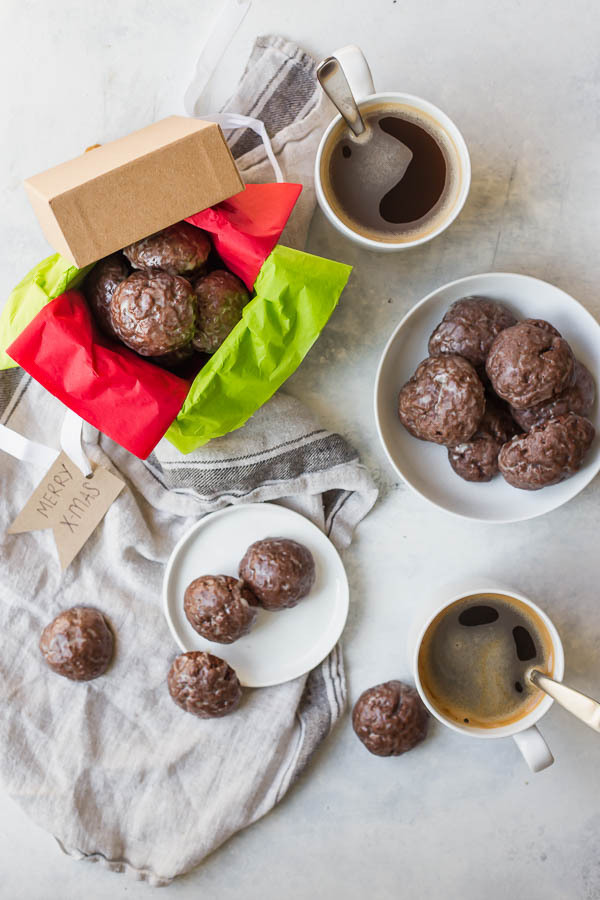
    When I was growing up, holiday gatherings with my Sicilian family meant that everyone brought a favorite dish to add to supper. In addition to giardiniera, bean and tomato salad, and pasta, we could always expect trays of Italian cookies. A favorite was the tetú, a dense, chewy chocolate cookie with a light glaze. 


    Traditionally served on All Saints’ Day in Sicily, these so-called “sweets of the dead” are a hit any time of the year. Our family includes them on Christmas cookie platters, and they frequently show up on Sicilian wedding cookie tables.


    I was thrilled to find a recipe for this classic Italian cookie on Alexa Peduzzi’s Fooduzzi.com. Alexa’s recipe is inspired by her Nana’s. Her twist? They are plant-based. 


    Alexa and I discussed her background and the significance of the tetú (or, as Alexa says, “to to”). 


    Tell me about your background. Where is your family from?

    We’re from all over the boot! One of my great-grandpas was from L’Aquila, my great-grandma was from Calabria, and I had some family up in Schignano on Lake Como. 


    What does your heritage mean to you?

    When I was a kid, I actually thought everyone was Italian because celebrating that part of my heritage happened all of the time and just seemed so normal and universal.


    I’m really proud to be Italian, largely because we’re a big food family. So being Italian (to me and my family) means black olives on our fingers at dinnertime, homemade pasta swirled into savory sauces, and simple desserts like these to tos.


    Walking into an Italian grocery store (like Penn Mac in the Strip District in Pittsburgh) is always the best sensory experience for me; the scent of cheese, olives, and oils smells like my childhood!


    What are to tos, and how/when are they typically served?

    At their core, to tos are chocolate cookies with a simple vanilla icing. They’re crisp on the outside and soft on the inside. I think there’s a similar version of these cookies floating around called “meatball cookies,” which is very accurate given their look before they’re iced.


    I’m from Pittsburgh, and the “wedding cookie table” is a very important part of our culture here. So, I saw them a lot at weddings growing up. Now, we mostly have them at Christmas, and I look forward to them every single year.


    What is the significance of this recipe for you?

    These are, hands down, my favorite cookies. 


    Yes, they’re delicious, but this recipe is one that I always consider “our family recipe.” I’ve never really seen to tos anywhere else, but I always look forward to them at family gatherings. 


    To tos are a simple chocolate cookie, but they’re so much more than that. When I bite into them, I’m always taken back to the weddings I attended, the birthday get-togethers we had, and the visits with family that included these cookies.


    They’re as much a memory as they are a recipe.


    How is this recipe different from the traditional version?

    My Nana’s version of this recipe is very similar to mine; mine uses vegan butter instead of regular butter. I tried to keep my version as close to the original as possible, considering the original has been my favorite treat for over 30 years! 


    I’m not really sure that my Nana would have really understood my desire to make to tos plant-based, but making this recipe always makes me feel close to her, even with my tweaks. 


    What do you hope at-home cooks and bakers will take away from your recipes?

    I hope they’re able to take one of my recipes and say, “Wow, this tastes great, and it’s plant-based,” rather than something like, “This tastes great for a plant-based recipe.” 


    I’m plant-based because I love animals, and I figure if I can satisfy my body with foods that don’t require them, I should. 


    I don’t believe that there’s one universal way of eating for every person, but I hope my recipes show people who are interested in plant-based options how simple, tasty, and uncomplicated they can be. 


    What is your goal with Fooduzzi?

    My goals have changed so much over the years! I started Fooduzzi almost 10 years ago, and when I first started, my goal was to take it full-time and work for myself.


    That said, I soon realized that I’m a terrible boss for myself! So, it’s very much a hobby and a hub where I share the recipes that I love at the moment. I’m not actively creating new recipes; I’m now sharing more of the recipes I’ve started making and truly love.


    If you enjoyed this article, consider subscribing to my newsletter for more content and updates!
  • Zucca in Agrodolce: Make This with Your Jack-o-Lantern Leftovers

    Zucca in Agrodolce: Make This with Your Jack-o-Lantern Leftovers

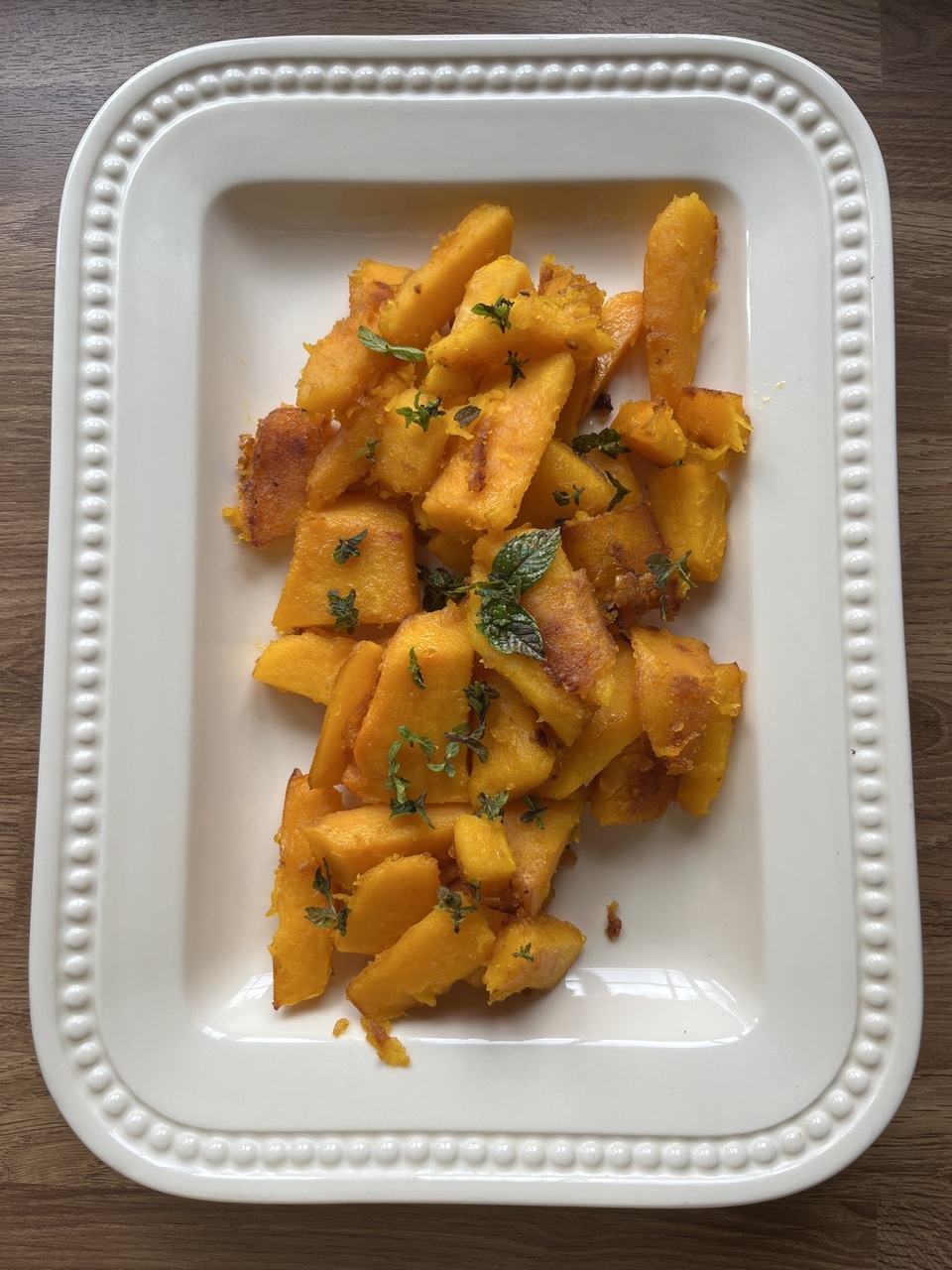
    Stop. Before you toss those jack-o-lantern scraps, consider saving them for a classic Sicilian pumpkin recipe. Believed to have originated in Palermo’s popular Vucciria market, zucca in agrodolce (sweet and sour pumpkin) is a simple seasonal side dish that’s sure to impress your most discerning supper guests. 


    Blogger Sarah Kearney of White Almond Sicily has a lovely rendition of this flavorful pumpkin recipe

    We chatted about her connection to Sicily, what inspired this dish, how to select the perfect pumpkin, and excellent zucca in agrodolce pairings. 


    Tell me about your background. What is your connection to Sicily?

    My parents were English, and I was born in the UK and grew up in an area in South London where there were a lot of Italian families. I went to school with many Italian-descendant children, and their birthday parties and invitations to their homes were always so fascinating and fun. I just loved sitting around the big family table eating pizza, pasta, and gelato, receiving lots of Italian warmth and hospitality. As I grew up, I knew that I wanted to visit Italy. Whilst other children my age were filling scrapbooks with photos of their favorite pop stars, I would be dragging my parents to our local travel agent to pick up travel brochures so I could cut out the photos of Italy and create my own Italy travel brochure. 


    In 2005, I read a travel article in a fashion magazine about Taormina in Sicily. With my love of all things Italian and my husband’s love of The Godfather movies, Sicily seemed like our kind of destination. So, after some research, I booked a weekend getaway to Taormina, and as soon as we saw the volcano Mount Etna from our airplane window, we knew we had already fallen in love with the island. Two years later, we bought our Sicilian home in Giardini Naxos, a seaside town nestled between the slopes of Etna, Taormina, and the Ionian Sea. 


    How did your life change?

    Coming from London, we are used to a fast-paced life, and over the past 17 years, we have learned to live life the way the Sicilians do. We learned to shop more locally at our local butchers, fish shops, and bakeries instead of using supermarkets and buying our fruit and vegetables from markets. Our taste buds changed with the fresh produce we were buying. 


    We joined the evening passeggiata along our seafront with our dogs. In the beginning, we used to zoom along, overtaking the locals, but now we take our time like the Sicilians and maybe stop at a bar for an aperitif or coffee or sit on the seawall eating a gelato. A five-minute walk to the seafront can turn into an hour’s walk with locals stopping to talk to us. In Sicily, we have made more friends than we ever have in London, and we have been adopted by many Sicilian families, who see us as one of them now. 


    What inspired you to share the recipe for Sicilian sweet and sour pumpkin?

    In 2014, I started to write my blog, “White Almond Sicily,” and a friend from London came to stay with us. It was his first visit to the island, and we discussed how not many English people visit Sicily or know much about its beauty, food, and culture. Thereafter, I started writing about our new life in Sicily, the places we visited, and the people we met. I decided to also share recipes for popular Sicilian dishes that our new Sicilian friends had made for us. 


    We now divide our time between London and Giardini Naxos, and my favorite seasons are spring and autumn when the island boasts an abundance of delicious fruit and vegetables. Autumn is a wonderful time of year to stay in Sicily with the grape harvest to make new wine, olives are harvested to make olive oil, trees are heavy with apples, prickly pears are in season, and there are food festivals that celebrate hazelnuts and walnuts. It is also the season for hearty meals like stews and risotto, with the most popular use being seasonal vegetables like pumpkins. 


    You will see pumpkins at markets or on the roadside piled up by local farmers on their three-wheeled Ape vehicles, a bit like what you see with watermelons in summer. I love Halloween, so I always like to carve a pumpkin into a lantern, which gives me the perfect excuse to use the leftover flesh to make Sicilian sweet and sour pumpkin. 


    Can you tell us more about the historical and cultural significance of this dish in Sicily?

    Like a lot of vegetable dishes in Sicily, pumpkins were used in poor times to replace meat, and the pumpkin was used as an equivalent to liver. The dish is thought to have originated in Palermo in the famous Vucciria market. 


    The rich aristocratic families would buy expensive liver, which would be fried and marinated in a sweet and sour way and then garnished with fresh mint. The poor could not afford the meat, so instead, they bought slices of pumpkin, which was cheap, and cooked it in the same way. 


    The dish was known locally as o ficatu ri setti cannola (the liver of the seven taps), which refers to seven taps at the seven fountains located near the market where the street vendors selling the pumpkins would be daily. 


    Do you have any personal stories associated with making or eating sweet and sour pumpkin?

    We usually drive from London to Sicily with our dogs, and after three days of traveling, on our first day back home in our Sicilian house, our neighbors always visit bearing gifts, usually food. It is quite often that we will return home and have a delivery from what we call “the lemon fairy” and find a bag full of lemons hooked onto the door knob of our front door. Last year, a neighbor gave us a crate of persimmons, which I made into a delicious jam, and of course, he was given a jar, much to his delight. 


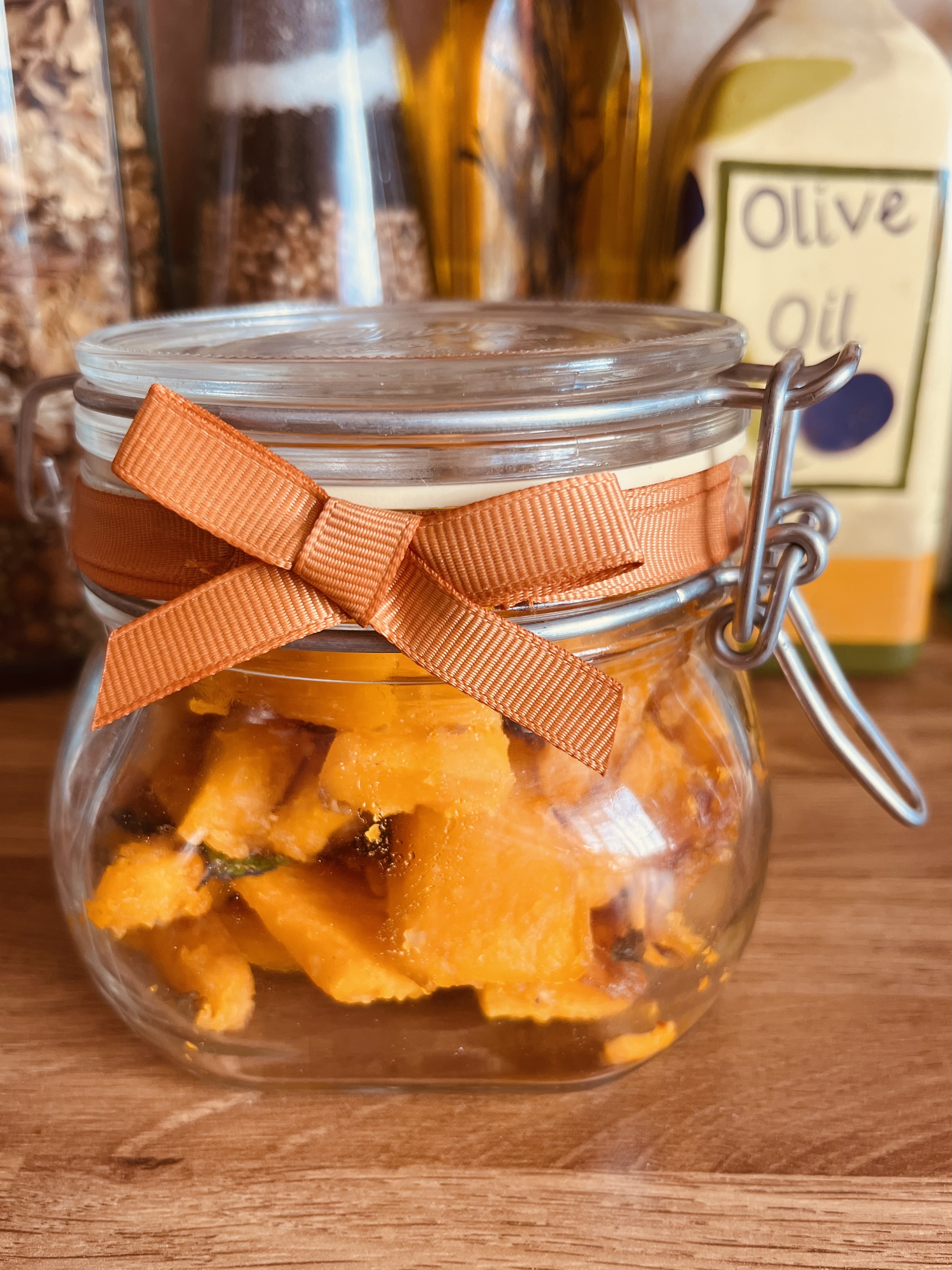
    I can remember the father of one of our friends, who owns a big plot of land on Etna, arriving at our house with the biggest pumpkin I had ever seen. I could hardly carry it. Of course, I used it to carve a Halloween pumpkin and made a sweet and sour Pumpkin with the remains. There was so much that I was able to preserve it in empty jars to bring back home to London. 


    I first tried this dish in a Sicilian restaurant in London, which was owned at the time by Enzo Oliveri, a well-known Sicilian chef from Palermo who now lives in the UK. It was Enzo who first told me how to make the dish in a similar way to another popular Sicilian dish, caponata


    What tips do you have for selecting the best pumpkin for this recipe?

    In Sicily, I always trust the vendor to choose the best pumpkin for me, but when in London, I always look for firm and smooth pumpkins that feel heavy for their size. Then, I know that there is plenty of flesh inside, and I avoid any pumpkins with cracks or bruises. We do not get pumpkins in London like those in Sicily; the ones in Sicily have a unique taste from being grown on fertile volcanic soil. 


    How do you balance the sweet and sour flavors in this dish to achieve the perfect taste?

    I use one tablespoon of sugar and two tablespoons of vinegar for the agrodolce (sweet and sour) taste. Sicilians tend to use white vinegar for this dish, but I like to use red wine vinegar. It gives the pumpkin a ruby-colored hue that makes the dish look a bit more exotic and gleam like Sicilian jewels. 


    What other traditional Sicilian dishes would you suggest pairing with sweet and sour pumpkin?

    In Sicily, this dish is usually regarded as a side dish or used as part of antipasti paired with other delicacies like caponata or melanzana parmigiana, together with local cured meats, cheeses, olives, and sun-dried tomatoes. As a side dish, we enjoy it with grilled meats or salsiccia, a Sicilian sausage made with coarsely chopped pork and usually containing fennel seeds. 


    Can you share any common mistakes to avoid when preparing this dish?

    It is all about getting the balance of the sweet and sour correct. Too much vinegar and the dish can become acidic. Too much sugar will make it hard to savor all the other flavors. Always leave the ingredients to mingle. You also need to add finely chopped fresh mint to garnish, as this brings out the flavors like a tastebud explosion in your mouth. Mint is a very typical ingredient in Sicilian cuisine from when the island was under Arab rule. 


    What feedback have you received from readers who have tried this recipe?

    This recipe is mostly viewed in autumn months, and most of my blog followers love that it is a lesser-known Sicilian dish to create and try. It is particularly great for children as all kids enjoy carving a Halloween pumpkin, so it is a great way to introduce this vegetable into their diet. 


    What do you hope readers take away from your White Almond recipes?

    My philosophy is to share the delights of Sicily through its culture and food using my own experience of living on and traveling around the island. I love that I can share recipes that I have learned locally with readers, who can then recreate dishes that they have tasted whilst in Sicily when they return to their own home kitchens. 


     >>Get Sarah’s zucca in agrodolce recipe here!<<

     zucca-agrodulce-jarred-Sarah-Kearney.jpeg
    Photo by Sarah Kearney


    If you enjoyed this article, consider subscribing to my newsletter for more content and updates!
  • Everyday Italian: Domenica Marchetti’s Secrets to Simple, Delicious, Ingredient-Driven Cooking

    Everyday Italian: Domenica Marchetti’s Secrets to Simple, Delicious, Ingredient-Driven Cooking

    Cooking Italian doesn’t have to be complicated. In fact, some of the best dishes are among the simplest, featuring fresh, seasonal ingredients and key pantry staples. Unlike certain cuisines with complex sauces and overwhelming techniques, Italian cuisine is just as approachable as delicious.


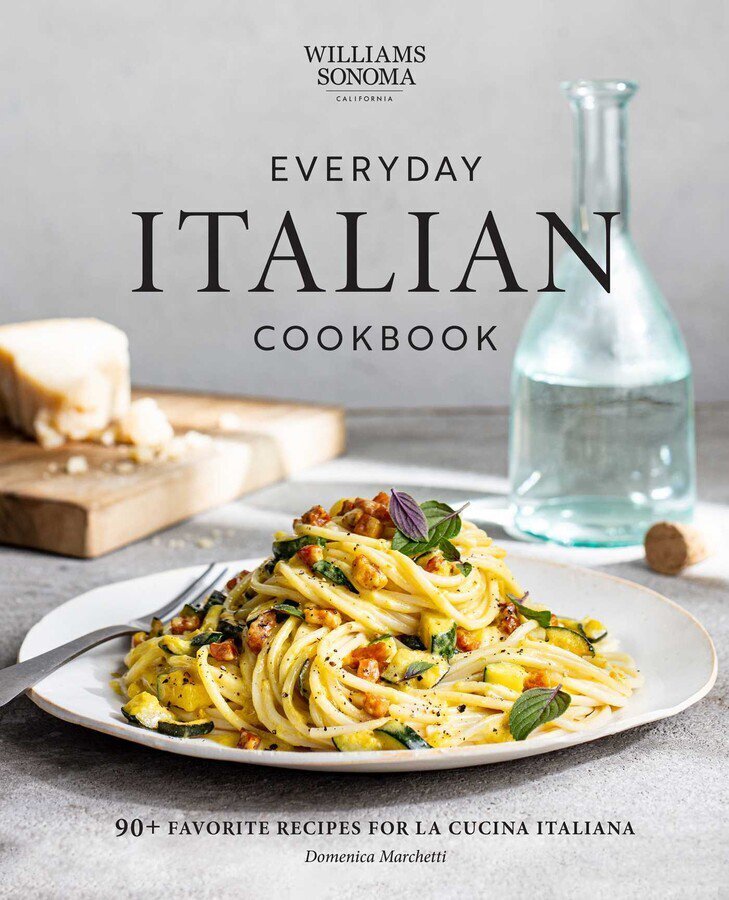
    That idea inspired Domenica Marchetti‘s latest cookbook, Everyday Italian, her eighth book on Italian cooking. Domenica, who has a ninth book on the way, has Abruzzese roots and a home in Abruzzo. The region formerly known as Abruzzi just so happens to have been part of the Kingdom of the Two Sicilies, so it’s no wonder many of our cooking traditions are shared. 


    Domenica took time out of her busy schedule of writing, teaching, and leading culinary tours to chat with me about her influences, favorite techniques, must-have staples, and what she hopes readers will take away.


    Tell us about your background.

    I am based outside of Washington, D.C., in Northern Virginia. But we also have a little house in Abruzzo.


    I grew up spending my summers in Italy on the Adriatic coast of Abruzzo. We had a beach house there for many years, and that’s really where my love for Italy just grew. I was spending all that time there.


    My mom was from Chieti; her mother was from the city of Atri, which is also in Abruzzo. Her dad was actually from Perugia in Umbria. Her family stayed in Abruzzo. 


    On my dad’s side, his parents came from Italy. His mother was from Isernia in the Molise region, which is attached to Abruzzo, and his dad was from Fondi in the Lazio region, which also includes Rome. But my main attachment is to Abruzzo because I spend a lot of time there. 


    My mom was a wonderful cook. Like many Italians, she came to the U.S. in the 1950s. She was kind of in love with post-war America and ended up meeting my dad on a blind date in New York City and staying.


    When she got married, she taught herself how to cook because she grew up in a family with a cook. So she didn’t need to learn anything when she was growing up, but she loved cooking and was a fantastic home cook. So she’s really my number-one kitchen muse.


    How did you get into food writing?

    My background is in journalism. I went to Columbia Journalism School and was a newspaper reporter before becoming a freelance writer. So, when my kids were little, I transitioned to freelance writing and reinvented myself as a food writer because that’s what I was interested in doing. 


    I used my connections in newspapers and magazines to start freelancing. And then that eventually led to books and cooking classes and doing book tours. More recently, with COVID, I started teaching online. I also do occasional culinary tours in Italy, which I’ve been doing for about a decade.


    You’ve been to Sicily. Describe your experience.

    It’s been quite a few years, but I have been. We had family friends from Sicily who lived in Rome, but they also had places in Palermo and the coastal town of Mazara del Vallo.


    It was before I was a full-time food writer. I remember walking through a citrus grove in this family’s yard and just being completely enchanted.


    I grew up in central New Jersey, and we didn’t have those there. 


    Of course, there are all the sweets and confections, the cannoli, the marzipan, the sweet ricotta, and the stuffed treats, and it’s just such an incredibly flavorful cuisine.


    I also remember the first time I had pasta with eggplant, which was basically pasta with tomato sauce and fried eggplant on top. I can’t think of anything simpler, but it was absolutely delicious.


    I was thinking about these assertive flavors in Sicilian cuisine: the fish, either dried or tinned or even fresh, the sardines, the anchovies, the swordfish, the tuna, and then the vegetables, the peppers, eggplant, zucchini, tomatoes, artichokes, winter squash. I mean, just all of the colors! 


    One of my favorite cookbooks on the food of Sicily is this book by Anna Tasca Lanza, The Heart of Sicily. It came out in the early 1990s, and I was in Los Angeles, of all places. My husband and I were coming back from our honeymoon, and his mom lived in California. We were walking around L.A., and we happened upon this cookbook store. Anna Tasca Lanza was there signing copies of her book. This was before the cookbook craze, so nobody was there except those who worked in the bookstore. So we sat down, chatted with her, and bought this book.


    Outside of my mom’s cooking, this book has been such an inspiration to me because it really did introduce me to Sicilian cuisine. In the introduction, she talks about the many cultures that passed through Sicily: the Greeks, the Romans, the Arabs, the Normans, the French, and the Spanish.


    She said all those conquerors and the wayfarers made an imprint on Sicilian cuisine without altering its basic character. The main element of Sicilian cooking has always been the sun. And that is so true if you think of the way they sun-dry tomatoes, the way they make the tomato paste, estratto, by spreading it out under the sun, the way they sun-dry vegetables like eggplant and zucchini and then preserve them in oil. The sun just brings out the colors and the flavors of all these vegetables and foods. And I really think that quote encapsulates Sicilian cuisine beautifully.


    You highlight some of those techniques in Preserving Italy.

    My grandmother from Abruzzo used to sun-dry sour cherries so that she would do the same thing. She would dry them in the sun until they were half-dried, not completely shriveled. She would put them in jars with brandy and sugar. She would make these boozy preserved cherries. 


    That really was the impetus for Preserving Italy because I wanted to recreate those sour cherries. In the introduction, I tell how when my sister and I were little after our grandmother passed away, there were still a few jars of those cherries in the pantry. My mom and her sisters—she had three sisters—were very, very parsimonious about doling out those cherries. And they made them last for years.


    The only way we could ever get cherries was if we told them we had cramps. When we had cramps, we were allowed to have a little spoonful of these really alcoholic, boozy, sour cherries. And then they were gone. 


    Years later, the more I started getting into Italian food, the more I thought about the foods I grew up with. So, I wanted to recreate those cherries. 


    Living in northern Virginia, it’s very humid, so I can’t sun-dry anything without it turning into mold. So, I did a version of oven-drying the cherries and then giving them a long marinating in spiced, sweetened alcohol.


    There are other things like candied citrus peel, which is one of my favorite things to make. I always make it for the holidays because it’s got so many uses. For one thing, it just makes your kitchen smell wonderful when you’re cooking down orange peel and then cooking it in syrup until it thickens and nicely coats the fruit. You let it dry, then roll it in sugar, and you’ve got this wonderful confection that you can dip in chocolate or mince and put into cakes and cookies or use as a garnish for cannoli.


    All these wonderful traditions are preserved throughout Italy. I mean, Italy has so many foods that grow well, such as hazelnuts, pistachios, almonds, and vegetables. There are just countless ways of preserving them.


    Abruzzo was part of the Kingdom of the Two Sicilies, so there are likely shared food traditions.

    I think that’s absolutely true. What’s interesting about Abruzzo is that it is central, but because it was part of the Kingdom of the Two Sicilies, it is identified with the South, and a lot of its cuisine is associated with the South. 


    I liken it to the Missouri of Italy. Missouri is kind of the gateway to the Midwest, but you think of it a little bit like the South. It’s kind of in the middle of the country, but it’s a little bit west if you think of Kansas City, Missouri. So it’s got all these different cultural influences.


    I feel like Abruzzo is the same thing. But yes, because it was part of the Kingdom of the Two Sicilies, I do believe it does have strong ties with southern Italy. So, some of the same foods are prepared in similar ways, like peppers. The cover recipe for Preserving Italy is peppers preserved in olive oil, which I absolutely love. They basically get a bath and sweet and sour vinegar brine with capers and garlic, and then you drain them after they’ve marinated a good long while in this sweet and sour brine, and then you top them off with olive oil and just pop them in the fridge. You don’t even have to can them. And they’re just such a wonderful thing to have around either to put on pizza or crostini or as a side to roast chicken. 


    That’s a very Sicilian thing, actually, this idea of sweet and sour, they love their agrodolce. They do it with fish; they do it with vegetables. One of my favorite treatments for agrodolce is winter squash, the zucca agrodolce, which is a Sicilian dish. It’s thinly sliced pumpkin or winter squash, fried with olive oil, and then just sort of plunged into a sweet and sour vinegar dressing or brine and other vegetables. You can do that with eggplant with caponata, but I really love it with the winter squash.


    My mom used to make that when I was growing up. It was a Sicilian dish, but she really liked it, so she used to make it, and that remains one of my favorite dishes. A couple of years ago, I ended up making a winter squash version of caponata instead of eggplant, but with the celery and the tomato, and it was so good. 


    I really love the sweet-and-sour tradition of Sicilian cuisine. One of the things that Anna Tasca Lanza points out in her book is that the Arabs who came over introduced the planting of sugarcane to Sicily. Ever since then, Sicilians have had a sweet tooth. So they like the sweet and sour, and also all of the sweets and confections, too. I think they can thank history for their sweet tooth.


    In Everyday Italian, you share must-have Italian staples. Which are specific to Sicilian cuisine?

    When I think of Sicilian cuisine, the first thing that comes to mind is nuts. They have the wonderful Sicilian almonds from Noto. And if you’ve not tasted a Sicilian almond side by side with, say, a California almond, you might not even know there’s a difference. But there’s a real difference. If you taste a good Sicilian almond, you understand almond extract all of a sudden because some people don’t necessarily like almond extract; they find it bitter and strong in flavor. But if you taste a Sicilian almond, you will taste a tiny bit of that aroma from almond extract, and you understand what almond extract is. It really has that almond flavor. 


    I occasionally splurge on Sicilian almonds. I buy them online. Last year, my daughter used Sicilian almonds to make these almond crescent cookies for Christmas. She’s not as big a fan of the almond flavor as I am, so she doesn’t ever use almond extract, but she used these Sicilian almonds.


    We tasted the cookies fresh from the oven, and I asked, “Did you put almond extract in these?”


    She said no. And it’s because she used these Sicilian almonds.


    Pistachios, too. If you take the time to peel them, they have this incredible green color. And that rich, nutty, sweet pistachio flavor or pine nuts, which are very Sicilian and buttery. 


    For other ingredients, I think of capers, capers and caper leaves, brined capers, and salted capers with those punchy flavors.


    Then there are anchovies, bottarga (the dried tuna roe), and colatura (the liquid from preserving the anchovies). All of these really strong flavors contribute to the richness of Sicilian cuisine.


    There’s vinegar, of course, and herbs. When I think of Sicilian cooking, I immediately think of mint. We were talking about winter squash and agrodolce


    What advice would you give to home cooks?

    I would just say that it’s pretty easy. Italian food is all about ingredients. And I know people have said this before, but it’s not like trying to master fancy French sauces or overly manipulated food or trying to transform one thing into another. It’s really about giving ingredients the best expression you can give them so that their own flavors shine. 


    I would say the most important thing is to choose good ingredients that are the best you can afford. It’s worth it because you really understand Italian cuisine. It doesn’t have to be overly complicated. 


    I mentioned pasta with eggplant. It’s really just a simple tomato sauce made with either fresh or canned tomatoes, fried seasoned eggplant, and good-quality pasta. When you’re buying pasta, buy the best you can afford. The same goes for good olive oil.


    Be open to different ingredients and flavors. You will be successful if you work with high-quality ingredients and have reliable recipes. 


    For example, maybe you don’t know too much about artichokes and think it takes a lot of work to peel them. Once you’ve done it, it’s like anything. You just roll up your sleeves and do it, and it becomes easier. So, if you happen to find good whole artichokes in the market, don’t shy away from them. Buy them. Find either a video or a description. You’ll see that the more you do it, the better you get at it. It’s just a process, a learning process, and don’t be daunted because Italian cuisine and its essence really is simple.


    >>Get your copy of Everyday Italian here!<<


    If you enjoyed this article, consider subscribing to my newsletter for more content and updates!
  • Preserving Los Angeles’ Italian American Legacy: A Conversation with the IAMLA’s Marianna Gatto

    Preserving Los Angeles’ Italian American Legacy: A Conversation with the IAMLA’s Marianna Gatto

    It was a sunny afternoon in downtown Los Angeles, and my mother, sister, niece, husband, and I stumbled on a building called the Italian Hall. There, we saw a sign for the Italian American Museum of Los Angeles (IAMLA). As we are all Italian Americans, we found this fortuitous. So, we popped in and toured the museum’s collection, an eclectic mix of fun facts and fascinating exhibits connected to Italian heritage.


    As a Los Angeles transplant from Milwaukee, I don’t often encounter such connections. Sure, there are some fabulous Italian restaurants, and Venice has canals. But I rarely have the opportunity to celebrate my Italian roots in the City of Angels.

    Thanks to places like the IAMLA, I now know that Los Angeles is home to the fifth-largest Italian American population in the United States. 


    Awareness of such lesser-known facts and her interest in her own Italian-American identity led the IAMLA Executive Director and historian Marianna Gatto to co-found the museum, which opened its doors in 2016.


    “When I started working on this project twenty years ago, people would say things like, ‘There are Italians in Los Angeles? Los Angeles had a Little Italy?’” Marianna says. “Now, I hear people saying, ‘Italians helped shape Los Angeles.’”


    Marianna, author of the recently published The Italian Americans of Los Angeles: A History, shared with me what inspired the founding of the IAMLA, her approach to curation and research, challenges she’s faced, where she sees the museum headed, and advice for those who wish to pursue a museum career. 


    What is your connection to Sicily?

    My Sicilian family came to the United States in 1897. They were from Lucca Sicula in the Province of Agrigento. Like many Sicilians, they came following Italy’s unification as the economic situation in the Mezzogiorno (Italy’s south) worsened. Following the American Civil War, there was a labor shortage in the southern United States, and Sicilians were recruited to work in the fields and fisheries. My great-grandfather, his son, and scores of others from Lucca Sicula were among them. 


    What inspired you to co-found the IAMLA?

    There were two key events that served as a catalyst for my work with the museum. My earliest inspiration can be traced to my childhood. From a very young age, I was aware that I was Italian American, but growing up in an exceptionally diverse part of Los Angeles where Italian Americans were a small minority, I had to search far and wide for a mirror. The opportunities to explore my italianità were few. I began to question, what is my place in Los Angeles and what is my place among Italian Americans? Do I have one?  


    To answer that question, I began devouring any book I could find on Italian American history. There were none about Italians in Los Angeles. I remember going through the indexes of volumes on Italian American history in search of ‘Los Angeles’ and in books about Los Angeles in search of ‘Italians.’ I sought answers from my father, but the information he shared often left me with more questions. Unlike most of the Italian Americans I read about, our family did not enter the U.S. through Ellis Island. My Sicilian side came through New Orleans and worked as agricultural laborers before continuing west to Colorado. At my grandmother’s urging, they moved to Los Angeles, which was then still a suburban Eden, in 1948. I was thoroughly confused. What kind of Italians were we? 


    When I was an undergraduate in college I learned about the Italian Hall, a building on the edge of downtown Los Angeles that had been constructed in 1908 and had served as a gathering place for Italian Americans during the first half of the twentieth century. I was floored. Italian Hall demonstrated that Los Angeles did indeed have an Italian American history with roots that stretched deep into its soil. A group known as the Historic Italian Hall Foundation was raising funds to rehabilitate the building, portions of which had languished after being vacant for decades, with the goal of resurrecting it as an Italian American community center. When I visited the building for the first time, my heart skipped a beat. I said aloud to the building’s ghosts, to the pigeons nesting in the rafters, “This needs to be a museum, and I want to be the director.” Well, years would pass before that dream materialized, but it did.


    So, you could say that my second inspiration was the building itself, Italian Hall, and the history it speaks to, that of the two-hundred-year history of Italian Americans in Southern California. The building was my muse, the impetus for my research. After visiting it that day, I set out to discover and document the Italian Americans of Los Angeles, a group whose influence and contributions are felt throughout the region yet, until recently, received little recognition. The idea that a community so integral to the Los Angeles metropolis could be forgotten absolutely baffled me.


    What are some highlights from your involvement with the museum?

    Next year marks my twentieth working on the museum project, and there have been many high points, low points, and in-between points. Opening our doors was a huge milestone. Witnessing how our work has brought people together and enriched so many lives has been really rewarding, as has meeting some truly special people. Last year, the IAMLA won a prestigious award for Woven Lives, one of the temporary exhibitions I wrote and curated that explores the experiences of Italian American women told through needlework. This exhibition is slated to travel to the East Coast.

    The IAMLA has also dramatically expanded its free public programming, and seeing how the arts and educational experiences we offer enrich resource-starved communities is also incredibly rewarding. Many of our youth visitors have never been to a museum or attended a live theatrical performance before. There have been other times when we have rejoiced after receiving an important grant or donation. 


    How do you approach curating exhibitions representing the Italian American experience in Los Angeles and the West?

    Our visitors are incredibly diverse; over 80 percent are not of Italian extraction. Our goal is to make history engaging, relatable, and relevant to all who step through our doors or access content online. We are cognizant of how we present information in order to appeal to different learning styles, educational levels, and age groups, and heavily utilize technology, interactive experiences, and storytelling. On any given day, you will see K-12 field trips, families, and senior and special needs groups visiting, and we want all of them to walk away having learned something. We emphasize universal themes, attempt to make connections with current events, and encourage visitors to draw upon their personal experiences. 


    We follow the same approach with our temporary exhibitions. The IAMLA presents two new and original temporary exhibitions each year. They cover a variety of topics, from Italian American inventors to Pinocchio as a cultural icon. Each exhibition is accompanied by a variety of free educational programming, and it’s through these events that we create a dynamic space that keeps people coming back. 


    You recently published The Italian Americans of Los Angeles: A History. Tell us about the research that went into that book.

    The research for the book brought me to archives and to cemeteries, to people’s homes and businesses; I poured over volumes of documents, scrutinized endnotes, and hunted down unpublished manuscripts. The book is a survey of Italian Americans in Greater Los Angeles from the time of the first Italian settler’s arrival in 1827, before there was an Italy and before California was a state.

    This is the first comprehensive auto-history of Italian Americans in the City of Angels. It looks at subjects ranging from Italian pioneers and foodways to faith, entertainment history, anti-Italianism, and the arts. It includes many rare images, and like the museum’s exhibitions, it is designed to be accessible and relatable, whether or not you are of Italian extraction or hail from Southern California.  


    What challenges have you faced in preserving and promoting Italian American history, and how have you overcome them?

    In the early days of the museum project, there was a crisis in awareness. Italian American history is often conceived as primarily an East Coast phenomenon, and numerically speaking, the majority of Italians did indeed settle in New York and Northeastern and Midwestern urban areas, but there are a number of other Italian American communities that are also worth studying and understanding. Los Angeles has an Italian American history that dates back nearly two centuries, but it has seldom been examined by Los Angeles historians or Italian American historians.


    Many Italian Americans were struggling to achieve upward mobility during a time when the emphasis in America was on consensus and assimilation. The decades during which laws passed to prohibit Italians from coming to the United States and when Italians were portrayed as radicals and anarchists were followed by World War II years when the United States was at war with Italy. Italian Americans—Italo Angelenos—stopped speaking Italian and deemphasized their Italian-ness. The older generation was often reluctant to speak about their experiences, and if history and culture are not transmitted, what happens? It is often lost. My work as a historian has centered around unearthing this history.


    There have been a number of challenges over the past two decades, but we have kept going. Perseverance has been an essential part of overcoming. 


    How do you see the museum evolving, and what projects or exhibitions are you most excited about?

    In the years that follow, I see the IAMLA continuing to expand in our physical location and our reach. Long before the pandemic, before virtual offerings became more commonplace, we presented considerable content online. We are also collaborating with other institutions to bring exhibitions and programs to various parts of the country. I see the IAMLA expanding its direct services to the public. Many of the people who visit the IAMLA come from resource-starved communities. Admission to the museum is free, and the overwhelming majority of museum programs—concerts, workshops, and other events—are also free. Serving as a resource for communities that often lack access to arts and cultural experiences gives me tremendous pride. The IAMLA is a museum and it is also a vehicle for bringing together communities and helping narrow the opportunity gap. 


    On the heels of the IAMLA’s very successful exhibition about Italian American jazzman Louis Prima, we will be opening a new and original exhibition on Italian American inventors and innovators that I’m particularly excited about. The exhibition examines the work of nearly one hundred inventors, from Enrico Fermi’s work on the nuclear reactor and Robert Gallo, who discovered HIV as the cause of AIDS, to Teressa Bellissimo, who created the Buffalo chicken wing and Bernard Castro, who devised the convertible sofa. We will be presenting some great programming in conjunction with the exhibition.


    What advice would you give someone pursuing a career like yours?

    Prepare yourself for a lot of ups and downs, and try not to get discouraged during the downs. It’s all part of the process. Strive to be a lifelong learner. The world changes more quickly than ever, it seems, and adaptability is key.


    What do you hope people will take away from a visit to the museum?

    In recent years, some of our leaders have determined that history—as well as the arts and other subjects—are “non-essential.” The results are frightening. I hope people will take with them a greater understanding of the many people that make up the American mosaic and that these little blocks of knowledge will foster the development of a more informed and compassionate nation.


    If you enjoyed this article, consider subscribing to my newsletter for more content and updates!  
  • Sicilian Roots in New Orleans Cuisine: The Untold Story Behind Iconic Dishes

    Sicilian Roots in New Orleans Cuisine: The Untold Story Behind Iconic Dishes

    New Orleans is renowned for its cuisine. But when it comes to several of its most iconic dishes, some credit should go to the area’s Sicilian transplants, says Louisiana historian Laura Guccione


    “If you think about something like shrimp creole with tomatoes in it, a lot of people have said that it definitely has a Sicilian influence,” says Laura. “And if you go to a restaurant here, a lot of places have stuffed artichokes on the menu. That’s definitely directly from Sicily.”


    Curious about the Sicilian origins of Louisiana’s plants and foods, the Delgado Culinary School graduate pursued a master’s in urban studies at the University of New Orleans. Her graduate thesis evolved into two New Orleans history book manuscripts, one on St. Joseph’s Day and the other on Sicilians and Creole Cuisine, both currently under peer review by LSU Press. 


    I caught up with Laura to learn more about how Sicilians colored New Orleans’s rich history. She shared some of the more surprising food contributions and how Sicilian corner stores promoted what’s become known as New Orleans cuisine.


    What is your background?

    I’m a native New Orleanian but grew up in the suburbs. My father’s a hundred percent Sicilian. His story is interesting because his father was born in Louisiana, but in Lettsworth, Louisiana, which is north of Baton Rouge and sugar cane country. His grandfather did not like it here, so they went back to Sicily. So, my grandfather was an American citizen. He was born here but was raised in Sicily. He came back as a teenager at 17 and then lived in New Orleans. I still have direct cousins in Sicily because his brother stayed in Sicily.


    My mother’s family is from the very beginning of New Orleans. They’re a Creole family, also Scots-Irish. 


    I grew up here, worked in the service industry for about 30 years, tending bar, and then decided to go back to school after Hurricane Katrina. 


    I went to culinary school, but I soon realized that as much as I loved restaurants, food, and cooking, I was really more interested in history. So, a few years later, I went back to get my master’s degree from the University of New Orleans.


    How did the challenges Sicilian immigrants faced influence their culinary contributions?

    Sicilians assimilated quicker than most places, so I think it’s harder to see what they’ve done. They immediately spread all over the city, including on the West Bank, uptown, downtown, and outside of New Orleans, because many of them came to work the sugarcane fields. 


    They were basically migrant workers. They would come here, spend time in Louisiana, then go to Chicago and go up to where other things were being harvested. 


    They went back and forth, which contributed to agriculture. Many Sicilians had small farms outside of New Orleans, almost within the city limits. 


    What happened with the Sicilians is that they contributed a lot to Creole cuisine. It’s not as obvious as an actual dish, with the exception of the muffuletta and a few other things that are obviously Sicilian.


    They were changing cuisine here because what they were growing was what they were familiar with. They were coming back and forth so they could bring seeds and plants. They were going into the field of producing, growing, producing, and distributing fruits, vegetables, and even oysters and fish. 


    In the history of recipes, you can see that as more and more Sicilians come here, you see a change in what’s being used. For example, everybody talks about the trinity [onions, bell peppers, and celery]. Paul Prudhomme was the first one to start using that. I talked to his sous chef recently, and he said Paul only really cooked with celery once he got here. Where does celery come from? It comes from Sicily.


    A lot of old gumbo recipes barely have anything in them. Through the years, you see more onions; you see more celery and peppers. Because what do they eat in Sicily more than anything? Peppers, onions, celery, and tomatoes.


    What’s a surprising Sicilian contribution to New Orleans cuisine?

    If you look at the history of the poor boy, it was created by the Martin Brothers. But they went to their Sicilian baker neighbor to have the bread made. 


    Baguettes from France are long and skinny with pointy ends. They went to their neighbor and said, “We need to change this because we want to make these sandwiches, but we don’t want to lose that end. We want something rounder and wider.”


    So Sicilians and the Martin Brothers created this loaf of bread that is now synonymous with the city.  And what do people come here for? Poor boys.


    Another contribution is the muffuletta. Can you describe its creation?

    No one will probably be able to prove how it really started. There’s Central Grocery and a place a couple of doors down called Progress. They both said that they created the muffuletta. Progress is gone, so it’s pretty much accepted that it was created at Central Grocery. 


    The story goes that Central Grocery sold the bread, which, if you go to Sicily, the muffuletta is just a round bread. Sometimes, people would serve it hot with olive oil and fennel seeds on it, but it’s just bread. It’s not a sandwich in Sicily.


    Central Grocery had the bread and all the pieces; they would sell the salami, cheese, and olives in the big barrels and bundle up stuff for the men to go to work. 


    One day, they said, “Why don’t we just put it all together and make this easier?”


    That’s an example of a Sicilian-owned grocery store having an impact. What is the history of these stores?

    At one point, probably in the early 1900s, maybe even heading into the mid-1900s, most of the grocery stores were owned by Sicilians or their children. They tended to be on a corner, and you didn’t have a major grocery store, so that’s where you probably got everything. You probably knew the people. And then there are lots of stories where the Sicilian families would let people buy on credit. So, there was definitely dependence upon the neighborhood, and the neighborhood depended on the grocers, who sold everything from flour to clothes.


    Mandina’s Restaurant and Napoleon House both started off as grocery stores. Most of these places started off as grocery stores, became bars, and then became restaurants. 


    The story with Napoleon House is that the owner at the time said, “We’ll make some sandwiches.” And then it just evolved from there. Now, it’s probably one of the most famous restaurants in the world.


    What is your goal in writing about Sicilian-New Orleans cuisine and culture?

    I really just want to shine a light on what I feel is a somewhat neglected history. I want something that could be used as a reference later. It’s like all this work I’m doing is not just for me but for posterity. 


    If you enjoyed this article, consider subscribing to my newsletter for more content and updates!