Blog

  • Scordato Bakery: Sicilian Baking Tradition Thrives in Milwaukee

    Scordato Bakery: Sicilian Baking Tradition Thrives in Milwaukee

    Opened in 1996 by the late Giovanni and Carolina Scordato, Scordato Bakery is one of the few Milwaukee bakeries serving specialties like Sicilian cookies, cannoli, bread, and sfinciuni


    But it wasn’t always that way.


    “When we first opened the bakery, there were so many Italian bakeries,” says Scordato Bakery Vice President Antonella Scordato-Lorenz. “Now, there are hardly any left. It is hard work, and it’s not easy. So, I’m not surprised that there are not a ton of traditional bakeries left in Milwaukee, but we are proud that we’re one of them.”


    I recently had the opportunity to chat with Antonella and her brother, Alessandro Scordato, who serves as the bakery’s president. The siblings shared their background, what goes into a typical day at Scordato, their favorite menu items, ways they ensure authenticity, advice for those interested in running a bakery, and more. 


    Your family is from Sicily. Tell us how Scordato got its start in Milwaukee.

    Alessandro: Our parents married in Bagheria. Our dad came first in his early twenties. He started working at his uncle’s bakery, Peter Sciortino Bakery. Our mom came a few years later, and they were here until 1980. We moved back to Italy for a few years, between 1985 and 1987. But they decided to move back to Milwaukee, and our dad and his friend decided to open up their own bakery called Roma Bakery in the Bay View neighborhood.


    They had that for a few years. Then, our dad sold his partnership to his partner, Sal, and decided to open his own place with our mom in 1996. That’s how we ended up with Scordato Bakery at our current location. We’ve been there ever since. 
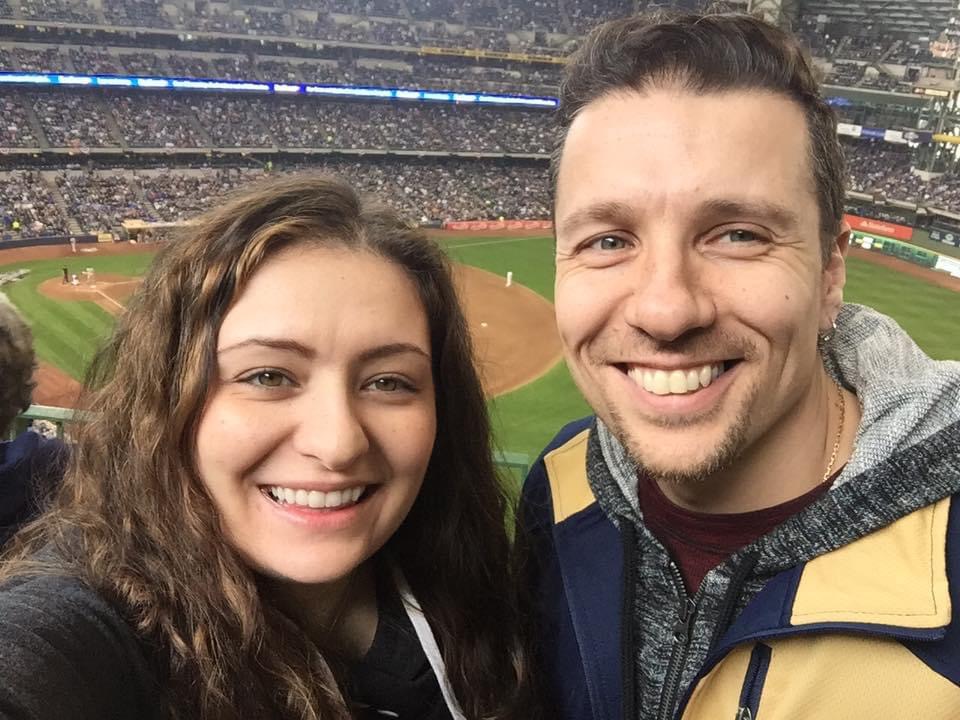
     

    Antonella-Scordato-Lorenz-and-Alessandro-Scordato.jpeg
    Antonella Scordato-Lorenz and Alessandro Scordato

    What kind of influence did your Sicilian upbringing have on you?

    Antonella: I think it was just more about our parents’ work ethic than anything. I guess it’s just making sure we’re keeping the tradition alive and keeping the roots of the types of things that we grew up with, the pastries, food, and things like that.


    Tell us about your experience taking over the bakery in 2019.

    Antonella: Our mom passed away in 2000, and then it was the three of us, my brother and I, with our dad. My brother’s son, Giovanni, came to work at the bakery when he was old enough, and later, our stepmom, Irina, joined us. Our dad kind of retired even though he was there almost every day. 


    It was hard to keep him at home. He worked his whole life and enjoyed what he did, speaking to customers and having a presence in the store. And he lived just a few blocks away, so he was never the type to just stay at home and watch TV. He was always hands-on. 


    Alessandro: Before our dad actually got sick, his body was starting to age, telling him, “No,” but he still wanted to be there. So he would come in, not work as much as he did before, but he was around. But my sister and I took over.


    We worked there pretty much our whole lives, and I did some other work when I was a teenager, but I always helped out in the store, so I got used to the hours and the work and everything little by little. Over time, it was just part of both of our lives, so it wasn’t that difficult. 


    Our dad was always there to point us in the right direction if need be. So, once he was gone, I think our main focus was always to maintain the work ethic he instilled in us, keep quality a top priority, and just keep the legacy going. And it felt good to be able to do that and keep going in that direction.


    Antonella: After he passed in 2019, it was almost like it lit a fire under us. I remember that for years, our dad always talked about how we should remodel the store and make improvements to the business. And we’re just like, “Yeah, that’s a good idea.”


    Then, after he passed, both of us decided we were going to remodel the store. We’re going to not reinvent things because we wanted to keep everything the same, but it was really nice just to kind of execute that vision that he had of redoing the store and making it look so much nicer. And it actually really helped grow our business even more, which was crazy how much just remodeling the store would’ve made a difference. But we’ve just been busy and steady ever since with just our regular customers.


    Alessandro: We have a really good customer base. They’re really loyal, and they’ve always supported us year after year, so they’ve been a big part of our success.


    What’s a typical day at Scordato Bakery?

    Alessandro: I start around one or two in the morning and do all the bread and roll orders for the store and delivery.


    Antonella: We have the wholesale accounts that we bake for and different restaurants in the area, and then we have to make bread and rolls for the store, of course. 


    Alessandro: After that, I just start on whatever cookies we need to make for that day and other items like banana bread or pizza crust or calzone, stuff like that. So I get done around 11. Then, my sister works in the afternoon, and she closes and takes care of any cakes or other pastries.


    Antonella: We do a lot of weddings, especially in the summer and September into the fall. We do a lot of sweet tables, wedding cakes, and regular cakes. Those are things that I take care of along with the hiring and payroll. We do the inventory, making sure everything is stocked.


    We’re really lucky. We have really great employees. We’re so lucky to have so many of our employees with us for over two decades. We’re in a really good community. We’re more like a close family.


    Alessandro: The work is ongoing; it never stops. You never really get to punch out when you run your own business. So if we’re not at the bakery, we’re going to Sam’s Club or getting inventory or Restaurant Depot. There are always certain things to take care of other than at the bakery. So it keeps us busy.


    Antonella: Our busiest time of year is the holidays and then a little bit into January. So we try to close for a week or so sometime in January when we’re finally caught up, and things are slowing down so we can give everybody a well-deserved break. 


    Next year, we’ll be closed for two weeks in the summer so we can spend some time with our family in Sicily. It’s really hard for either of us to get away unless the bakery’s actually closed. It’s not like a company where we can just punch out, and I can’t relax or even think about enjoying a vacation if the store’s open. So it’s like we’ve got to close in order to relax and enjoy ourselves.
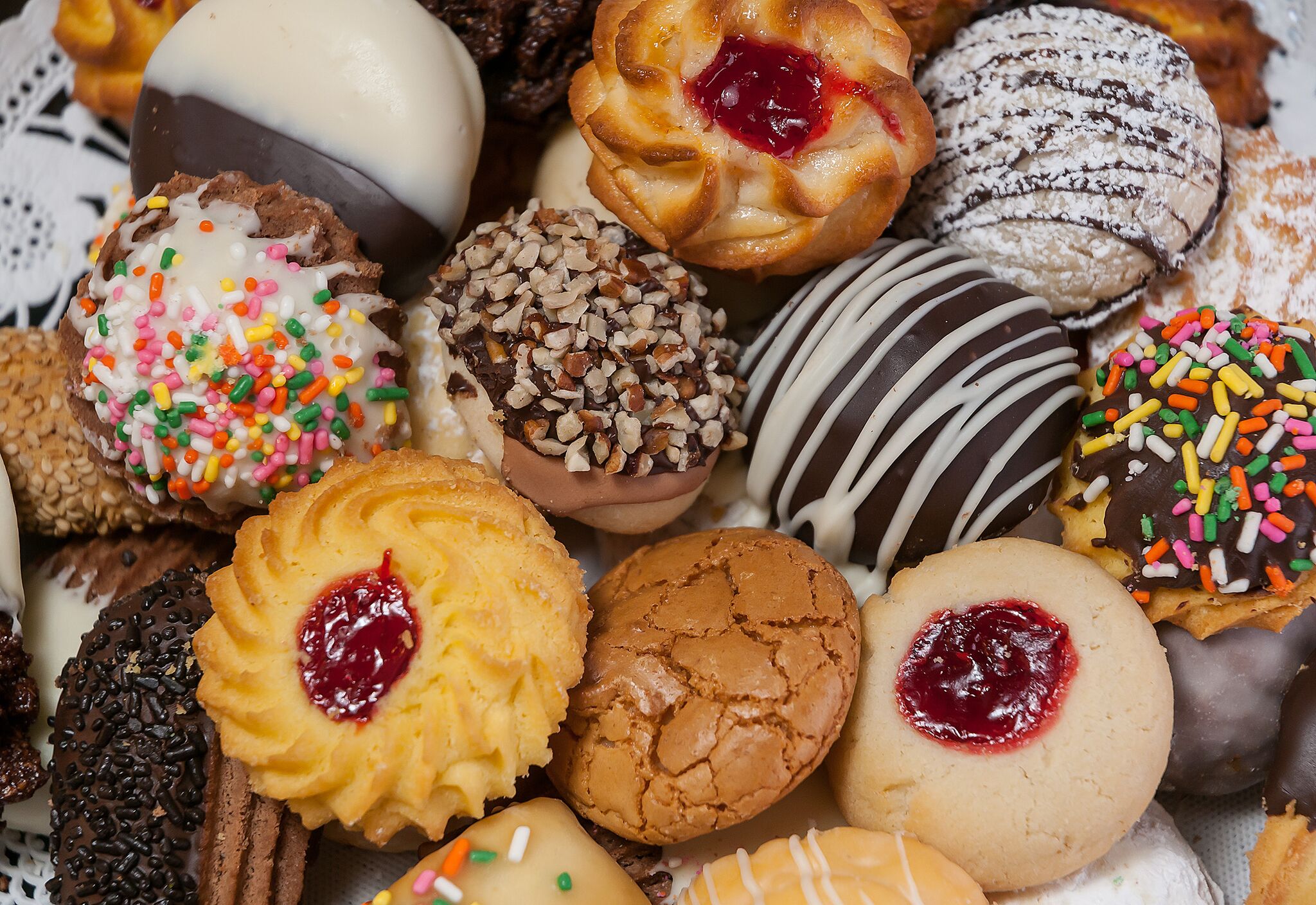
     

    Scordato-cookies.jpg
    Scordato cookies are a holiday favorite.


    What are your favorite items on the bakery’s menu and why?

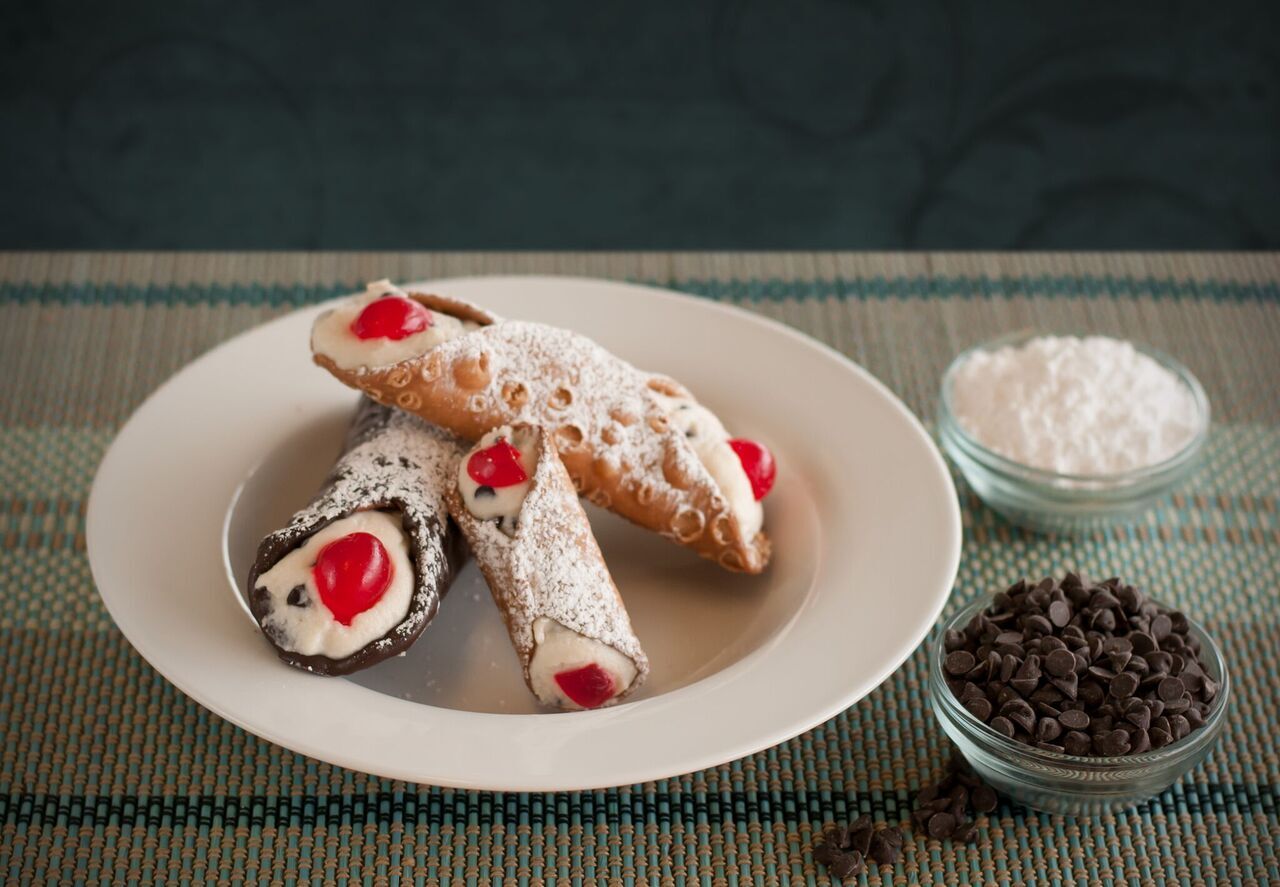
    Antonella: I still obsess over cookies, especially the more traditional ones like the tutu and the Sicilian rainbow cookies. Our cannoli, especially the chocolate, are always so good. 


    Alessandro: We’ll always have cannoli when we’re feeling a little nostalgic or homesick for Sicily.


    Antonella: Or the sfinciuni


    When we’re on vacation and closed, I always miss our bread and rolls. You won’t be able to find that nice crispy bread that we have. I look forward to coming back, making another batch, and having a nice hot sandwich on bread right out of the oven.


    Alessandro: One of my favorites is what our dad used to do: a mini Italian loaf right out of the oven, still hot. You just slice it down the middle. You add some extra virgin olive oil, some Romano cheese, and maybe a little bit of tomato. I eat it right out of the oven, and the texture when you first bite it, with that crispiness on the crust, is just one of a kind.


    Tell us more about your sfinciuni.

    Antonella: It’s a traditional sfinciuni outside of the fact that the one we make for the store doesn’t have anchovies. We make it without anchovies because it’s not as popular here. 


    Ours has a traditional thick, spongy crust. It has tomato sauce, oregano, grated Romano cheese, and spices. It’s just like a meatless room-temperature pizza. 


    We do make it with anchovies on order, but we don’t typically sell it in the store. Even though it’s traditional, it’s not as popular that way.


    Alessandro: It’s a tradition in Sicily. Each family makes its own sauce with caramelized onions. Some people use the traditional primo sale cheese.


    Antonella: It’s what you put into the dough before you bake it in the oven. Before you put your sauce on, you make the dough, you lay it out, and then you push the primo sale into the dough. We don’t make it that way for the store because it’s expensive and hard to find here.


    Alessandro: We’ve had to change it up a little bit. But the way that we make it turns out really good, especially with the Romano cheese mixed in with the breadcrumbs and the olive oil on top. 


    I prefer it the day after in the toaster oven, or I just throw a slice from the day before directly on the oven shelf and crisp it up. It gets this really nice crunchy taste on the outside, but it still has that sponginess on the inside.


    We don’t use pizza dough; we use bread dough, and that’s the only way you can get that really thick spongy size on the crust. If you use regular pizza dough, then you’re just going to end up with a thinner, denser crust. So if you want that nice, thick kind of pan style, you use the bread dough. 


    How do you ensure the authenticity of your Sicilian recipes?

    Alessandro: We use simple ingredients in all of our products, especially the cookies and the bread. We don’t use preservatives. Our dad always tried to keep the same recipe from Sicily that he grew up with, and our uncle taught him that. “Keep it the same. Don’t do anything fancy; just keep it original.”


    It shows, and it makes a difference in the taste. Quality has always been our number one priority, and we ensure that the process stays the same and that the steps from start to finish remain the same every time we do something. That’s helped us stay well-known with all of our customers.


    Antonella: Whenever we go to Sicily, we’ll bring back ingredients that we need. We get our anise oil, which we use for anise cookies. 


    We try to make sure we don’t ever change anything or compromise just to save a few pennies. There are cheaper ways that we can do things, but that’s really not how our dad did it.


    Alessandro: One example is the butter. We always emphasize using a hundred percent butter. Some places do a half-and-half, half margarine and half butter. You can taste the oily difference. Things like that compromise the product, and we don’t want to go down that route.


    Antonella: Even when we make our cannoli cream…. I’ve seen recipes that are just cheap cream cheese. We use simple ricotta and sugar and chocolate chips. We make everything the way our dad did. We’re not trying to save a few pennies.


    You’re also known for your cakes. Can you share a memorable cake order?

    Antonella: One that stands out was one of my very first wedding cakes. We’ve been making cakes for a long time, but this one was probably one of my favorites. It was one of those ones where when you’re done with it, you step back and really admire it.


    It’s one of our most duplicated cakes; brides will come in, see it, and want that exact same one. It’s a three-tiered cake with calla lilies that are cascading down. It’s simple. There’s not much to it outside of the beautiful calla lilies, but it’s just one of those cakes that is just really memorable. 


    Then there was one other cake that I made… I don’t remember the cake at all, but it sticks in my mind because as I was finishing it, the bride showed up. I was still putting it together, and she started crying because she was so happy about it. 


    I don’t remember what the cake looked like at all. I don’t even know if I still have a picture of it, but I just felt the emotion of her being so overjoyed.


    What advice would you give to someone who wants to start their own bakery or pursue a career in baking?

    Antonella: Find a good staff, find good people that you can rely on. We wouldn’t be able to do any of the things we do without our staff. 


    Alessandro: It’s kind of a load off knowing that we can rely on them when needed. So that helps out a lot when you can trust your employees to take the next step whenever you need them to.


    Antonella: Alessandro’s son, Giovanni, who was named after our father, works at the bakery, and he’s an incredible help. He is such a hard worker, and he definitely helps with a ton of things: a lot of what our mom showed me how to do, like our lasagna that we make on weekends or different things, like our homemade sauce and meatballs that I used to make. 


    Now, I spend most of my time just making cakes and pastries, and he’s able to pick up that tradition and help me with those types of things, and he’s great at it. So, it’s great to have him be a part of our bakery and our legacy and help us.


    You have to get good employees that you can trust and rely on, and you have to make sure that you’re willing to give the best customer service and always put that first. I feel like that’s so important. Every time I see another good review, another five-star review on Google, I’m just like, “Well, they were impressed with our customer service.” I feel like that’s so important nowadays. 


    Alessandro: It’s hard to go into a place and actually talk to the owner or someone that’s part of the business. Our dad said, “It’s easy to open up a business. It’s difficult to keep it successful year after year after year.” 


    It takes a lot of work, dedication, and sacrifice, and you have to focus on these things. Otherwise, you won’t be successful.


    Antonella: You’re always kind of on call if something happens; it kind of never ends. You have got to be willing to part with time and be as dedicated as possible.


    What do you hope customers will take away?
    Alessandro: I’m hoping that whoever reads this understands that we’re a small family business, and we hope that they appreciate all the hard work and the products that we’ve put out. It’s difficult to find local businesses nowadays. We hope to continue the tradition for another 30 years, hopefully, and God willing. We’re happy with what we do, and we’re hoping to continue the legacy of our parents.


    If you enjoyed this article, consider subscribing to my newsletter for more content and updates!

  • Driving Innovation and Navigating AI’s Future: A Conversation with Datacom’s Lou Compagnone

    Driving Innovation and Navigating AI’s Future: A Conversation with Datacom’s Lou Compagnone

    Artificial intelligence (AI) is rapidly redefining how we interact with data and has permeated most aspects of our digital world—and in more ways than we are even aware of.


    How we safely and effectively navigate that new information highway is one of the questions Datacom Director of Artificial Intelligence Lou Compagnone helps answer.


    She has her work cut out for her, but then again, as a Sicilian Australian, she says a solid work ethic is in her blood. 


    Lou shared with me her connection to Sicily, how she got started working in AI, what excites her about AI’s future, and how she plans to drive innovation.


    What is your connection to Sicily?

    My main connection is my father. He was born in Sicily and moved to Australia from Santa Vittoria Domenica when he was about five years old, but he and his family still very much lived like they were in Sicily. The town I grew up in, Donnybrook, in the southwest of Western Australia, is basically the Little Sicily of Australia.


    During the fifties, there was a mass migration of Sicilians because of the war. A lot of them ended up in Perth and Fremantle, in particular. A huge number of them actually migrated to Donnybrook.


    They almost recreated Sicily in Donnybrook to the point where even their houses looked Italian. They really shaped the landscape. They even grew prickly pears.


    So, without even knowing it, I formed a connection with Sicily to the point where when I first visited, when I was in my twenties, I had a sense of déjà vu. I felt like I’d been there before because it looked so much like Donnybrook, and I just really felt at home there.


    Sometimes, there’s a really inexplicable feeling where you just have a sense of belonging even though it’s not somewhere you’ve been before. When I met my aunt, who lives in Sicily, she said you just feel at home when somewhere is in your blood. 


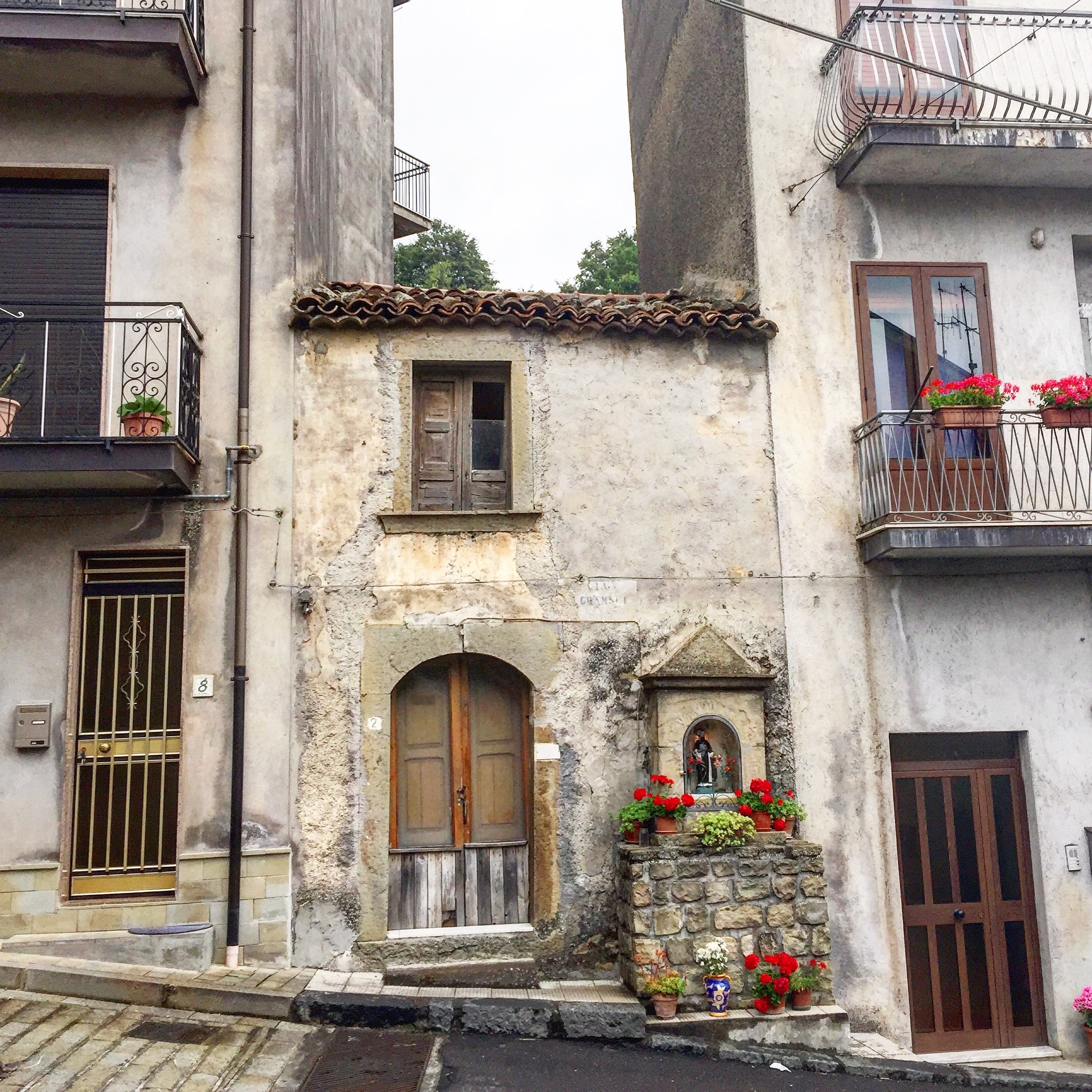
    Lou-Compagnone-s-father-s-house-in-Sicily.jpeg
    Lou’s father was 6’7″ and lived in the town’s smallest house.


    How did your Sicilian roots shape you personally and professionally?

    Work ethic is a big thing. So my nonno worked until he was in his nineties. We tried to stop him from working because he was getting a bit too frail to be on our family farm, and we worried he might have a fall. He was always climbing ladders and doing all sorts of things. So we decided one day that we just weren’t going to pick him up to take him to work. And then he just started walking on his own. He found a four-wheeler motorbike and just hooned along the road with no license. So we realized we were just going to have to let him work.


    My dad was the same. He had that same work ethic and worked harder than anyone I’ve ever known. He’d always be up at four in the morning and back when it was dark. He worked as an accountant and on our family farm. Even now, he’s nearly 80 and retired, but he still does people’s tax returns and manages property and stuff like that. So I guess a bit of that has rubbed off on me where I push myself hard in the work that I do, and part of it is because I am passionate about it, and part of it is just this drive that I have just to finish things and do things well. And so that is a bit of a Sicilian thing. Sicilians are sort of battlers. They push through things, and they do it well.


    How did you get started working with AI?

    I’ve worked in the tech industry for about 17 years, but my background was actually in service design and futurism. And that might seem like a weird background for AI, but it’s helpful. And there are a few reasons for that. If you think of a service as something that helps people to do something, I always think of artificial intelligence as closing the gap between humans and technology more than any technology before. So, it makes it easier for someone to do something. I almost describe it as a beeline. It beelines you between the thing you want, the information you want, or the action you want, and then getting that. Naturally, I always think about closing the distance. Futurism is thinking about what’s coming tomorrow and how you prepare for it.


    The combination of that—helping people work out what their service needs to be in the future and futurism—probably makes me perfectly placed for it. Artificial intelligence is only as good as the problem that it solves. There’s a figure from Harvard Business Review that 80% of AI projects fail. A big part of that is because they haven’t actually done service design.


    I sort of sweep in and work out what the actual problem is, the real problem to solve. And that works really well with AI. 


    Describe your role and the group you lead at Datacom.

    I’m the director of artificial intelligence for Datacom. I’m mostly an individual contributor because it’s basically changing everything that we do. My role is really about operationalizing AI for both our business and customers. The best way of describing it is that a lot of our customers will go to AI summits, or they’ll have these tech vendors talking about AI, and they’ll be talking about generative AI and context windows and tokens and all this really abstract stuff. And they walk away and go, “What does this mean for my business, and what do I do?”


    My role is to help people work out what to do and where to start. I’m doing that for Datacom in terms of working out how we reimagine our services and our solutions, how we build our internal capabilities, how we govern AI (because that’s a really important part of making sure that you’re doing things safely), and how we have our own innovation pipeline. Then, I help customers do the same. We’re very transparent about our own learning journey with AI because it’s such a new and changing field. If anyone claims to be an AI expert, I’m like, “Is anyone really?” because the field is changing so quickly.


    What challenges do organizations face when integrating AI, and how do you help them overcome them?

    We recently did a survey of 200 business leaders in New Zealand. One of the biggest things that came out is that although there’s really been an increase, even from last year, in sentiment towards AI and adoption of AI, there’s still low governance. Few people have been able to find specific use cases for it. So, the biggest challenge is finding the right problem to solve and the right use case that will have tangible benefits. On the flip side, many people just buy a tool, like they’ll buy Copilot, and go, “It’s not working.” That’s because they’ve just bought this tool without actually working out the use case and the problem to solve.


    Many people tell me they feel there’s a lot of interest within the organization in people using AI, but it’s just happening in lots of different pockets. They describe it as almost out of control as if it is a runaway horse. One of the biggest challenges is how you govern it. How do you coordinate it so that people are doing it in a safe and ethical way, in a scalable way, and in a way where you can actually measure the benefits?


    It’s not just having a tool for its sake. In the end, AI does use a lot of data. It drives a lot of cloud consumption, so you actually have to do it in a worthwhile way. And sometimes, AI might not be the answer for everything. If you’re doing it in a more strategic and governed way, you can have better visibility of whether it’s working.


    I think security and data readiness are also challenges—making sure people have the data they need to really live up to the ambitions of the solutions they want to build. AI is only as good as the data that it consumes.


    We help people with getting their data ready, ensuring that they actually have what they need, and then making sure that they have the security guardrails in place. A big thing with large language models is what happens to your data when using it, where it goes, and what that actually means. I describe to people who are using public AI that they need to understand that anything they type in is going into the big soup of the world. You need to really be cautious about that. And for businesses, it’s thinking about actually using enterprise solutions so that you can keep your data close to you.


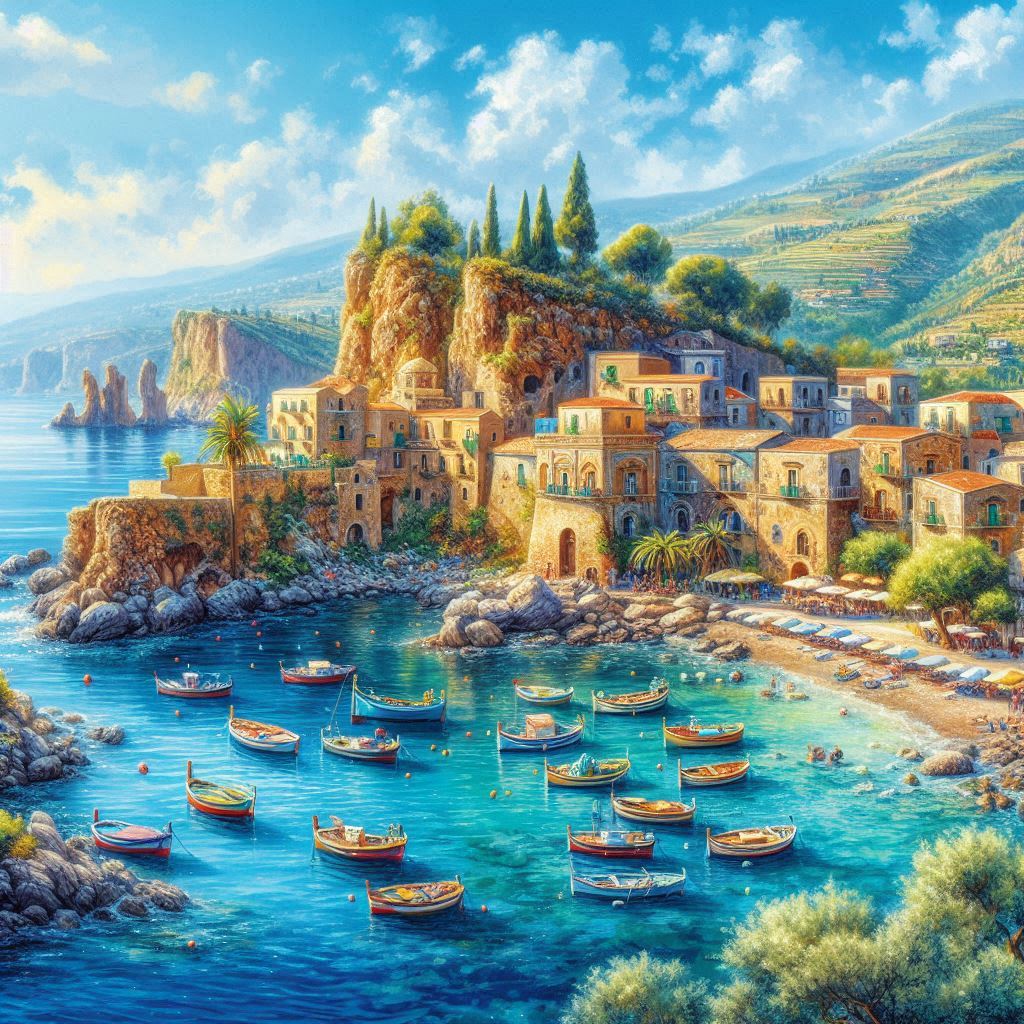
    photo-realistic-illustration-of-Sicily.png

    AI-generated illustration of Sicily


    What excites you about the future of AI?

    The Institute for the Future recently reported about the different horizons of what’s coming with AI. What we see at the moment in Australia and New Zealand (the U.S. is probably quite different) is the first horizon of AI, which has some capabilities but some key limitations. The limitations often include things like truth. We know that AI can hallucinate; if it doesn’t actually know the answer, it can just make it up.


    A lot of the AI we’re seeing can’t actually reason. It is really just an elaborate spreadsheet in lots of ways. A very, very good one, a super-smart search. Where it gets interesting and where we’ll see those exciting developments is more on horizons two and three. So, on horizon two, we’re seeing in places like the U.S. and especially China, an ecosystem of multiple AI models interacting with each other. What you describe as agentic AI is where things can become really special.


    It is even more interesting to go beyond the digital to the physical, to interact with the real world through robotics, autonomous vehicles, and neurotechnology.


    I monitor signals of what’s changing. I’m very obsessed with Neuralink and following how that’s going with people who are paralyzed being able to play Mario Kart with their minds. I’m really interested in seeing where that technology will go.


    I recently saw something about a talking pet collar, which I thought was hilarious. It’s a chatbot for dogs, and it’s voice-activated, so it basically gives pets the ability to talk to you.


    Then, there’s an AI MRI machine that Japanese scientists have invented that records your dreams and gives you the ability to talk to other people in your dreams. I also saw something recently about a scientist who connected a mushroom to a robot body, and it taught itself to walk.


    Things like that are interesting to me. If we go back to that thing about the beeline, this goes beyond a shorter distance between two places. This is actually going to unlock things that previously have been behind locked doors. And that’s fascinating, whether it’s realizing the capabilities of mushrooms—that they might walk if given the right technology—or unlocking the language of pets and what they say to us. The question is whether we should be unlocking that stuff in some cases, but whether we should or not, it gives us the ability to unlock things.


    What are your long-term goals for the AI initiatives at Datacom?

    I want to build our own internal capabilities. This is a big thing. We already have some amazing people at Datacom. We’ve got about 7,000 people, and a lot of them are developers with AI skills. Some of the stuff that they come up with is just incredible. Someone’s building an evolutionary algorithm at the moment using AI that becomes smarter as time goes on.


    I want us to be at the forefront of capabilities because the role that I want us to play with the customers is to help them build their capabilities as well. And in some ways, that’s a terrible business model. I want us to help people become independent and make ourselves redundant so that we can simultaneously play a development or tech partner role and a sort of education role.


    Part of that is that I want us to learn with our clients. But then the other ambition for me is all around making sure that we play that role in ensuring that AI is safe and ethical and that it’s done in a scalable way. And part of that is sustainable because how we design it is really important.


    I think in some of the bigger tech companies, the driver is data consumption. You need data to do AI, but the way you design it is key so that it’s done where you’re actually using data where you need to, and it’s all in how you architect it. Playing a role in AI for the good is pretty important to me.


    How do you plan to drive innovation and make a lasting impact in your field?

    I want to innovate in a human-centered way. I’ve seen a lot of people talking about how they want to create an AI-driven future. I want to create a human-driven future that’s supported by AI. A big part of what I want to do is help humans have agency in the direction this is going and shape the direction. Part of that is actually that you need to lean into it. You need to test the capabilities, and you need to start thinking at a longer horizon.


    In futurism, we think about a 10-year horizon. If we start thinking about where things are going, we need to think about the stuff that we both want to enable and are excited about. We want to capitalize on our competitive advantage, but we also want to prevent some of the stuff that we actually don’t want to be part of our futures. My plan is to help organizations work out and enable the futures they want and prevent the ones they don’t want.


    If you enjoyed this article, consider subscribing to my newsletter for more content and updates!

  • Saving Europe’s Donkeys: Inside Italy’s Il Rifugio degli Asinelli

    Saving Europe’s Donkeys: Inside Italy’s Il Rifugio degli Asinelli

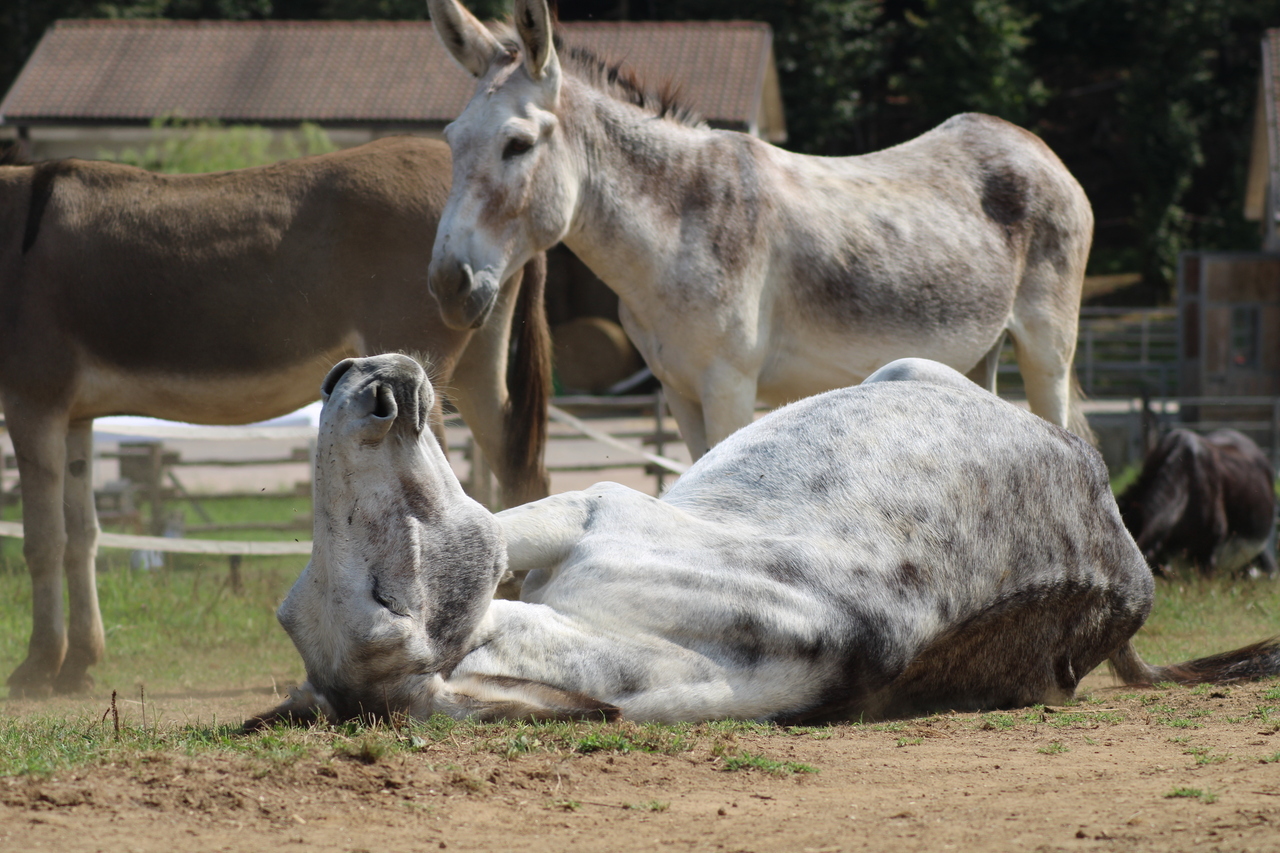
    It’s the quintessentially Sicilian image: A brightly colored wooden cart pulled by a donkey. While the Sicilian cart is largely a thing of the past, the plight of donkeys throughout Europe remains a pressing issue. Once vital to agriculture and transportation, these animals face hardships ranging from overwork in tourism to neglect due to misunderstandings about their needs.


    Enter Il Rifugio degli Asinelli. With a mission of educating the public, improving donkey welfare, and healing physical and emotional scars, this Italian subsidiary of UK-based The Donkey Sanctuary serves as a lifeline for donkeys from across Europe facing neglect, abuse, and misunderstanding.


    I recently caught up with Il Rifugio degli Asinelli Communications & FR Officer Ilaria Ruzza, who shared more about this important organization and the threats donkeys face. She additionally shed light on surprising donkey facts and how the public can get involved in caring and advocating for this equine species. 


    What inspired the establishment of Il Rifugio degli Asinelli?

    Il Rifugio is the Italian subsidiary of the international animal welfare charity The Donkey Sanctuary, founded in 1969 in the UK by Dr. Elisabeth Svendsen MBE. Our location in Italy puts us in a good position geographically to welcome donkeys from different countries across Europe. Over the years, we have welcomed animals from Greece, Romania, France, Switzerland, and, of course, Italy.


    What are some of the key threats donkeys face?

    While some donkeys suffer from neglect and abuse, poor welfare is often because of misunderstanding and a lack of knowledge about how to care for them. Sometimes, they are considered “small horses,” but donkeys are very different in their behavior and physical needs. In places popular with tourists, donkeys are still used to generate income, and this means they can be overworked or kept in poor conditions, as is also the case for animals involved in the milk and breeding industry.


    Can you share some success stories of donkeys rehabilitated at the refuge?

    Ardito was born in 2003 and comes from the Oropa Valley, a few kilometers from Il Rifugio. He lived for over a year, locked in a stable, without ever seeing the light of day because his elderly owner was no longer able to properly care for him. When we went to retrieve him in 2016, he was underweight, with long hooves and covered in parasites, but he already had a wonderful character: the only thing that hasn’t changed, so much so that he was renamed the “Gentle Giant.” He constantly seeks the attention of humans and loves to be scratched on the withers. Living inside a closed environment and without the necessary air circulation for a prolonged period of time led him to develop a respiratory condition comparable to human asthma. Animals affected by this pathology require greater precautions (stable beds made of dust-free wood chips and not straw, administration of specific high-quality feed). He has created strong bonds of friendship with Lucio and Galileo, his stablemates, but he still has a good balance with all the other animals in the group in which he lives.


    Ardito-donkey.JPG

    Ardito was rescued from a state of neglect.


    In 2013, we rescued 34 animals coming from Italy’s biggest-ever equine seizure in Colleferro, near Rome. This included 14 mules and hinnies and 12 pregnant jennies, leading to another 12 foals over the following year. It was February, and we had heavy snow. All our staff worked very hard to enlarge our quarantine area, as we were not used to welcoming so many animals at a time. Before arriving at Il Rifugio, they were completely abandoned. Sadly, many animals were already dead or died during the seizure because of starvation or severe, untreated wounds—with no trust at all towards humans. We’ve been rebuilding that bond every single day since they arrived, healing both physical and emotional wounds. There’s still a long way to go, but when they approach to receive a scratch, we know we’re going in the right direction.


    What are your main challenges in caring for over 100 animals from various countries?

    We currently have 106 resident animals (93 donkeys, 12 mules and hinnies, and one pony). They all come from different backgrounds. They can’t tell us about what they have been through, so we have to get to know and understand every single animal in his or her behavior and character, besides their specific physical needs (diet, conditions, etc.).


    How do you ensure well-being and health at the refuge?

    Our qualified, experienced and trained staff care for our animals every single day, while our veterinarian is on site three days a week and in case of emergency as well. Our farm schedule includes periodic visits, dental checks, vaccines, hooves trimming and grooming, and weighing on a monthly basis. Individual diets are reviewed each month to ensure welfare and avoid possible conditions stemming from a wrong alimentation. Animals with behavioral problems are followed through specific sessions by trained personnel so that they can be more comfortable during health checks.


    What might people be surprised to learn about donkeys?

    Donkeys are incredibly smart and intelligent animals and, like other equines, have a keen fight-or-flight nervous system response. However, compared with horses, the donkey’s fight-defense mechanism is more easily engaged and can be seen in donkeys displaying behavior in the range of standing their ground when faced with a threat. Donkeys may also freeze when faced with a threat, which can be mistaken for them being stubborn when, in fact, they may just be reacting to a novel situation. Their varied behavioral responses demonstrate how donkeys need to be treated differently from horses and not just seen as a smaller, longer-eared version of a horse. They create strong and long-lasting (even lifelong) bonds with other donkeys, usually in a pair but sometimes in groups of three or four. When we move a donkey from one stable to another for a vet visit, we always keep them with their bonded friend(s); otherwise, they can be scared, deeply stressed, or even become aggressive. Bonded friends stay close to each other during any activity: grazing, eating, running, scratching, etc.


    What kind of training and education programs do you offer?

    On occasion, we offer public courses, both online and on-site, facilitated by our Training and Educational department, completely free of charge, focusing on the basic information and knowledge for donkeys’ welfare. We also offer courses on a wide range of subjects through The Donkey Academy, which is a collaborative online learning platform and knowledge exchange developed and run by our own experts at The Donkey Sanctuary. The self-paced courses are designed to teach new skills or enhance existing ones. They cover basic welfare and wellbeing, behavior and nutrition for donkey owners and guardians, right through to specialist courses that include donkey behavior for veterinary professionals, clinical examination, and dental and farriery care.


    The Donkey Academy is also free of charge and offers courses in English and Spanish, both to professionals (e.g., veterinarians, dental technicians, vet nurses, paraveterinarians, and farriers) and to laypeople (i.e., donkey owners, guardians, people interested in donkey care and welfare). The virtual learning environment also hosts training pathways for The Donkey Sanctuary employees, designed to ensure that all of our donkeys will benefit from a consistent and predictable approach to their care. The Donkey Sanctuary is also involved in collaboration with different Universities, Colleges, and professional associations in several countries, offering tailored education programs to students and professionals.


    Recently, two courses in Italian have been launched: one is dedicated to our Il Rifugio employees, while the other is open to the public, offering owners, perspective owners, guardians, and other interested people all the information needed to properly care for donkeys and enhance their welfare and well-being.


    What key activities and facilities are available at the refuge?

    Upon appointment, we welcome groups, both children and adults, for guided tours, which last approximately a couple of hours: we explain our mission, the needs of a healthy donkey, and what he looks like so that people may be able to recognize a donkey in distress and report it to authorities if they ever see one. Three different groups of vulnerable and disabled people come once a week to benefit from our free DAA (Donkey Assisted Activities) program. They spend some time in our paddocks with our animals (who are never tied and always free to move around), shadowed by our qualified staff. We have an Info Point where visitors can ask questions, make a donation, and adopt a donkey.


    Can you explain the process of adopting or fostering a donkey or mule?

    Distance adoption is a symbolic way to help all donkeys. With a yearly donation of 36,00 EUR, you will contribute to the well-being of all animals living at Il Rifugio. Our program includes seven donkeys (Alin, Ardito, Agostino, Clementina, Filippo, Galileo, and Ombra) and one mule (Marco). Adopters will receive a special certificate with a picture of the adopted donkey, a welcome letter, and the donkey’s ID with all their information. We then send three newsletters a year (Spring, Summer, and Christmas) where we provide updates on the adoption scheme animals, which can be seen during our open days to the public.


    We currently have 43 donkeys living in Guardian Homes. People interested in joining our Guardian Scheme are invited to read the terms and conditions first. Donkeys are very sociable creatures who make fantastic companion animals. However, they do require a great deal of time, space, resources, and, of course, attention. Our Guardian donkeys are selected carefully so we can maximize the chances of our donkeys and their foster owners. Guardians have a happy and long-lasting life together. They are always fostered in pairs, given how important it is for them to have a bonded companion. Our Welfare Department commits to a visit once a year to check everything is running smoothly and that all welfare standards are respected.


    What do you hope people take away from your work?

    To better understand and deeply respect this animal, who enormously contributed for centuries to human needs and activities while being so often neglected and mistreated. We want a world where every donkey has a good quality of life, a path that starts with education, knowledge, advocacy, and sensibility. We’re trying to achieve it each day, to build awareness, to let people see and experience how wonderful donkeys are in every respect.


    If you enjoyed this article, consider subscribing to my newsletter for more content and updates!

  • Fennel: A Nutrient-Rich, Zero-Waste Vegetable with Versatile Uses

    Fennel: A Nutrient-Rich, Zero-Waste Vegetable with Versatile Uses

    Prized for its bulbs, leaves, and even seeds, fennel is the ultimate zero-waste food. It’s also rich in fiber, potassium, vitamin C, and manganese. 


    To explore the origins and uses of fennel, I reached out to “I Love Fruit & Veg from Europe,” a global initiative that promotes the mindful consumption of high-quality European fruits and vegetables both within Italy and abroad. Their purview includes organic produce and products with PDO (Protected Designation of Origin) and PGI (Protected Geographical Indication) certifications, advocating for healthier, safer, and more sustainable diets. The initiative is supported by Italian producer organizations such as Agritalia, A.O.A., La Deliziosa, Meridia, and Terra Orti and is co-funded by the European Commission.


    “I Love Fruit & Veg from Europe” Campaign Manager and Coordinator Manuela Barzan shared more about this flavorful vegetable.


    Where does fennel come from originally?

    Common fennel (F. vulgare) or finochietto is native to Southern Europe and countries bordering the Mediterranean Sea but has become naturalized worldwide. To the ancient Greeks, fennel was a symbol of victory, known as “marathon,” lending its name to the Battle of Marathon (490 BC), where legend has it the battle unfolded in a fennel field. The Romans, too, embraced fennel as a symbol of achievement, fashioning its leaves into wreaths to crown champions in their games.


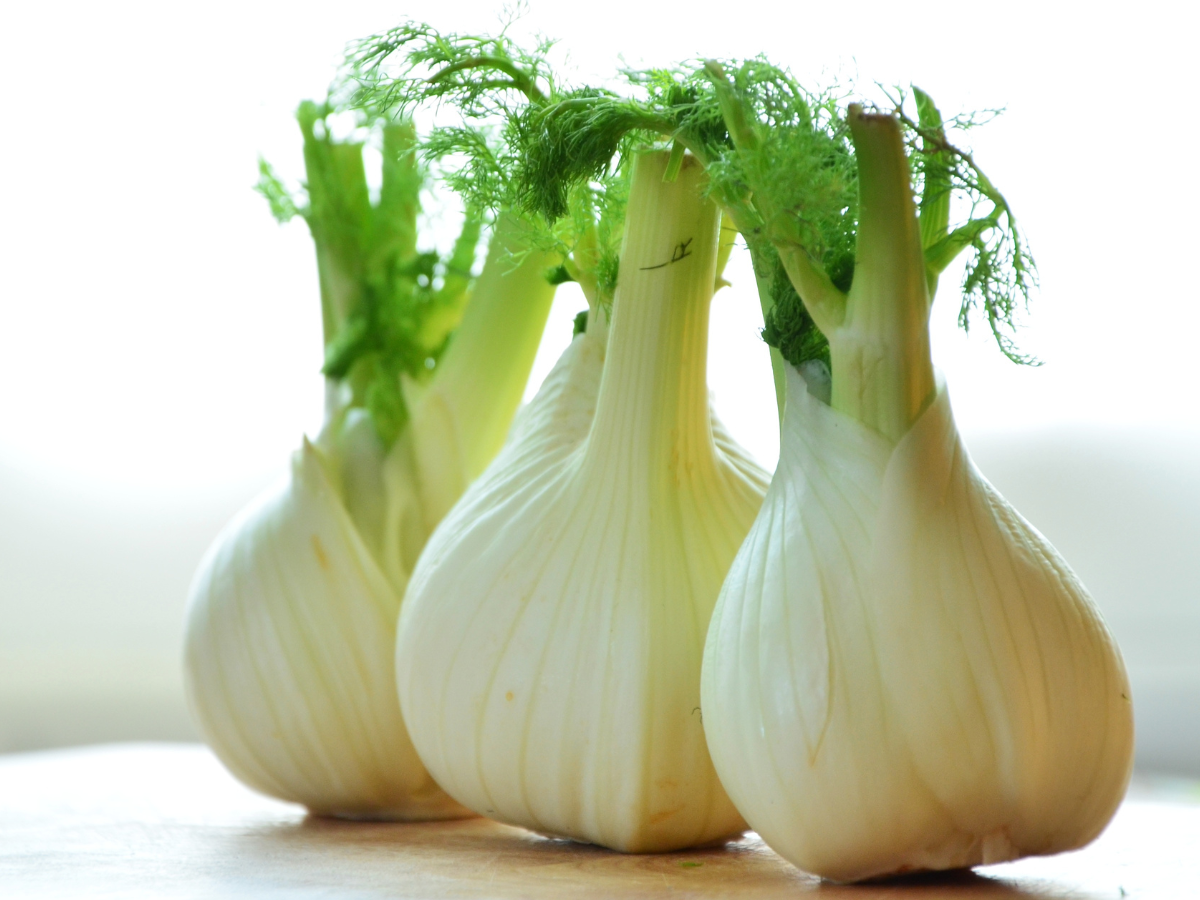
    Florence fennel, or finocchio (Foeniculum vulgare var. azoricum), is a cultivated variety from the same family as wild fennel. Developed in 17th-century Italy, it resembles wild fennel at the top with similar stalks, fronds, and flowers, but at the base, it forms a white, layered structure often called a “crown.” Although commonly referred to as a bulb, it’s not a true bulb—its layers are crisp and carry a mild anise flavor.


    Where and how is fennel typically grown?

    India is the largest producer of fennel, which is grown for its seeds and is widely used in cooking and traditional medicine. Spanish missionaries brought fennel to North America, cultivating it in their medicinal gardens. In California, it is now commonly referred to as wild anise and grows abundantly along roadsides and in pastures across the U.S., where it is often regarded as a weed.


    Bulb fennel (finocchio) is grown globally but thrives in warm, moist environments. Various cultivars can be harvested at different times based on their growing location, with the general harvest season in Italy spanning from spring to fall.


    In the U.S., fennel is considered a cool-weather crop and is typically available from fall through early spring, although grocery stores stock it year-round. However, since fennel is a relatively minor crop in the U.S., any out-of-season supply not sourced from California or Arizona usually comes from a greater distance.


    What parts of the fennel plant are used and how?

    Every part can be used in some way! Bulb fennel is grown for its seeds, essential oil, fronds (leaves), and swollen leaf base, which is consumed as a vegetable. While the stalks can be tough and somewhat stringy, they are often used to flavor stocks. The fronds can serve as a garnish or be incorporated into marinades and sauces.


    Common fennel is primarily cultivated for its seeds, which possess a more aromatic quality than those of cultivated fennel and have a robust flavor reminiscent of licorice.


    What are the nutritional benefits of fennel?

    Fennel is a nutrient-dense, low-calorie food that offers several health benefits, including:

    • Rich in antioxidants: Fennel is abundant in various antioxidant compounds that help shield cells from damage caused by free radicals, potentially lowering the risk of chronic diseases such as cancer and heart disease.
    • Colic relief: Colic, a frequent issue for newborns, can be effectively alleviated with fennel, whether used alone or combined with other herbs. Fennel seeds are commonly included in gripe water, a well-known remedy for this condition.
    • Menstrual pain relief: Research indicates that fennel might lower the production of oxytocin and prostaglandin, hormones linked to painful periods.
    • Enhanced digestion: Traditionally, fennel is consumed after meals in many cultures to support digestion and minimize gas. Studies suggest that fennel may help by reducing inflammation in the intestines and decreasing the levels of gas-producing bacteria. Additionally, fennel oil has been found to alleviate symptoms of irritable bowel syndrome.


    What are some favorite Sicilian recipes that feature fennel?

    • Sicilian sausage: Known as salsiccia, these sausages are made from coarsely chopped pork mixed with fennel seeds. They are typically sold in coils on skewers, weighed by the pound.
    • Pasta con le Sarde: This dish is a staple in Sicilian cuisine. According to legend, when Euphemius of Messina returned from exile in Tunisia to lead a military campaign in 827, his Arab cooks created this recipe using the first ingredients they found upon landing at Mazara’s harbor. The combination included wild fennel, raisins, pine nuts, and the freshest sardines available.
    • Pork and fennel ragù: For this dish, start by removing the casing from Sicilian sausages, squeezing out the pork, and cutting it into pieces. Sauté shallots in a bit of wine, then add the sausage and combine it with tomato sauce and a teaspoon of fennel seeds. For a twist, you can substitute the tomato sauce with fresh ricotta. This ragù pairs beautifully with casarecce, a short, twisted pasta native to Sicily.

    How do you recommend preparing fennel to bring out its best flavors?

    Fennel bulbs can be prepared in various ways, including steaming, grilling, roasting, or braising. They are often served with olive oil or butter. They offer a sweet, subtly anise-like flavor that pairs especially well with fish.


    To enhance the flavor of Florence fennel when using it raw in salads, slice the bulb and let it soak in ice water for an hour in the refrigerator.


    Antonio Carluccio said in Complete Italian Food, “Fennel has such a sweet taste and pleasant aroma that it was often served at the end of a meal as a dessert in Italy. It is delicious in every form, raw or cooked, and indispensable in pinzimonio [tender spring vegetables served sliced and raw to dip in newly pressed olive oil with a little salt and pepper].” 


    Can you share any tips for selecting the best fennel?

    When selecting fennel bulbs, look for those that are white or pale green, firm, and heavy. Steer clear of any that appear yellowing, dry, or starting to shrivel. The fronds should be vibrant and crisp, not wilted.


    As fennel ages, it becomes drier and tougher, with a more intense anise flavor. However, removing the outer layers will make the inner part less tough.


    How do you store fennel?

    Sturdy fennel bulbs and stalks can be stored in the refrigerator for an extended period. However, the fronds may lose their crispness, so it’s advisable to detach them, wrap them in a paper towel or newspaper, and place them in a container in the fridge. Keeping the fronds dry can help extend their freshness.


    What other ingredients complement fennel in recipes?

    Fennel pairs especially well with fish.


    The chopped young leaves can enhance the flavor of salads and various dishes, and they are commonly enjoyed alongside oranges.


    Why should people try fennel?

    Fennel is a highly versatile vegetable that can be enjoyed raw or cooked. It is easy to incorporate into various dishes without generating waste. It is rich in fiber, low in calories, and boasts numerous health benefits. 


    Here are some common ways to include fennel in your meals:

    • Sip fennel tea, a soothing herbal infusion made by steeping fennel seeds in hot water. This traditional remedy is often utilized to promote digestion and reduce bloating and gas. You can find it in tea bags or make it by steeping whole fennel seeds.
    • Incorporate fennel into salads for an extra crunch.
    • Substitute fennel stalks for celery in soups or stews.
    • Wrap fennel with other root vegetables in foil and roast in the oven until tender.
    • Use the bulb, stalks, and fronds as a flavorful base when roasting chicken or pork.
    • For a tasty side dish, roast fennel wedges seasoned with salt, pepper, and butter.


     If you enjoyed this article, consider subscribing to my newsletter for more content and updates!

  • Manima: Reviving Sicilian Hand Embroidery with Modern Elegance and Social Impact

    Manima: Reviving Sicilian Hand Embroidery with Modern Elegance and Social Impact

    Drawing on the more than 1,000-year tradition of Sicilian hand embroidery, Palermo-based luxury lifestyle brand Manima offers such exclusive, high-end products as home decor, linens, resort wear, and wearable art, all crafted using traditional techniques.


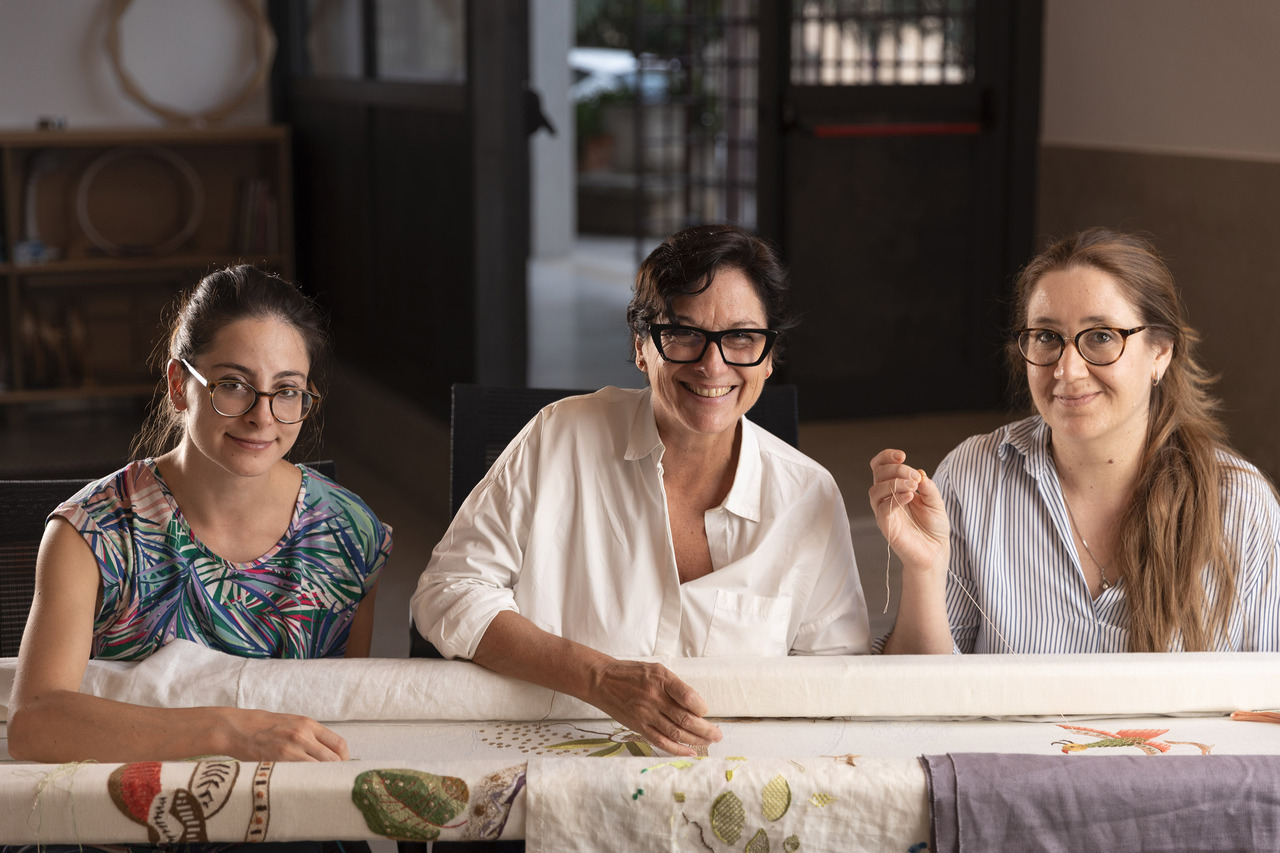
    With a beautiful atelier in the city’s historic center, Manima, which takes its name from Mani + Anima, meaning hands and soul, was founded by the husband-and-wife team of CEO Carolina Guthmann and Executive President Piero di Pasquale. The company focuses on combining female artisanship with technology and social impact with a platform to connect embroiderers across villages to Manima headquarters, allowing women to be included remotely while maintaining control over the quality, deadlines, and design.


    Carolina recently took time out of her busy schedule to share more about Manima and the Sicilian hand-embroidery tradition. 


    Tell us about Manima and how it started.

    It was born from the desire my husband and I had to do something meaningful in the second part of our lives, after a long and successful career in multinational corporate companies and RAI Television on my husband’s side.


    We left our careers, studied and researched for over a year, and then found the project that would satisfy our wish to generate social impact, work with high-end artisans, and preserve a cultural heritage. That was hand embroidery because it has a market that never dies out; it is typically female in Italy and had a very important social role in the past until globalization hit local artisanship. It is also a form of artistic handicraft that can be done in groups and even large groups; it creates strong social bonds and can be re-interpreted endlessly. 


    What is your background?

    I have a degree in macro-economy and worked for many years in top management roles in multinational companies, such as Procter & Gamble, Bristol-Myers Squibb, and Merck.


    My husband is a former TV journalist and was, among other things, an anchorman in the U.S. for RAI public TV. He has a background in political sciences and international relations and was the Director of RAI News worldwide.


    What are the unique characteristics of Sicilian hand embroidery featured in your products?

    Sicilian hand embroidery is rich and diverse, reflecting the island’s history of 26 different conquests, each leaving its mark on local craftsmanship. This eclectic mix of influences has shaped a wide range of styles and techniques, making Sicilian embroidery truly one of a kind.


    One of the standout techniques is pulled thread embroidery, a traditional Sicilian method that we incorporate in a modern and distinctive way. For instance, this technique is central to our Saline resort line, as well as our collection of colorful and vibrant table linens, giving a fresh twist to classic craftsmanship.


    Moreover, throughout Sicily, many small villages have preserved and perfected unique embroidery methods over generations. We have carefully selected and partnered with some of these master artisans, integrating their extraordinary skills into our project. Their expertise ensures that each piece carries the authentic spirit of Sicilian heritage while embracing contemporary design.


    When and how did the tradition of embroidery as part of a dowry originate in Sicily?

    The tradition of embroidery as part of a Sicilian dowry is a reflection of the island’s rich and diverse history. It evolved through centuries of cultural exchange and was a testament to the bride’s skills, her family’s status, and the importance of craftsmanship in Sicilian life.


    This practice likely originated during the Middle Ages, influenced by the various cultures that conquered and ruled Sicily, including the Byzantines, Arabs, Normans, and Spanish, each contributing to local customs and aesthetics.


    Already under Byzantine influence, Sicily saw the rise of luxurious and intricate embroidery, especially with aristocratic families, and embroidery was a way to showcase wealth and status, becoming an important element of bridal trousseaus prepared for marriage.


    This further evolved under Arab influence and later in the Norman and Spanish periods. It was in later periods that embroidery flourished within Sicilian noble families and started to spread among middle-class families. 


    Dowries had of course also a social role as a reflection of a family’s social status or as a symbolic value featuring religious or protective motifs intended to bring good fortune, fertility, and protection to the marriage. 


    What do the various motifs and patterns in Sicilian embroidery represent?

    Apart from religious motifs like crosses, sacred hearts, and others, the rich nature in Sicily has inspired many motifs. 

    • Flowers and Leaves: Floral patterns are very common in Sicilian embroidery, often symbolizing beauty, fertility, and growth. Flowers like roses or pomegranates may represent love, life, and renewal.
    • Wheat: Sicily has a strong agricultural tradition, and wheat is often a symbol of abundance, prosperity, and good harvests. Wheat motifs in embroidery might also evoke wishes for the family’s financial success and stability.
    • Olive Branches: The olive tree is a symbol of peace and longevity, as well as a representation of Sicilian heritage and the importance of agriculture.

    How is the tradition of embroidery passed down through generations in Sicilian families?

    In the past, embroidery was part of a girl’s upbringing and traditionally regarded as an essential skill for women, particularly in rural Sicilian communities, where it was a reflection of a girl’s domestic ability, patience, and creativity.


    Furthermore, in some Sicilian villages, embroidery was not just confined to the family but extended to a whole community of women across generations, and many villages are known for their specialization in specific embroidery techniques. Families in these villages would take great pride in perfecting these methods and passing them down, ensuring that unique regional styles were preserved and celebrated across generations. 


    What efforts are being made to preserve and promote the tradition of Sicilian embroidery today?

    Locally, in some places there are efforts by small groups of embroiderers, sponsored by mayors or churches. There are many little museums in Sicily, but they are almost unknown and rarely visited. As of my knowledge, there is no other project like ours that uses advanced technology to preserve an ancient tradition.


    If you enjoyed this article, consider subscribing to my newsletter for more content and updates!

  • Rediscovering Gattò di Patate: The French-Inspired Sicilian Potato Cake

    Rediscovering Gattò di Patate: The French-Inspired Sicilian Potato Cake

    Potatoes are not commonly used in Sicilian cooking. For my nonna, there were two exceptions: her insalata vastasa and a main dish called gattò di patate


    The name gattò comes from gâteau, the French word for cake. The rich dish was created in the late 18th century by French chefs who served at the Bourbon court. These so-called monsieurs or monzù were brought to the Kingdom of Naples by Queen Maria Carolina of Habsburg, wife of King Ferdinand IV of Bourbon and Marie Antoinette’s sister.


    I recently stumbled on a recipe for a gattò created by Letizia Mattiacci, a Rome-based food writer, cookbook author, and Madonna del Piatto cooking class instructor. While Letizia uses ham, this potato cake can easily be made vegetarian by substituting spinach.


    Letizia and I spoke about her winding path from entomologist, a biologist who studies insects, to agriturismo owner and then cooking class instructor. She told me about her gattò recipe and shared tips and tricks for achieving the perfect gattò structure.


    What is your background?

    I was born in Perugia, but my mother was from Librizzi, Sicily. She moved to Perugia in the 1960s for work, and there, she met my father, who was a local in Umbria. So, I spent my youth there. 


    Then, I started a Ph.D. program in insect ecology. I didn’t speak a word of English, and I had never been anywhere. In the second year of my Ph.D. program, I took a plane for the first time to move to the United States for six months of lab work. And that was the first big adventure of my life.


    I worked in a couple of labs in Washington, D.C. I worked in Beltsville, Maryland, at the USDA lab, and then I worked at Texas A&M University. I loved it so much that I went back in the second summer to finish some of the experimental work I had done there. 


    After that, I started traveling for work. I found my first postdoc in the Netherlands. I met a lovely, tall, and skinny Dutch guy who, at some point later, I married. He’s also an entomologist. 


    We worked as scientists in the Netherlands for three years and did some field work in Zimbabwe. I worked with the United Nations in Vienna and then got a job as an associate professor in Switzerland.


    By then, we both had jobs in Switzerland and spent five years there. But then we discovered that an academic career with all the politics involved was not really our calling. So we did the romantic thing: We bought a farmhouse back in Umbria, in a beautiful place above the hills of Assisi. 


    We bought this place in ’97, and it took us five years of hard work in Switzerland to finance the renovation. Then we went back to Umbria, had our baby, whose name is Tea, and started the adventure of innkeeping and cooking classes. 


    We had friends everywhere, and I’ve always loved to cook. I discovered that people always ask you for a recipe when you are Italian. 


    I always cooked with my mom or with my family. My Sicilian family mostly lived in Perugia, so we always had big Sicilian parties.


    We had an agriturismo for more than 22 years, and it was marvelous, but we had to stop for many reasons. We sold it, and we moved it to Rome. 


    Tell me about your gattò recipe.

    In the south of Italy, you won’t find many recipes with potatoes. The original gattò was made with some sausage there, probably some salami. But my mother made it with cheese and ham because when we grew up in the 1960s, the concept that you should have had lighter food started to come in slowly. By the mid-70s and 80s, food had probably started to be less oily and less rich, while between the 1960s and the 1970s, it was very rich. 


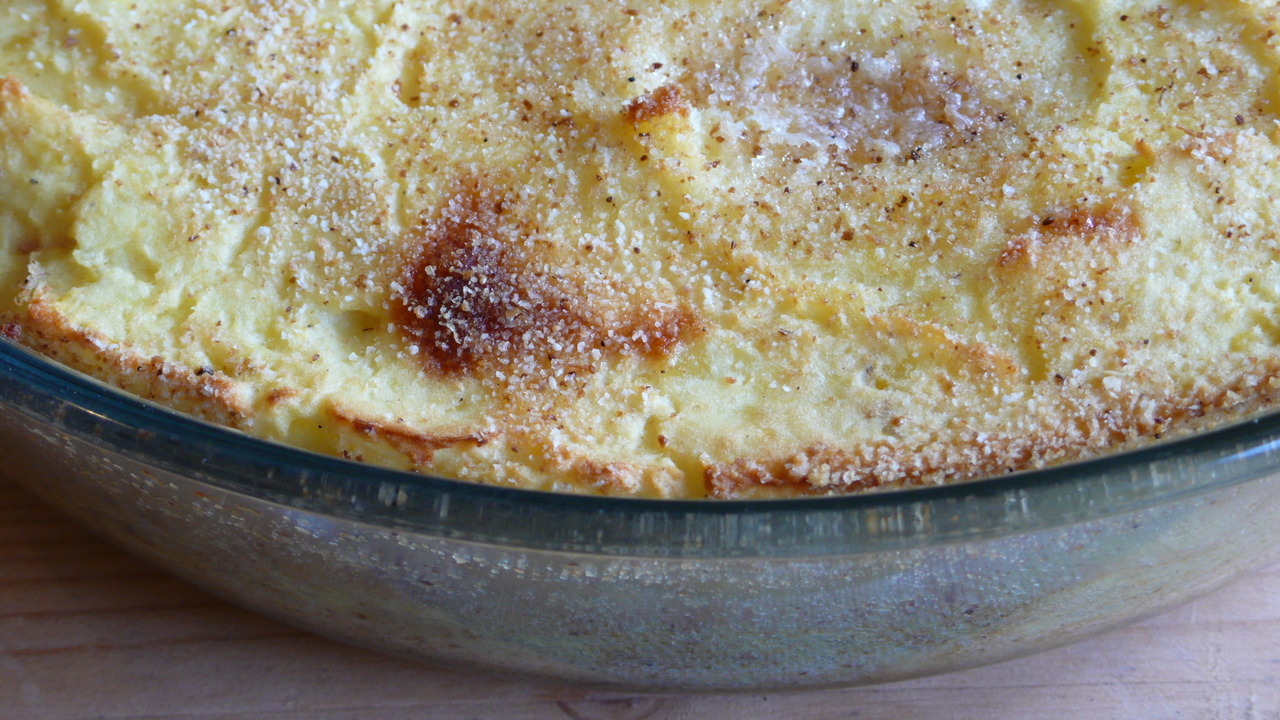
    My mother made this lovely potato puree. She cooked the potatoes and then riced them with a vegetable mouli. She then added eggs, a bit of olive oil, and quite a bit of Parmigiano. She then layered it in an oil pan with breadcrumbs and put some cheese and some ham in it. When you cut it in the middle, you have this sort of melting cheese that comes out of it.


    My daughter is also very fond of the dish, so this is a tradition. I probably make it once every three weeks or so in the winter. 


    Can you speak to the 18th-century history of this dish?

    In that period, a lot of things happened. There is a dish called sartu, a rice dish. This is another dish that comes from French chefs and has been adopted in southern cooking. For a very long time, rice was not especially popular in Italy, and it was considered a food for the sick. 


    Then, the French cooks at the Bourbon court elaborated on these exotic ingredients. They realized they had to offer them in a way that reflected the local tradition. Most likely, the French wouldn’t have made a rice casserole with tomato sauce, but they put tomato sauce in it, which made it more palatable for the local court.

    What are some other Sicilian potato recipes you would recommend?

    While in the past, potatoes were indeed not common in Sicilian cuisine, there are a handful of recipes that might be nice to consider. My grandmother Rosaria made whole-baked potatoes stuffed with meat and cheese.


    Here are a couple more examples:


    What are some important tricks for achieving the right gattò structure?

    It’s important to cook the potatoes just right so they don’t absorb too much water, and it’s important to have good-quality potatoes. Your equivalent in the U.S. would be Yukon Gold potatoes. If you have floury potatoes, they will absorb too much water, and your gattò will not have the right texture because you want it to be fluffy. In recent years, I have microwaved the potatoes because they do not absorb any humidity except their own.


    If you boil your potatoes, do so with the peel on so they don’t absorb too much moisture. If you feel they’ve gotten a little bit overcooked, you could put them in the oven and dry them a bit after that. 


    It’s important to do a good job with the ricing. Just smashing will not give you a good structure. The easiest way is actually using a vegetable mouli. 


    Then, you beat the eggs in there quite soon while the potatoes are still warm. You beat all the ingredients together, but what matters is the eggs because they will hold it together.


    After that, you can just put it in a bowl so it doesn’t stick and let it cool off. This is the most important part. It’s also important to taste it for seasoning because it has to be sweet. If you use ham, it is sweet; if you use some melting cheese, it is also sweet. If you don’t give it a little bit of salt and pepper and maybe a dash of nutmeg to contrast, then you will have something that is a bit bland.


    The rest is very easy. Oil or butter your pan and sprinkle it with breadcrumbs—good breadcrumbs, not store-bought. [Get Letizia’s breadcrumbs recipe here.]


    To keep the shell whole, take two spoons and spoon the potato all over the top. Then, wet one of the spoons and very lightly push it down. If you start moving your potatoes around, the crust will break.


    For my recipe, I normally make three layers of potatoes, so you also have to decide how many potatoes to use for that size of pan. I like to use a Pyrex circular pan, but it works in many different pans. 


    potato-gatto--flan-with-cheese-and-ham.JPG 


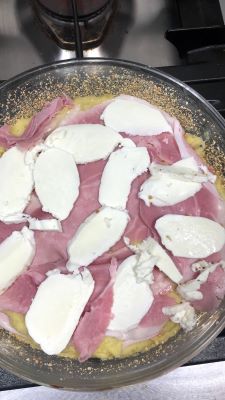
    Then, I layer my cheese and ham. I like to use Scamorza, but it’s not easy to find in the United States. A good-quality cow’s milk cheese that melts easily without becoming watery is ideal. 


    I make two layers and then sprinkle again with breadcrumbs, a little bit of Parmigiano, and a few dots of butter. 


    What do you hope at-home cooks will take away from your gattò recipe?

    This is an easy family food. It is good the day you make it and gives you good leftovers. You can make it for a party. It is a very easy, practical, and inexpensive dish to make nowadays. And it makes children very happy.


    After a certain age, we worry about calories and blah blah. But it is good food; I don’t know anybody who doesn’t like it.


    >>Get Letizia’s gattò recipe here!<<


    If you enjoyed this article, consider subscribing to my newsletter for more content and updates!

  • Sicilian Roots and Jazz Rhythms: The Musical Journey of Daniela Schächter

    Sicilian Roots and Jazz Rhythms: The Musical Journey of Daniela Schächter

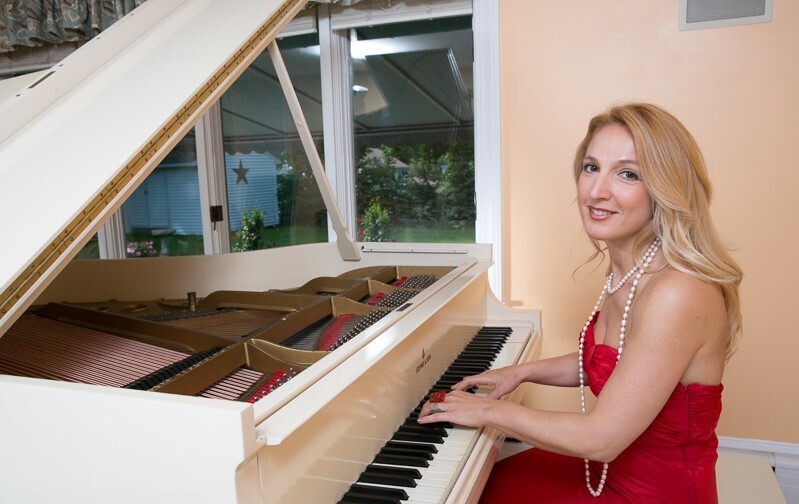
    Growing up in Messina, Sicily, greatly impacted Massachusetts-based jazz singer, pianist, and composer Daniela Schächter. Drawing from her experiences within a musical family and the Mediterranean views of her former home, her music has led her to prestigious jazz festivals and renowned venues, from the Hollywood Bowl to the Kennedy Center. Along the way, she has collaborated with acclaimed artists and won several awards for her contributions to jazz music. 


    Daniela and I recently chatted about her musical influences, her decision to pursue jazz as a career, her role as an associate professor at Berklee College of Music, and more.


    How did your experiences in Sicily shape your career?

    I had a musical family. My father was a piano player. He didn’t turn that into a career, but he played all the time, and my mom sang. So, I grew up with music around my house, and my brother, Davide, is a jazz guitar player. So I started studies in classical music, took lessons, graduated from the conservatory, and then started teaching and playing. I did lots of different jobs: accompanying singers, working for the Philharmonic Academy, and playing ballet pieces. Then, I started playing with rock bands and jazz groups. That was really fun. I had lots of friends and lots of concerts; it was beautiful.


    There is lots of jazz still going on in Sicily; it’s really a land full of talents. I was there until I was 28, when I moved to the U.S. I thought I would stay for six months, but then I decided to stay longer. 


    What inspired you to pursue jazz?

    That’s probably because of my mother’s influence. She listened to lots of Ella Fitzgerald, Oscar Peterson, Louis Armstrong, Tony Bennett, and all the great singers of the jazz era. She would take me to a little jazz club back in the day, and she would go there and sing with other musicians.


    I loved listening, and then I took lessons in jazz piano. My brother started playing in little jazz groups, so there was a lot of jazz in the house.

    I felt that jazz was closer to my soul in a sense and harmonically closer to the classical composers that I felt very attracted to.


    When I was in Sicily, I was actually doing lots of different styles. But then, when I moved to the U.S., I just decided to marry the jazz world. I didn’t really continue with rock groups. I still love lots of the music that I played, but I just don’t play it anymore.


    Which musicians or composers have the biggest influence on your work?

    Well, classical, definitely Ravel and Debussy and also Bartók and Stravinsky. So lots of contemporary composers. But of course, I also love Rachmaninoff and Chopin. For jazz, I have lots as well. So, from Gershwin to more contemporary stuff. Of course, I love Sarah Vaughan and Mel Tormé; those vocalists are very dear to me. But, of course, great pianists like Keith Jarrett and Bill Evans. They really made an impression, and probably, they’re still in my sound.


    From where else do you draw inspiration?

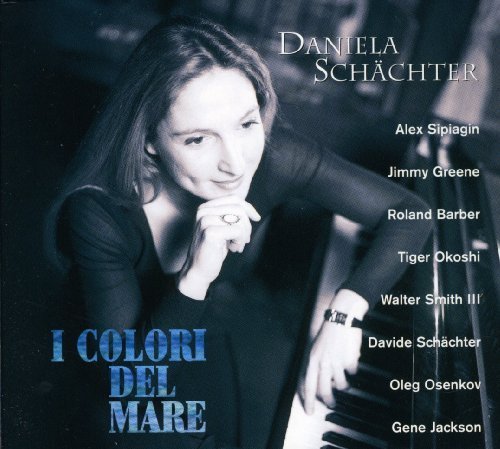
    I am inspired by lots of different things. First of all, nature. My second album is dedicated to the colors of the Mediterranean Sea, so it’s called I Colori Del Mare. And that is my favorite album that I recorded because it really brings me back to all the colors of Sicily, the sea, and the beauty of nature.


    Nature is definitely my main inspiration, and everything related to the sea because I grew up in Messina, which is surrounded by sea. 


    I-Colori-Del-Mare.jpg 

    You’ve won several awards. Which is most meaningful?

    I think of the Mary Lou Williams Jazz Piano Competition because that was the first. That was really promoting women and women in jazz. It was very competitive, and I felt that everybody really deserved it as much as I did. Everybody was really good, and I didn’t really feel that I was going to get it, so it was a great joy when that happened. I was really happy that the judges found something a little bit different and something special in me. Pianists Geri Allen and Billy Taylor were among the judges, jazz legends for whom I have so much respect. Sadly, they are not with us anymore.  


    You’re an associate professor at the Berklee College of Music. What do you enjoy about your role?

    I enjoy it when I have foreign students who come to me and need guidance. Most of them are super talented, but they need guidance in finding themselves in a place they don’t know, which is new to them. I love helping them get used to a new environment and explaining my experience because I went to Berklee College of Music myself. So, I can totally understand what they go through, how they process things, and how overwhelming the whole system can be. 


    How do you see your music evolving?

    My music is going to evolve with my own person, evolving and finding more balance. I often go to Italy because I want to keep the connection. I want to remind myself who I am, what I love, and where I’m coming from. I want my daughter to feel the same. She actually feels Italian, which is something that makes me really happy. 


    I want to find a balance between my professional life overseas and my professional life here. Since I have a 7-year-old daughter, she took a lot of energy, and I couldn’t commit to several engagements. Between that and the pandemic, I’ve not really been performing as much as I love to. So, I would like to find myself performing more often, especially in my own country. 


    What do you hope to deliver to your audiences through your music?

    What I try to communicate is images of, for example, nature. So, the way I see it, and in many of my compositions, I describe a lake, pond, or leaves that fall. And I would like my audience to feel the way I feel.


    I also write lyrics, and sometimes, the message is easier to understand through words. Writing more songs with lyrics will also help me in that sense. I love to write wordlessly, but at the same time, I have a few songs with lyrics, and I would like to continue with that and even include more lyrics in my pieces. 


    If you enjoyed this article, consider subscribing to my newsletter for more content and updates!

  • Noemi Schembri’s Journey to Masterful Guitar-Making

    Noemi Schembri’s Journey to Masterful Guitar-Making

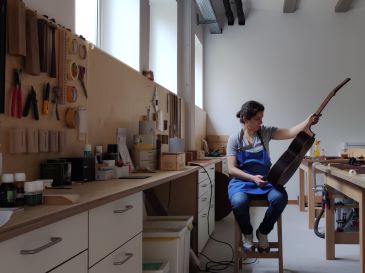
    Wood has fascinated Noemi Schembri since adolescence, about the same time she picked up playing the guitar. Her interests collided, sparking a curiosity about how the wooden instrument was built.

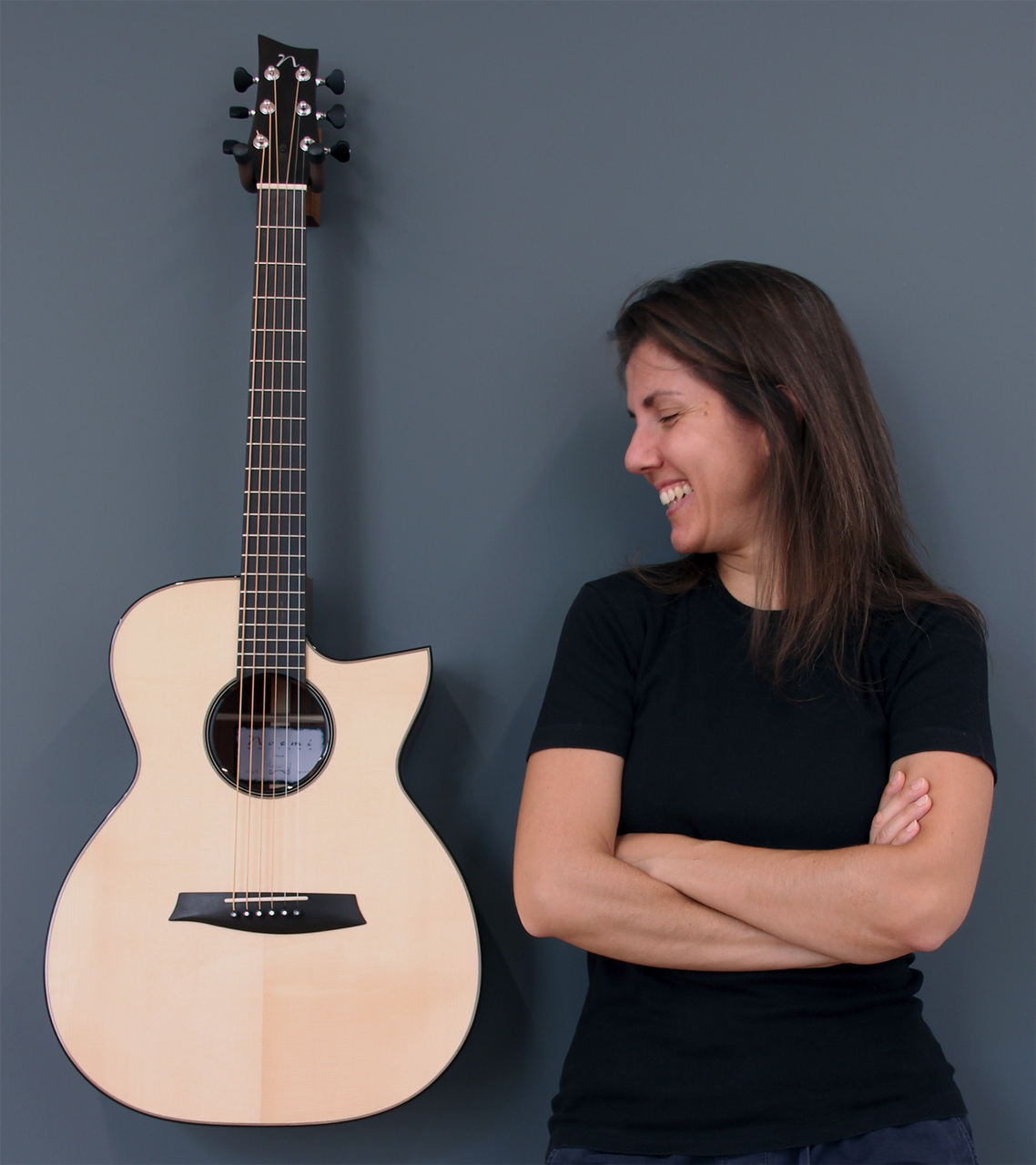
    Inspired, the San Cataldo, Sicily native, moved to Canada, where she studied under the guidance of renowned Master Luthier Sergei De Jonge. Noemi had the opportunity to learn modern building techniques for both steel-string and classical guitars.


    It was a new way of looking at her favorite instrument, which inspired her, after her apprenticeship, to return to Italy, where she opened her first workshop in Solighetto. She has since moved production to a larger space in Susegana, where she builds guitars entirely based on customer needs: desired sound, wood choice, ergonomics, playability, and aesthetics. 

     
    Noemi shared with me her journey and approach to lutherie, materials she uses, challenges she’s faced, and more.


    What inspired you to pursue guitar-building?

    It was mainly the combination of my love for wood and woodworking and the fact that I started playing the guitar when I was 11. Over time, thanks to scholarly studies based on wood—from secondary school to university—my curiosity about how guitars are built and who builds them grew inside me.


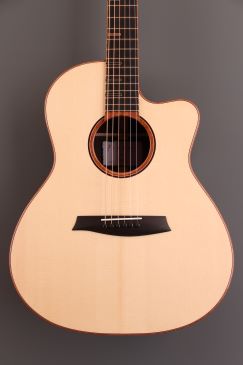
    guitar-front-365.jpg


    How did your time studying under Master Luthier Sergei De Jonge influence your approach to luthierie?

    My time with Sergei De Jonge left a fundamental imprint on me. I had no experience and no references, and his open approach to guitar-making is what I still follow today while building my guitars: trying different ways and learning from my results.


    How has your experience working in both North America and Italy impacted your guitar-making?

    Steel-string guitars have deep roots in American culture, and classical guitars have ties to Italian culture. I naturally started exhibiting in both places, lately more often in the U.S.A. Now, my market is 90% in the U.S.A. with steel strings only and 10% in Europe with mainly classical guitars.


    My goal is to bring classical guitars to the U.S., learn their needs from the classical guitar player’s perspective, and respond to them.

     
    Noemi-Schembri-365.jpg

    Tell us about your workshop. You recently moved to a larger space.

    It was time to move to a bigger one and have proper spaces dedicated to the building process and to the customers who come and try my guitars. It took me a couple of years to find the one I liked, so even if it was bigger than what I was looking for, I decided to keep it and have extra space for the future. You never know!


    Can you describe the most challenging parts of building a guitar by hand and how you overcome them?

    Well, in the beginning, you think that steps like bending sizes, carving the neck, and routing the dovetail joint are the most challenging, but the more you build, the more you learn how to realize those physical parts and the more you focus on the main thing: the sound! Making a guitar sound as you “hear” it in your mind is the most challenging part, and while working on it, at the same time, you are building your personal sound, the sound that players will identify as their sound.


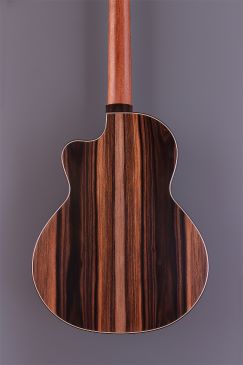
    guitar-back-365.jpg 

    What materials do you use?

    The only material is wood, except for the strings, tuners, nut, and saddle.


    I use different wood species, grain directions, and ways to cut every piece of wood according to its function. Sometimes, I work with wood species that I have never used before, and in that case, I have to learn how to work with them.


    Can you share a challenging request?

    It wasn’t a customer request but a challenge that I gave myself: building the smallest body guitar I have, with the brightest sound wood I had at that time for the back and sides, adding a cutaway (which means taking off air volume from inside the guitar box), and achieving a big warm sound as if it was coming out of a big body guitar with a warm tone wood.


    I was very happy with the result and even happier seeing people’s reactions when they realized how small the guitar was!


    What do you hope people will take away when they purchase one of your guitars?

    Inspiration, wider explorations of the field, and joy while playing it!


    If you enjoyed this article, consider subscribing to my newsletter for more content and updates!

  • Semolina MKE: Reviving Old-World Pasta in Milwaukee

    Semolina MKE: Reviving Old-World Pasta in Milwaukee

    Set in Milwaukee’s Bay View, a historic Italian enclave, Semolina MKE proudly carries on old-world pasta traditions while catering to an appetite for regional flavors and staples. 


    Owner Petra Orlowski’s maternal grandparents were Sicilians from Chiusa Sclafani and Vicari. She credits her grandmother with teaching her how to cook pasta, among other things. 


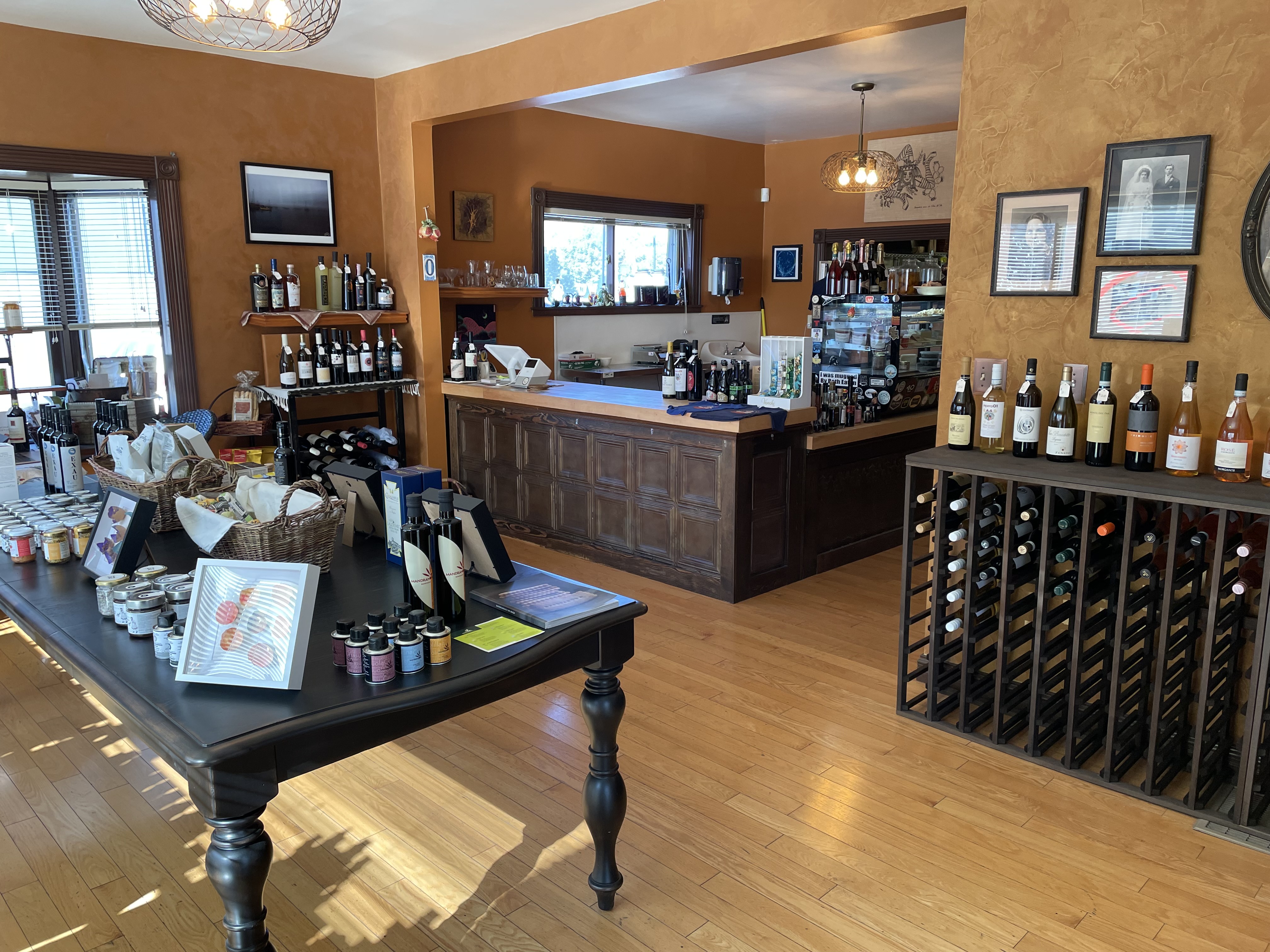
    Today, Petra gives that knowledge back to her community, teaching pasta-making classes and showcasing high-quality Italian specialty items like olive oils, vinegar, honeys, salts, wine, and cheeses.


    “I’m all about sharing,” she says. “I want people to make food. I don’t want to be a gatekeeper holding these recipes for myself. Everybody should be cooking.”


    Petra took time to chat with me about her journey to starting Semolina MKE, popular products and classes, and her hopes for her customers, many of whom she considers friends. 


    Tell us about your background and what inspired Semolina MKE.

    I worked as a dental technician for years, and then I got married, got pregnant with twins, and stayed home with them for four and a half years until they went to kindergarten. Then, I wanted to get out of the house again, so I started working at Sanford Restaurant as a host. I worked there for about 15 years and did everything but the kitchen. I did two years as a pastry chef for a different restaurant. Then, I was managing another restaurant prior to COVID, and that shut down. 


    So, when I was sitting at home alone with no work to do, I started doing a really deep dive into pasta-making. I had always made pasta, but this was me making more intricate shapes and just kind of trying to keep myself busy. Then, I was making so much pasta that people started wanting to buy it.


    I realized that pasta does not fall under the cottage food laws in Wisconsin. I had to actually find commercial kitchen space, and that’s how Semolina was born.


    You carry quite a few specialty items in addition to pasta. What are you particularly proud to showcase?

    There’s a brand, Bona Furtuna, in Corleone, Sicily. As far as I know, we’re the only store that carries their products in Wisconsin. We actually just visited the farm, and the president of the company was there. We got to go out into the olive groves and pick wild fennel from the side of the road. Their olive oils are top-notch. They are a wonderful organic 1% for the Planet, B-Corp, the whole nine yards. So we’re very proud to carry those products. 


    I also carry olive oil from a company called Mandranova, which is another farm in Agrigento that we visited. 


    Both farms are very modern. Everything is temperature-controlled, so the oil doesn’t get too hot as it’s being crushed and mixed. The polyphenols stay at their highest levels, and they are doing everything to make the highest-quality ingredients or products. 


    We also carry some fantastic honeys from Sardinia. It’s a mother-and-daughter team, Maria and Daniela. Maria is around 80 years old. She was a little spitfire and yelled at me for not knowing more Italian.


    I love working with these small producers we get to visit and get to know. Also, while we were there, we went to a winery called Quignones in Licata. I can’t carry Alfredo’s wines, but I can carry some of his food products. So we are able to go there and have a wonderful afternoon with him. It’s so great to be able to build these relationships with producers, and they’re so happy to have their products in the U.S., too.


    Semoline-MKE-interior.JPG 

    What are the most popular products you offer?

    Probably the most popular is the culurgiones [Sardinia’s answer to the ravioli]. I make them every Sunday, and people have gotten used to having those available. My favorite is probably pappardelle, the simple egg pasta. I like the wide noodles. 


    How did you learn to make pasta?

    My grandma used to make pasta. Not often, but it’s one of those things that I took upon myself to learn. I didn’t take any classes. I just started making it and just figuring it out on my own. 


    My husband and I went to Rome about six years ago and took a cooking class. It was about pasta-making and a bunch of other things, which really bolstered my confidence that I could do this myself and show other people how to do it as well.


    Tell us about your pasta-making classes.

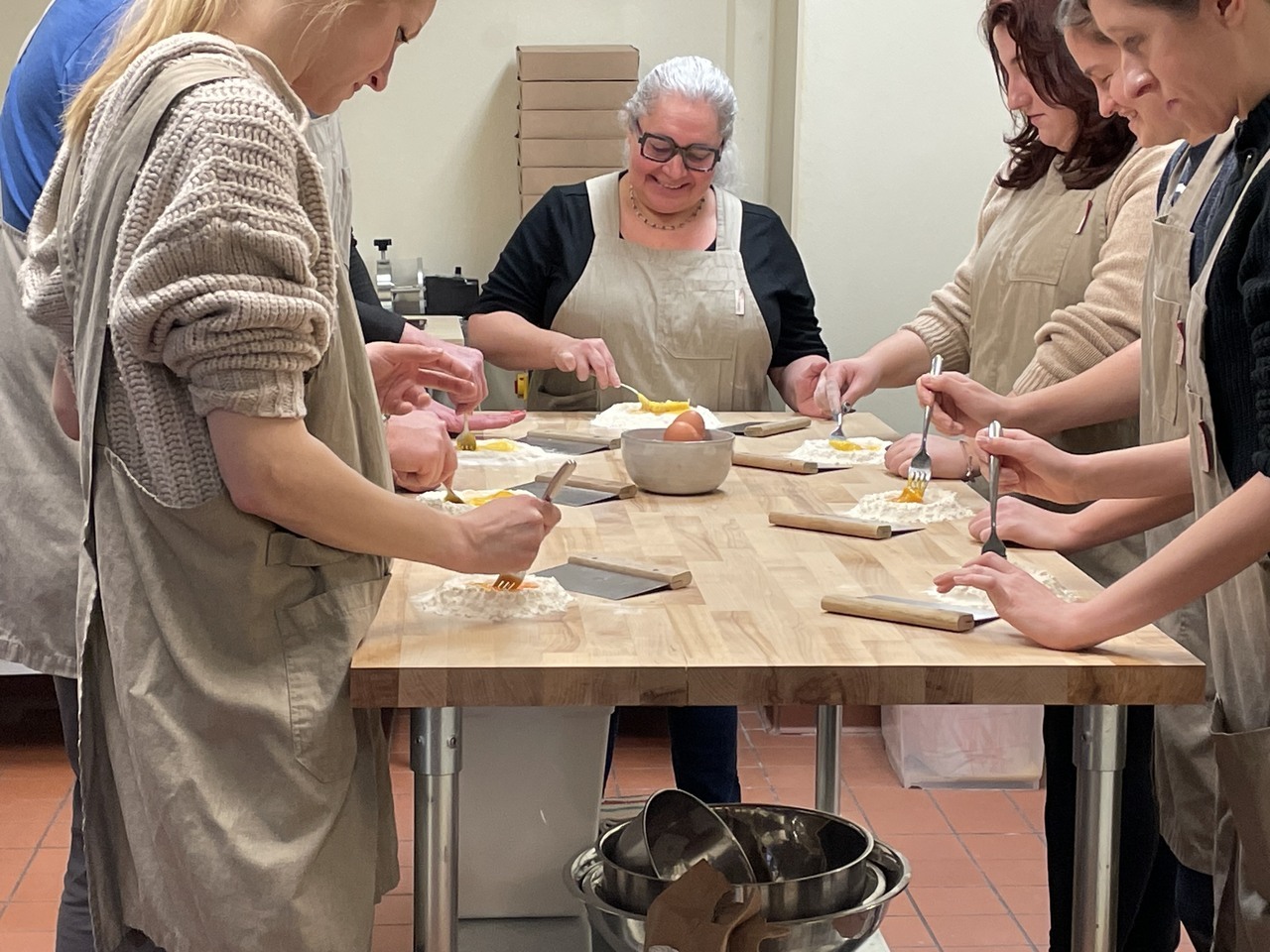
    The classes in the shop are limited to a maximum of six people. I offer three different classes: classic egg dough, hand-shaped pasta, and ravioli. 


    Each class starts out with making the dough from scratch. While the dough rests, we go into the kitchen. I show everyone how to make a sauce, and then we cook up pasta I had made earlier in the day. Everybody sees how I cook, sauce, and serve it. Then, they get their bowl of pasta and a glass of wine or some Italian non-alcoholic beverage. When we’re done with that, I answer all of their questions about olive oil and cheese and whatever. During that time, we go back to the pasta room and do all of the rolling out and shaping. They can see the salt I’m putting in the water to boil and how I’m not rinsing the pasta. They can see my method of cooking so that they can replicate that at home.


    What do you hope participants take away?

    I want people to actually learn and walk away feeling like they can do it at home. And I know a lot of them do because they come back and buy flour to make everything at home. So, I am confident that people leave with the knowledge they need.


    I try to teach them about the ingredients we’re using so that they know how to buy olive oil and how to use it. They don’t let it sit in their pantry for a year because they want to save it for a special occasion. It’s food; you use it. 


    I also just want them to feel comfortable and have a really fun time while they’re doing it and that they can call me and ask me things. When they come into the shop, I want them to know that we have carefully curated, we have tasted things, and we have talked to the people who grow these things, so you can trust us when we tell you this is a good product. 


    If you enjoyed this article, consider subscribing to my newsletter for more content and updates!

  • How Bondolio Turned a Sacramento Valley Farm into an Award-Winning Sicilian Olive Oil Producer

    How Bondolio Turned a Sacramento Valley Farm into an Award-Winning Sicilian Olive Oil Producer

    Sicilian olives, particularly those grown in the Mount Etna region, benefit from long, hot summers and mild winters—something the western Sacramento Valley’s semi-arid climate delivers.


    That’s where Bondolio olive oil producers Karen and Malcolm Bond grow their Sicilian olives. The couple first purchased their farm in 1986. Back then, it was an almond farm. However, the trees were never big producers, so they pulled them out in 1999 with an interest in starting anew.


    A chance encounter with a particularly good fresh olive oil inspired them to set their sights on olive growing. 


    Getting started was far from easy, but through persistence and self-taught craftsmanship, the couple is not just growing certified organic Sicilian olives but producing award-winning olive oil. 


    I spoke with Karen to learn more about Bondolio’s start, why she chose Sicilian olives, and her favorite ways to use her olive oils. 


    Tell us how you decided to grow olives.

    We were in Naples for Christmas between 1999 and 2000. We stayed in a villa east of Naples. Just as we were leaving, the owner said, “We just made our fresh olive oil last night. Would you like to taste it?” And I said, “I’ve always cooked with olive oil, but I’ve never tasted fresh olive oil.” 


    Being a nice Italian girl from South Jersey, I was very anxious to taste it. She took us to their farm, where all the trees were over a thousand years old and had huge gnarly trunks. She took us to a little stone building with a wood-burning stove. She toasted some bread and poured this wonderful liquid on top with a little bit of sea salt, and I fell in love. I said, “This is what we’re doing on our farm.”


    Why did you choose Sicilian olive cultivars?

    After deciding to do olives, we went on a two-year mission to find the right olive oil that met my needs. I always bought Italian olive oils because they tend to be fruity—especially southern Italian oils. And so we went all over Italy tasting oils at farms. If we saw a sign for olive oil, we would stop and buy some. We would go to grocery stores and farmers markets all over Italy to taste the oil. My husband would put olives in brown paper bags for me to taste, and I always picked the same three olives: Nocellara, Biancolilla, and Cerasuola. It’s your typical Sicilian blend that most families have. 


    We asked nurseries in California if they had these trees, and they said no. It would take two to three years before they could sell any to us; they would have to import them. So we got our own import license and imported the trees. 


    Bondolio-olives.jpeg

    Karen Bond holds her prized olives.


    Tell us about that process.

    We found a grower who said they had imported trees to the U.S. When the trees arrived, the FDA called us and said, “We have a problem; come down to the San Francisco airport.”


    So we had to go to the Department of Agriculture at the airport, and they took Malcolm through a series of clean rooms, opened the box, and showed that the little baby trees had soil on the roots. They then opened an incinerator and threw our trees away. So that was heartbreaking. 


    We had to find a grower who could prove they had imported to the U.S. We finally found someone. In the meantime, the University of Florence helped us design our orchard, and they recommended that we bring in a fourth tree type, a Pendolino. Even though olives are self-pollinating, the Pendolino is a pollinating tree, and we’d have a higher production.


    Our little baby trees arrived on Christmas Eve, 2006, six years into the process. I always tell people we were born during a time when delayed gratification was a good thing.


    We took the baby trees home on Christmas Eve. They arrived on a Lufthansa flight at around one o’clock. We were just praying they would get through customs and then the Department of Agriculture because they were only packed in vermiculite. It was a three-day holiday, so everything would be closed, and we wouldn’t be able to pick them up. They arrived at the Department of Agriculture at ten minutes to five o’clock, and they got cleared. So we were able to bring them home.


    The next day, I cooked dinner, family and friends came over, and we planted 1,250 trees in two-inch pots. The problem was that they had to be quarantined, so we had to put them in a greenhouse.


    The state and the feds would come and pull a tree out with its roots and take it with them to test for pests and diseases. 


    Because the trees were growing, we had to transplant them to five-gallon pots. And finally, after two and a half years, they said we could plant them. 


    So that’s 2008. I think they went into the ground in the spring of 2009 because they were cleared in late summer, and you just can’t plant at that time. It’s too hot. 


    In the first year, 2010, we actually had little olives on all the trees, so we picked them all. We only got about 300 pounds.


    Malcolm made his own homemade mill, and we milled them, and it tasted good. So we said,
    “Okay, let’s move forward.” 


    The very next year, we got around 3,000 pounds. There was a mobile mill then, and the oil tasted great, so I said, “Let’s enter the Yolo County Fair.” Malcolm said, “No, we’re going to New York and L.A.” They’re the two big international competitions where everyone from around the world enters their olive oil. We won gold in New York, gold in L.A., Best in Show in Yolo County, and Best in Show in Napa County in our very first year.


    Our phone started ringing off the wall, and people wanted to buy our oil. The same thing has happened just about every year.

    Award-Bondolio-Steps.jpg

    Malcolm and Karen Bond


    What sets Bondolio apart from other California olive oils?

    California olive oils are Spanish, French, northern Italian, or Greek, which have different flavor profiles. Arbequina tends to be a very mild oil, and so many people grow Arbequina. I wanted ours to be different from everyone else’s.


    Some people have brought in Biancolilla, and some people have brought in Nocellara, but no one has brought in Cerasuola. It’s very difficult to propagate. They told us we would lose 80%, and we did not. We probably lost only 10%. Because we have such rich soil here, they were happy growing here. But I think that’s what sets us aside. It’s a totally different blend from everyone else in California. 


    karen-bond-sipping-olive-oil.jpeg

    Karen Bond sips her liquid gold.

    How do you use your olive oils?

    I use olive oil every single day. For example, we normally have poached eggs and roasted potatoes for breakfast, so we roast the potatoes in olive oil and pour olive oil on the eggs. I use olive oil in just about everything I cook, including pasta, risotto, and fish.


    We make mandarin oil with our Pendolino. We pick it on the very last day of milling and throw fresh whole mandarins in as we’re milling. So it’s a great orange oil. I put that over halibut and bake with it. Then, when it comes out of the oven, I pour a little bit of oil over it. 


    When Nathan Norris was the head chef of Zuni Cafe, he told us that we had the most versatile olive oil. They always have an olio nuovo dinner in December; he did a whole dinner with our oil. He started with a persimmon salad with goat cheese and pomegranate seeds on the top and poured our oil with a little bit of salt on it. He then made a salad, then he made fish, and then he made a dark chocolate sorbet with our oil on top. And it was to die for. Our olive oils don’t have a bitter flavor, so they can go with a lot of different foods.  


    crostini-with-Bondolio.jpeg
    Bondolio olive oil served with crostini.


    You give tours by appointment. Tell us about those.

    On our tour, we serve food. If there are 10 or more people and they request it, we’ll do pizza on the patio for them. Our biggest tours right now are from retirement communities. They’ll come up with 40 people on a bus, and we’ll do a tour, and then we’ll do pizza for them.


    They’ll get to taste our oils and vinegar, but sometimes, I serve it with hummus. In the summer, when there are cherry tomatoes because we have a big garden, I will do what I call caprese shooters with our olive oil. I sometimes do crostini, where I’ll take fresh tomatoes with garlic and basil with our olive oil and put that over toasted bread. I try to give people ideas on how to use the oil. 


    We are open to the public one day a year, the second Sunday of December, when we introduce our new oil and have other vendors there. We have pizza, beer, wine, and sodas on the patio, rain or shine. 

    olive-grove---Bondolio.jpeg
    Bondolio olive groves

    What do you hope people take away from your olive oil?

    How to use our oil and to use it quickly: Many people have the misconception that olive oil is like wine in that it ages well. It does not. The longer you keep it, the flavor profile goes down. Ours usually last two years, but it doesn’t have the oomph it initially has.


    I also try to make people understand how healthy olive oil is for them. There’s so much evidence coming out now about how olive oil reduces breast cancer, reduces cholesterol, and helps prevent Alzheimer’s disease. Both my husband and I are in our seventies. Neither one of us takes any medications. We’re extremely healthy. We exercise every day, and we ride our bikes every day. We do Pilates and things, and we go to the doctor, and they say, “We can’t believe that you don’t take any medications.” But I think it’s partly because of the olive oil.


    If you enjoyed this article, consider subscribing to my newsletter for more content and updates!