Blog

  • Beyond ‘Bella Vita’: AIS-Phila Redefines Italian Identity in America Through Culture and Education

    Beyond ‘Bella Vita’: AIS-Phila Redefines Italian Identity in America Through Culture and Education

    Post-World War II, Italy was a nation in recovery, rebuilding its economy, infrastructure, and identity under new democratic leadership. In June 1947, the United States drafted the Marshall Plan, a program designed to provide financial assistance to Western European countries devastated by the war. As the third-largest recipient, Italy received 10% of that aid. In turn, U.S. government agencies, organizations, and business groups expanded their efforts to build strategic partnerships with their Italian counterparts. That collaboration led to the formation of civic organizations committed to cross-cultural and educational exchange among Italians and Italian Americans. And it paved the way for the 1956 launch of the America-Italy Society of Philadelphia (AIS-Phila).


    Since its inception, AIS-Phila has embraced arts and education while continuing its commitment to the Italy-U.S. friendship. Meanwhile, in Italy, AIS-Phila has participated in restoration projects, such as the Committee to Rescue Italian Art in the aftermath of the 1966 Arno River flood, and built a center in 1980 for survivors of an earthquake east of Naples.


    As the collaboration continues, AIS-Phila remains focused on deepening the understanding of contemporary Italian culture as it exists in Italy and moving beyond stereotypes. Chief among its offerings is a language school, offering 45 courses to around 350 students in person and online. The community can also participate in AIS-Phila lectures, films, concerts, and art exhibitions. 


    AIS-Phila Executive Director Elisa Schwab Clewis grew up in Brazil and Italy before moving to the U.S. She’s lived in Philadelphia since 2006, working in the non-profit sector and gaining over 16 years of experience teaching Italian culture and language in higher education. 


    Elisa shared more about AIS-Phila, its unique offerings and mission, upcoming collaborations, and her leadership goals.


    What new initiatives have you taken on as the organization’s third director?

    My mindset is that I will consider everything we get in. I never say no to anyone until I first talk with them.


    It was maybe my fifth day here when we received this email from the Philadelphia Museum of Art inviting us to get tickets for the craft show in November, where Italy would be the guest country. I said, “This is interesting. We need to get deeper on this.”


    I found out who the artists were and decided to write a letter inviting them to a party here. They told me, “We cannot really talk to you directly. You need to talk with our curator. But he’s actually amazing.” So, I talked to him and began collaborating with him, and they came here. Some did not have enough money to stay in a hotel, so we arranged for them to stay with host families. And we had a welcoming dinner.


    It was totally made up on the spot, but it went well. It was great.
     

    AIS-Phila---Cristina-Vea-and-class.jpg
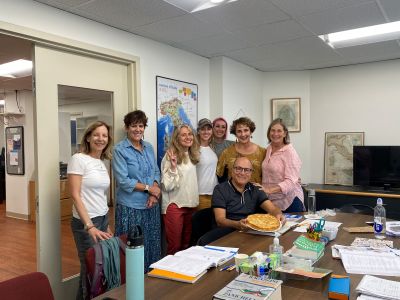
    AIS-Phila teacher Cristina Vea holds up a peace sign while posing with her language class.


    Share more about your school.

    The school seriously started about 11 years ago. The former director did an amazing job of building the basis of the school from one that had just a couple of courses. The board decided to bring in an executive director and a director of the school, and we are working together to take it to the next level. We are offering cultural courses, accelerated courses, and pronunciation courses. Our teachers are the heart of it. Several have PhDs in literature, one is a sociologist, and we have a film studies person. We have such expertise among our teachers.
     

    AIS-Phila---Todi.jpg
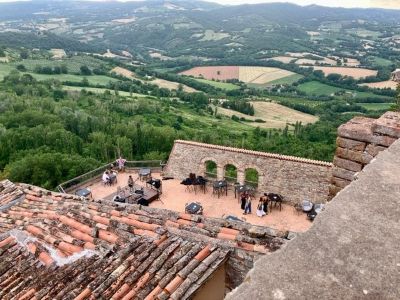
    Study abroad with AIS-Phila in Todi, Italy. 

    Tell us about your study abroad program.

    We’ve been doing this for about 15 years, every June for one week in Todi, which is in Umbria. It is a very nice medieval town. Our students would take classes from 9 a.m. to 1 p.m., and then in the afternoon, we do sightseeing. The cool thing is that they can pick between homestays—a family home, a hotel, or an apartment. I will say that 70% of them want to stay in a home with a host family, which is great because you really get the best.
     

    AIS-Phila---Pinocchio-presentation.jpg

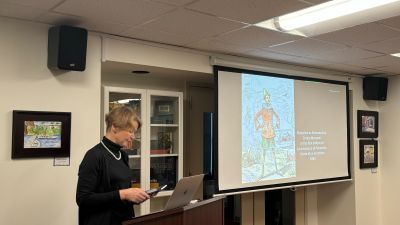
    Anna Kraczyna spoke to AIS-Phila members about translating Pinocchio for Penguin Classics.

    What events and activities do you offer, and what is their role in the mission?

    The mission is to really bring Italian culture to the U.S. We are not a heritage organization, so we are a little bit different. Our events are getting deeper into aspects of Italian culture through history, art, music, and lectures.


    We have been historically involved with the restoration of art in Venice. We do a series of conferences on Venice. It can be any aspect, like literature in Venice or the environmental situation of Venice, with the water rising. We just hosted Anna Kraczyna, the translator of Pinocchio into English for Penguin Classics. She presented the real meaning of the book, and it was absolutely wonderful. The event could also be seen on Zoom because some people are not in Philadelphia or have mobility problems. If you offer the event on Zoom, you open up to the entire U.S., so we will be looking into doing that more.
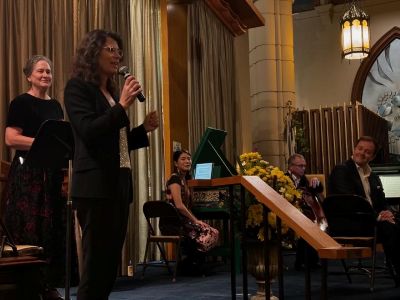
     

    AIS-Phila---Amerita-Concert.jpg

    AIS-Phila’s Amerita Chamber Players Concert Series

    Can you share any memorable moments or success stories?

    The November show with the artists was quite amazing. We ended up receiving art from three of them who decided to leave their art behind and donated it to us so that we can do an auction and a joint fundraiser. So I will try to sell it and pay them a fair amount. But then I can also do some fundraising with “100% Made in Italy” art pieces.


    Success stories? There are a lot. We’ve been doing a lot of backstage work with the financial part of the organization. I was with an official at City Hall, welcoming high school students from the sister cities, one of them being Florence. The reception was wonderful.


    It’s such a rich job, yet so natural to me because that’s what I am. I’ve always been between the two countries.


    What upcoming projects or collaborations are you particularly excited about?

    We are going to collaborate with Robert Campana, who has built Stop Italian Sounding. What is that? It’s when someone approaches the supermarket in the United States and wants to buy a product. Often, products use Italian-sounding language, the colors of the flag, or the Tower of Pisa to show that the product is actually authentic, but it’s not.


    He wants to educate the public about this. He’s been doing a terrific job to the point that when I was teaching at Arcadia University, I offered a course titled “Made in Italy,” and part of my course focused on stopping Italian sounding. We went to his website and looked at his videos, and then my students had to build an advertisement to educate the public on that. So, Robert and I want to start offering master classes at AIS-Phila. Then, we’ll have a tasting so you can also taste the product. We are looking into collaboration with restaurants or places where you buy Italian products.


    We haven’t really done much with food because I didn’t want to fall into the “Let’s cook together!” This Robert Campana collaboration is so perfectly in line with us; it’s our way of, “Let’s talk about food, but let’s talk about it in an educational way. Let’s give you some options so you can decide.” For me, it’s a great accomplishment that we will collaborate. 


    Philadelphia has the World Affairs Council of Philadelphia, the oldest nonprofit that deals with the international environment in Philadelphia, and we are officially collaborating. We are already organizing the welcoming event for the new general consul from Italy, who is coming this summer. We want to do an official welcome between us and them.


    We are also collaborating with an organization that helps people get Italian citizenship. Especially now, we get a lot of requests. We absolutely do not give any legal advice. So, I decided to collaborate with an organization called Italiza. They’re based in New Jersey, but they work with the entire U.S., and their legal office is in Rome, so they can really help people with that. We help people with translations. 
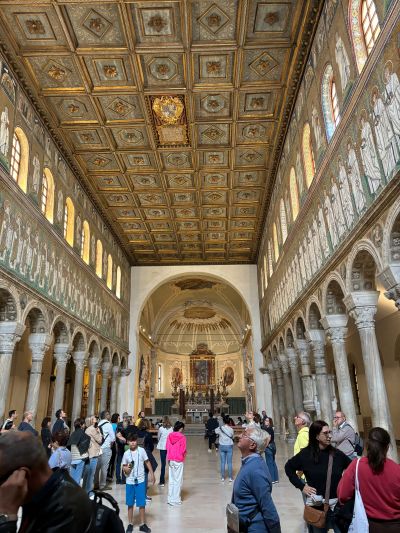
     

    AIS-Phila---Ravenna-s-Basilica-of-Sant-Apollinare-Nuovo.jpg

    AIS-Phila presents Vittorini awards to University of Pennsylvania students who study abroad and encounter sights such as Ravenna’s Basilica of Sant’Apollinare Nuovo.

    How do you hope to impact the community?

    Sometimes, the understanding of Italy is very romantic. It’s very, “Wonderful wine!” and “Bella Vita!” My underlying mission is to really bring Italy and the understanding of the complexity of a country with a huge culture, history, and diversity. So, I am just really going beyond what people might superficially think and trying to really educate the public. And sometimes, Italian Americans are the ones who need to move away from their stereotypical idea of Italy and move to “This is a country that lives today. Things didn’t stop 60 years ago.”


    We have 20 teachers, including the director of the school. We are from Italy, so that’s what we are, right? That’s what I like to promote.


    I hope to share the complexity of Italy and the reality of today. I’m happy some of our students want to travel to Italy. The fact is that most tourist places don’t really represent the country, so really, it’s all about this authenticity.


    If you enjoyed this article, consider subscribing to my newsletter for more content and updates!
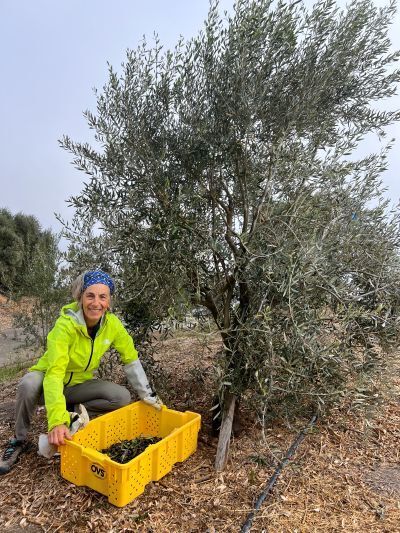
  • From Literature to Luretík: How Elise Magistro Transformed Her Passion for Italian Culture into Award-Winning Olive Oil

    From Literature to Luretík: How Elise Magistro Transformed Her Passion for Italian Culture into Award-Winning Olive Oil

    In many ways, Elise Magistro’s work as an Italian language and literature professor influenced her trajectory to olive growing and oil production. 


    “Daily contact with Italian language and literature reinforced the prominent role that food (or lack of it in poorer regions) has played in Italian life over the centuries,” says Professor Magistro. “Olives and olive oil are woven into the fabric of Italian culture—the literature, art, and cuisine—much like the olive trees that grace the Italian landscape. Although the route wasn’t direct, literature led me to connect with many facets of Italian culture, and olive oil was simply one of them. When I knew that my teaching career would be winding down, I found myself heading in that direction as a way to remain connected to Italy.”


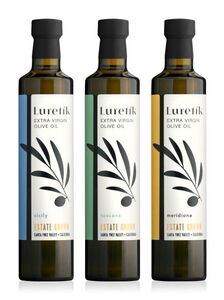
    Drawing from a childhood shaped by her Sicilian paternal grandfather’s cooking and memories of her French-Basque maternal grandparents’ farming, she left the classroom behind after more than three decades to plant an olive grove in California’s Santa Ynez Valley. She has since embraced olive oil production and elevated her region’s reputation with internationally acclaimed, award-winning Luretík certified organic extra virgin olive oils.


    We talked about her journey and influences, the challenges she’s faced, how she chose her olive varieties, the story behind the Luretík name, what sets the brand apart, her advice for business owners, and more.


    What inspired your transition from academia to olive growing and oil production?

    My relationship with Italy and Italian culture is deeply personal and goes back more than 50 years. When I was young, my grandfather was a constant presence in our home. He was a shoemaker and did not speak much English, but he was an impressive cook and often prepared our daily meals. The dishes were not elaborate, but the quality of the ingredients was excellent, and the food was always prepared with great attention to detail. However, other than our grandfather’s cooking and his conversations in Sicilian with my father, there was nothing particularly “Italian” about life in our house. If anything, my mother’s Basque traditions figured more significantly in our upbringing. With grandparents who had immigrated from Sicily and France, my siblings and I were aware of our foreign roots but raised to be very American.


    I went to Italy for the first time when I was 19 years old. That is where the personal link with my grandfather’s linguistic and culinary influences took a surprising turn into a new and exciting cultural territory. In Tuscany, it was a head-over-heels, fall-in-love Stendahl moment: the architecture, the food, the fashion, the daily rituals, the slower pace of life, the intimate connection to a place, all so very different than anything in the U.S. The final leg of my sojourn that year was in Sicily, a visit that brought me full circle back to the world of my grandfather’s kitchen. The experience left an indelible mark and was the start of an enduring love affair with Italy.


    After completing my undergraduate studies and an M.A. in Italian, I went on to get a PhD, with a focus on southern Italian writers and Italian women’s writing. There is often a very regional component in Italian literature, one that reflects the tendency of Italians to identify with their region of birth and to take pride in that identity. (When I first went to Italy, it was far more common for people to introduce themselves as “Siciliani, Toscani, Calabresi,” or even with more city specificity as “Palermitani, Fiorentini, Romani” rather than as Italians.)


    This regional identity is front and center in Italy’s food culture, and olive oil, as everyone knows, figures centrally in Italian cooking. Whenever I was in Italy, I would inevitably end up in people’s kitchens, where I discovered that olive oils (depending on the region I happened to be in) all had distinct flavor profiles. Tuscans tended to favor oils made from Frantoio, Leccino, and Moraiolo varieties that are native to the area, while Sicilians favored oils made from Nocellara del Belice, Cerasuola, Biancolilla, and Tonda Iblea olives.


    As I would later discover, there are more than 1,200 olive varieties in the world, with roughly 700 found in Italy, most of which are autochthonous or native to a specific region. When I started out, I didn’t know anything about growing olives and making olive oil, but the idea of growing different Italian varieties in California soils was very exciting to me. By the time I retired from teaching in 2019, I had already started taking coursework in Italy and at the UC Davis Olive Center in preparation for what was to come.


    Luretik-Olive-Orchard-Magistro-DJI-0898-Final-WEB-Res-144dpi-Jeremy-Ball.jpg

    Luretík olive grove in Santa Ynez Valley. Photo by Jeremy Ball


    What challenges did you face at the beginning?

    My husband and I decided to buy a piece of property, knowing that we wanted to try our hand at growing olives and producing olive oil. We looked up and down the state, searching for the right spot, and landed in the Santa Ynez Valley, just north of Santa Barbara. 


    The Santa Ynez Valley is one of the most fertile agricultural areas in California, so growing olives there wasn’t so much of the challenge. The closest town to our grove is even called Los Olivos, and the area is blessed with a mild Mediterranean climate, ocean breezes, and ideal soils. Initially, not even water presented much of a worry since olives are fairly drought-resistant. For me, the greater challenge was navigating a world that was completely new, one in which I had zero experience. I talked to everyone, especially agronomists and olive oil experts, as well as to small producers who were having success with their olive operations. I continued to take coursework and read everything I could about soils, water management, tree pruning, pest control, harvest timing, and sound milling practices. And I spent a lot of time in the grove simply observing, something I continue to do today.


    To draw a cooking analogy, one can start with the best ingredients and still not end up with a great result. Good soils, great weather, and optimal growing conditions don’t guarantee that you will necessarily end up with high-quality olive oil. In the end, my approach to making olive oil was similar to the one I had adopted in my own study of Italian and one that I often shared with my students: “Immerse yourself in the subject and find a way to do so every single day. Repetition and daily contact are the keys to succeeding.” At the time, I’m not quite sure I fully realized the scope of what is entailed in producing a high-quality olive oil, but I was committed and have not looked back.


    /> 

    Olives used to produce Luretík extra virgin olive oil are estate-grown.


    Tell us about your olive trees.

    We purchased our first 50 Nocellara del Belice trees and 50 Cerasuola trees, both Sicilian varieties, in 2012. We kept them in pots in our backyard until we were ready to put them in the grove in 2016. We gradually added more of each, along with other varieties, and nearly a decade later, we are at a little over 1,000 trees, comprising nine Italian cultivars.


    I chose Italian varieties for several reasons, not the least of which were sentimental. Sicily and Tuscany were my touchstones, and Sicilian and Tuscan oils had always been my favorites. When we were getting ready to plant, however, I received some very good advice from two small producers in Italy who were guiding us through the process. They encouraged me to be open-minded and to plant a variety of cultivars so we could see which ones adapted best to our California soils. They also noted that the strategy made sense for the overall health of the grove, as pests that attack one variety may ignore another and diseases that strike some varieties might not show up in others. Finally, they insisted that biodiversity would not only help physically protect the grove but also protect my financial investment. It was the best advice I could have gotten. Our Coratina trees (a variety I had never intended to plant) began producing after only two years and have produced one of our most frequently awarded oils.


    I continue to spend much of my time in Italy visiting small producers who grow the same varieties we do at Luretík so that I can better understand how to work with a particular cultivar, especially when it comes to timing the harvest and milling olives, as no two olive varieties are the same. Some cultivars in our grove are more sensitive to cold; others are less tolerant of heat. Some varieties come into production after just a couple of years; others take four or five. Some olive varieties mature early; others mature late. But more importantly, the same variety grown in a different geographic area will produce a different oil, and there are harvest timing and milling decisions that will also affect the final product. All these considerations must be taken into account when managing a grove and making a quality olive oil. Finally, I’d say that varietal diversity in our grove has opened up options for blending different oils to create oils with unique sensory profiles.
     

    Olive oil production


    How do you choose the blend of olives for each type of olive oil, and what makes them unique?

    Italy has a comprehensive database of native cultivars that catalogs the chemical and sensory profiles of over 198 Italian varieties. The site has the additional benefit of tracking taste profiles of oils made from the same cultivar but not grown in the region of origin (important for me as I am growing Italian varieties in California).

    I started out with the idea of producing monocultivar oils, but the problem in the beginning was that no single cultivar in the grove was producing enough olives to make more than 20 gallons or so of oil. Rather than simply milling all my olives together and producing a “field blend,” which is what people normally do in this situation, I decided to take a certain percentage of olives of one cultivar and mill them together with an equal or lesser percentage of another variety that I thought would produce a pleasant oil.

    I based my decisions on what I had learned about the different taste profiles of individual varieties and information gleaned from other Italian producers and databases. While the method was a bit unorthodox (oils are typically blended after having been milled separately), all three of the resulting blends we produced that year were recognized with the highest awards in international competitions. Now, as the grove nears full production, we will be able to mill our varieties separately and blend with more precision. With the help of a professionally trained, expert olive oil taster, I am learning more about this process, and the prospect of continuing on this path is very exciting.


    Where does the name Luretík come from?

    When it came time to plant the grove, I was looking for an Italian name or something that reflected both the Mediterranean roots of olive oil and the California provenance of our oil. And I was really struggling. My mother, who was Basque and whose parents farmed, suggested the name Luretik. Lure in Basque means earth. And when the suffix -ík is added (luretík), the word translates roughly to “what comes from this ground” or “from my own land.” It just seemed perfect, because not everyone grows the olives that go into making their oil. Growing my own olives was a source of pride and important to me, so the name resonated. In the end, the name Luretík was a nod to my mother’s Basque farming roots, while the Sicilian cultivars that make the oil honor my father.


    You’ve won numerous international awards. What sets your oils apart on a global scale?

    On the one hand, what sets our oil apart is what sets every good oil apart: they are produced with care and attention to every detail in the journey from the grove to the mill. Fruitiness, bitterness, and pepperiness are the three positive characteristics of a quality oil, and in a perfectly crafted oil, these characteristics will be in balance, with one sensory trait never overpowering the other two.


    How you arrive at that balance, again, is a combination of many factors, with perhaps the most important being healthy olives that are harvested at the optimal moment, then milled by a knowledgeable miller within 12 to 24 hours of picking. 


    On a more personal level, I would say that our oils have been recognized because we adhere to the highest standards when making Luretík olive oil. Although we are quite small, we are fully certified organic with an eye on becoming certified sustainable. We have earned the trust of our customers by being principled and transparent about how we make our oils, and maintaining that trust is key for me. In a very real sense, it goes back to the work ethic instilled in me by my parents, and particularly my father. He never told us, so much as showed us, that if you are going to take the time to do something, you need to work as hard as you can. I think that philosophy has paid off for us.


    What business advice would you give?

    I would say start with the product, because everything else is secondary. If you can find a way to make beautiful oils, all else will fall into place. Before introducing our oil to the broader market in 2022, I wanted to be as informed as possible about all aspects of what I was doing and selling. That is why I still spend much of my time talking with experts and visiting small producers who have been successful over time in maintaining the quality of their oils. Ideally, one should have a sound business plan in place, but I was admittedly a little slower on that front as all my energies were geared towards learning how to farm the olives and make the oil. 


    Olive oil is having a moment. It seems we read about it everywhere: chefs interested in food pairings, fitness enthusiasts touting health benefits, and marketers looking to create gorgeous packaging for a product that is on everyone’s mind. And that is all good for olive oil, but producers should be cautious about feeling the need to get involved in too many areas at the outset. I would argue for a slower approach that is focused on the product.


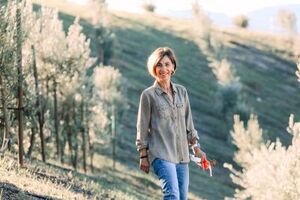
    Elise Magistro – Photo by Jeremy Ball


    What do you hope to share?

    The world of olive oil is as vast, and for that reason, a lot of what I do is education. Part of my mission is to help people make informed decisions about their choices, especially because there is a great deal of confusion around olive oil. Labeling, for example, has become a minefield of misleading terms. For starters, I try to walk people through the essential terminology on a label so that they can feel more confident about their choices. People have been very responsive about becoming more knowledgeable about olive oil, and that has been gratifying for me.


    An equally important part of what I want to share about olive oil, however, is tied to my love of Italy and the historic role olive oil has always played in Italian culture. While almost every trip to Italy still includes stays in Tuscany and Sicily, I am always happy to visit other regions, to learn something new that I can share with others. This olive oil venture is part of a longer journey that started decades ago, and it happily keeps me connected to a country and a culture that I have never ceased to love. I feel very fortunate that I was lucky to do something over the course of my life that kept me so engaged. I could do it forever. 


    If you enjoyed this article, consider subscribing to my newsletter for more content and updates!

  • How Gourmet Girls is Redefining Italian Food in the UK’s Brighton and Hove

    How Gourmet Girls is Redefining Italian Food in the UK’s Brighton and Hove

    Giulia Civello pulls a worn hardcover book from her shelf and flips through it, revealing little scraps of paper marking various pages. It’s a cookbook, and one of the bookmarks is labeled “Franco” for her father, marking his favorite recipe.


    “What’s amazing about these old Italian cookbooks is that so many of the recipes assume such a high base level of cookery compared to the recipes you see now,” Giulia says as she looks down at the book. “It’s just ‘Cook the fruit; make the pastry.’ There’s no explanation of what that means. And there’s no oven temperatures or anything like that. You just have to know, which I think is totally wonderful.”


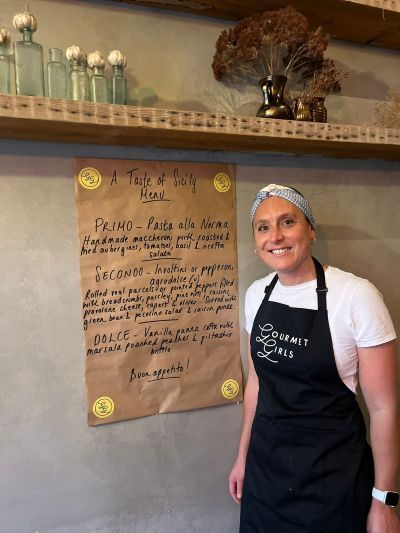
    The cookbook belonged to Giulia’s great-grandmother and was passed down through generations with Sicilian recipes and food traditions. Today, Giulia shares that knowledge through Gourmet Girls, a series of pop-ups and supper clubs she and her team host in venues and homes across Brighton and Hove, a seaside community in southeastern England.


    Giulia’s father came to the UK from Catania, Sicily, where her family spent summer holidays. Drawing from that heritage, Italy travels, and her background as an environmental consultant, Giulia serves food stories and sustainably sourced Italian fare with meals celebrating various regions such as the Dolomites, Puglia, and, of course, Sicily. 


    Giulia shared more about her business and passion for Italian food, memorable events, favorite dishes, challenges, and what she hopes diners take away.


    How and why did you start Gourmet Girls?

    I thought about doing it for a long time before I actually had the guts to launch. I started in ecology and then migrated into the environmental sector. I’ve always been a foodie and interested in sustainable food and farming. 


    I was always getting my grandma to teach me recipes. My grandma grew up with her mother, father, and grandmother in the house, so she wasn’t actually the main cook in the house; it was her mother.


    I worked in London five days a week, commuting up, which was incredibly stressful. I thought, “What am I doing? This isn’t what I want to do.” Then other things happened in my personal life, and I thought, “If I’m going to do it, I just need to do it now.” So, I went for it. 


    It started as—and mainly still is—supper clubs, which are a great model for me because I host these pop-ups at venues. I don’t have my own catering kitchen, but I go into places, cook in their kitchens, and invite people over for an evening. Everybody sits together, and it’s all very much about community. I come out and tell them about the dishes and the heritage of the dishes. But the real thing for me is cooking Italian food that people don’t get in an Italian restaurant here. I want to cook regional Italian food, which is what Gourmet Girls is all about—everything from the Dolomites to Sicily to Tuscany to Puglia.


    Many friends say, “Oh, we don’t go out for Italian; we just go out for Asian. You can just cook Italian at home, can’t you?” And I say, “No, no, there’s so much more than what you get in your High Street pasta/pizza restaurants.” And so that’s what it’s all about, really.


    Gourmet-Girls---guests.JPG
    Guests enjoy a Gourmet Girls supper.

    What makes Brighton and Hove a special place to offer events?

    Brighton is a brilliant place. It’s very multicultural and open. It has a very big LGBTQ community, and you get a lot of people who come down from London, love it, and stay from all over. You get people interested in trying new stuff and lots of different groups. It’s interesting to see the kind of people who attend my events. You get all age groups, people who are learning Italian online, who are really obsessed with Italy, real foodies who just want to try something different, or people who have just heard about it. It’s a nice mix of loads of different people coming together, who are joined by their interest in what the food will be like.


    Gourmet-Girls---place-setting.jpg 

    Suppers are served with stories to complement the courses.


    Share a memorable Gourmet Girls event.

    The biggest one I did was a Roman street food pop-up. That was challenging. There were 70 people, and I was churning out the Roman version of arancini (supplì).


    Every time I do an event, I get anxious in the lead-up—that’s just my personality. But then I come away feeling so warm inside because people just love it. They love that you can tell them interesting anecdotes and the heritage of what they’re eating. 


    I had a job in a cheese shop when I was studying at university. People would love it if you told them how cheese is made and the story about the people making it. It’s just that connection with food, isn’t it? It’s totally different. And that’s what the supper clubs and catering are all about, really. It’s about sharing my love of the dishes and the heritage of the dishes.


    Gourmet-Girls---pasta-alla-Norma.JPG

    Pasta alla Norma


    What are some favorite regional dishes you introduce?

    I always do pasta alla Norma, which people have sometimes heard of, but often the aubergine is so badly cooked. People try to bake it. It’s like, “Get a pan of oil and fry it!” That’s the way to get the best out of an aubergine. I make a really good pasta alla Norma, with a lovely ricotta salata, which I get from a really amazing Italian cheese guy in London.


    That recipe comes from Catania, so I’m particularly fond of it. It’s named after the famous opera by Bellini. As the story goes, playwright Nino Martoglio said, “Chista è ‘na vera Norma!” when he tried it for the first time.


    I also enjoy serving granita, traditionally a breakfast food, as a dessert. I serve it with a little brioche just as you would have at breakfast time in Sicily. I do an almond granita with a little shot of espresso that the guest can pour on top. When my dad has granita, it’s always alla mandorle with caffè on top. It’s just the most divine combination of flavors, so that’s another favorite as well.


    Gourmet-Girls---Giulia-Civello.jpg
    Giulia Civello in the kitchen.


    What were some of the biggest challenges you’ve faced?

    The challenge I find is that Italian dishes are based on the quality of ingredients. The UK climate is so different from that of Italy, especially Sicily. If you try to cook pesto alla Trapanese, which has almonds, tomatoes, and basil, you won’t get the same flavor. A lot of British chefs who cook Italian food throw everything at it to compensate. You end up with these pasta dishes with 17 ingredients, which you never get in Italy. I seek out really high-quality ingredients to try and replicate those Italian flavors, which is not all that easy. And so I have to kind of tailor the menus around what I can get. Staying true to the authenticity of the dish is key for me.


    Another challenge has been marketing and learning to spread the word about the events. Fortunately, I have a good family network and friends in Brighton and Hove. So my events initially were filled with friends and family, but once they’ve been once or twice, you need to move on to the next set of people. It’s like, how do you reach them? That’s been a big learning curve.

    I attended networking events and posted my event on all sorts of random event websites, trying to get the venues where I was hosting to post it on their socials. That helped a lot. I’m lucky my best friend and her husband have a branding agency. They did all my branding, which was amazing. 


    Gourmet-Girls---Giulia-Civello-plating-food.jpg
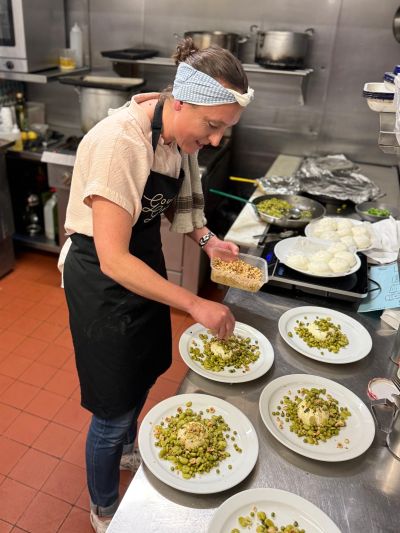
    Giulia Civello adds the finishing touch to a Gourmet Girls meal course.

    What are your future plans?

    Probably not immediately, but I would like it to be my full-time job. The supper clubs are great because they allow me to test recipes. It’s quite a friendly setting to do it. I haven’t had to make huge investments financially in terms of catering equipment and things like that. The venues also have staff that I can rely on. But the plan is to eventually transition to having my own prep kitchen and all my own kit and doing much more private catering—not mass wedding catering though; I’m not interested in doing 250 plates of food for a wedding. I want to do small things, where it’s still very much about the food I’m cooking. It’s not just the event; it’s about food. That’s what I’m all about, really.


    Gourmet-Girls---Giulia-Civello-table.jpg
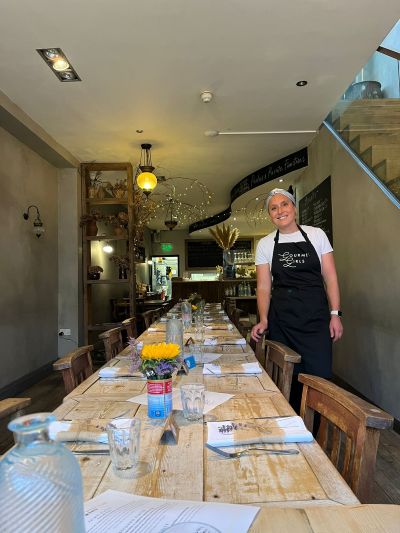
    Gourmet Girls guests typically sit at a long table for a communal dining experience.

    What experience do you hope to share?

    I hope my guests will come away having eaten something new and learning about Italian regional food.


    This winter, I’m planning a Dolomites menu. After university, I spent a ski season in Italy, where I lived in the Dolomites in Val Gardena for six months. It was a glorious experience.


    The food there is just wonderful. It is quite Austrian in terms of its influence because where I was, it actually used to be Austrian; the border moved during the war. When you’re skiing there, you see these beautiful mountains, and they’ve got all the holes where the soldiers would be hiding and fighting. It’s an amazing place, and it’s all dumplings, polenta with sausages, and strudel. It’s so different from anywhere else in Italy; really hearty mountain fare. So I think that will be nice around Christmas.


    I hope people come thinking, “Wow, this is Italian food? I don’t associate this food with Italy!” That’s the kind of reaction I like. It’s just a voyage of discovery.


    If you enjoyed this article, consider subscribing to my newsletter for more content and updates.

  • Preserving Sicilian Heritage: Independence, Louisiana’s Italian Cultural Museum

    Preserving Sicilian Heritage: Independence, Louisiana’s Italian Cultural Museum

    With fewer than 2,000 residents, Independence, Louisiana, may be small, but its devotion to its Italian—largely Sicilian—roots runs deep.

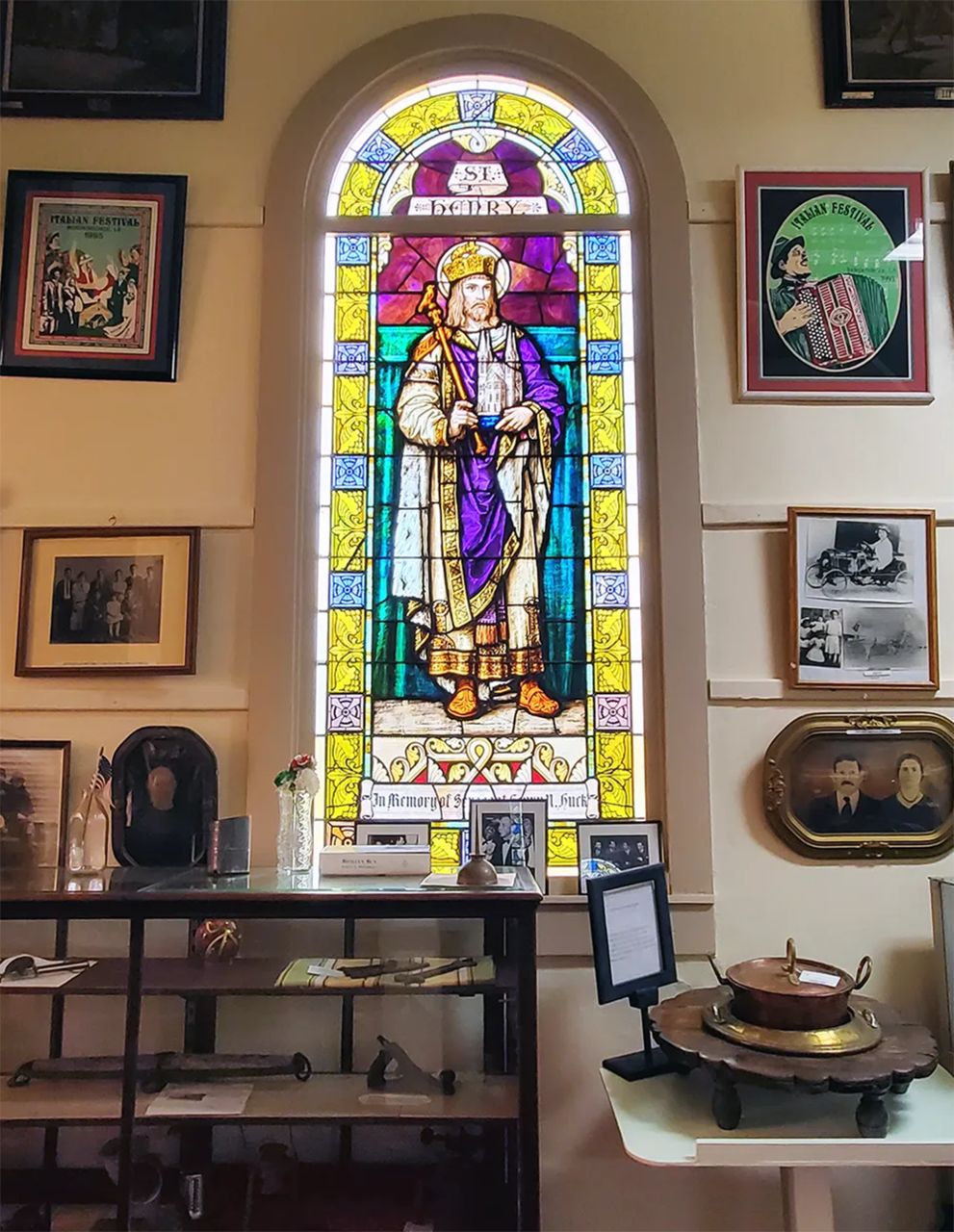
    It all started in the late 19th century when a large influx of Sicilian immigrants arrived in the state, many taking jobs as sugar cane laborers. A contingent moved to Independence, where they worked the fields of strawberry farms. The rich heritage they brought with them is celebrated at the Independence Italian Cultural Museum. The institution, which is committed to preserving Sicilian and Italian culture, music, art, and language, hosts a variety of fundraisers throughout the year.


    I spoke with Lesley Vullo, an Independence resident and Italian dual citizen who volunteers with the museum, to learn more.


    Tell us about the significance of the museum’s building.

    The building was originally the Mater Dolorosa Catholic Church, built in 1908 by Sicilian and Italian immigrants. My great-grandparents and grandparents actually attended church there. When my dad was younger, it was still in use. Then, they built the new church across the street and turned the old building into the museum.

    What are some of the events organized by the museum?

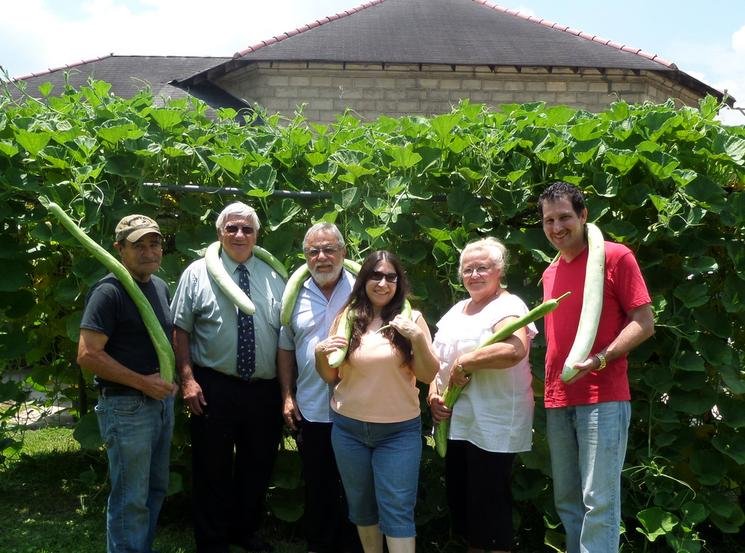
    Each August, the museum hosts “Cucuzza Day,” where people bring their cucuzzi and compete in cucuzza-growing and cooking contests. There are also contests for kids, and seeds are available for purchase.

    Then, in September, we have “Sotto Le Stelle,” which is essentially a night under the stars. It’s an opportunity to bring back the Sicilian spirit of outside dinners and the evening passeggiata. We turn the street outside the museum into an outdoor family dining experience.


    We also have holiday cookie sales and spring stuffed artichoke and muffuletta sales. Throughout the year, we offer Sicilian language classes. 


    Cucuzza-Group.jpg

    Cucuzza Day celebrates the fruits of the giant squash harvest.


    What can visitors take away from their museum experience?

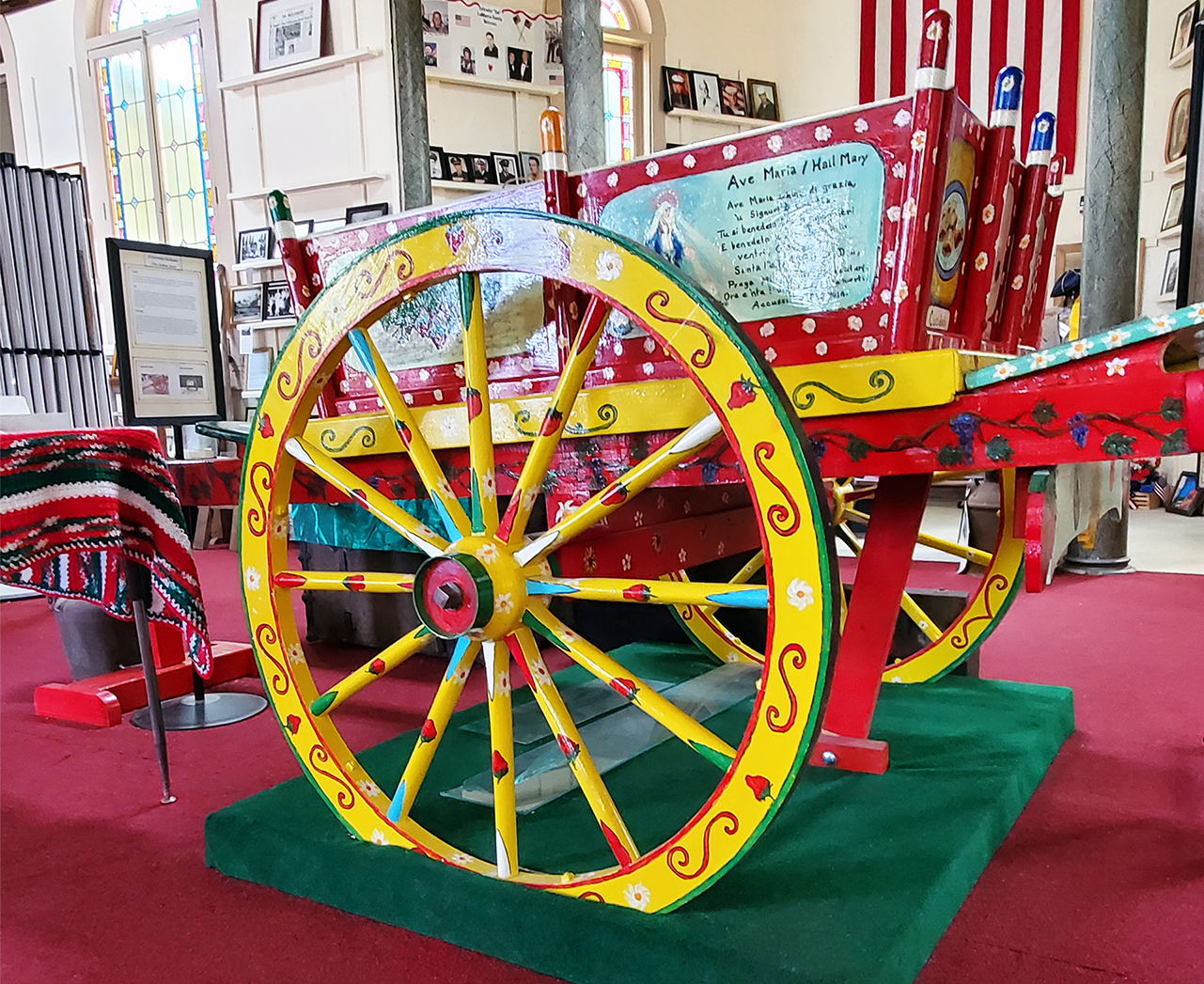
    The community has donated a lot to the museum. We have everything from wedding dresses and Sicilian musical instruments to a hand-painted Sicilian cart and St. Joseph altar. There’s a lot of history here and an opportunity to reconnect with ancestral roots. Independence is a small town, and having this museum here to connect us all is a big deal. 


    Handmade-Sicilian-Cart.png 

    A handmade Sicilian cart is among the displays.


    If you enjoyed this article, consider subscribing to my newsletter for more content and updates!
  • How One Young Leader Is Reviving Italian-American Heritage

    How One Young Leader Is Reviving Italian-American Heritage

    The bulk of Italian immigration to the United States occurred between 1880 and 1920, with approximately 4 million Italians arriving during this period, mainly from Southern Italy and Sicily. That means most Italian Americans are at least four generations removed from their Italian heritage.

    Traditions fade along with those connections. It’s no wonder that one of the most pressing concerns among cultural organizations is how to reach and inspire younger audiences.


    At 27 years old, Patrick Ross Campesi bucks the trend. 


    While many of his peers may feel distanced from their roots, he’s spent the past five years leaning in. It all started with the passing of his Sicilian grandfather in 2016 and a desire to better understand and embrace his legacy. He began researching his genealogy, learning more about his great-great-grandparents, who emigrated from the Trapani area to the United States in the 19th century and found work as sugarcane farmers in Louisiana. 


    About five years ago, Patrick decided he could do more and help other Italian Americans connect with their heritage. He’s since taken on leadership roles with St. Expedite Lodge Order of the Italian Sons and Daughters of America, American-Italian Federation of the Southeast, and Italian American Future Leaders. In 2023, he founded the Louisiana Italian American Heritage Foundation, for which he serves as president. 


    Patrick shared his experience, present and future challenges, and what he hopes to give back to the greater Italian American community.


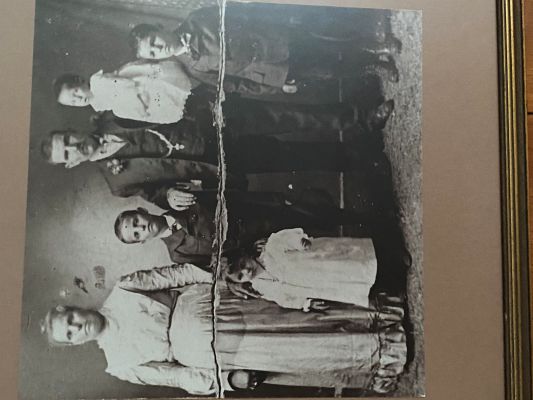
    Patrick-Campesi-s-great-grandfather-Joseph-Campesi-with-parents--Vincenzo-and-Gaetana.jpg

    Patrick Campesi’s great-grandfather Joseph Campesi with parents, Vincenzo and Gaetana


    Tell us about your background and connection to your heritage.

    My great-great-grandparents Vincenzo and Gaetana came to America in 1890 from Sicily because there were not many job opportunities for them in Sicily. 


    Some of the families stayed in New Orleans, and not long after that, the other half went up to what’s called Iberville Parish, where I was born and raised. We moved up there probably in the early 1900s. 


    We were sugarcane farmers there until the 1927 flood, which pushed us more toward the river. Once that flood happened, the levee broke, water crested, and my family worked with the Army Corps of Engineers in our little town to rebuild the levee. Half of the men in the family used the mules and the donkeys to help rebuild the levee with whatever forming equipment we had. The other half went down to some smaller towns in Louisiana to trade fur and provide for the family. It wasn’t long after that, after the Great Depression, my family moved further south, about 15 minutes by car now to White Castle, and that’s where I was really brought up. 


    My connection to all of this was my grandfather Ross Joseph Campesi. He was born in 1925. He grew up farming sugarcane, but he was the one who really took the family from tenant farmers to owning the land. He started building businesses from there, and with only a high school education, achieved the American dream.


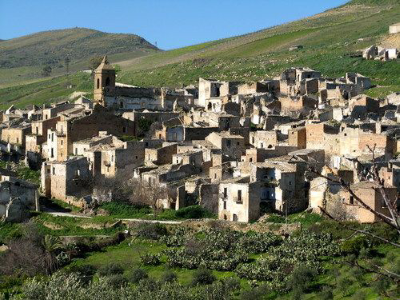
    Patick-Campesi---poggioreale.png

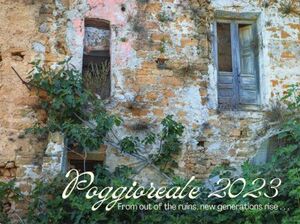
    Poggioreale, Sicily

    I was 18 when he passed, so I knew him for a good portion of my life, and he always would talk about how we’re Sicilian. We’re from Poggioreale, and there’s an organization called Poggioreale in America. I didn’t realize that there were other Poggiorealesi in America outside of my family. We grew up in what they called the Campesi Compound. I was with my uncles, cousins, and everyone in that area. I was just so confined to that little box. But then I found this organization, and this opened my world up.


    My grandfather would say, “Family first, always.” It is something that stuck with me and was very impactful to me.


    Once he passed, and as we entered the pandemic, I started learning more about the family, genealogy, and history. My dad was telling me more and more stories; I was just more interested in it.

    Not long after that, I reached out to a gentleman named Charles Marsala, who is very involved in Louisiana. He’s been my mentor and has brought me through the ranks, introducing me to people like Marianna Gatto, Basil Russo, and John Viola, the Italians pushing to get young Italian Americans involved again. And I’ve been very lucky because of that.


    I was instituted as President of the St. Expedite Lodge of the Order ISDA. That was my first foray into any type of nonprofit cultural leadership position. From there, I was elected Vice President of the Federation of the Southeast. Then, two years ago, I started the Louisiana Italian-American Heritage Foundation. Lastly, from 2024 to 2025, I was Chairman of the Italian American Future Leaders. It’s been a busy four years, but I wouldn’t change it for the world.


    Tell us about St. Expedite Lodge Order ISDA and your role.

    St. Expedite Lodge of the Order ISDA is a local chapter of ISDA. I was put in as vice president in 2021, and then the president ended up stepping down. He said, “Look, you’re really the one who’s pushing to get the younger people into it; you should take the presidency.”


    I had to bring together people that I knew at the time, four years ago, to help create an organization. Some of the roster has changed; now, it’s just an amazing group of people. They’re hardworking.


    A group of us went to the Italian American Future Leaders Convention. We typically go down to New Orleans a couple of times a quarter, and we’ll see Louis Prima’s daughter Lena Prima perform and maybe go to an Italian restaurant. Our focus is on social events for young professionals. But we do have events like a Christmas event at a place called Houmas House, where we have people of all ages. We want anybody who is Italian or Italian-loving to celebrate the culture with us here. 


    Great-grandparents-Margherita-and-Joseph-in-sugarcane-fields-.jpg

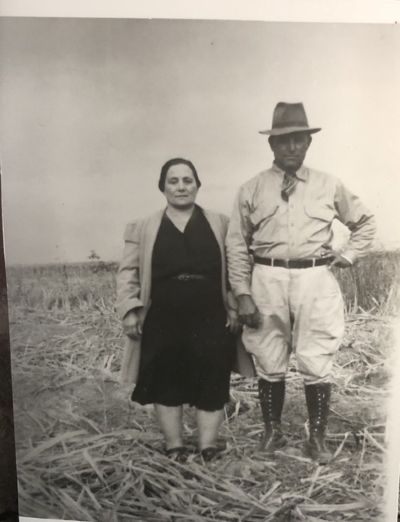
    Patrick’s great-grandparents, Margherita and Joseph, in the sugarcane fields where the family worked


    How did the Louisiana Italian-American Heritage Foundation start, and what is your vision as President?

    I started that in December of 2023. It began as a political action committee, but because I’m in finance now, I can’t be involved in any PACs. We pivoted straight to a nonprofit, and we focus more on fundraising and some lobbying, but not directly like a PAC.


    One of the main things we’re focusing on right now is fundraising for a monument to the Sicilian sugarcane harvester. So my family obviously came over here and did that. A lot of Sicilians came over and contributed to the growth of sugarcane production, not just in Louisiana but across the country and the world.


    My grandfather worked with Louisiana State University to go around the world teaching third-world countries how to actually cultivate a better crop and to have a better yield. We lucked out in that, being here in Louisiana with such great soil. So he was teaching those practices, but that’s a direct contribution just for my family, not to mention all the other Sicilians who came here and did that.


    Another thing that we’re doing is the Heritage Commission. New Jersey has established the New Jersey Italian American Heritage Commission, a piece of legislation that gets passed. It’s a commission that the New Jersey State government established. It’s not appropriated in any funds by the state. They have internal fundraising or grants from the Italian government. They create coursework that they can provide for schools to teach Italian contributions and Italian history here in America. One of the videos is about the relationship between Italy and America, as far as Amerigo Vespucci (we’re named after an Italian), how the American government is mimicking the Italian Republic, our accounting system, and all these everyday different contributions with an Italian root. That’s something we want to bring to Louisiana. 


    Share more about your involvement with the Italian American Future Leaders.

    It is like a melting pot and a mastermind group where people come from all different walks of life, from 21 to 35, with all different experiences. Whether they run organizations or are members of them or have ideas for social media, it’s a way for all of us to come together and say, “Hey, I was dealing with something with my lodge in Louisiana; how did you do it in Indiana?” And that’s real-life experience. There’s a guy who does amazing festivals up there, and he’s helped coach us on how to do some of the feasts we do down here. So it’s just a great way for us to connect and network.


    What led me to want to get involved with it? I’m a people person. I like to be connected. I like to network with people and to share in our culture. It’s something that’s so beautiful but will die out if we don’t pass it on to the next generation.


    As far as leadership was concerned, I saw something great and wanted to be a part of it. But it wasn’t just me. There was a team of people that I was working with, and even while I was chairman, a lot of people helped us put together that conference that we have every year. But just to be a part of something like that and to learn from all the Basil Russos, John Violas, and Pat O’Boyles of the world, who have done so much for the community in their lifetime, but even more so with IAFL, has just been an amazing experience. 


    Attracting younger generations is a challenge for cultural organizations. How are you working to overcome that?

    It’s difficult across the board. One of the things we’ve found is that having leadership positions available for the younger people makes a difference. Representing the young Italians of Louisiana and having the positions I have shows others that if you are active in this, this is also something that you can attain.


    In many of these older organizations, the old guard doesn’t want to hand over the baton; it could be more vanity or ego. As Italians, we’re sometimes guilty of that; we’re also competitive. When you have an older organization that’s strong but won’t allow younger people to participate, well, they’re going to start their own thing, and now you’re splitting the community you’re trying to bring together. So it is not really fruitful for anybody.


    It’s important to have good mentors who help bring you up through the ranks and introduce you to the people that you need to know if you were to take that position, so you’re not thrown to the wolves. I’ve mentioned Charles Marsala because he’s just been such a huge part of my life in the Italian world. Working with him was the first time I’d ever been in a nonprofit and working in any type of leadership. So I had to learn a lot of stuff, but he taught me the ropes. He had somebody who taught him the ropes, so it’s like them reaching out that hand.


    Many younger Italian Americans looking for that identity, and our culture and community will take that offering, that olive branch, if you will, and get more active. One thing that we do is just have events that people want to go to. We want to keep an air of tradition and culture while making it modern and attractive for a young Italian professional to actually want to come to the events, keeping it upbeat but still maintaining that central tradition and culture we all collectively share. 


    What initiatives or programs are you most proud of implementing or supporting?

    I’m a very proud Italian American from Louisiana. When people think of Italian Americans, they think of New Jersey and New York, but they forget about California, Florida, and everybody across the country. But we’re here, just a different flavor of the Italian American pie. So one of the things I’m most proud of, outside of just seeing the growth of IFL last year, was the Louisiana delegation that we had come in. Some people I was very close with, and some I didn’t even know were from Louisiana, and they showed up there. Now, we’ve got our group, which has experienced IAFL, and we represented Louisiana very well.


    Outside of that, locally with the St. Expedite Lodge, it’s just the growth that we’ve had, not only in total membership but also with leaders who want to take action, take part, and take responsibility in the development of this organization. We now have a marketing department that works on social media, whether it be Instagram posts, Instagram Reels, or Stories, trying just to have content continuously put out there, not just something to put out there, but something meaningful. We have an event coordinating department as well, which is planning the Spring Serata. 


    Patrick-Campesi---grandfather-Ross-and-his-cousin-Grace-Cannizzaro.jpg
    Patrick’s grandfather Ross with cousin Grace Cannizzaro


    What do you hope to share with your community?

    It’s multifaceted, for one, as I look back to the little enclaves here in Louisiana. We used to have the little Italys across the French Quarter. It used to be called Little Palermo. There were so many Sicilians and Italians there, but as people age, they move out, die out, or become more successful because their families saved enough money to send them to school. They wanted a better life, and when they moved out, that community disappeared.


    I want to bring that community back, not just locally, but on a national scale where it’s a national enclave, not just limited to Louisiana. I think IAFL is the perfect breeding ground for that.


    I got stuck in New York two years ago on a flight back from Italy. I had some friends I met from IAFL who drove in from Massachusetts, and I had people who stayed with me for one day, took me around, and showed me around the area. I would never have known them and never would’ve been able to experience that had I not been at IAFL. Another example was when I was in New Orleans last October. Two friends, one from North Carolina and the other from New Jersey, came down for our film festival. Sure enough, we met another guy who happened to be in New Orleans and had attended IAFL the year before from Texas. We all just got coffee and beignets in the French Quarter.


    It’s just bringing that community together. And I think outside of just the local sense of things, we’re in a digital age where network is just so much more expansive, and that’s something that I’d like to bring for us here is not just in Louisiana, but being able to help a friend who wants to maybe move to New Orleans or who wants to open a business or has a connection that I have here that could benefit them. I’d like to be able to expand that. We will bring that back together, but on a national scale.


    If you enjoyed this article, consider subscribing to my newsletter for more content and updates! 

  • How Food Shaped the Allied Invasion of Sicily in 1943

    How Food Shaped the Allied Invasion of Sicily in 1943

    When and where did the U.S. first enter World War II in Europe? If you said D-Day, you’d be forgiven, as much has been said and produced related to the invasion of Normandy.


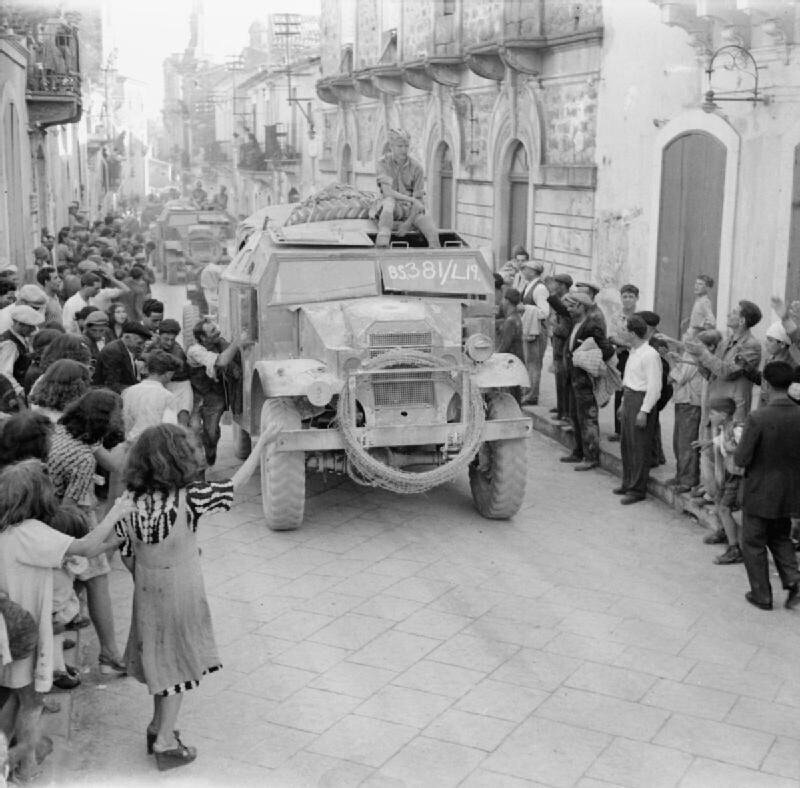
    What most people forget was that the Allies’ first European landing was actually in Sicily from July through August of 1943. So-called Operation Husky began as a massive amphibious and airborne campaign followed by a six-week-long land operation involving more than 150,000 ground troops. 


    Coverage of the event was carefully choreographed, with the media releasing photographs and newsreel footage of crowds cheering, women handing out flowers, and soldiers giving chocolate bars to children.


    While writing The Last Letter in Sicily and Beneath the Sicilian StarsI had the opportunity to tour Catania’s Museo Storico dello Sbarco in Sicilia 1943, where I gained a deeper understanding of this event from the Italian perspective. In truth, there was a fine line between liberation and invasion. Yes, these soldiers brought food and pushed out Nazis. But the campaign also cost the lives of 135,000 Italian troops.


    Later, I stumbled on a fascinating project called “Food, Hunger, Migration and the American Myth in Sicily at the Time of the WWII Allied Landing,” produced by Teresa Fiore, the Theresa and Lawrence R. Inserra Chair in Italian and Italian American Studies at Montclair State University, and students at Montclair State University. The team conducted a series of interviews with individuals with memories of the arrival of the Allied Forces in Sicily in 1943, the late phase of Fascism, and the post-war period.


    It’s a reminder that the history of war isn’t written by battles alone, but also by hunger, nourishment, and the stories passed down around the table. From these quiet legacies, several scenes in my historical novels were born.


    If you enjoyed this article, consider subscribing to my newsletter for more content and updates! 

  • Where the Crust Is Thin and the Roots Run Deep: The Story of Zaffiro’s Pizza

    Where the Crust Is Thin and the Roots Run Deep: The Story of Zaffiro’s Pizza

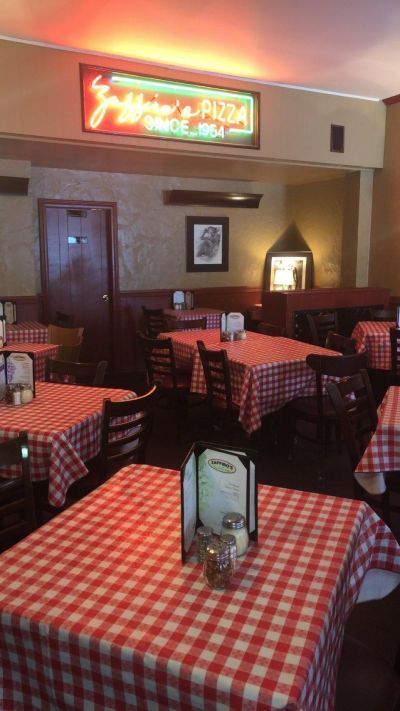
    Step through the door at Zaffiro’s Pizza at 1724 North Farwell Avenue in Milwaukee, and you’ll find yourself immersed in the past while perfumed by the scents of garlic, tomato sauce, fried seafood, and freshly made pizzas. It’s a classic 1950s pizza joint with red-and-white checkered cloths draped over tables with salt, pepper, and Parmesan shakers. 


    Set in the Brady Street neighborhood—one of Milwaukee’s three historic Italian enclaves—the restaurant has been family-owned for 71 years. Its story began with Librorio “Bobby” and John Zaffiro, whose parents arrived in the United States in 1913 from Santo Stefano di Camastra, Sicily.


    The brothers opened Rock-a-Bye Tap in 1951, just a few years after the end of World War II, when American soldiers returned from Italy with newfound cravings for pizza. The bar was located in another historically Italian neighborhood, the Third Ward, which was hungry for familiar cuisine. So, the Zaffiros decided to start serving pizza.


    As Italian food grew in popularity, so did the Zaffiros’ business. Bobby opened Zaffiro’s Restaurant on Farwell in 1954. It had just a few tables and a service bar. Bobby used his mother-in-law’s recipes to prepare pasta dishes and lasagne. But the star of the menu was his super-thin crust pizza. 


    By 1970, it was clear Zaffiro’s needed more space, so Bobby acquired the barber shop next door and added a dining room and a full bar. John made the pizzas while the more extroverted Bobby worked front of house. You could often find him making people laugh from behind the bar.


    John retired in 1988, and Bobby passed away a year later. Bobby’s wife, Rose, and their two sons, Mike and Joseph, took over Zaffiro’s until Joseph left the business in 2007. Rose passed in 2008, and Mike and his family have held full ownership to this day.


    The restaurant has weathered economic downturns, neighborhood shifts, and the COVID-19 pandemic, but for 71 years, it has remained standing, retaining its original decor and recipes. Sure, there have been changes, like its partnership with Marcus Theatres, which introduced regional theater-goers to the Zaffiro’s brand, and expanded delivery service, which became necessary starting with the pandemic. But at the end of the day, Zaffiro’s mission remains intact. It’s all about building a community around good food.


    Mike shared Zaffiro’s history, business growth, challenges, and more. 


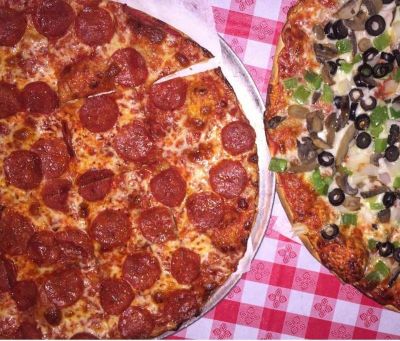
     Zaffiros---pizzas.jpg

    Quite possibly the world’s thinnest pizza crust


    What inspired Zaffiro’s super-thin pizza crust?

    My father and my uncles took a road trip to New York, and they saw how big pizza was. At that time, there might have been one pizza place in Milwaukee. My dad said, “I’m going to put pizza on the menu at the bar.”


    He worked tirelessly to figure out how to make our crust, which is the thinnest crust in the world. It was through a lot of trial and error.


    He wanted thin and didn’t want it to droop. My dad always said about the pizza they tried out East, “Some of those pizzas are falling down.”


    They serve in eight slices with mostly triangular cuts. We do 16 with square-cut slices. It’s known in Chicago as “tavern pizza.”


    Why has it been so important to preserve the original recipes?

    It comes down to this: When I’m behind the bar, and someone comes in and hasn’t been in here for 20 or 30 years and says, “It tastes the same,” that’s what I want. My father really stressed that you don’t mess with the recipe.


    Tell us about your partnership with Marcus Theaters and how that came about.

    They came to me in 2008 and asked if I was interested. At that time, I was looking to open another place, but I decided to take the jump. They know what they’re doing and have been terrific with us.


    They do everything. It’s a licensing agreement, so I don’t have to worry about anything. They’ve got my name and my recipe. They were selling our pizza at Miller Park for three years.


    They sell our pizzas in their theaters throughout the Midwest. They have three regular sit-down restaurants, and then in all the other theaters, they have it so you can bring your pizza into the theater with you. 


    What challenges have you faced?

    The recessions over the years and 9/11 really hit us. All you can do is keep plugging away. Thank God we were able to stay in business and make enough to keep it afloat.


    During COVID, we had to close the dining area. We had been delivering to downtown businesses during the day and decided to start delivery from the evenings until closing time to keep the business alive. We now deliver during all opening hours, and it’s a big part of our business.


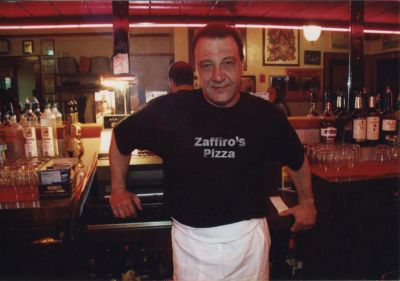
    Zaffiros---Michael-Zaffiro.jpg
    Mike Zaffiro worked behind the bar crafting Wisconsin Old-Fashioneds and more for decades.


    How has your location on Farwell, near Brady Street, benefited you?

    I’ve always wondered how it would have worked if we were somewhere else. When people say “Location, location, location,” I believe that. We have location, location, location, but with a terrific product. You can have the location, but it’s no good if you don’t have a product that goes with it.


    We’ve been in the community for a long time. With the area’s apartments, you have turnovers. So people will be there for three years, and then you don’t see them for a couple of years, and then all of a sudden they’re coming in with kids. And they keep coming back.


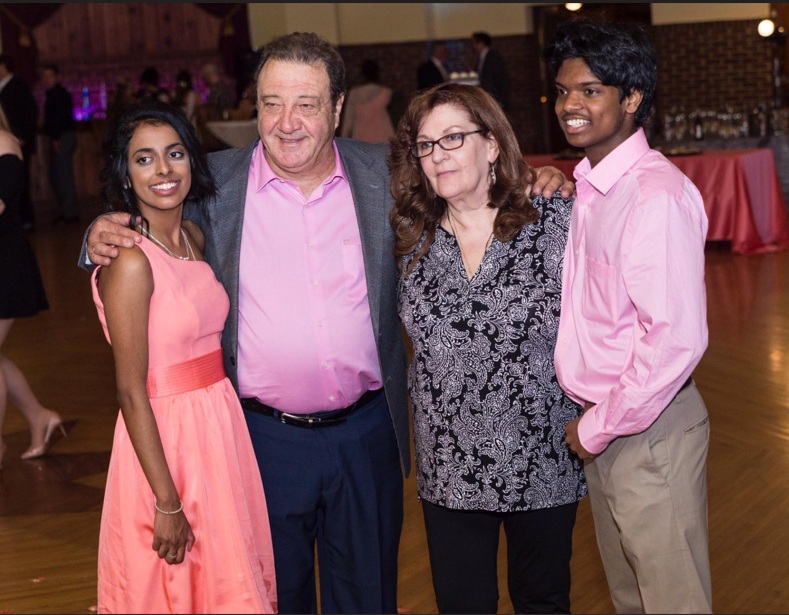
    Zaffiros---family.jpg

    Rebecca, Mike, Rose, and Michael Zaffiro


    What is the future of Zaffiro’s?

    Both of my kids are working here, so they’re the next generation. That’ll be the third generation.


    The restaurant hasn’t changed much since we’ve been here. We’ve often thought about remodeling, but customers say, “Don’t do that.” And I agree with them. 


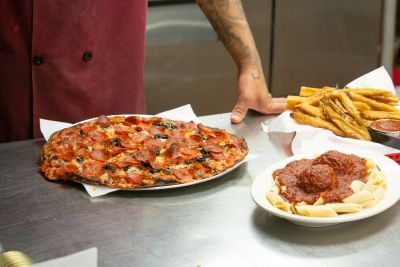
    Zaffiros---menu-offerings.jpg

    Take your pick from deep-fried appetizers and old-school pasta to sandwiches and, of course, pizza.


    What do you hope to share with customers?

    We’ll just keep continually giving them a good product and good service at a reasonable price. I think we’re Milwaukee’s oldest pizza place now. We’ve gotten great press throughout the years, but it all comes back to the quality of the food. 


    If you enjoyed this article, consider subscribing to my newsletter for more content and updates! 

  • Vermont’s Italian Spirit Endures: From Stonecutters to Cultural Stewards

    Vermont’s Italian Spirit Endures: From Stonecutters to Cultural Stewards

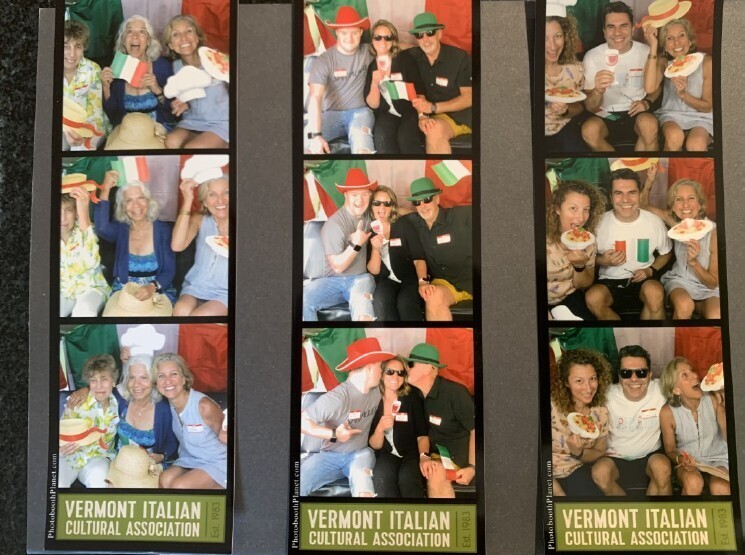
    The history of Vermont’s Italian American community was shaped in stone and later bulldozed in the name of progress. But in the end, those were only structures, for its spirit lives on, thanks in part to the efforts of the Vermont Italian Cultural Association (VICA). 


    Starting in the 1880s, skilled stone cutters and carvers from Northern Italian cities, including Carrara, emigrated to the state, pursuing high-paying jobs in a place with hills and lakes reminiscent of their home. Many found work carving headstones at the Vermont Marble Company, which had operations in Proctor and Rutland. Later, more Italian immigrants settled in Washington County’s Barre, the self-proclaimed “Granite Center of the World,” where they worked the quarries and carving sheds.  


    As the Italian immigrant population grew, families gravitated toward Vermont’s largest city, Burlington, and formed what would later become known as its Little Italy. However, starting in the 1960s, the city embraced a philosophy of urban renewal and razed over 140 homes, businesses, community centers, schools, and gardens in favor of new commercial developments.


    While the Greater Burlington Italian American community lacked a physical heart, its love and devotion to its heritage inspired VICA’s launch in 1983. The group’s passionate push to preserve connection and identity has evolved into a statewide network that partners with cultural organizations, such as opera companies, film festivals, music groups, and authors, to deliver Italian-themed events and programming.


    VICA President Lisa DeNatale moved to the Green Mountain State 25 years ago. For her first 15 years, she was largely unaware of its Italian presence. Once she discovered the rich heritage and history, the descendant of Sicilians from the Enna Province town of Pietraperzia felt called to preserve it.


    Lisa shared more about Vermont’s connection to Italy, the organization’s history and current offerings, and her leadership goals.
     

    Vermont-Italian-Cultural-Association-Lisa-DeNatale.jpg 

    VICA President Lisa DeNatale in Venice, Italy


    Tell us more about Vermont’s Italian immigrant history.

    To tell that story, I have to say a little bit about my own background because I’m half Sicilian; my grandparents came from Sicily. My father, Giuseppe Salvatore DeNatale, was born in the U.S. I grew up outside Boston, where there’s a very large, prominent, and active Italian and Italian American community. It was common for us to get together with my grandparents for Pasqua, name days—you name it. And it was always a very important part of my life.


    I met my husband and moved to Portland, Oregon, where we stayed for 10 years. We moved to Vermont 25 years ago, totally unaware that there was really an Italian community here, and stumbled upon it after being here for 15 years or so.


    I guess it just never occurred to me that there would be an Italian community in Vermont. It was not the place you heard about Italian immigrants coming to. But as I’ve learned, it was an important destination for Italians, primarily those from the north initially.


    In the late 19th century, Vermont had granite and marble quarries. When these were discovered and/or developed, they needed skilled carvers. A large population of Italian immigrants, mainly men, came here from Carrara and many northern towns, and then more came from the Naples area. They came to Barre (not to be confused with Bari, Italy) and the Rutland area, where the quarries were.


    They had a very strong Italian immigrant presence in Barre, where they built the Socialist Party Labor Hall. One testament to the work of these men is Hope Cemetery, where many Italian immigrants are buried. It’s also where many stone cutters cut their monuments and mausoleums, so it’s really an outdoor museum.


    From the late 19th to the early 20th century, there was a great Exodus from Italy; more and more people came here to support Italian families and businesses. Some came to Burlington and formed a tight-knit Italian neighborhood. They might have started as fruit peddlers and then opened markets and businesses.


    There was a very strong Italian community here in Burlington, where Italian was heard on the streets. What has remained is this very strong Italian culture, Italian tradition, and an appreciation for what Italian immigrants brought to Vermont.


    The Vermont Italian Cultural Association is the primary organization whose mission is to preserve and promote Italian culture so that we don’t forget that Italian immigrants made many important, lasting contributions to Vermont and the country.


    I was doing some research and discovered that Stanley Tucci’s paternal grandparents first came to Vermont. They settled in Northfield. His grandfather learned how to cut and worked in the slate sheds. He came when he was 14 years old, which was when many came to this country, met his wife, married, and lived in Northfield, Vermont, until they moved to New York, where they opened a monument company.


    I’m sure there are many stories like that of others who came here and since moved on to other parts of the country and became prominent carvers and stone cutters for many of the monuments you see throughout the United States. 


    Vermont-Italian-Cultural-Association-making-pizzelle.jpg

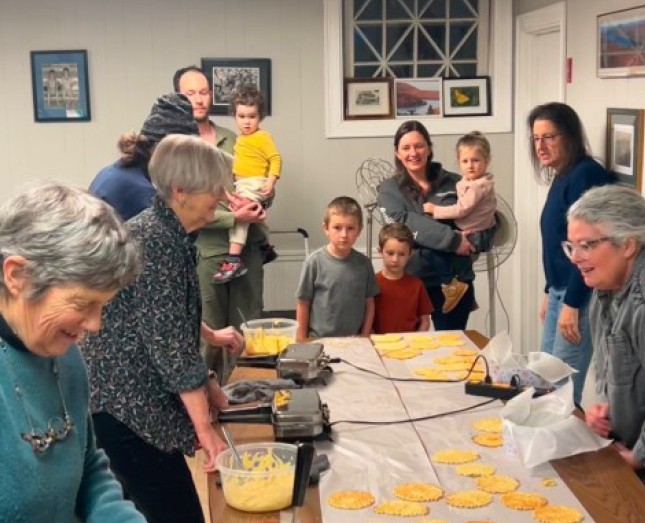
    VICA members make pizzelle.

    How and why was the VICA founded?

    Some Italian Americans and Italians came to Vermont, some to teach at the university, and they were leaving places like Philadelphia, New York, and Boston. When they came here, there was no organization. They believed they were drawn to one another and felt it was really important to form a community and begin to recognize the contributions, culture, and heritage that preceded them.

    We just celebrated 42 years since the organization was created. It didn’t start as a nonprofit. It started with people getting together in someone’s living room or a local community center. It’s been about 23 years since we officially became a 501 (c) 3.


    We’re an all-volunteer organization. We don’t have any paid staff. We don’t have a building or a hall where you can have events. The organization was really founded by families and individuals in the Greater Burlington area. It’s the largest city in the state and home to many colleges and universities. So it was started here, but our membership is statewide. We have members living outside the state because we offer virtual programming. We also have a number of business partners who are spread throughout the state. Those partners are a combination of Italians and Italian Americans who opened businesses producing or selling Italian products. Several native Italians here in Vermont make salumi and pasta, bringing all the Italian traditions and methods to Vermont. Because we don’t have a physical space, these partnerships allow us to really have a large footprint in the state.


    Vermont-Italian-Cultural-Association-Carnevale.jpg

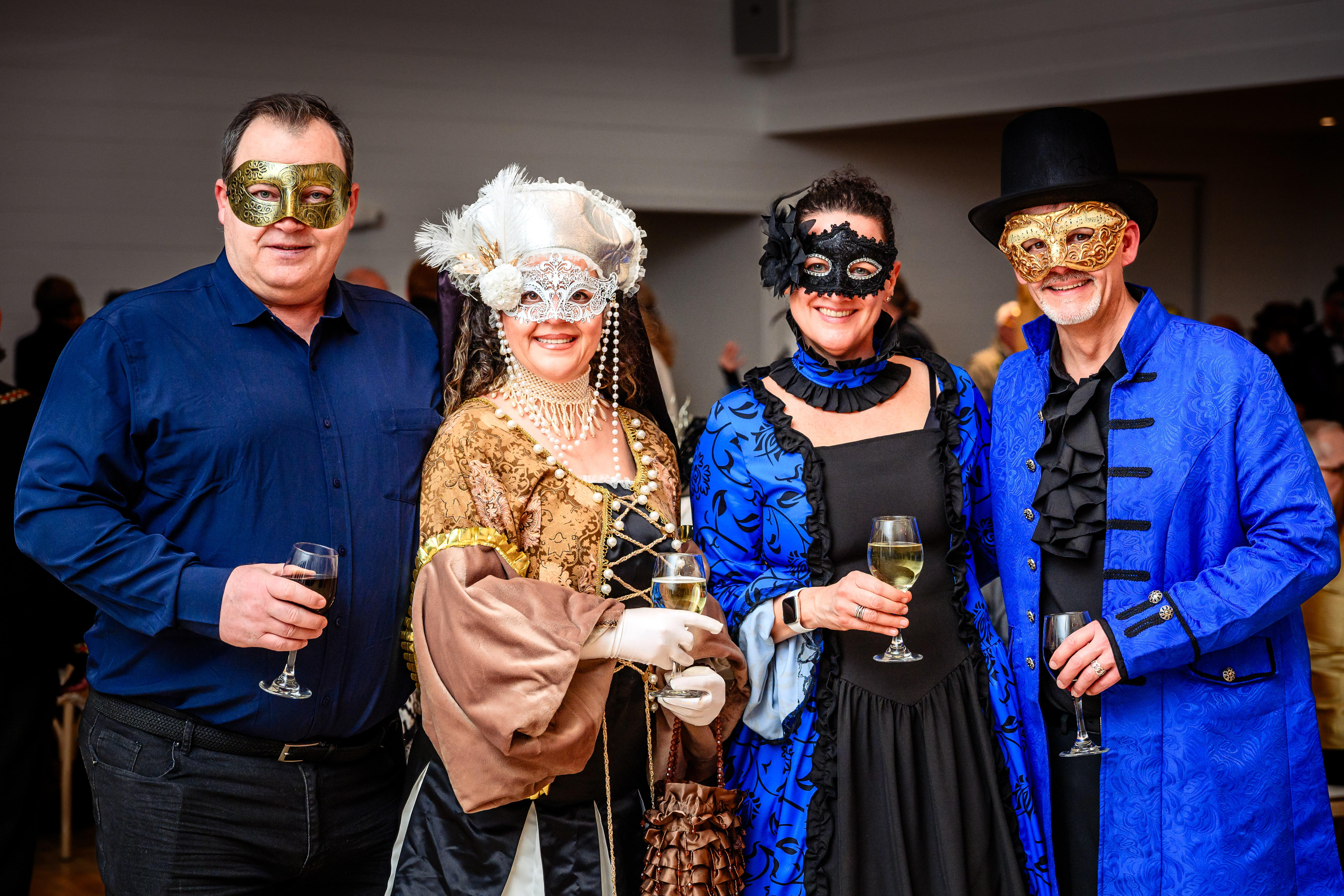
    VICA Carnevale

    What events and activities do you host?

    Vermont is not a large state—we have fewer than a million people. It’s easy to network, so we have been creating business partnerships and relationships with cultural organizations. We have several opera companies here, the International Film Festival, and Upper Valley Baroque. There are just so many cultural organizations that we partner with to bring Italian music, film, opera, food, wine, or history to our members and the greater community.


    The music director of the Opera Company of Middlebury, Filippo Ciabatti, is also the director of Orchestral and Choral Programs at the Hopkins Center for the Arts at Dartmouth College. A native Italian, Filippo has presented several online lectures. We just did one on Puccini because the Opera Company of Middlebury will be performing La bohème this summer.


    Our events really run the gamut. We host writers and have wine-tasting events, cooking classes, and Italian language conversation groups. We also have a very strong relationship with the Italian Consulate in Boston, which has jurisdiction over Vermont, so we’ve done events in partnership with them. In March, we celebrated Carnevale with a fundraiser for our scholarships and grants program.


    The events can be completely tied to an Italian feast or a celebration, such as Liberation Day, or they could just be because we have something interesting to share with our community. There’s really something for everybody. 


    Vermont-Italian-Cultural-Association-bocce.jpg

    VICA members play a game of bocce.


    What do you hope to share with your members and the community?

    What we really want to do, first and foremost, is just remind people of the depth and the richness of Italian heritage here in Vermont. Maybe we don’t necessarily appreciate or understand things about particular aspects of Italian culture—even if it’s just wine tasting and hearing about the different regions of Italy and the wine.


    More than anything, it connects to those things that are deeply a part of who we are. Whenever we get together, I always have a story, or someone shares a story with me, that we just immediately connect on. Maybe it’s the way we had dinner at our nonna’s house.


    The most important thing is to connect as a community through those things that we share that maybe we’ve lost sight of because we are a little farther away generationally. Younger people, and we have quite a few younger members, are also seeking that kind of understanding and connection because they’re farther away generationally from their ancestry. That’s really what we want to accomplish. 


    Vermont-Italian-Cultural-Association-dinner.jpg 

    VICA members enjoy an Italian dinner together.


    If you enjoyed this article, consider subscribing to my newsletter for more content and updates!  

  • From Carlentini to the Cornhusker State: Reviving Omaha’s Forgotten Sicilian Ties

    From Carlentini to the Cornhusker State: Reviving Omaha’s Forgotten Sicilian Ties

    Omaha might not be the first place that comes to mind when considering a community with a rich Italian heritage. However, Italians are, in fact, the Gateway to the West’s fourth-largest ethnic group. Two-thirds of that population claims roots in the small Syracuse Province town of Carlentini, Sicily. Their ancestors first arrived in the late 19th century, pursuing opportunities with the railroad and in construction, smelting, and meatpacking. The Carlentini families brought their devotion to Santa Lucia, their town’s patron saint, leading to the 1925 founding of Omaha’s annual Santa Lucia Festival.


    Within the waves of immigrants from Carlentini, a widow named Lucia Ciculla arrived in 1913 with her daughters in search of a better life. Her family has lived in Omaha’s Little Italy for generations. Today, her great-great-granddaughter Sheri Kanger, director and co-founder of the Sicula Italia Association and co-founder of the Carlentini Omaha Association, is working on strengthening the connection to her ancestral home. After much coordination and trips back and forth to Sicily, Sheri hopes to see the two locales linked as sister cities later this year.


    Sheri shared the inspiration for the Carlentini Omaha Association, its path to sister city status, their accomplishments, and what the organization hopes to deliver.


    What led you down this path toward connecting Carlentini with Omaha?

    My whole journey started in 2011 when I started asking my grandfather questions about his grandmother. He told me she was buried right down the street, a few blocks from my grandfather’s house, up on a hill.


    My grandfather told me how close he was to his grandmother, and that’s the part that got me because I was so close to my grandparents. When he passed away in 2014, I told my husband, Ken, “Nobody’s buying Grandpa’s house. Let’s buy it.” 


    So, we sold our 3,400-square-foot home and bought a 950-square-foot home. Shortly after that, I went to the cemetery and archdiocese offices and said, “I don’t quite know where my grandmother’s buried. Can you give me some information?”


    The gal asks, “Well, when was she buried?” And I’d seen a photo from my sister, so I said, “On her headstone, it just said her first and last name, the year she was born, and the year she died.” I showed the photo, and they said, “Well, we need to know what month.”


    It dawned on me that in 2011, when I was asking my grandpa questions about his grandmother, he said she was really sick and dying of cancer when it was close to the festival time. He remembered looking out the window with his grandmother on the edge of her bed. The saints were coming down the street, the band was playing, and the whole procession was going by. So I knew it was late August since it’s been celebrated at the same time for years and years.


    I said, “Let’s start with August.” So, the lady went and got these big books because they weren’t in the computer system. She went down the list, through all of August and all of September, and found my great-grandmother’s name and that she died September 29, 1939.


    She got me the plot map, and it dawned on me: I remembered my grandfather saying he didn’t like that her cameo was missing, that it must have fallen off and broken, and that it bothered him that her picture was not on the headstone anymore. So, I just blurted out, “Do you have a lost and found?”


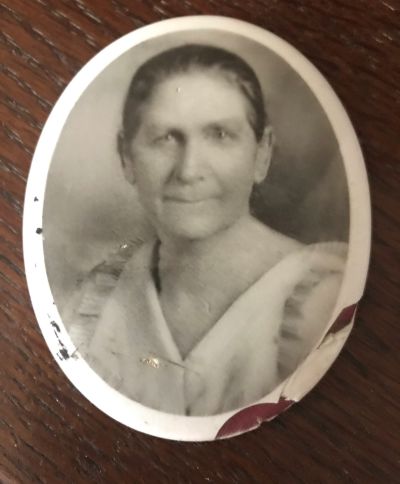
    The lady turned around and pulled a cookie tin from a file cabinet. She opened the lid and pulled out three cameos. One was a young soldier, the second was an old woman who didn’t look Italian, and the third was someone who looked like she could be related.


    She looked like my sister, and I remembered my grandpa saying my sister always reminded him of her. She’s got these blue eyes—bright, light blue. My mom had those eyes, and it’s a very rare recessive trait. In this black-and-white photo, you could tell that the eyes were light, so I took a picture of them. I sent the picture to my sister, and she said, “Where’d you find her?” And I said, “Is that her?” And she said, “Yes.”


    I said, “Well, I just left the archdiocese.” She said, “Go back.” I went back, and all three cameos were still lying out on the shelf on the counter. I grabbed my great-great-grandmother’s and I left.


    I had it remade because I knew retelling that story would be hard if I put that same cameo back on. I told my great aunt, who would be my grandfather’s sister, and she insisted on paying for a new cameo.


    We had a little ceremony with my great aunt and one of my cousins. My son, my niece, and my sister were there. We all went and put this thing back on with glue, and to this day, it’s still on there. It’s been there for almost 10 years.


    I brought the original cameo back to my house. I have my grandparents’ remains, so I put the cameo on the box of remains.


    Carlentini-Omaha-Association-USA--Inc----Sheri-Kanger-s-great-great-grandmother.jpg

    Sheri Kanger’s great-great-grandmother’s cameo

    Tell us how and why the Carlentini Omaha Association formed.

    I went to Carlentini with Ken in 2017, and our marriage was blessed in the mother church there. There was this instantaneous connection—just being in that city, feeling like these are my roots. I am half Italian and a quarter Carlentinese, but those are some strong roots!


    It was so inspiring to me. I had been a member of the Sons and Daughters of Italy. But when I returned, I became part of the Santa Lucia Festival organization and the American Italian Heritage Society.


    In 2018, Santa Lucia Festival’s members wanted to take a trip to Carlentini for the 400th anniversary of the celebration of Santa Lucia in 2021. I stood up at a meeting before I even talked to my husband, and I volunteered to put the whole trip together. People were excited, and at that point, 100 people wanted to go. But when I told them, “There’s a $500 deposit, and this is what the actual amount is,” it changed. So, roughly 50 of us planned to go to Italy in 2021.


    As I was putting this trip together, our mayor in Omaha was also working on a sister city relationship with France because Omaha Beach has that connection with Omaha, Nebraska. I thought, “There’s got to be something we can do with all the Italians I’ve grown up with.”


    So, I contacted the Omaha Sister City Association (OSCA). When I finally got a response and met with them, they told me certain requirements were involved. They didn’t think people in Omaha would be interested in having a sister city with Carlentini.


    I said, “I think you’re wrong about that. I just came back from there in 2017, and there are people here and there who would both be interested in formalizing this relationship because we’ve always had this sister bond.” I mean, even symbolically, in my own family, the three sisters who were separated from each other, cousins who have been separated across the world for generations.


    I met with a lady named Carmelita De LaGuardia, who has a similar background to mine. Once she found out I was putting this trip together for 2021, she said, “My family’s out there in Carlentini; they want to know who you are.” I told her my family history and that I was a Ciculla. She said, “I’m Ciculla, too. We’re related!”


    She and I decided to contact OSCA and set up a meeting. We met with them and shared information about the enclaves, the Italian population, and all of the things those people did to create the city as it is today.


    The person from OSCA looked at both of us and said, “Why haven’t Omaha and Carlentini already been sister cities? This is amazing information.” They wanted to know more, so I wrote and submitted the application in 2020.


    My husband was the deputy chief of police then and had cabinet meetings with the mayor of Omaha. Mayor Jean Stothert just happened to come across this application from OSCA, saying they wanted to establish a relationship between Omaha and Carlentini. And she said, “Why is Catania applying for a sister city when France is not solidified, yet?”


    My husband responded, “It’s Carlentini.” 


    The mayor asked, “How do you know?” And Ken responded, “My wife submitted the application for Carlentini to pursue the sister city connection.”


    She then said, “I’d like to go to Italy. This would be kind of a neat thing. Tell me more.”


    Our 2021 trip actually derailed because of COVID. The mayor then went up with my husband, me, and an OSCA representative in 2022. It was shortly after that that we formalized the “friendship agreement.” It’s like your engagement before your wedding ceremony, so to speak. In August, the formalization of Carlentini as a sister city will occur.


    Carlentini-Omaha-Association-USA--Inc----Mayor-Jean-Stothert.jpg
    Mayor Jean Stothert signs the Carlentini-Omaha sister city “friendship agreement,” while Carlentini Mayor Giuseppe Stefio simultaneously does the same.
     

    In 2020, when we were all in shutdown mode, we needed somebody on the other side in Carlentini who could also speak English and help us facilitate and get this moving. It just so happened that my travel guides had to pivot while in shutdown and were doing these live feeds from different cities and places. They ended up introducing the world to a travel guide named Eleanora Formica, who would be my travel guide.


    I contacted her on Messenger and said, “My family’s from Carlentini; this is their name.” She said, “I went to school with your younger cousin, Laura.”


    We started an instant friendship, teamed up with Carmelita, and started the Carlentini Omaha Association. We signed documents in Carlentini in October 2020. From there, our relationship was like a sisterhood, the three of us girls. We thought of all kinds of programs, projects, and events that could better strengthen that bond between our two cities moving forward. We’ve since had six different grade schools involved in pen pal programs. We’ve had three galas and have done all kinds of different things.


    On this end, Carmelita, three others, and I started the Sicula Italia Foundation to help fund programs we would do with Carlentini. Then, it took a different route. Some of us found that it would be easier to do individual projects.

    In November 2023, I got a call from an elementary school teacher and Eleanora in Carlentini. They wanted to do a physical exchange and bring elementary school children to Omaha for a week. I set up an itinerary and a place for them to stay.


    I did not have any funds. Since the Carlentini Omaha Association was actually in Carlentini, this was going to be a challenge to do on my own. I contacted Omaha Public Schools with the signage at the bottom saying Carlentini Omaha Association. They sent me a contract back with Carlentini Omaha Association at the top.


    I said, “I can’t do this with just my name, so I went ahead and formed Carlentini Omaha Association U.S.A. Incorporated. That’s how we were able to reach an agreement with the Omaha Public School system and have the kids from Carlentini come over.


    The kids loved being in Omaha for the week. They met kids of Carlentini descent, which was a big plus for them. They started new relationships and friendships.


    Two community events took place at the Sons and Daughters of Italy Hall, where they worked with me and hosted a potluck dinner one night and then a genealogy meeting another night with the kids. My husband helped me put together a big program with the Police Athletics for Community Engagement program (PACE). We had kids from Omaha who were of Carlentini descent playing with kids from Carlentini on a team called Carlentini Omaha Association, fully outfitted with soccer gear, playing against kids who were of primarily Hispanic descent with PACE, playing the game that’s universal to the world: soccer.


    Over 150 people attended this event. It’s just something that’s near and dear to my heart, and I want to continue strengthening that relationship.


    Carlentini-Omaha-Association-USA--Inc----Welcoming-Carlentini-kids.jpg
    Omaha kids welcome exchange students arriving from Carlentini.


    What do you hope to share with your community?

    I taught for 26 years and had a project in one of my classes where the kids had to show pictures of their families. I called it the “All About Me” project. Knowing who you are and where you come from is important, and diversity makes us understand and appreciate each other more. Those differences make us understand each other and not hide that we’re not all the same.


    Understanding different cultures and respecting, honoring, and continuing traditions is important. It’s also important for the people in Carlentini and for us to be able to help fund projects and continue to work with them.


    If you enjoyed this article, consider subscribing to my newsletter for more content and updates! 

  • Poggioreale in America: Connecting Descendants Through History, Heritage, and Hope

    Poggioreale in America: Connecting Descendants Through History, Heritage, and Hope

    When Sarah Campise Hallier’s father unexpectedly passed away in 2012, she realized she didn’t have much information about his side of the family or her Sicilian roots. It awakened a passion for genealogy, and in 2019, her research led her to a distant Texas cousin, Ross Todaro, Jr., who had recently co-founded a group called Poggioreale in America (PIA).


    Ross invited Sarah to a reunion in College Station, Texas, organized for people like her, descendants of Poggioreale, Sicily. There, she encountered 300 people who shared her connection to the Trapani Province town.


    Later that year, she traveled to Sicily on a Poggioreale in America-sponsored trip. Fifteen people stayed for nine nights in the 500-person town. Each day, the group was bused to a different Sicilian locale, allowing Sarah to see the island’s western side. She also saw the remains of her great-great-grandfather’s house at Poggioreale’s original site, now a ghost town.


    More than 200 people died in a 1968 Belice Valley earthquake. It decimated Poggioreale and forced the evacuation of about 4,000 residents. Some moved to a newly erected village just over two miles south. Others relocated elsewhere in Sicily. But many left Italy completely, heading to the United States and Australia.


    Thus began a second major wave of Poggiorealesi emigration, seven decades after the first. About 4 million Italians—most from the south and Sicily—arrived in the U.S. between 1890 and 1920. Many fled rural poverty after Italy’s Risorgimento; others followed family and job opportunities. The Poggioreale diaspora settled in New Orleans, Texas’s Brazos Valley, and, in the case of Sarah’s family, Fresno, California. 


    After that first reunion and Sicily visit, Ross and co-founder Tina Anderson asked Sarah to join the PIA team. She’s served on the board for five years and is currently the managing editor. It’s a natural fit for the writer and Appetito magazine associate editor. But Sarah wears many hats.


    In addition to managing the quarterly newsletter and helping oversee website and social media communications, she’s helped with reunions and the college scholarship fund. The group raised $15,000 in 2022 and 2023 for college students who are also descendants of Poggioreale.


    “The sense of community is important to me, especially with my dad not here anymore,” Sarah says.


    She continues to help grow the organization, hoping to strengthen the Poggiorealesi community across generations.


    Poggioreale-in-America---2022-Reunion-Sarah-Ross-Tina.jpg

    Sarah Campise Hallier with PIA co-founders Ross Todaro and the late Tina Anderson.

    Tell us more about Poggioreale’s history.

    The town itself was established in 1642, and we can trace my family back that far. In 1968, a devastating earthquake in Sicily affected Gibellina, Salaparuta, and Poggioreale.


    There’s a lot of controversy surrounding that earthquake. It was pretty devastating in Poggioreale. When we interviewed the people in the town who never left, they said the government came in and decided that the town was uninhabitable. So, the government established barracks at the foot of the hill.


    For the better part of 15 years, the families would sleep in the barracks at night, but during the day, they would travel back up to the town, go into their houses, cook, and just hang out in the piazza. There are still people in the town who lived through this and are still alive.


    One Poggioreale resident told me, “The concrete unions came in and built a new town at the base of the hill.” Many survivors of the earthquake still live in the new town, but the ghost town up on the hill is a reminder of the sadness from over 50 years ago.


    Some say the town probably could have been salvaged had it gotten into the right hands, but the government is now helping the town turn it into a tourist destination. They’ve started a little museum and renovations in some of the buildings so that tourists can visit safely.


    Poggioreale-in-America---Poggioreale-Antica.jpg

    Sarah Campise Hallier and her brother, Dr. John Campise, in Poggioreale Antica in front of the ruins of their great-great-grandfather Mariano Campisi’s birthplace. 


    What are PIA’s future plans?

    Poggioreale in America, Junior is a subdivision of PIA. They worked with the board to create the college scholarship program, and they’re trying to grow that right now. It’s been stagnant over the past year, but recent donations have sparked an interest in revamping the program for this coming year.


    A PIA 2023 calendar was sold to raise funds for the college scholarship program.


    What keeps you involved?

    I had my Italian citizenship recognized in 2021 through the San Francisco Consulate via the Italian Jure Sanguinis law. I’ve been an amateur genealogist for decades, learning it all from my mom. While I was growing up, I watched her traipsing through cemeteries—all of the stuff you did before the internet came around to find out your family history. So, the genealogical perspective is probably what I enjoy the most—being able to find your roots. I do a lot of work with expanding our family tree and helping others within the organization do that, too—just as a fun side project. But I just feel a connection to the part of it that brings us all together.


    Poggioreale-in-America---Henleys--Tusas--Maniscalco--Father-and-Sarah-Campise-Hallier.jpg

    Reunion organizers Marilyn and Jack Henley, Jack Anderson (husband of late President Tina Anderson), Anna and AJ Tusa (owners of Briquette Restaurant), Cav. Pietro Maniscalco from Australia, Father Rigoli (Pastor Our Lady of Guadalupe Catholic Church), and Sarah Campise Hallier at the 2025 PIA Reunion in New Orleans

    It’s absolutely amazing that thousands of people all over the United States came from this small town in Sicily. My daughter attends UT Austin. She was born and raised in California, and did a blind roommate pairing during her first year in college. In the first couple of weeks of being in her dorm, she found out that her roommate’s great-grandparents also came from Poggioreale. We’ve been trying to figure out if we are related or not.


    Little things like that make you think, “Wow, it’s pretty incredible,” and to just be able to get together… I’ve been able to meet first cousins I never knew I had.


    Poggioreale-in-America--Sarah-Campise-Hallier-s-Campise-cousins.jpg

    Sarah Campise Hallier’s Campise cousins at the 2023 PIA Reunion in Bryan, Texas


    If you enjoyed this article, consider subscribing to my newsletter for more content and updates!