Author: wp@codeaddicts.io

  • Beneath the Sicilian Stars Virtual Launch Party with Author Lindsay Marie Morris

    Beneath the Sicilian Stars Virtual Launch Party with Author Lindsay Marie Morris


    Thanks to all who joined me for the release of my newest novel, Beneath the Sicilian Stars (Storm Publishing, July 2025). I’m also so grateful for our party host, Catherine Maita. July 8’s party brought readers together from near and far (from across the United States to India!) to celebrate a tale of family, resilience, and the enduring ties that span an ocean and generations.

    Beneath the Sicilian Stars is my attempt to bring overlooked history to light and honor the resilience of ordinary people during extraordinary times. I believe these stories matter—not just to remember the past, but to remind us how fear can too easily overshadow compassion, and how immigrant communities have historically managed to endure even through the darkest times. Thank you for watching, for reading, and for supporting my journey.


    Click here to see a list of where and when you can catch my future appearances (many are virtual).

  • Keeping Traditions Alive: Inside Akron’s Sicilian-American Women’s Club

    Keeping Traditions Alive: Inside Akron’s Sicilian-American Women’s Club

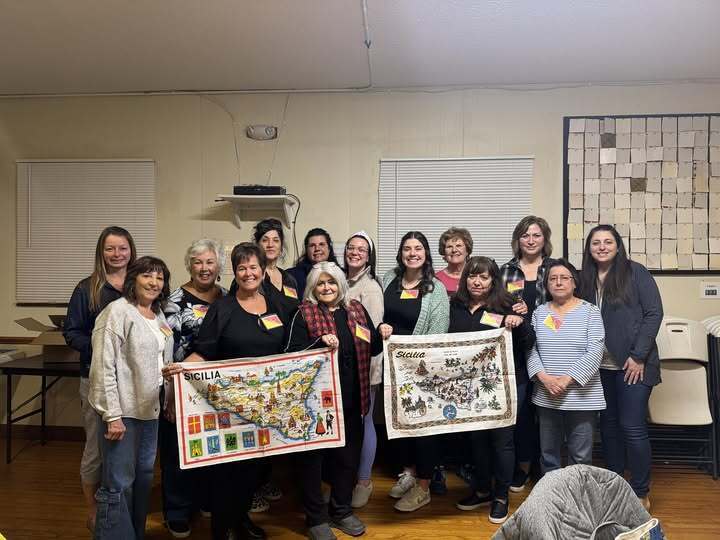
    Among the many Facebook Groups dedicated to Sicilian heritage, you’ll find only one Sicilian-American Women’s Club. With more than 3,600 online followers and about 60 active club members, the Akron, Ohio-based organization was founded in 1934 by a group of Sicilian immigrant women to preserve their cultural heritage and provide a community for those of Sicilian descent. Its motto—fraternity, charity, elevation, and discipline—is embodied by what President Vita Signorino Moore calls “strong-willed and dynamic women.” 


    Moore, who is Sicilian on both sides, with a mother who came to the U.S. as a child from Partanna and a father who arrived as an adult from Marsala, shared more about the club and its activities. She also spoke about how the organization aims to reach younger generations while carrying on traditions. And she expressed her hope for what members will take away.


    What were your reasons for joining the club?

    It gives me satisfaction to hold on to memories. There’s a lady there, and every time I see her, I get tears because she has my grandmother’s eyes. She’s so sweet, and I look at her, and I’m like, “This is my nonna!”


    It’s like, why not hang out with a group of ladies who remind you of your relatives? And they act like them. It’s comical in a way because they’ll say something familiar, or there’ll be a hand gesture or something.


    I want to preserve that tradition and history there. And why not have that? Everyone asks, “If you could bring someone back…” This is my way of reviving my childhood and memories by attending the meetings and experiencing the culture, people, and their dynamics. 


    What I enjoy, too, is that when people come, they’re always made to feel welcome. We usually introduce them and have them share where they’re from. And there’s always someone in the group—no matter what—who says, “Yes, I know someone from that area” or “I know exactly where it is.” 


    Some of them have never been to Sicily. It also gives them the gift of, “Oh, this is someone who actually may know or can tell me about my town that you’re not going to get from looking online or from a Facebook post or whatever.” You’re hearing it directly from someone.


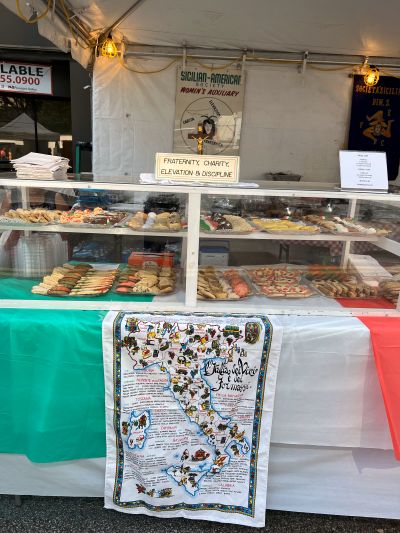
    Sicilian-American-Club-Women-s-Club-Summit-County-cookies.jpg 

    The club is passing its recipes and stories onto the next generation.


    What are some of your signature events and activities?

    On March 12, we had our St. Joseph’s dinner. We celebrated St. Joseph Day, which is a big event in Italy. Starting last year, we switched it up a little bit. We all bring in a covered dish, but we also make a donation.


    If you look at the authentic St. Joseph’s table, it’s a presentation of foods that you provide. But we bring canned goods and non-perishable items. One of the ladies is heavily involved with an area organization called Good Neighbors, so we filled a vehicle this year and last with canned food. We donate food to the local communities with our St. Joseph table.


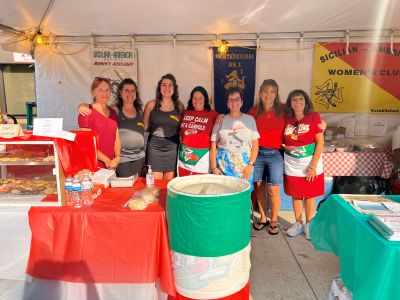
    Each month, we’ll have a theme depending on what’s happening. But the biggest event we all participate in is the Summit County Italian-American Festival, which is generally held in July in downtown Akron. We are known for our cookies. People come from everywhere, and they want our cookies. I would say each member donates anywhere from six to twenty dozen cookies. So we sell quite a few cookies and do pizza fritti and cannoli.


    We always have a Christmas party, we have a picnic, and we go on excursions. We’ve attended several events at the Italian American Museum of Cleveland.


    We’ve brought in speakers, an opera singer, a lady who sold chocolate—whatever interests someone. 


    Sicilian-American-Club-Women-s-Club-Summit-County-Italian-American-Festival.jpg
    The Sicilian-American Women’s Club brings cookies to the Summit County Italian-American Festival.


    Tell us about your famous cookbooks.

    When COVID was happening, I saw a Facebook post from someone who went to my high school with a picture of a cookbook. It was all beaten up. And he said, “The publisher is no longer publishing this. Is there anyone who knows anything about this group? I would love to have another copy.”


    Well, it just so happened that he graduated the year behind me. I contacted him and said, “You’re talking to the president. And yes, we’re aware of this cookbook.”

    It came out right when I was in college. There was a copy in my parents’ basement.


    He said, “I have some downtime. What if I reorganized it, and we print it?”


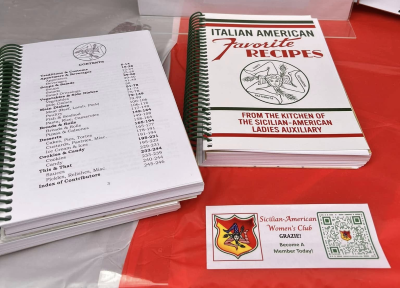
    So, during COVID, he did this, which is very gracious of him. He added an index showing the people who contributed to this cookbook, most of whom are now deceased. There are 300 to 400 recipes.


    It has been great for us because, during the pandemic, everyone else was stagnant for a year. We didn’t meet in person, but we were making money because we printed a thousand cookbooks, and they disappeared in a heartbeat. Everybody was buying them. We had porch pickups and everything else.


    We ordered another thousand and still have about 300 left. It was a great money-maker for us when everyone else was losing. It’s just the original recipes, but we beefed them up a bit and organized them better. 


    Sicilian-American-Club-Women-s-Club-cookbook.png

    The legendary club’s cookbook


    How are you reaching younger generations?

    I’ve succeeded in bringing my daughter on board, and she is now the recording secretary.


    At Christmas time, we have a party and invite guests and everything, but at the end, we do this bambina song; we’re singing a song and a rosary to Jesus. I remember the very first time she came there. I remember looking at her and seeing how that was something new for her. It’s bringing on those histories and things you wouldn’t necessarily know.


    The other thing is when we use the cookbook and make the cookies. My daughter looked in the cookbook and found one that made 13 dozen cookies. It would be the easiest recipe to make because then we wouldn’t have to make two or three batches. Between the two of us, we were trying to put this together (and these are recipes written years ago), and we’re trying to figure it out.


    It has been very rewarding to experience it with my daughter, instill it, and pass it on. I believe for a lot of the members, having the younger generation along with the older ones… They’re enjoying that. And they like that because—believe me—a lot of advice is provided in these group meetings! There’s a lot of openness and a lot of caring for the group. And I think the younger generation sees this. 


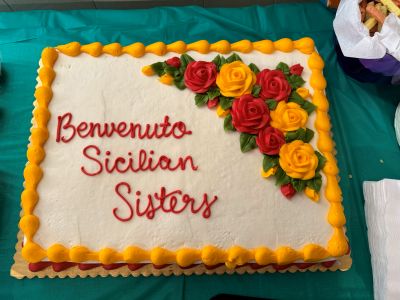
    Sicilian-American-Club-Women-s-Club-cake.jpg
    Each event is a celebration of Sicilian sisterhood.


    What do you hope members gain from their experience?

    I hope they continue to understand the group and further understand the culture, the reasons these people made the food, and the traditions they passed on. 


    If you enjoyed this article, consider subscribing to my newsletter for more content and updates!

  • Etched in Stone: Preserving Cleveland’s Italian Heritage at IAMCLE

    Etched in Stone: Preserving Cleveland’s Italian Heritage at IAMCLE

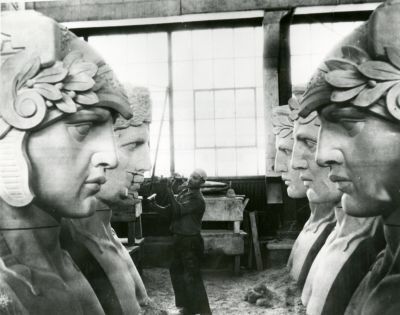
    An estimated 4 million Italians emigrated to the United States between 1880 and 1920, most seeking economic opportunities. About 25,000 of those people settled within seven neighborhoods of Cleveland. Many were scalpellini (stone carvers). Their hands and tools shaped many local buildings and structures, including the iconic Guardians of Traffic (the namesake of the city’s baseball team) on the Hope Memorial Bridge.

    Setting stories of Cleveland’s Italian heritage in stone is mission-critical for the Italian American Museum of Cleveland (IAMCLE). Museum Director Pamela Dorazio Dean leads the charge, serving as both the Director and Curator of Italian American History at the Western Reserve Historical Society.

    With a focus on “Faith, Family, and Ambition” in the Italian American experience, Pamela and her team showcase exhibits and offer events and educational programming, including Italian language and culture classes, as well as walking tours of Cleveland’s Little Italy, where the museum is located.

    In addition to sharing the stories of Cleveland’s Italian immigrants and the IAMCLE’s founding, Pamela provided further details about the museum’s history, events, offerings, and goals.


    What is the history of Italian immigration to Cleveland?

    Cleveland has a pretty sizable Italian community. We’re in the top 10 in terms of the number of people who still identify as having Italian heritage in Northeast Ohio.

    They came mostly from Southern Italy (south of Rome) and Sicily. And for Cleveland, a lot of them came from the regions of Abruzzo and Molise, which used to be one region until the 1960s, when Molise broke off. So a lot of the older Italians still say they’re from Abruzzo, but that’s only because the regions used to be one. Many of them were stone carvers or sculptors—scalpellini, as they call them in Italian. And a lot of them were general laborers looking for work because none was available in Italy. They could not improve their station in life. It was a hopeless situation. So, they left Italy and came to the United States.

    Some of them made money in the U.S. and then returned to Italy or sent money home, but the large majority stayed. In Cleveland, they initially settled in a neighborhood known as Big Italy. It was where the city center was, where the market district was located, where all the produce came through. It had been a Jewish community before the Italians moved in.

    As the Italians were coming in the 1880s, they found inexpensive housing near places where they could find work, and the Big Italy neighborhood provided those things. It wasn’t until around 1885 that the Little Italy community started to form.

    The area where Little Italy is now located was owned by the Cozad family, whose house is still standing just on the outskirts of Little Italy. They used the land for fruit orchards. They began selling off the land in the mid-1880s, and people began settling there. It became known as the East End of Cleveland. Then, when the Italians started coming in the late 1880s, it became known as the East End Italian Settlement. Eventually, it became known as Little Italy.


    Cleveland’s Little Italy

    Tell us the story of the Italian Museum of Cleveland’s founding and its role in the Italian community.

    The first museum in Little Italy was founded by a group of volunteers who lived in the neighborhood. They ran it from 1985 to 2007. It was all-volunteer, people concerned about preserving the history of the neighborhood, especially at a time when it was changing. A lot of the original Italian families had moved away. University Hospital and Case Western Reserve University are nearby and were buying up properties in the neighborhood.

    This museum was a way to keep the museum and the neighborhood grounded in the past. It provided a home for many of the families that used to live in the neighborhood. When they would return to the neighborhood, they could go there and see various photos of the neighborhood’s past, First Communion class photos, old buildings, and old friends.

    The two ladies who were running that museum, Lauretta Nardolillo and Eva Maesta, whom I met in 2007, were in their early eighties and said they needed to step away from the museum. No one wanted to pick up where they had left off. So, they donated all of the museum’s collection to the Western Reserve Historical Society, where I worked and am still working as a curator of Italian American history.

    I cataloged and organized all of the materials. When that museum closed, I realized there was a hole left in the neighborhood. People know it’s a historic neighborhood, and they know it’s an Italian neighborhood. But there was really nowhere for them to explore and understand what the neighborhood was about, who the people were who made it, and all the contributions they made to not only that neighborhood but to Northeast Ohio.

    I had been talking about it within the Italian community for a while, and I finally got funding from the Italian Sons and Daughters of America. Basil Russo, who lives here in Cleveland, is the national president of that organization. He agreed with me and thought my vision for a museum was exactly what the neighborhood needed, what the Italian-American community needed, and what the city of Cleveland needed to understand our contributions.

    Often, in our community, people fall back on the mafia stories. And while that is a part of our culture and part of who we are, it’s a very small percentage; less than 1% were involved in the mafia, but it gets 110% of the attention. So we wanted to emphasize the more positive aspects. The museum received funding in 2020. We didn’t open right away because of the pandemic, so we ended up having our grand opening in October of 2021.


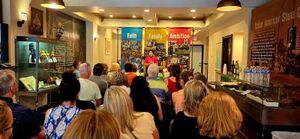
    The Italian American Museum of Cleveland focuses on “Faith, Family, and Ambition.”


    What kind of exhibits can visitors expect to see at IAMCLE?

    We’re very small. We only have about 900 square feet of exhibit space. It’s basically one long rectangle in an old building built in 1902 in the Little Italy neighborhood. It was a bank, and then it was home to Presti’s Bakery, which is still very popular in the neighborhood.

    Right now, we have an overview of Italians in Cleveland. It’s called “Faith, Family, and Ambition,” and it defines the values of Italian culture that helped the immigrants be successful and settle in the United States, specifically in Cleveland. We have photographs and some objects on display.

    We tell the story of the stone carvers, which is very important not only for settling the Little Italy neighborhood but because the Guardians of Traffic, who our baseball team is now named for, were carved in Little Italy by immigrant stone carvers from a town called Oratino, Italy, which is in the Molise region. A lot of people are unaware of that and that’s a great story., People are more interested in learning the history of those statues because our baseball team changed its name to the Guardians.

    Next month, we will be opening a national traveling exhibit on Louis Prima, the Sicilian singer who was born and raised in New Orleans and became very popular in the 1940s and 1950s. He was just an amazing musician, but quite a character. He helped popularize not only jazz in general, but also Italian music, because he often sang in Italian. That exhibit started in New Orleans. It was also at the Italian American Museum of Los Angeles and the American Jazz Museum in Kansas City. It will come to Cleveland and be here through the end of the year.

    Italian-American-Museum-of-Cleveland-exhibit.jpg
    IAMCLE visitors trace Cleveland’s Italian American history from emigration to Big Italy and Little Italy.

    What events and programming does the museum offer?

    We want the museum to be a community gathering space instead of just a place where people come and look at exhibits. We want to bring the community together and teach them about Italian and Italian American culture.

    One of our popular offerings is our Italian language classes. We partner with Dr. Paola Basile, who is a professor and head of the Italian Studies Program at Lake Erie College in Painesville, Ohio, and a native of Rome, Italy. She is an excellent teacher, and those classes always fill up. People are very interested in learning the Italian language.

    We also offer classes where we explore the different regions of Italy, again taught by Dr. Basile. There are 20 distinct regions in Italy, each with its own traditions, foods, and interesting UNESCO sites. Dr. Basile reviews all of the interesting information about the region. Then, at the end of class, we taste food and wine from the region, which is very popular. People love having some wine and a little taste of Italy after class.

    Another of our offerings is walking tours of the Little Italy neighborhood in the summer months, in partnership with an organization called Take a Hike. They offer historic tours throughout the city of Cleveland.

    What’s really cool about the Take a Hike tours is that they have actors playing characters from the neighborhood during the tour. For this year’s tour, we will have stone carver Domenicantonio Mastrangelo, who helped carve the Guardians of Traffic, and Rocky Colavito, an Italian-American baseball player who played for the Cleveland Indians in the 1950s. It’s going to be a really fun tour.

    We offer other events that pop up along the way. Sometimes, authors will contact me, somebody who has written a book about Italy or their Italian family history, and we’ll have author talks, meet-and-greets, and those kinds of things.

    What do you ultimately hope to share?

    I hope the museum will help people understand that our culture is more than food and the mafia. We’ve made significant contributions, as shown here in the city of Cleveland and the region of Northeast Ohio. I especially want people to learn about the impact that the stone carvers made in our city and region. That’s one story that has kind of gotten lost in history.

    Little Italy is adjacent to Lake View Cemetery, a beautiful park-like cemetery founded in the 1870s. Many of the monuments and headstones there were carved by Italian and Italian American stone carvers.

    Italians have also contributed to buildings in downtown Cleveland. So, there’s the artistic aspect of the Italian immigrants that a lot of people don’t think about immediately. They think about the greats like Michelangelo, but these ordinary Italians also had many artistic skills that they learned while they were in Italy and brought over with them.

    Italians have been influential in business and politics, the arts, and the construction industry. We want to bring that story of who we are and how Italians helped make Northeast Ohio a great region through our contributions to the forefront, and we do that at IAMCLE.


    If you enjoyed this article, consider subscribing to my newsletter for more content and updates!

  • The Partner Who Believed in My Novel Before I Did

    The Partner Who Believed in My Novel Before I Did

    Today, I celebrate 19 years of marriage to Matt Sirolly, my greatest champion, critique partner, and friend. Without Matt, The Last Letter from Sicily might never have been completed. I might never have received the two-book publishing deal that also brought Beneath the Sicilian Stars into the world.

    I started writing what would become my debut novel in a creative writing class, inspired by my grandparents’ story of being separated during World War II. After writing several thousand words, I shared with Matt that it might have the potential to become a novel. He agreed and encouraged me to keep going.

    I wrote on and off, but eventually, I set it aside. Who was I to think I could finish a novel, let alone publish one?


    Later, over our anniversary dinner, Matt asked, “How’s the novel coming along?” I shook my head. In my mind, there was no longer a novel. But he told me not to give up, and I didn’t want to let him down.


    So I picked it back up and returned to it in earnest. When I reached the part set in Cagliari, Sardinia—where my grandfather had been stationed—I struggled. I had never been there, and the scenes felt hard to bring to life. Matt suggested we travel to Sardinia and rent an apartment for a month. That trip turned out to be exactly what I needed. I finished the novel in a Marina District apartment, and we even toured World War II bunkers with a professor from the University of Cagliari.

    Of course, finishing a novel is only part of the journey. Publishing is another challenge. I queried a few dozen agents and received rejections because, as one agent put it, “No one’s buying World War II fiction.” I felt discouraged. Matt suggested we create our own press and publish it ourselves. I loved the idea.

    But then I discovered Storm Publishing, a UK-based traditional publisher that had just signed Lelita Baldock for her heartwarming World War II novel, The Baker’s Secret. I decided to pitch them.

    Within a week, I was able to share their enthusiastic reply with Matt. The commissioning editor loved the story’s angle, the Sicilian setting, and the fact that it was inspired by my grandparents.

    I had only one name in mind when I wrote the novel’s dedication.


    So today I raise a glass to Matt, on this special day and always. Everyone deserves someone like him. I just happened to be lucky enough that he chose me. I look forward to all the chapters ahead, knowing we are in this together.


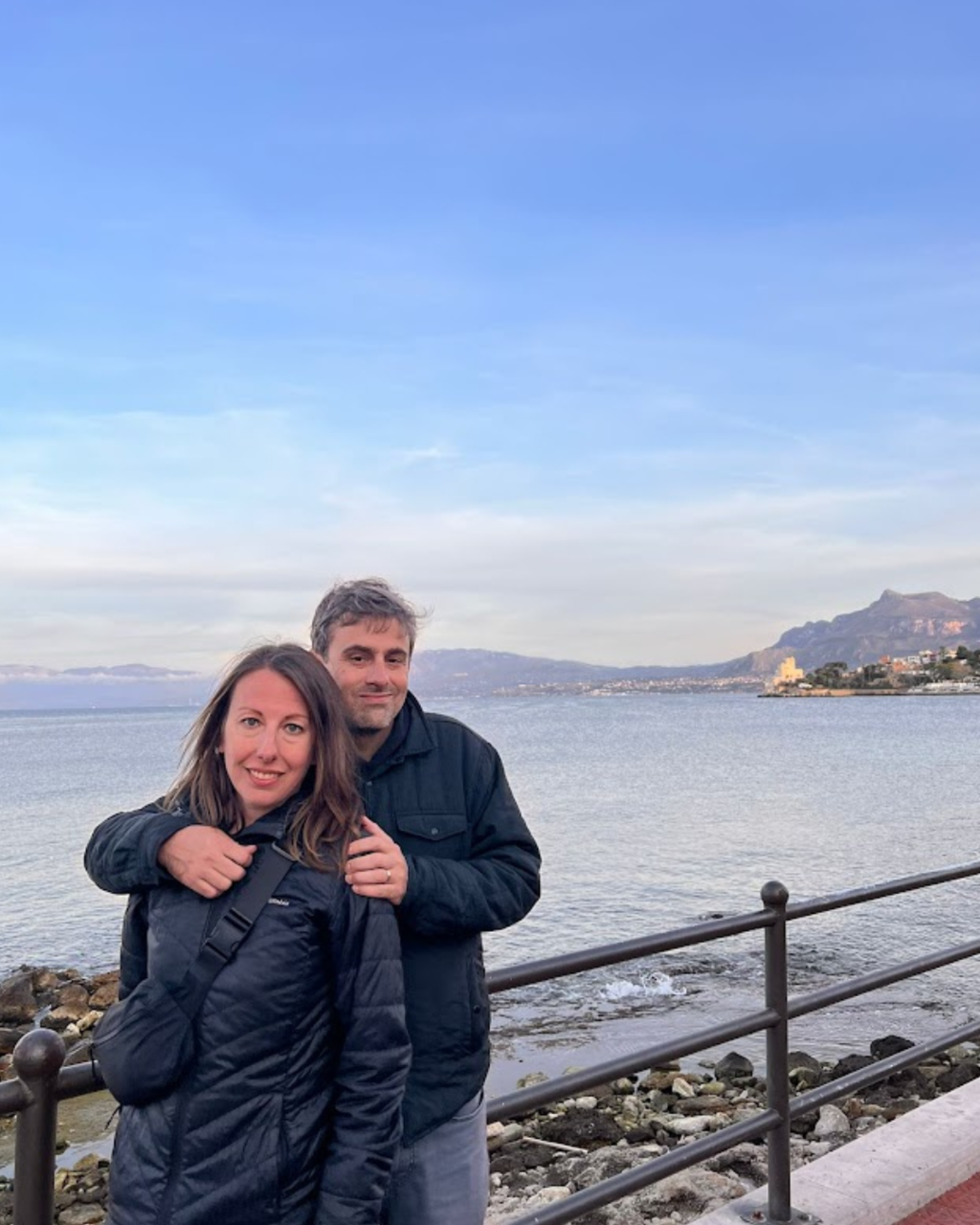
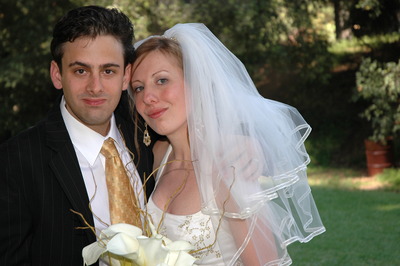
    Matt and Lindsay on their wedding day in Temescal Gateway Park, Pacific Palisades, California


    If you enjoyed this article, consider subscribing to my newsletter for more content and updates!

  • How The Sicilian School Is Rewriting the Renaissance Narrative: Anne Maltempi Illuminates Sicily’s Overlooked History

    How The Sicilian School Is Rewriting the Renaissance Narrative: Anne Maltempi Illuminates Sicily’s Overlooked History

    The narrative surrounding Renaissance Italy has long been centered in the north, thanks to the influence of the Medici family, Dante, Leonardo da Vinci, Michelangelo, Raphael, and Botticelli. Culturally rich Southern Italy and Sicily, however, have been left out of the conversation, and for far too long, argues Anne Maltempi, an assistant professor of history at the University of Mount Union and founder of Instagram’s @The_Sicilian_School. Through her teachings in the classroom and via social media reels, she invites students to appreciate the ways Renaissance Sicily stands apart, shaped by its Greek, Arab, Norman, and Spanish influences on the arts, sciences, and humanities.


    Sicily is a strong part of Dr. Maltempi’s identity as a daughter of Sicilian immigrants from Oliveri, within the Province of Messina. She grew up speaking Sicilian thanks to her closeness with her paternal grandparents, who had moved to the United States, and her maternal grandparents, with whom she often spent summers. But as she shared with me, it wasn’t initially part of her planned career path. 


    We discussed how the stars ultimately aligned, how and why she has embraced social media, her favorite chapters and heroes from Sicilian history, why Sicily has been overlooked, her latest project, and where she hopes to shed light.


    What inspired your career path?

    When I started graduate school, I wanted to study English literature because I was a big Shakespeare fan. So, my first master’s degree is in Shakespearean literature.


    I realized that through that program, I was called more to history. As a scholar, I liked the historical aspects of Shakespeare’s world almost more than I liked the literature itself, so I decided to pursue history.


    Since I was studying Shakespeare, the next logical step seemed to be to study Tudor-Stuart Britain and see what the kings and queens were doing.


    That field was saturated, and I was struggling to be inspired. So I said, “I know about the Renaissance, but I never hear anything about Sicily in the Renaissance. I’m Sicilian, and I wonder what was going on.”


    I found that nobody studies 15th and 16th-century Sicily much. There’s a lot of stuff about the Middle Ages and later in the modern period. So, I would say I was led to that partly because of how I grew up, having been to Sicily so many times and not really understanding its history or becoming familiar with it other than my own family history and linguistic ability.


    I grew up speaking Sicilian and later acquired Italian. That was a big bonus because it allowed me to further research that field. Sicilian scholars during the Renaissance did not speak Tuscan, like Dante in the Middle Ages; they spoke their own vernacular—a version of Sicilian. Picking up a 16th-century Sicilian document was really cool. Having language as a tool has been the bedrock that allowed me to continue on this career path.


    Tell us about the Sicilian School you’ve created on social media.

    I started the Sicilian School last July. I had been thinking about starting a social media page for a couple of years, partly because the job market for academics is not very great. I thought this would be an opportunity to teach my passion. I figured I may not have a classroom in the university, but maybe I can get one online and just build it myself.


    I talked to my husband, and he said, “Look, you really love your work. Why don’t you stop talking about a social media page and just do it? Maybe that’ll be a good creative outlet for you.”


    So I did my first reel at some point last July, which was a comparison of Michelangelo’s David to the genius of Palermo. I was expecting to get, I don’t know, five views. I wasn’t going into this with high hopes. Overnight, I got 500 views, and a bunch of people were commenting pretty positively. And that was all really validating.


    My husband was right. It did become a really fun, creative outlet for me because then I got to think about other reels I wanted to do and series I wanted to start, and it just kind of snowballed from there. 


    Which chapter of Sicilian history fascinates you most and why

    I will say my period, the 15th and 16th centuries, though it’s really a toss-up. The history of the Middle Ages is great, too, because it’s multicultural. There are pockets of Greek speakers, Arab speakers, and Jewish communities; of course, you have the Normans and the monarchs. You constantly have people coming in and out, so it’s really interesting from that aspect. 


    The Middle Ages period is also fascinating from a political and governance aspect because Roger II and Frederick II proposed progressive documents from our perspective. They had constitutional-style documents, and they were administratively trying to make a cohesive connection within their kingdoms. 


    We mistakenly think that women didn’t have much power in that system, but the power that they actually had is pretty impressive. So, I love the Middle Ages from that perspective.


    I also love my period, because I think it really serves as the other half of the narrative of the Renaissance. After all, there are still a lot of writers, artists, and culturally elevated people in society. But the process is developing in a slightly different way because Sicily’s not a city-state like Florence. It’s actually part of the Habsburg Empire in my period. And there’s some influence from Spain. It is decidedly less multicultural in that period because the Spanish essentially kicked out everybody who was not Catholic or forced them to convert.


    But what I like politically about my period is that you see the contention between the noble Sicilians and Imperial Spanish representatives. I like looking at that because for so many years in modern history, the idea that’s put forward is that Sicilians were this economically destitute, not very well educated, kind of people who were doomed to failure. When you look at the exchange between

    these political figures, you see that Sicilians had a lot more power and agency than we tend to think of in that period.


    We tend to think Florence was the big center of Renaissance culture, and that’s why it’s important and why we study it. But the truth is, the Renaissance was a big movement happening in different ways in different places, and Sicily offers one of those new perspectives into how Renaissance culture and thought developed in that period, which is not necessarily so centered on Florence.


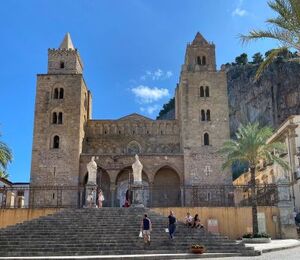
    The Cathedral of Cefalù in Sicily is a renowned example of the Norman-Arab-Byzantine architectural style.

    Why has Sicilian history been overlooked?

    That’s the million-dollar question right there. And there are a lot of reasons. To start, linguistically, it’s hard. Because you’re going to the ancient period, where you can actively find documents in Latin, Greek, and Arabic, and in the Middle Ages, you’re getting into early types of Italian vernacular, but really more so, early types of Sicilian vernacular. 


    I grew up speaking Sicilian dialect, but I grew up speaking a form of Sicilian dialect from the forties and fifties when my grandparents came. When I opened a 16th-century Sicilian book for the first time, I was like, “What am I looking at here? It’s like a modern English speaker reading Shakespeare for the first time or reading Chaucer for the first time.


    So linguistically, it’s a complicated area of the world. It’s also a complicated area of the world simply because of its history. It’s one of the most dominated islands in human history. So you’re going in relatively quick succession from the Greeks to the Romans, to the Arabs, to the Normans, to the Spanish. I mean, a bunch of people are there, and this is not to mention little groups like the Phoenicians, the Carthaginians, Vandals, Berbers, and everybody else showing up there. So that’s complicated.


    I also think there are historiographic tendencies. Scholars of history, especially in the 18th and 19th centuries, paid a lot of attention to Western Europe. And by Western Europe, I really mean North-Central Western Europe, places that were culturally mixed because of these proposed difficulties that I outlined previously, get ignored.


    Sicily, particularly in the scope of Italian history, is one of the only areas in Italy that was under Arabic rule for a significant amount of time. And I do think there is a racial aspect to it. A certain marginalization comes with studying the history of a place that may be considered uncivilized.


    I also think the Reformation played its part because there was a lot of Reformation propaganda against very Catholic spaces, particularly Spanish Catholic spaces, and Sicily was a Spanish territory. Sicily became this place where it’s hard to study, while having some topics that may be a bit controversial to study. So, for those reasons, I think Sicily gets marginalized.


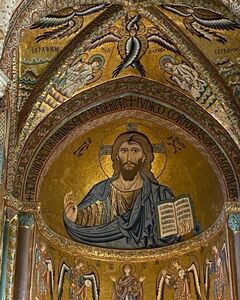
    View within the Cathedral of Cefalù

    You are writing a book. What can you tell us about it?

    It’s a work in progress. It is a historical text based on my dissertation. I’m basically looking at the work of five Sicilian intellectuals who were alive in the 15th and 16th centuries. I am reading their works and analyzing them to see how they defined themselves as Sicilian. Do they see themselves as Sicilian, or do they see themselves as Spanish because they’re part of the Spanish Empire? Or do they still see themselves as descendants of Normans, Romans, or Greeks? How do they define themselves?


    I think the process of identity formation highlights a lot of those missing spots in history that can be filled because you have to look at how they conceptualize their own history and what they feel is artistic and culturally viable, including island culture. How do they feel about living on an island? Do they define themselves by the fact that they’re living on an island?


    All of those things go into it. So, that’s what my book is about. Each chapter is going to be a different intellectual with their work, analyzing it specifically for those purposes, looking at whether they see themselves as Sicilian. And what, if so, did being Sicilian mean in the 15th and 16th centuries?


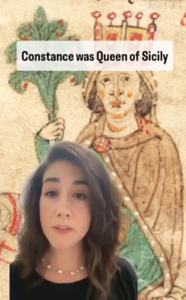
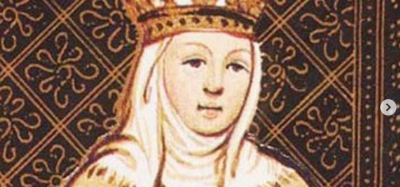
    Queen Constance, the mother of Frederick II, is a favorite.

    You’ve featured several women who stand out in Sicilian history. Who do you particularly admire?

    There are two that I really love, and one might be glaringly obvious. I love Queen Constance. I think I have four or five reels on her. She’s the mother of Frederick II, and she is one of the baddest ass women, I think, in medieval history. I just love her. I don’t know if half the stories about her are true. I hope to God that they are, I mean, maybe it’d be nice if she weren’t an assassin and killed her husband. I don’t know if she actually did. I’m pretty sure that’s just a conspiracy theory.


    I think the coolest thing about her, aside from the story that she had a baby at 40 in the middle of a town square, is that she was Sicilian. She loved Sicily and retained rulership of Sicily even after marrying the Holy Roman Emperor.


    Now granted, her husband didn’t really care so much about ruling Sicily. He just wanted the benefits of being married to the Queen of Sicily. But who cares about that? She said, “I’m going to make the laws here, and you just sign off on them.” And that’s what happened.


    It also kept her constituents happy because the Holy Roman Emperor had created some contention by marrying her. A lot of people in Sicily were concerned that they would lose their rights to the Holy Roman Empire. Her maintaining rulership of Sicily actually quelled quite a few rebellions because they said, “OK, so our queen is still our queen, and she’s still going to do stuff for us.” And that made a big difference.


    She knew she wasn’t stupid, and he knew that, too. He wasn’t stupid either. It was also politically beneficial for him, but I still think that’s pretty cool.


    Adelaide del Vasto, mother of Roger II
     

    One of the other women I really like is Adelaide del Vasto. She was the mother of Roger II. And we don’t know as much about her as Constance because she was illiterate. So, the sources we have from her are dictated. But she was a Lombard, originally the Lombard Princess, but really fell in love with Sicily and ended up staying there the last few years of her life. She actually left most of her wealth to a monastery in Sicily, where she ended up spending her last few years.


    I’d like to learn a little bit more about her. I feel like there’s something more there that I just haven’t been able to find yet. So that’s kind of my secondary project. After I finish my first book, I want to look more into her. She’s just really intriguing and fascinating to me. So I’m going to see what I can find.


    What do you hope to share with your students and audience?

    Minimally, I hope they enjoy what they’re seeing, and through my work, recognize that there are a lot of places in the world and that all of those places have a culture, a significant contribution to make to broader society.


    I want them to see that different people had different things to say, that all of those things are important, and that they provide something relevant to the world we live in now.


    If you enjoyed this article, consider subscribing to my newsletter for more content and updates!

  • Branded as ‘Enemy Aliens’: Unearthing the Hidden Struggles of Italian-American Fishermen During WWII

    Branded as ‘Enemy Aliens’: Unearthing the Hidden Struggles of Italian-American Fishermen During WWII

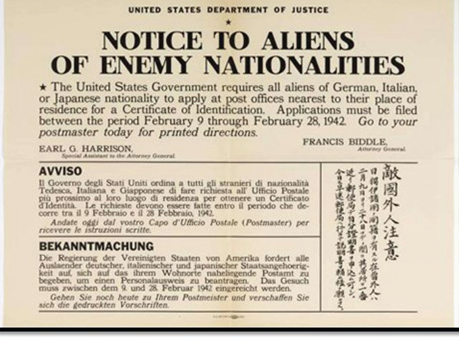
    The first week of December 1941 brought fear and uncertainty for Italian immigrants in the United States. Nearly 600,000 were labeled “enemy aliens,” kicking off a period of restrictions: forced registration, curfews, home searches, travel bans, and even internment. While Beneath the Sicilian Stars portrays one family’s struggle in California, fishermen on the East Coast faced similarly devastating disruptions, many of which remain untold.

    Maria “Mia” Millefoglie discovered this darker chapter of American World War II history while delving into family history for her manuscript, and as a contributing author to Our People Our Stories, a collection of over 80 stories, poems, vignettes, and photos celebrating Gloucester, Massachusetts’ history and the resilient individuals who call Gloucester home.

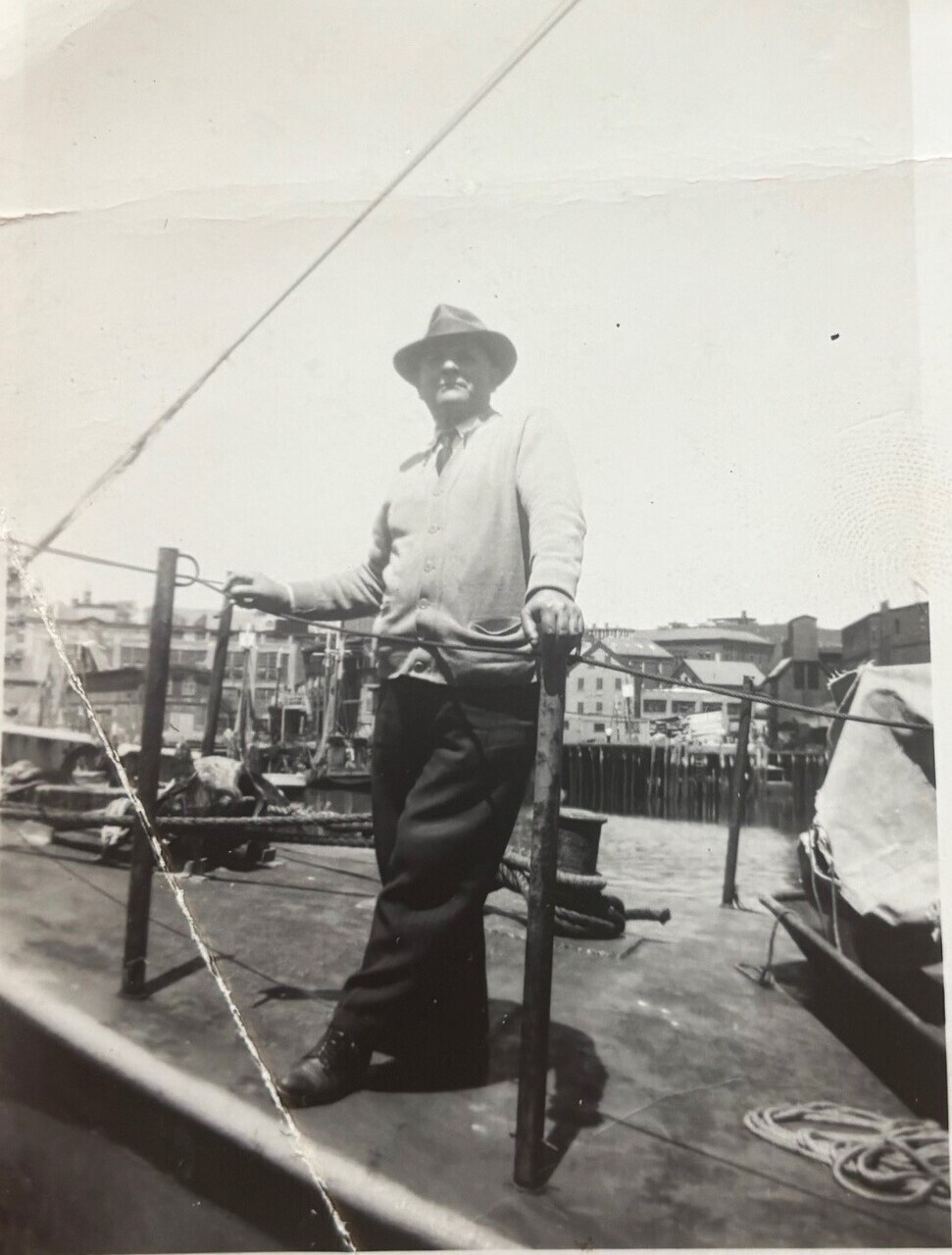
    Mia’s mother had recounted life in war-town Sicily, the bombs, the poverty, and how she was forced to beg for bread. Her grandfathers were banned from fishing commercially on Gloucester’s shores and could no longer send money back to their families. Other relatives recounted stories of families selling mattresses and jewelry for food. These stories prompted Mia to understand why. 


    That quest for knowledge led her down what she calls a rabbit hole, eventually culminating in Branded: Enemy Aliens in Gloucester, a three-part storytelling series partly funded by Awesome Gloucester and hosted by Down the Fort: A Documentary and Archive Project.


    Through her research, Mia learned that President Franklin D. Roosevelt’s Proclamation No. 2527 branded her Sicilian grandfathers, Filippo Millefoglie and Pietro Favazza, as “enemy aliens.” What’s more, Roosevelt’s Executive Order 8970 established several Defensive Sea Areas off the coasts of the continental U.S., including areas in Maine, New Hampshire, Massachusetts, and California. Fishermen found themselves barred from key fishing zones and coastal ports, designated as restricted areas for national security. Fishermen who were declared enemy aliens were barred from fishing and banned from the waterfront.


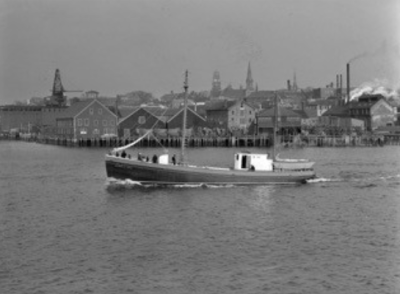
    The federal government also requisitioned (or, in some cases, confiscated) fishing boats, either retrofitting them for military use or prohibiting their operation entirely. These restrictions effectively stripped many Italian immigrant fishermen of their livelihoods. Curfews and other limitations made it even more difficult for families to find alternative employment, exacerbating their financial hardships.


    Mia shared more about her project, its inspiration and goals, the challenges she has faced, and the community response.


    What inspired Branded as “Enemy Aliens”?

    Both of my grandfathers were branded enemy aliens during World War II. They were Sicilian immigrant fishermen who were caught in the political turmoil. Having no knowledge of this proclamation, I never asked about their experiences. One day, I remember telling my grandfather Filippo that I was going out to California. His eyes twinkled, and he said, “Ah, California, I want you to go to San Francisco.”


    He named the street and said, “I used to have a fruit cart, and I used to shine the apples for pretty ladies.”


    I was in my twenties then, and just thought, “OK. My grandfather liked pretty ladies,” and I dismissed it. 


    Later, I tracked the impact of the Proclamation and realized that after he couldn’t fish in Gloucester, he went to California, where he sold fruit from a vendor’s cart. So there was your pretty lady story.

    I started piecing things together. The mystery of what my grandfathers did was intriguing to me. How did they make a living when they were banned from the waterfront? And they were banned from travel.

    I haven’t figured out how my grandfather arrived in California yet, nor how he managed to find work. But he managed, and during that time, my family, including their children, my father, my mother, and the grandmothers, were in Sicily during World War II. So the families were separated, straddling two homelands.


    It was really tough to survive. They had been barely surviving on fishermen’s salaries, and now couldn’t send money over to Sicily. So, it was a personal connection, and exploring just how they survived made me realize their resilience.


    Jennie & Lucia in Harbor Cove, Gloucester, MA, 1937. The fishing boat was requisitioned during World War II.
    Photograph by John C. Adams. Courtesy of the Cape Ann Museum Library & Archives, Gloucester, MA.

    Describe the project.

    This will be a three-part series. I have just completed part two, and we’ll be working on part three. The work involves interviewing family members who have recollections of family stories of World War II in Gloucester, researching archives, and collecting photographs.


    I hope to illuminate the impact of the Enemy Aliens Act on the families of fishermen in Gloucester, Massachusetts, and in Terrasini, Sicily. Today, I’m interviewing the grandchildren, who share their memories of their grandparents. Time is of the essence because there aren’t many of those people left. I’m delving deeply into these family histories.


    What am I trying to illuminate? One, it’s very timely today. There are lessons to be learned when we apply these types of restrictions, if you will, on a selected group of people. Today, the words “Enemy Alien” have been resurrected in our administration as part of our national immigrant policy. Debates continue on due process and what constitutes a national risk.


    During World War II, it is arguable whether there was due process or a registration process, but it was certainly a trying time. People were certainly interned, isolated, prosecuted, and unfairly restricted.


    There was also loyalty and allegiance. Some of these immigrant families had children fighting in the service. So I’m also trying to shed light on what it was like for a mother who had one son labeled as an enemy alien, and another was serving the country. What conflicts did this cause among families? In essence, I want to capture the stories of conflict, loyalty, and allegiance in this relatively undiscovered history.


    What challenges have you faced?

    The challenge is really finding people who have recollections. And I feel an urgency to this work because I’m relying primarily on grandchildren. I actually do have two fishermen that I’m talking to who were closer to the source. Finding people who have experienced this period is the biggest challenge, along with navigating archives and records.


    Through the U.S. Navy administration, I’m attempting to locate the list of all the boats that were requisitioned, their retrofitted details, and the dates and methods of their return. So that’s a challenge. I have tracked down several boats, and their owners are featured in the stories.


    In many ways, the vessels become characters. In families of fishermen, the boat is a loved family member.


    I’m also investigating what happened in the harbors. We had U-boats in the harbor, and I just learned from family members that U-boats destroyed two fishing boats in Gloucester. 


    Have you encountered any surprises or particularly moving discoveries?

    I was surprised and relieved to learn that the U-boats that destroyed the two Gloucester fishing boats out at sea allowed the men to get on dories. 


    Perhaps, the U-boat captains believed they had issued a death sentence, underestimating the strength of these men. They were out at fishing grounds, and their livelihood was destroyed. And then they were at the mercy of the sea in a dory, where they rowed to safety all the way to Maine. The men rowed for 36 hours in an attempt to survive and find shelter.  


    I’m thinking, “Look at the resilience and the courage of some of these people.” I found that to be truly moving.


    I am reading excerpts from newspapers about the role of women. They supported the war through fundraisers, purchasing Navy bonds, and forming societies for peace. These stories genuinely touch me. 


    What has been the response thus far?

    The first response was, “Oh my goodness, Alien Enemies Act. That’s exactly what is happening today.”


    When I wrote the first series, the Enemy Alien Act was not in our vocabulary. Then, the news brings out instances of searches, detention, and deportation of illegal immigrants. We begin learning about this Act, which had previously been used by presidents only in times of war. For this series, I don’t intend to enter into the political arena, but I felt it necessary to acknowledge the Act for our readers.


    I have particularly enjoyed readers sending me photographs of fishing boats, family members, wedding photographs, and more!  It felt as if they were going through their family archives, saying, “Oh, this was my grandmother and grandfather during the war. And here they lived in the fort, and here they were restricted.” They were delving back into their own family histories and archives, sharing little snippets. I loved all of this. 


    I think it’s awakened people. We’re trying to say, “Listen, this is important history. We’re trying to let you know what your stories are; send us pictures, etc.”


    There has been a positive response. It’s been just gratifying for me to hear people come forward. That’s been great.


    Looking back, I’m more in awe of my family and all the immigrants who came to this country as I explore this history, and this is just another piece that builds on it. It is an incredible story of resilience, isn’t it?


    If you enjoyed this article, consider subscribing to my newsletter for more content and updates!

  • Preserving Monterey’s Italian Fishing Legacy: The Italian Heritage Society’s Mission to Honor a Storied Past

    Preserving Monterey’s Italian Fishing Legacy: The Italian Heritage Society’s Mission to Honor a Storied Past

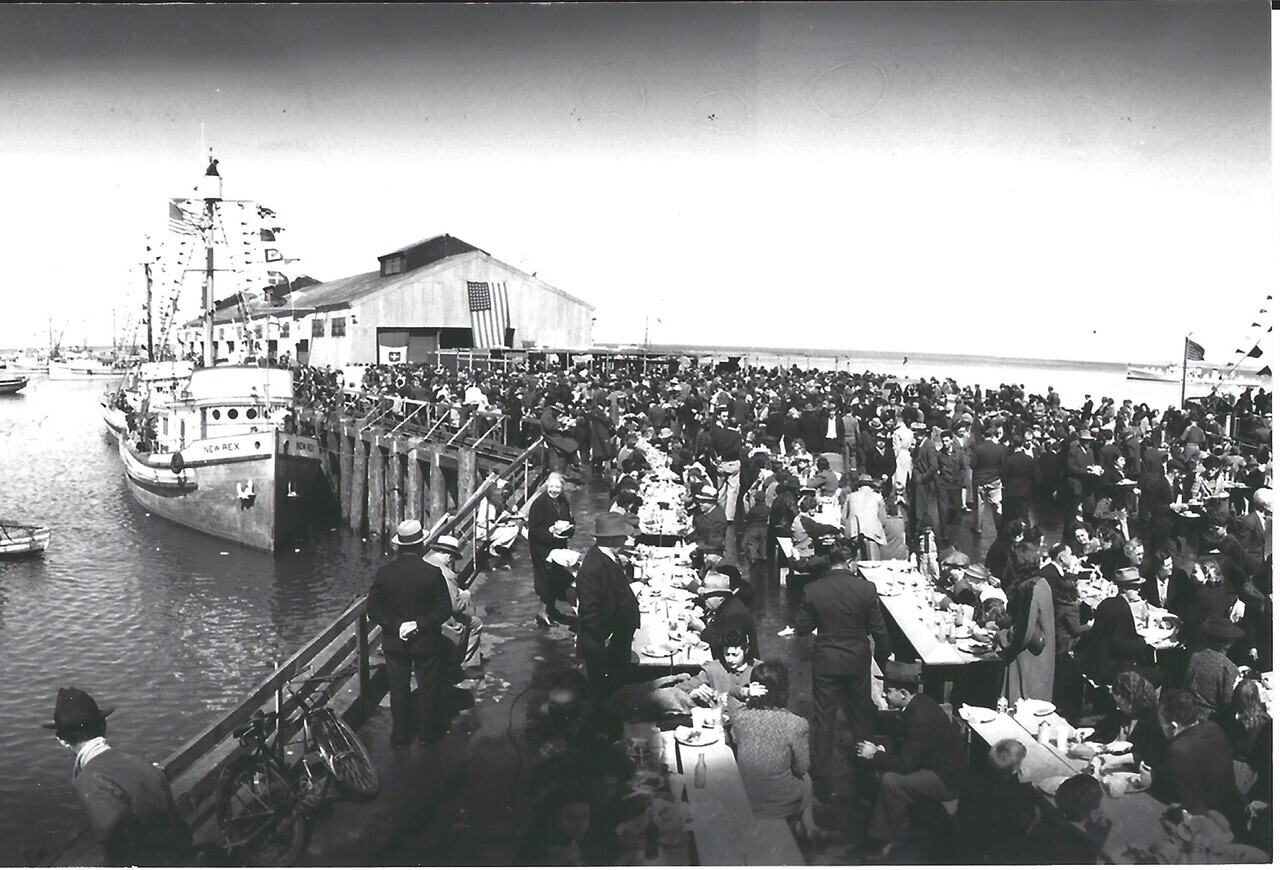
    Known for its now-defunct sardine canneries that inspired John Steinbeck’s Cannery Row, Monterey, California, has a rich history as a fishing community. Communities have fished the area for thousands of years, with contributions spanning from indigenous communities to Portuguese, Chinese, Japanese, and Italian (primarily Sicilian) fishermen. The latter of whom are celebrated by the Italian Heritage Society of the Monterey Peninsula.

    Founded in 1975 and currently led by President AnnaMarie Della Sala Stanton, the organization aims to honor and preserve the stories, traditions, and culture of Italian families who immigrated to the Monterey Peninsula and Central Coast of California more than a century ago.


    The Italian Heritage Society has published three books celebrating local Italian American history, culture, and community contributions: Italian Fishing Families of Monterey, Italian Fishing Families of Monterey (second edition), and Italian Americans—We Don’t Just Fish! 


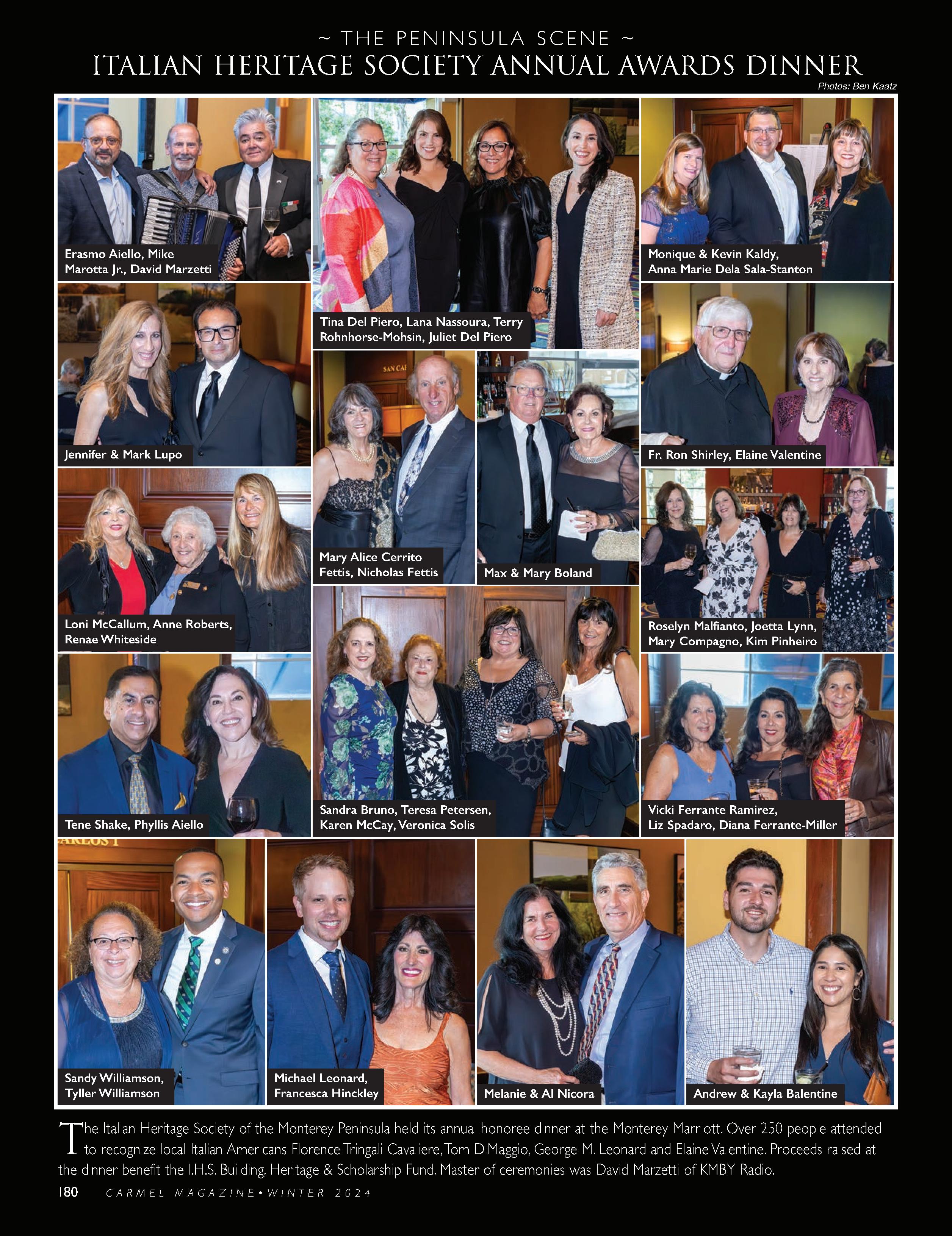
    Since 2002, the organization has recognized notable individuals connected to Monterey’s Italian Community at its annual Honoree Dinner fundraiser. In the past four years, the group has awarded $25,000 in scholarships.
     

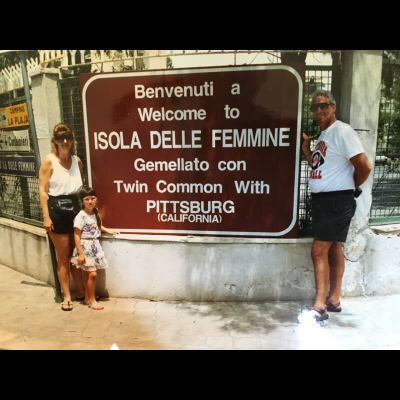
    Recognizing the city’s deep connection with the Sicilian community of Isola delle Femmine, from which many early Italian Monterey residents emigrated, Italian Heritage Society members Gasper Cardinale, Peter Coniglio, Peter Davi, and Sal Ferrante were instrumental in establishing a sister-city relationship between the two locales in 2017.


    In December 2023, the organization launched a joint effort with the Monterey History and Art Association to present a display titled “Bounty of the Sea” at the city’s Stanton Center. The exhibit presents stories, photographs, and fishing paraphernalia gathered from various groups that have fished in Monterey Bay throughout its history. 


    I had a chance to speak with Mike Ventimiglia, the organization’s vice president and webmaster, who shared more about Monterey’s past and Italian contributions.


    How and why did the organization start?

    The idea behind it was, and still is today, to preserve the local history of the fishing industry in Monterey. We have written three books about the history, capturing the fishing industry and the people who fished in the fishing industry; we went beyond that with the last book we published, We Just Don’t Fish! It’s taking the people whose parents had ties to the fishing industry that, as the fishing industry became depleted, had ventured off into different professional organizations that still help the Italian community, the largest community in Monterey then.

    The Italians realized they had to get involved in the community if they were to make changes. They felt it was very important to get involved with politics and change the course, which they did and changed for the better.


    The Italian community’s predominance in Monterey went from the early 1900s to probably the 1960s and early 1970s. And then it started changing. Different people got elected to office. The Italians weren’t on the city council, so it just started diminishing. We don’t want to lose the history behind what the Italian community did for the city of Monterey.


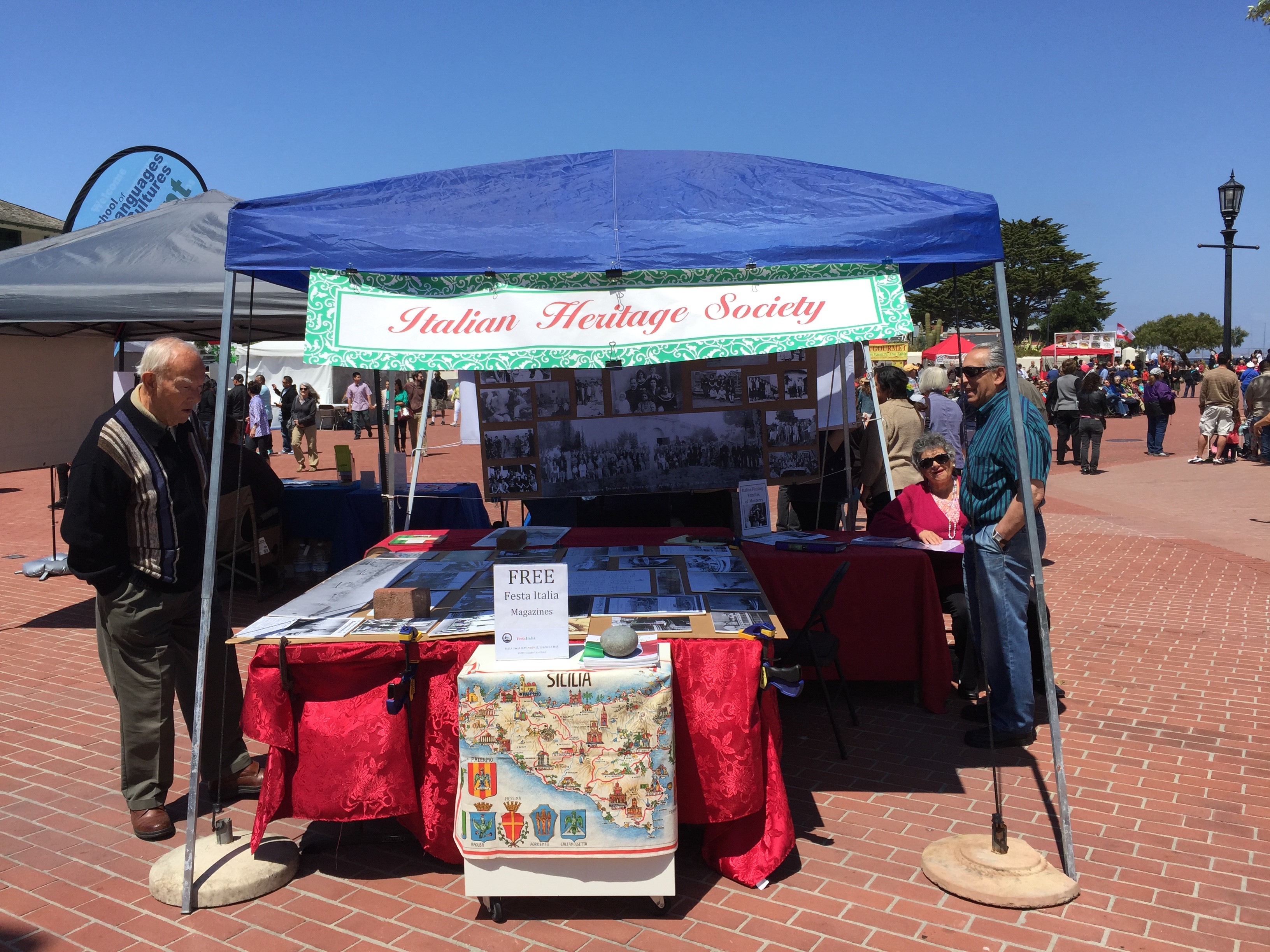
    Monterey-Festa-Italia.jpg
    The Italian Heritage Society at the three-day Monterey Fisherman’s Festival.

    Tell us about Monterey’s connection to Isola delle Femmine.

    My great-grandfather came from there, and then they left because of the hardships there at that point in time. While doing my genealogy, I realized I had six uncles who came here, and I found out more about them. But I also had two aunts back there who never came. Their father migrated to Martinez, where other Sicilians came at that time. They used to fish the Martinez Straits in the Sacramento River, and many of them came into what they called Black Diamond (Pittsburg, California, today) at New York Landing.


    Before the Sicilians, the only people who really fished in Monterey were the Chinese and the Japanese. They mostly did shellfish, and salmon was a big thing then. But salmon gave way to learning about fishing for sardines. 


    In about 1905, they started fishing sardines in Monterey. Frank E. Booth was the main cannery owner at the time, and he called on a man named Pietro Ferrante for his expertise in fishing. Pietro realized they were using the wrong fishing nets. They weren’t using a lampara net, which is a close-fitted net. And so he recommended and brought forth what was a really small net compared to the gill net they were using. And they started getting more of an abundance of fish. Booth transitioned from doing salmon to canning sardines, which started the escalation of “How do we get more people here?”


    So, Pietro Ferrante called his friends in Martinez and Pittsburg and told them they needed fishing in Monterey. People in that area were used to fishing off the coast of Africa.


    Word got out that there was an abundance in Monterey, and people started migrating here. They’d send notes back to their family members and friends in Sicily. And they started migrating because they had an opportunity here.
     

    They felt quite at home when they came to Monterey because it reminded them of their old country. It just continued to prosper and went through generations of different types of boats they used and canneries.


    Reading the history of women working at the canneries in Carol Lynn McKibben’s Beyond Cannery Row, Sicilian Women Immigration, and Community in Monterey 1915-1999 was quite an eye-opener for me. Many of my aunts worked on that, and she interviewed many of them, allowing me to see some things that I never knew about.


    Women were the backbone of the Italian fishing industry because they were the ones running the households while the men were out fishing. They were the ones that basically, in the future years, were making investments in property as canneries closed and the fish industry started depleting. So they were not only doing the canning but also taking care of the household because the husbands were gone all the time.


    Monterey-2024-Honoree-Dinner-Photo.jpg


    How can the community get involved?

    We’re always looking for members and community support. We get a lot of that during our fundraisers and when the community comes out to honor the four individuals we nominate to attend the annual dinner.


    The support of the Italian community has fallen to a certain degree. We used to have a lot of community involvement when we were involved with the city and its politics, including the mayors and city council members, as well as many individuals serving on various city boards. That has given way to the modernization and the different needs of people in various sectors living here on the peninsula.


    There are people who can’t afford to live here, but they want to. So the direction has gone towards other things, like the tourist industry. Monterey’s tourism is one of the biggest fundraisers they have. And then the events that have come into play here. A lot of city direction is geared towards that, but we always look for their support. 


    If you enjoyed this article, consider subscribing to my newsletter for more content and updates! 

  • Documentary Uncovers Era When Italians Were Deemed ‘Potentially Dangerous’

    Documentary Uncovers Era When Italians Were Deemed ‘Potentially Dangerous’

    While researching my first novel, The Last Letter from Sicily, I stumbled on the book Una Storia Segreta by Lawrence DiStasi, from which I learned about government restrictions and actions during World War II that targeted some 600,000 Italians, so-called enemy aliens who were not yet American citizens. Many were placed under curfew, and some were banned from their workplaces. But what I found most jarring was the fact that about 10,000 Italian people were evacuated from their homes in California alone, and hundreds of Italian men were rounded up nationwide and placed in internment camps.


    Those stark statistics inspired my second novel, Beneath the Sicilian Stars. I fell down a research rabbit hole, where I discovered the documentary film Potentially Dangerous, produced by Noah Readhead, Zach Baliva, and Naomi Baliva, which sheds light on this hidden history through interviews with historians and individuals with families directly affected by evacuation and internment experiences. 


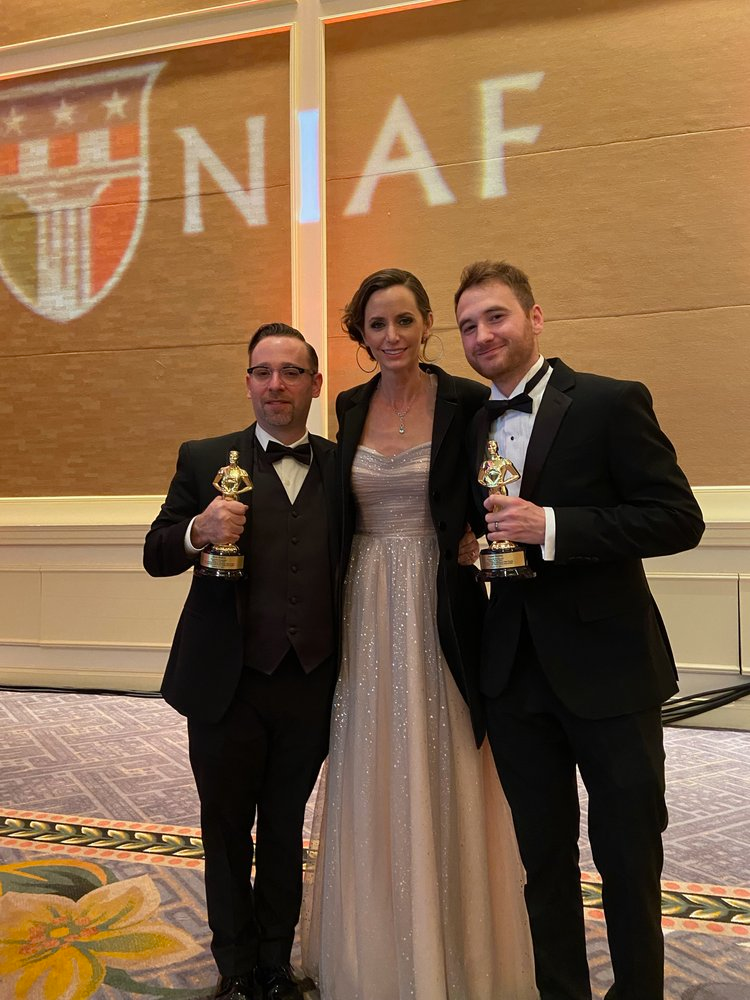
    I spoke with Zach, who also served as the director, about the film. He shared how the documentary started with an entry to the Russo Brothers Italian American Film Forum, an annual fellowship opportunity sponsored by The Italian Sons and Daughters of America, AGBO, and The National Italian American Foundation, which supports projects that tell original Italian American stories. 


    The film would win the 2021 award, among other prizes and distinctions. And actor John Turturro signed on as executive producer. You can catch Potentially Dangerous on PBS. (Check your local listings for PBS member stations.) It’s also available on DVD and streaming


    What inspired the making of Potentially Dangerous?

    I learned about the Russo Brothers Italian American Film Forum shortly before the deadline in 2020. I wanted to enter something because I’ve worked mainly in narrative filmmaking, but I’ve also worked as a journalist and a freelance writer. So, documentary is kind of a natural space for that combination. The problem was I didn’t have a topic, and the deadline for the film forum was approaching. I thought, “I’ll fill out an application, and through the process, I’ll get to know the people involved. They’ll reject my application this year, but next year, I’ll be prepared.”

    I needed a story, so I Googled “unknown Italian American story” or something. When you do that, the first search results are Larry DiStasi’s work on this topic because one of his books (Una Storia Segreta) translates to an unknown story or a secret history.


    I went through dual citizenship, and my family is Italian American. I had never heard of any of this before. And so, really quickly, I got interested in it. 


    Oftentimes, you find a story, and it’s already been done, or there’s already a novel, or there’s already a documentary, or whatever. So, usually, when I contact people, they’re like, “Oh, somebody tried to do this already, and it didn’t work.” And with this, it was the opposite.


    When I contacted Larry, he said, “This has been my life’s work, and I would kill for somebody to make a documentary about this. Please do; I’ll turn over all my research and connect you with all the people.”


    I would have had nothing if Larry had not been involved or receptive or hadn’t primed the pump by doing all his research. But I just contacted him at the right time. And so he was very, very receptive. 


    As I was going through the research with him, I started to realize this was something I had to be involved in. And primarily when I realized that there were people detained and held within Ellis Island, that was kind of the clincher for me because I remember going to New York as a young child, and you hear, “This is where our family came through.” And just to realize that not many years later, these same people who saw this as a beacon of hope and freedom were held against their will in the same facility, to me was just this fascinating juxtaposition.


    As I started doing more work, people were super receptive to being involved, and it took on a life of its own. We ended up winning the Russo Brothers Italian American Film Forum and got funded.

    It was just being in the right place at the right time. And lots of credit to Larry, who is really the champion of this cause. And if it wasn’t for him doing a lot of the work over the years… He put people in a position where they were more receptive to speaking to me.


    I know that when he first started interviewing people, many didn’t want to participate. And so 15 years later, when I came along, they were like, “Alright, we’ve started to tell this story, and now we want to see how far we can take it.”
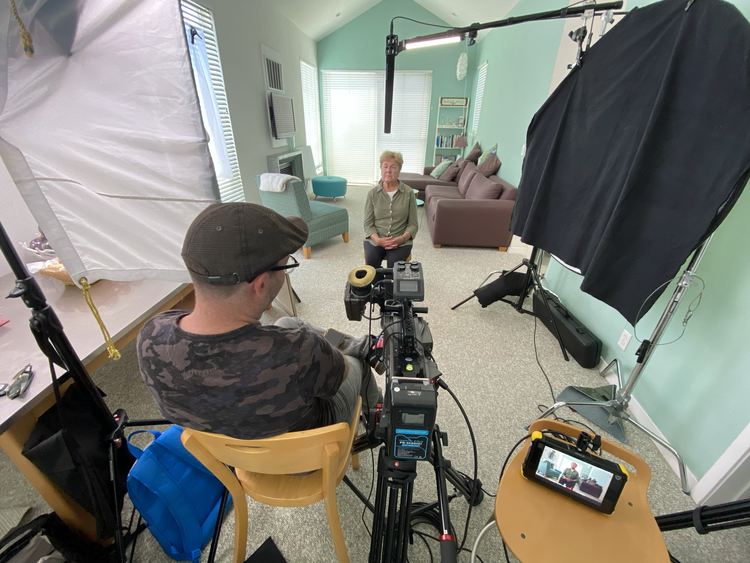
     

    Potentially-Dangerous-interview.png

    Zach interviewed several individuals about their family’s experiences during World War II.

    How did you approach the sensitivities of the story?

    Larry had done a lot of hard work on that, but it was a weird combination of dynamics. I had to move quickly because we had a deadline. And if you didn’t hit that deadline, which was five months during COVID with an $8,000 grant, you had to pay that money back. So I was moving very quickly, but one of the most important things to do was to build trust and get to know these people, so they want to tell you these very traumatic things that happened to them 80 years ago. You can’t just fly in there and say, “Alright, the camera’s on. Talk.”


    There was one very elderly woman whom I spoke to first. She was, I think, in her upper nineties, and she’s the only person who refused to participate. She said she didn’t want to appear on camera because she was insecure about her appearance. That was a little bit of an excuse. She had this really compelling story. I think she lived in a house near Pittsburg, California, with all these other people and was the one to help teach them English.


    I worked with her two or three different times to try to convince her, saying, “We won’t even put you on camera; it’ll just be audio-only for research purposes.” She was the only person who wouldn’t do it, and it was very discouraging because she was the first person I approached, and I feared her reaction might be a sign of what was to come. 


    For everyone else, it was just moving as slowly as we could to make sure they were comfortable. And then it was also word of mouth. That helped because when I contacted people, I would say, “So-and-so sent me to you,” or “Your cousin told me that you had an amazing story, and it would be sad if we missed it.” 


    A lot of the work that I do as a journalist is interview-based, so I’ve done, in my freelance career, two or three thousand interview-based articles. You develop this natural ability to sit with people and learn how to make them feel comfortable and how to elicit the best responses. I didn’t just set up the camera and right away say, “So what was it like when your father was ripped from your home?”


    A lot of these people are elderly and have kids and grandkids who are a little protective of them, so there were some small hurdles, but overall, most people really wanted to get the story out there, especially because they realized—not to be morbid—this is their last chance. 
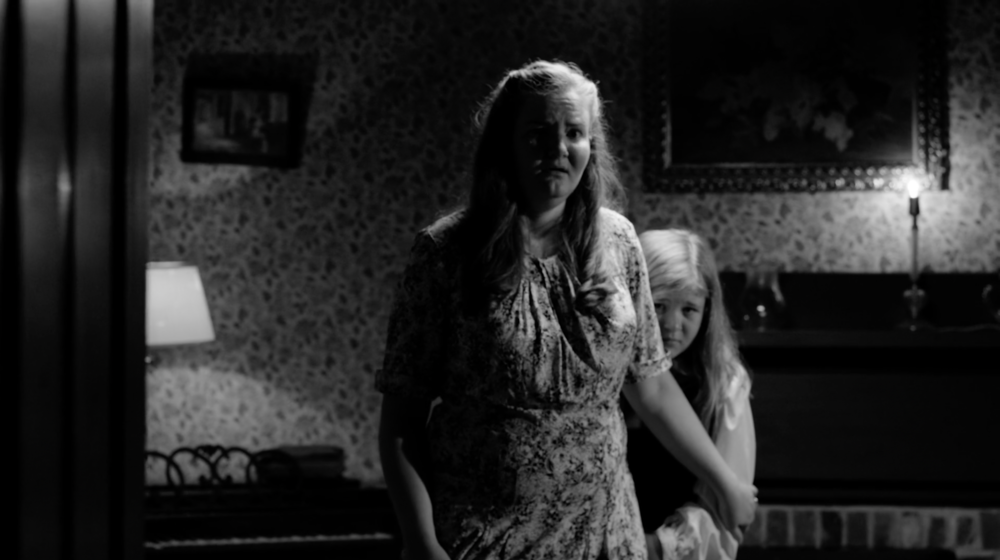
     

    Potentially-Dangerous-still.png

    Still from Potentially Dangerous, dramatizing an FBI raid of an Italian family’s home.

    Why do you think this aspect of history has remained hidden?

    I think part of it is that they were so ashamed, but also afraid of speaking out. We featured Tony Rosati from the other Pittsburgh, whose father was detained twice. He shared that his mother was paranoid for the rest of her life. For decades later, every time the phone rang, she would worry about who was on the other end, like, “Are they listening to our conversations? Can I trust law enforcement?” 


    When you think of all those dynamics, you realize these are the reasons why this story hasn’t been told. These people are so reluctant to tell their stories because they’re worried about what might happen to them and that something like this could happen again.


    Your executive producer is John Turturro. How did that come to be?

    My main goal with the project after it was done was to just get it to the widest possible audience. In the world of film, especially today when it comes to distribution, it’s sort of like a used car salesman or loan shark world where everybody wants a piece of the money, and everybody gets it except for the person who creates the content. So you get all these offers from people. But unless you are a really big name, usually what happens is you get a very little amount of money. They put it on the shelf, and it’ll be available for five bucks on iTunes or whatever, but nobody’s really going to rent it because there’s no marketing or whatever.


    The trade-off for me was that if we could get it to public television, there might still be little money involved, but millions of people would see it. That quickly became the goal, and then I realized I would have a greater chance of reaching that goal if somebody like John was involved. 


    John comes from a military family. His family is from the parts of Italy from which several of the story’s families came. And I had seen that he had worked with some notable Italian directors, and I just felt like, “OK. Out of all the people I could approach, he has to be at the top of the list.” And he was super receptive. He said, “I’m really busy, but anything I can do, even if it’s just lending my name to this project, anything I can do to help, I would love to.”


    Without him, I don’t think we would’ve gotten to PBS, for example. He really helped us open those doors.


    What other projects do you have in the pipeline?

    Funding is always the wild card, and it’s heartbreaking to me because, even within the Italian community, there are many causes and initiatives that these organizations already support. They all want to screen Potentially Dangerous, but there’s no money to fund another project.


    I was working on one for a while that ended up going away. It was going to be called The Last Goldbeater in Venice. I found this guy who’s like 75 years old, and he’s literally the last artisan in Europe who makes gold foil and gold leaf by hand.


    Every day of his life for the last 50 years, he’s gone into this closet-sized studio and beat a bar of gold—I forget the exact number—like 30,000 times with a 13-pound hammer to make one leaf of gold foil. They use this on the most important monuments in the world, and if they use machine-made materials, it’s not the same as all this stuff. 


    So the story was that if he doesn’t find an apprentice by the time he retires, this very important cultural art form will go extinct, like mask-making, glass blowing, lace, and other Italian traditions. It mirrors the plight of the city of Venice, which is over-tourism and climate change. 


    We had a major hospitality brand on board to fund half of the budget, and then, at the last minute, they withdrew their support because they had other priorities for their marketing dollars in 2024. I couldn’t ever replace them. Then the guy retired, and the story went away. In the documentary space, this happens a lot.


    Now, I have another story. I found a group of West African refugees who have all fled terrorism and war and ended up in Italy, and they’ve formed a soccer team to sort of assimilate and give them hope and purpose as they rebuild their lives in this new country.


    The cool part about it is that the Italian government sponsors them as an anti-racism movement. They placed them in the lowest tier of the official Italian soccer league, and against all odds (as this underdog story), they won the Cup in their first year and moved up from the ninth to the eighth level of the Italian soccer league.


    One of their players signed a contract with a Serie-A team and scored a game-winning goal in his first game, and it kind of put them on the map. And so now, a lot of Italians know that this team exists. 


    Unless we find a sports brand, team, or somebody to co-fund this with us and produce it, then I’m afraid the same thing will happen. But that’s the project now: to figure out if there’s a way to fund this story before it also goes away. 


    There are lots of stories to tell, but limited time, resources, and money to do it. And for me, it’s heartbreaking when a story that one really believes in just vanishes because of money.
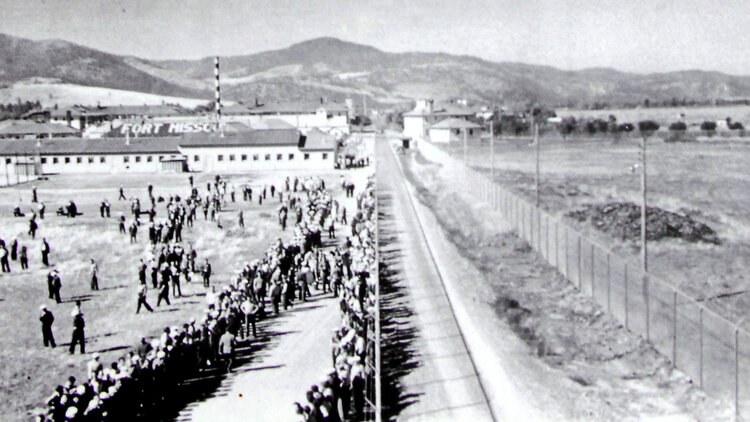
     

    Potentially-Dangerous-internment-camp.png

    Hundreds of Italian “enemy aliens” were imprisoned in internment camps across the nation.

    How do you hope Potentially Dangerous will contribute to a greater understanding of Italian American history?

    It’s something I think about a lot, and not everyone agrees with me. I really do believe that because these events happened, they stopped publishing Italian-language newspapers in some places, and people started hiding that part of their personalities and that part of their identities. And that sort of contributed to my own experience in the Midwest of how my family is like, “OK. We’re Italian, we’re Italian American.” But it doesn’t really mean a whole lot to us, unfortunately. And these events had a big role to play in that. My argument is that because of what happened, we’ve been left with this caricature of what it means to be an Italian or an Italian American.


    We have the mafia stereotype, and we have this very shallow understanding of the Italian American expression in the United States. My argument is that if this hadn’t happened, there would be a more robust and deep expression of Italian Americanism because they wouldn’t have had to hide certain parts of their culture to be accepted. Therefore, that expression would’ve been fuller and more complete for generations. And now you have all these organizations like the Italian American Future Leaders of America, and people of my age and younger who are trying to recapture that. But these events really played a part in that. 


    If you enjoyed this article, consider subscribing to my newsletter for more content and updates!
  • How Friends of Isola delle Femmine Creates a Lasting Bond Between California and Sicily

    How Friends of Isola delle Femmine Creates a Lasting Bond Between California and Sicily

    Frank Bruno grew up in Pittsburg, California, hearing his grandmother’s memories of Isola delle Femmine, a fishing village outside Palermo, Sicily. But he knew very little about the place and didn’t think much about it. That was until 1992, when his friend, Vince DiMaggio, shared that he’d returned from his godparents’ wedding vow renewal in the same town. Vince had spoken with Isola delle Femmine’s then-Mayor Vincenzo DiMaggio about possibly having a Sister City relationship with Pittsburg.


    Frank and Vince weren’t alone in their ties to Isola delle Femmine; most of Pittsburg’s Italian American population shared that connection. As President of the Pittsburg Chamber of Commerce, Frank was in a good position to take action. He asked Pittsburg’s mayor, who agreed to the proposal, and then he reached out to officials in Sicily.


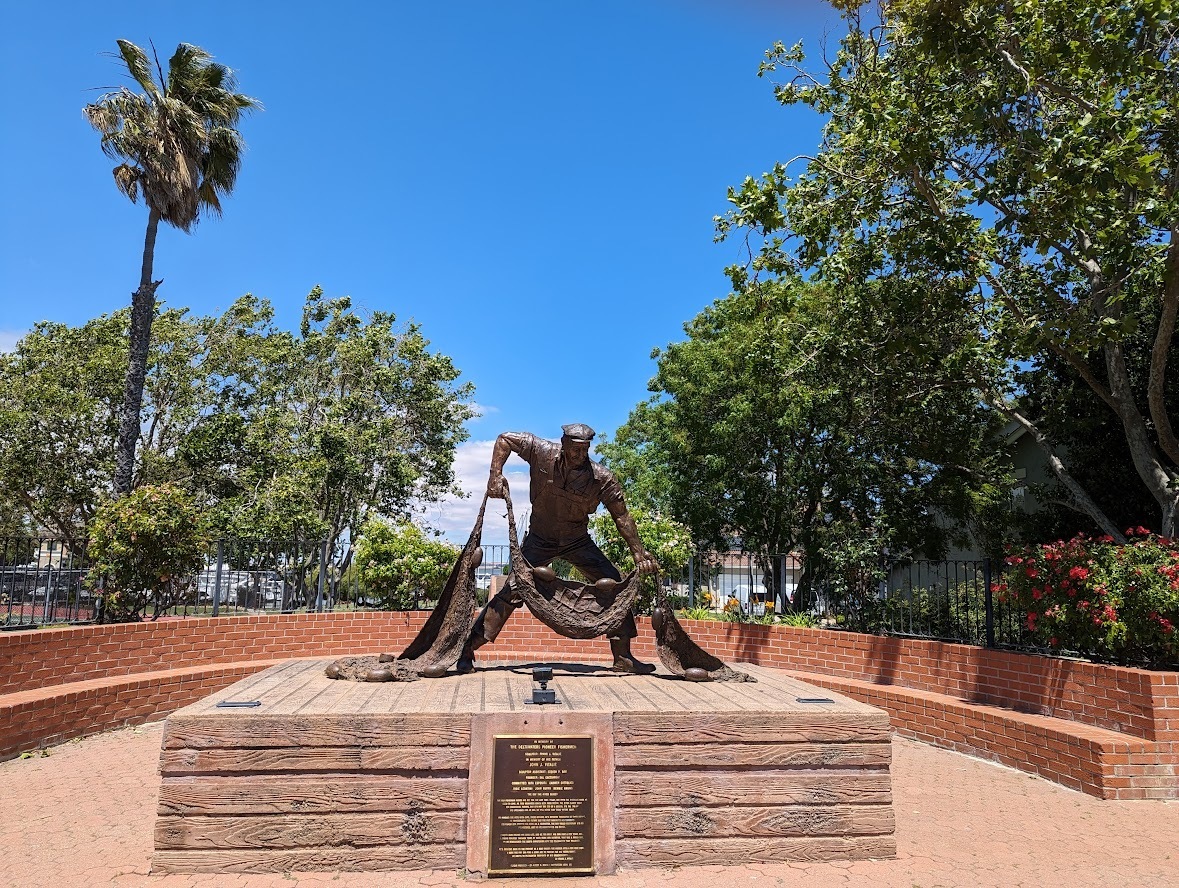
    When Isola delle Femmine’s mayor came to Pittsburg, he saw its iconic fisherman statue, sculpted by local artist Frank Vitale, whose grandparents came from Isola delle Femmine. He wanted one for his town, so Pittsburg community members raised funds to make it happen.


    The sculptor still had the mold he used to build a replica that the Americans sent to Sicily. Today, you can find that statue at Isola delle Femmine’s Piazza di Pittsburg, named for the town’s original sister city.


    That would have been the end of the story: a lasting connection made in honor of shared heritage. Frank moved to Novato, California, in 1997 and lost track of many of the people who were involved until 2017, the 25th anniversary of the Isola delle Femmine-Pittsburg delegation’s first visit.


    Frank and Vince returned to the fold, and a group from Isola delle Femmine joined the community for a reception. Two years later, Frank, Vince, and Vice President Mary Coniglio co-founded Friends of Isola delle Femmine with a mission statement to preserve, protect, and promote Sicilian-American heritage within Isola delle Femmine’s California sister cities, which today number three after the 2017 and 2019 respective additions of Monterey and Martinez.


    Frank, who serves as Friends of Isola delle Femmine’s President, shared more about how and why Isolani emigrated to the U.S. and first landed in Pittsburg. We also discussed the organization’s events, outreach, and evolution, as well as its challenges for the future.


    Friends-of-Isola-delle-Femmine-1994-trip---Sal-Caccaroni--John-Buffo--Vince-DiMaggio--Sculptor-Frank-Vitale--Frank-Bruno--Mary-Coniglio--Rocco-Battaglia--Vince-Coniglio.jpg

    Friends of Isola delle Femmine 1994 trip – Sal Caccaroni, John Buffo, Vince DiMaggio, Sculptor Frank Vitale, Frank Bruno, Mary Coniglio, Rocco Battaglia, and Vince Coniglio


    How and why did Isola delle Femmine residents find their way to Pittsburg?

    Back in the 1860s, when Garibaldi unified Italy, it did little to help the people in Sicily. They were still starving, and there was no work. One story was that they were so hungry they resorted to eating wheat plaster from the walls.


    In 1862, two brothers from Isola delle Femmine with the last name Aiello came to New Orleans, where a big influx of Sicilians lived in the French Quarter.


    They were trying to make a living fishing and cooking. After a Yellow Fever outbreak, they left Louisiana for Oregon, where they fished for salmon before seeing an advertisement from California. The state was looking for fishermen to come and help fish the delta to feed the people who came in for the Gold Rush. So the Aiellos got on a train and ended up in what is now called Pittsburg, California, on the Sacramento River. They started fishing and called for their family, saying, “Here in Pittsburg, the weather is like home. The fishing is abundant, and we’re making money.”


    A lot of people started to come, and many of them worked and stayed here. Then, a lot of them went back home. Pittsburg was the fishing area, but there was seasonal fishing. So when the seasonal fishing went to the wayside, they went to Martinez and Monterey, and many of them stayed there while others went back to Pittsburg. So that was the influx, which is why we have three Sister Cities with Isola in our organization.


    Describe your cultural exchange and promotion efforts.

    Back in 1994, we started a student exchange program. We only did it twice. We sent high schoolers back there, and they went to school. Isola delle Feminine sent college students here, which became a vacation for them. And I said that’s not what we really wanted to do as a student exchange program.


    My idea, and we’re trying to start this now, is to have something similar to what I’m involved in with the Rotary Club: a group study exchange. There would be dentists or any occupation that is here that wants to go. We would supplement, coordinate their stay over there, and have a little bit of money to help them there. But they would pay for their trip. They would go over to Isola and the Palermo area and vice versa.


    We can do it with contractors, dentists, doctors, and many professional business people who would come back and forth. As for the cultural heritage stuff, we’re working on doing what I call an ancestral fair, having an area where folk music and heritage stuff are going on, and then having booths. 


    How have you connected with younger generations?

    We’re giving scholarships to our members’ children, grandchildren, and great-grandchildren who are going to college. We give out six; two years ago, we gave out 10. They would have to qualify normally by having a grade point average acceptable for college and writing a statement about what it was like growing up Italian. Then we have a picnic and give out our scholarships.


    One of our roadblocks is passing on our cultural heritage to the younger generations. It’s very difficult. They’re proud to be Italian American, but that’s where it ends. Now, all of us old-timers look at this as memories. Growing up in Pittsburg was one of the greatest childhoods anybody could have. I mean, it was just full of family everywhere.


    We have functions, but not many younger people have come. Instead of trying to decide how to capture the younger generation and have them tell us what they’re looking for, we’re going to have a discussion and invite a number of our younger members who are 40 or 50 years old to ask them.


    If we’re going to succeed as a cultural heritage organization, we need to replace these people. I can’t do this forever.

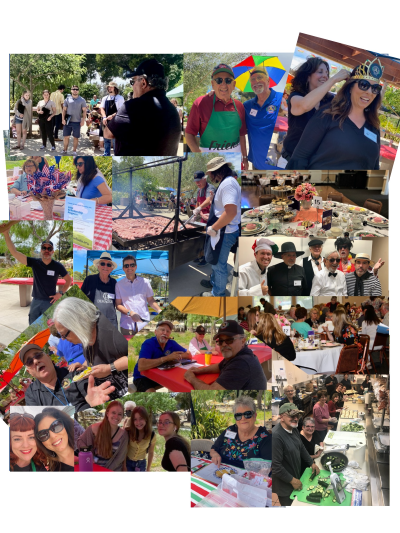
    Friends-of-Isola-delle-Femmine-picnic.png

    Scenes from Friends of Isola delle Femmine picnics


    Tell us about your events.

    We’ve had some fundraisers to fund administration, scholarships, and anything else we want to do. We’ve done pretty well. 


    We started with a program back in 2019 called That’s Italian. We had some opera singers, and we sang show tunes at a place called the Colombo Club in Oakland. About 565 people could sit down for dinner, and then upstairs, there is a banquet hall, bar, and stage. We had 200 people, and they went downstairs and had a nice Italian dinner. And then they came up, and we had this big show and a live auction.


    After the pandemic, when the British Queen passed away, one of our members said, “Why don’t we have a High Tea but Italian style?” We had one in Monterey and one in Pittsburg. We’re finishing up our third one, which will be the last, and we’re going in another direction.


    Our summer picnic was designed to be something we used to do as kids and families. Here in Northern California, we have Mount Diablo, where we had Camp Curry and Marsh Creek, and we could swim and play baseball as a family. We wanted to do something similar and said, “Why don’t we just give our scholarships out then?”


    We are getting about 250 people, and we can showcase what we do and get new members out of that. We have an Italian who lives in Martinez and owns a catering company. He comes and does the pasta and salads, and then we cook sausage. The mayor of Martinez and the city council people come out, and they do the serving. 


    What do you ultimately want to share with your community?

    There are Italians and Sicilians from Isola here in Pittsburg, California, but not many. They’ve branched out to the other areas. What I want to accomplish for the community is to bring back our pride and heritage and continue to have that. We all want to remember what our nonnas and nonnos did for us when we were growing up. We’re trying to put together a cookbook per se with all these recipes in our newsletter. But we want to do more cultural stuff to remember our grandparents and great-grandparents; hopefully, the next generation will be appreciative.


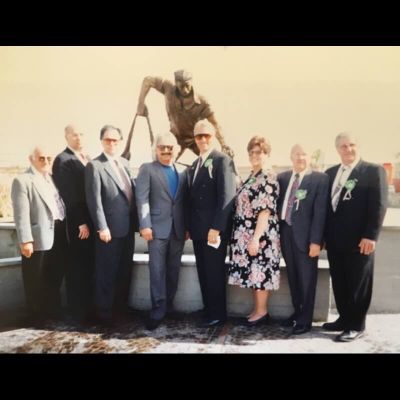
    Frank-Bruno-and-family-unveiling-of-the-Fisherman-Statue-and-sister-city-in-1994.jpg

    Frank Bruno with family at the celebration and unveiling of the Fisherman Statue and sister city in 1994


    If you enjoyed this article, consider subscribing to my newsletter for more content and updates! 
  • She Built a Brooklyn Foodie Bookstore Inspired by Sicilian Roots

    She Built a Brooklyn Foodie Bookstore Inspired by Sicilian Roots

    From a young age, Brooklynite Paige Lipari yearned for a space where she could bring together her passions for food, books, and the arts. As she grew older, she realized she also wanted to share what she loved with her community.


    Following a trip to her family’s home in Alcamo, Sicily, Paige decided that the space would be a bookstore catering to gourmands by selling Sicilian and Italian specialty goods alongside cookbooks and serving as an event space for foodies and neighbors in Greenpoint, Brooklyn. And so began Archestratus Books + Foods in 2015.


    I recently sat down with Paige, who shared more about Archestratus’s start, her deep connection to Sicily, the challenges and rewards of running a niche business, how she has engaged the community, and more.


    Tell us about your connection to Sicily.

    I’m Sicilian on both sides. My father was born in Sicily, and my mother is second-generation American. I have a very strong connection with my Sicilian heritage. We go to Sicily every few years and visit my family in Alcamo.


    My family has a city house and a country house because it was four hours to Trapani by donkey, but now it’s seven minutes. They’re in the city house in the winter, and then they go to the country house for the warmer months, where they have vineyards. They grow grapes, and they sell mosto to winemakers. 


    I actually didn’t go to Sicily until I was 19, which felt very late. And then we started going more and more, but my nonna always brought the Old World Italian. I never really related to this sort of gold chain/ white shirt Italian American—that just wasn’t in my family. I grew up with a nonna who always had some wine on the table with some fruit and cheese. We always ate raw fennel after every meal.


    She was very much into agriculture and would grow things all year long. The food was unique compared to other Italian American restaurants we visited. And she was my first anchor in that culture.


    Archestratus-interior.png

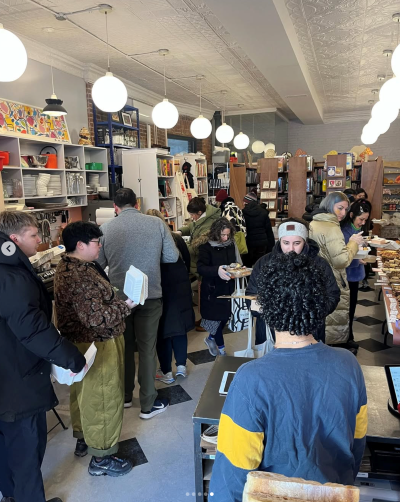
    Archestratus specializes in vintage and new cookbooks.

    What inspired you to open Archestratus, and what led to the naming of the bookstore?

    When I was really young, I loved books, and there was this closet where I would sit and read by myself. And I was a latchkey kid with two working parents, so I started cooking for myself really early.


    I kind of knew in the back of my mind that I wanted a bookstore. I also love design and making spaces feel warm and cozy. And then I love the arts, so the idea of having people perform in this space, doing conversations and talks, and keeping that intellectual stimulation.


    It wasn’t until I went to Sicily for the first time, when I was 19, and met my family, that I completely broke open this obsession with Sicilian food and, of course, Sicilian cookbooks. I fell in love with them, and it changed my life. 


    When I came back, it was kind of my way of connecting with them and also preserving my heritage because my nonna was starting to have dementia. The recipes were all in her head.


    When I learned about Sicilian cuisine, my creative juices just flowed so hard in that direction. I could never really put my finger on why it was different or what it was about until I went there.


    Sicily’s so beautiful and unique, and it’s amazing to me that now it’s getting its flowers as far as how it is its own place. But 20 years ago, when I started out making this food and getting really passionate about it, nobody knew. No one was talking about how it’s influenced by Spain and North Africa, and there are a lot of Middle Eastern flavors, and there’s the Couscous Festival and all that stuff.


    I was passionate about spreading the word.


    Where did the name Archestratus come from?

    I read Pomp and Sustenance by Mary Taylor Simeti and read about Archestratus, and I immediately felt a connection with him. He was kind of wild in what he wrote, and he was deeply mysterious; we don’t know much about him.


    I named the store first, and then all these answers revealed themselves later. He was a poet who was more interested in places and simplicity, enjoying himself and having a good time. Food was all about that and gathering.


    Cookbooks are documents of places, times, and people. I’m interested in how food is a way of seeing the world and bringing people together.


    How do you select the books for your collection, and do you have any personal favorites?

    I go to book sales. I love books where it feels like there’s a real voice. I know there’s a place for more prescriptive things that fill a niche. I just make sure that they’re really of good quality and were done with intention. 


    Some of my favorite books are Pomp and Sustenance and Honey from a Weed by Patience Gray.


    Patience Gray’s husband was a sculptor, and they would travel around the Greek and Italian islands in the Mediterranean, chasing marble for him. So she would spend time in these places. While he was doing the work, she would go out and sniff the windows of the homes, figure out what the women were making, and write about them in a strange, esoteric, funny way.
     

    Archestratus-Cookbook-Club.png

    Can you share some highlights of the community spirit at your bookstore?

    We started the Archestratus Cookbook Club in 2015, and it has always been successful. We pick a book every month, and then everyone shows up with one portion of a dish. Then we all just have this feast, take a little bit of everything, and try other dishes from the book to see if you want to buy it.


    Our bake sales are probably the most incredible. We held a bake sale for the L.A. fires and raised $9,000 in three hours, which was matched by a corporate sponsor. We also held a bake sale for Joe Biden, one for Planned Parenthood, one for Ukraine, and one for Palestine. 


    We usually have around 80 bakers, and then it gets people to come. It’s such a great model. You spend $20, but then if it’s a big sale, that $20 can turn into $200.


    Archestratus-Bake-Sale.png


    What’s been your biggest business challenge?

    The pandemic was a challenge, but it wasn’t my biggest challenge. In a bizarre way, I almost felt like I was ready. I already wanted to expand and had been researching more food vendors.


    During the pandemic, we were a bookstore cafe, and I was already starting to think we were outgrowing this space. So, I was already researching vendors for fresh milk and eggs and trying different things. And so I had set up all these connections, and then the pandemic hit, and I was like, well, I could do a grocery pickup.


    On March 19, 2020, we did a grocery pickup, which was one of the first weekends. By April, we had one day when we had to pick up for 220 people. They would come up on the street with their order, and then I would fulfill it. So I had this bizarre flow happen with the pandemic, and we were O.K.


    My biggest challenge after the pandemic was when we expanded, and then I realized, “I don’t like this. I don’t want to do this. I don’t like having a bigger staff, and I don’t like dealing with this landlord.”


    I thought I would love it, that this was what we needed. But then I realized we needed to be smaller, more flexible, and lighter on our feet.


    I did this big thing, saying, “We’re doing this.” Then, I had to pull back and make that hard decision to contract.


    Every decision I make is pretty public, but I was not doing the thing that I know I love. I love making food, and I love cooking, but it was not making me happy anymore at that level. Facing that and just financially getting through that and out of it has been extremely challenging, and I’m still dealing with the effects. 


    What are your upcoming plans?

    I know that people want recipes, and I want to share them. And so, figuring that out is going to be 2025, and starting to do that. I know there will be a newsletter, so I’m going to start writing one and sharing some of these recipes.


    Another more community-driven thing I want to do this year is create a community zine and start making a cookbook with everybody, especially coming out of these bake sales. We have such a network of people who love to develop recipes, cook, and have family recipes. We started doing that before the pandemic, but it never got off the ground. And this is the year I want to make time.


    What do you hope people take away from a visit to Archestratus?

    I hope that they get inspired to be more of themselves. I hope that they see that we’re operating on a frequency of not giving a shit, and I hope that they go off and they do whatever they want to do. 


    If you enjoyed this article, consider subscribing to my newsletter for more content and updates!